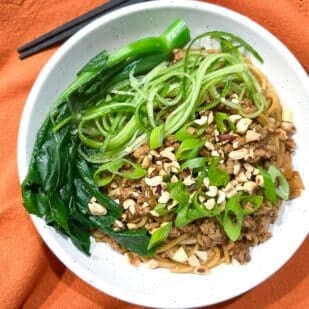
Low FODMAP Dan Dan Noodles
If you have a hankering for spicy noodles, this is the recipe for you! Long, slurpy noodles (in this case, rice noodles), ground pork, garlic flavor, ginger, soy sauce, Shaoxing wine, and loads of chili oil and pepper! You can adjust the heat to your liking.
Ingredients:
Sauce:
- 2 ½ tablespoons soy sauce, such as San J, low sodium and gluten-free
- 1 teaspoon low FODMAP garlic powder, such as FreeFod or Fodmazing
- 3 tablespoons Chinese sesame paste
- 2 tablespoons Chinese chili oil
- 2 tablespoons toasted sesame oil
- 2 tablespoons black vinegar
- 1 teaspoon sugar
- 1/4 teaspoon Sichuan peppercorn freshly ground
Pork:
- 1 tablespoon Low FODMAP Garlic-Infused Oil. made with vegetable oil, homemade or purchased
- 16- ounces (455 g) ground pork
- ¼ cup (16 g) chopped scallions, green parts only
- 75 g ya cai, preserved mustard greens, chopped; optional
- 1 teaspoon freshly grated gingerroot
- 2 tablespoons Shaoxing wine
- 2 tablespoons hoisin sauce such as San J
- 1 tablespoon soy sauce such as San J, low sodium and gluten-free
Noodles & Toppings:
- 12 stalks choy sum, hard stems removed
- 12- ounces (340 g) low FODMAP gluten-free noodles, such as Jovial spaghetti
- 2 Persian cucumbers, ends trimmed away, julienned
- 1/3 cup (24 g) chopped scallions, green parts only
- 3 tablespoons chopped toasted peanuts
- Chinese Chili oil
Preparation:
-
For the Sauce: In a large bowl, whisk together the soy sauce and low FODMAP garlic powder, then whisk in remaining sauce ingredients; set aside.
-
For the Pork: Heat oil in a wok or heavy bottomed large skillet over medium heat. Cook pork, breaking it up with a wooden spoon or spatula until it is halfway cooked through. Add scallion greens, ya cai if using, and ginger, stir-frying until the pork slightly browns and scallions soften. Deglaze the pan with Shaoxing wine and continue to cook until the liquid is mostly evaporated. Add hoisin and soy sauce and continue to cook for another minute; keep warm.
-
For the Noodles: Meanwhile, bring a large pot of water to a boil. Drop in the choy sum, blanch for 30 seconds, then remove with tongs and drain. Keeping water at a boil, cook noodles until very al dente (they will continue to cook when you toss everything together. Drain pasta reserving ¼ cup (60 ml) noodle cooking liquid. Add noodles to the bowl with the sauce, using your tongs to toss until they are coated evenly. Add noodle cooking water as needed to help create a glossy sauce.
-
Quickly divide the noodles among individual bowls, add the choy sum, and the hot pork over top. Arrange cucumbers on the side and top each bowl with the scallion greens and peanuts. Offer chili oil for those who want them even spicier!
Notes:
FODMAP Information
All recipes are based upon Monash University & FODMAP Friendly science at time of initial publication.
• Cucumbers: Both Monash University and FODMAP Friendly have lab tested cucumbers. FODMAP Friendly had given them a “Pass” at ½ cup (64 g). Initial Monash app entries stated that no FODMAPs were detected upon lab testing and set a serving size at ½ cup (75 g). Upon re-testing, both testing bodies altered their app entries to represent amounts of fructose in the cucumbers tested at that time. Cucumbers can contain no FODMAPs or can contain a high FODMAP amount of fructose. Eat to your tolerance.
• Garlic-Infused Oil: Make your own Garlic-Infused Oil or buy a commercial equivalent for the easiest way to add garlic flavor to your food. Fructans in garlic are not oil-soluble, so garlic-infused oil is low FODMAP.
• Ginger: Monash University has lab tested fresh ginger root and has determined it to be free of FODMAPs, making it one of our go-to no FODMAP foods.
• Low FODMAP Garlic Powder: Conventional garlic powder is made from dried and granulated, or powdered, garlic cloves and is considered high FODMAP. There are a couple of low FODMAP garlic powders on the market: FreeFod Garlic Replacer and Fodmazing Garlic Substitute Replacer. The FreeFod has been lab tested and is certified low FODMAP by FODMAP Friendly. Both brands contain the same ingredients – maltodextrin and natural garlic flavor. We find them to be excellent additions to your herb and spice collection. Use them as you would conventional garlic powder.
• Pasta: Please note that small amounts (74 g) of conventional wheat-based pasta is low FODMAP Use your Monash app for more information; the diet is not wheat or gluten-free. If you are gluten-free, you have to read labels, as there are many low FODMAP gluten-free brands of pasta available, but remember that gluten-free does not equal low FODMAP. Use what is called for in individual recipes. Our go-to is rice-based pasta. Monash University and FODMAP Friendly have both tested “gluten-free” pasta, but they do not specify what the pasta was made from. Monash says gluten-free pasta is low FODMAP at 145 g or 1 cup cooked; FODMAP Friendly lab testing suggested 2 cups or 146 g cooked is low FODMAP. Monash has also lab tested pasta made from rice, which they list under “rice stick” and it is low FODMAP at 220 g, which no Moderate or High FODMAP amounts given.
• Peanuts: Monash has lab tested peanuts. They are low FODMAP in 28 g amounts, which they say is 32 nuts (but sizes can vary, so go by weight). They have stated say that only trace amounts of FODMAPs have been found in peanuts.
• Scallions: Monash University lab testing initially found no FODMAPs detected in scallion greens; in subsequent tests, scallion greens showed fructose content. The suggested serving size is 75 g. Monash states the scallion bulb low FODMAP serving is 32 g (about 1/3 cup). FODMAP Friendly has also lab tested scallions: their recommended serving size for the green parts is 16 g, with a max low FODMAP serving between 160 g and 176 g (from different tests). FODMAP Friendly says it is low FODMAP in 19 g to 20 g portions, which is about 2 tablespoons finely chopped.
• Sugar: Monash University and FODMAP Friendly have both lab tested white, granulated sugar. Monash states that a Green Light low FODMAP serving size of white sugar is 1/4 cup (50 g). FODMAP Friendly simply states that they have tested 1 tablespoon and that it is low FODMAP. Regular granulated white sugar is sucrose, which is a disaccharide made up of equal parts glucose and fructose. Sucrose is broken down and absorbed efficiently in the small intestine. As the fructose is never in excess of the glucose, white sugar will never be high FODMAP, even in large amounts.
Please always refer to the Monash University & FODMAP Friendly smartphone apps for the most up-to-date lab tested information. Foods will be retested from time to time; in the case of raw ingredients, such as fruits and vegetables, results may vary. All lab tested results are valid and represent a snapshot in time. As always, your tolerance is what counts; please eat accordingly. The ultimate goal of the low FODMAP diet is to eat as broadly as possible, without triggering symptoms, for the healthiest microbiome.
