

History loves to celebrate the triumphs, but it’s the blunders that make it human. Behind every great leader, inventor, or conqueror was someone who, at least once, made a jaw-dropping decision that changed everything.
Take, for instance, Napoleon’s 1812 invasion of Russia, which resulted in the loss of over 500,000 soldiers—more than 80% of his Grande Armée—due to cold, starvation, and poor logistics.
Even the most brilliant minds got it wrong sometimes—and the ripple effects shaped the world we live in. So, grab your mental time machine, because we’re diving into the moments that prove even history’s legends had “what was I thinking?” days.
Napoleon’s disastrous march into Russia
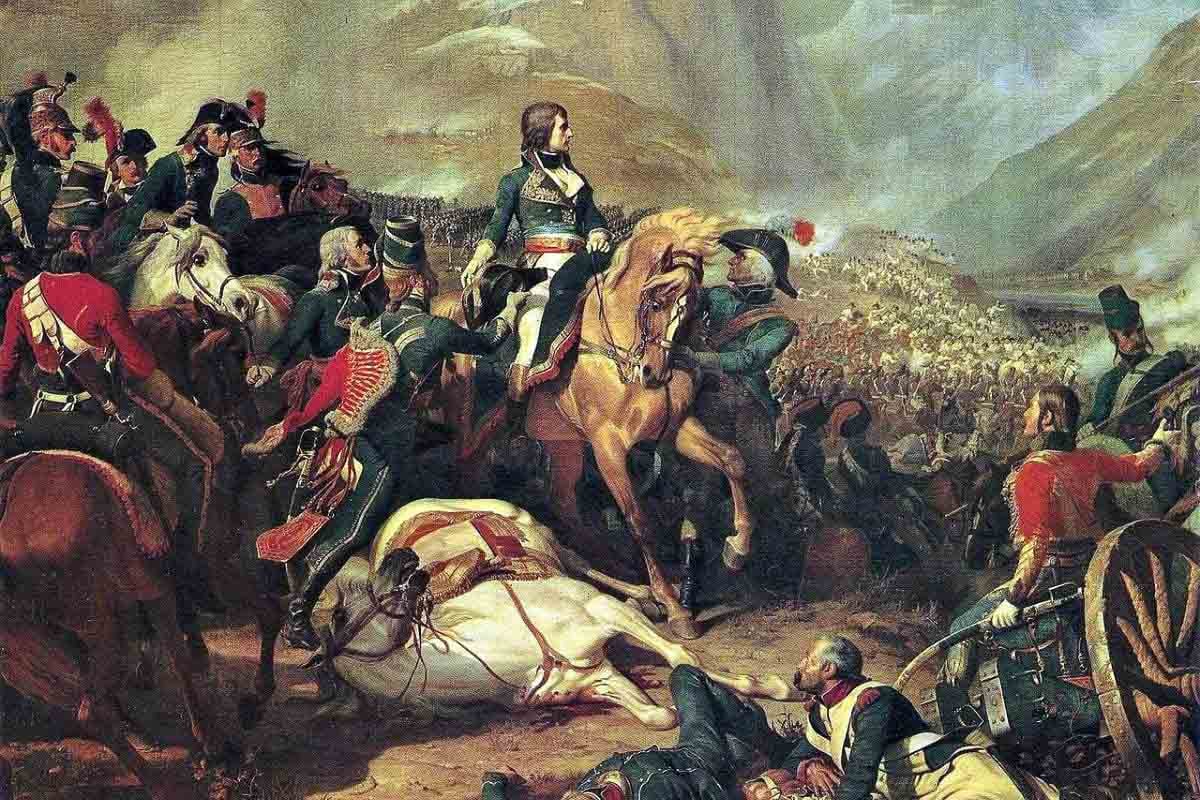
In 1812, Napoleon Bonaparte thought that invading Russia would cement his dominance in Europe. Instead, it destroyed his empire.
His army of over 600,000 soldiers marched into a Russian winter unprepared for the freezing temperatures and long supply lines. By the time they retreated, only about 100,000 survived. It’s one of history’s greatest examples of pride clouding judgment—literally frozen ambition.
Cleopatra’s fatal alliance with Mark Antony

Cleopatra VII was one of the most brilliant political minds of her time, but her partnership with Mark Antony proved disastrous. Their love and power play against Octavian (the future Emperor Augustus) made them enemies of Rome.
When their forces were defeated at the Battle of Actium in 31 B.C., both chose suicide over capture. Cleopatra’s downfall ended Egypt’s independence and handed control to Rome. It was a mix of romance, pride, and political miscalculation that changed the course of ancient history.
Galileo’s stubborn fight with the Church

Galileo Galilei was a genius who revolutionized science—but he also had a knack for poking powerful people the wrong way. His support for the heliocentric model (that the Earth revolved around the Sun) directly challenged the Catholic Church’s teachings.
Instead of presenting his ideas carefully, he mocked Church leaders in his writings. That move got him tried by the Inquisition and sentenced to house arrest for life. He was right about the science, but his delivery nearly buried it.
Also on MSN: 12 weird historical ideas that somehow came true
George Custer’s fatal miscalculation at Little Bighorn

General George Armstrong Custer was known for his confidence, but at the Battle of Little Bighorn in 1876, it turned into overconfidence. Ignoring intelligence that warned of a massive Native American force, he charged ahead with only a few hundred men.
They were completely overwhelmed by Lakota, Northern Cheyenne, and Arapaho warriors. Custer and his troops were wiped out in what became known as “Custer’s Last Stand.”
Hitler’s decision to invade the Soviet Union

In 1941, Adolf Hitler made one of the most fatal errors in military history by launching Operation Barbarossa. He underestimated both the brutal Russian winter and the resilience of the Soviet army.
His forces stretched too thin, supplies ran out, and the tide of World War II turned. The invasion cost millions of lives and shattered the German war machine.
Thomas Edison’s obsession with direct current

Edison’s rivalry with Nikola Tesla might be one of the pettiest—and most famous—feuds in science. Edison believed direct current (DC) electricity was the future, while Tesla backed alternating current (AC), which was cheaper and more efficient.
Edison spent years launching smear campaigns, even staging public electrocutions to make AC look dangerous. But AC won out, powering the modern world. Edison’s refusal to adapt showed that even geniuses can cling too hard to being right.
Richard Nixon’s Watergate cover-up

Nixon’s presidency could have been remembered for diplomacy and ending the Vietnam War, but instead, it’s forever tied to the Watergate scandal. When a break-in at the Democratic National Committee headquarters was traced to his campaign, he chose to cover it up rather than come clean.
The tapes revealed everything, and in 1974, he became the first U.S. president to resign. It wasn’t the crime—it was the cover-up that destroyed him. Even today, “Watergate” remains shorthand for political scandal.
The Titanic’s arrogance against nature
Save this article
When the Titanic set sail in 1912, it was called “unsinkable.” That confidence turned deadly when the ship ignored multiple iceberg warnings while cruising at top speed. When disaster struck, there weren’t enough lifeboats for everyone—only 710 of the 2,204 passengers survived.
Napoleon III’s misstep in the Franco-Prussian War

Napoleon III wanted to restore French glory but ended up repeating his uncle’s mistakes. In 1870, he declared war on Prussia without realizing how well-prepared his opponent was. The French army suffered crushing defeats, and Napoleon III was captured, ending his empire.
The loss also paved the way for Germany’s unification under Prussian leadership. His overconfidence didn’t just cost him his throne—it reshaped Europe’s balance of power.
Marie Antoinette’s disconnect from reality

“Let them eat cake” might be apocryphal, but it captures Marie Antoinette’s biggest flaw—her total detachment from France’s starving citizens. As queen, her lavish spending and indifference became symbols of royal excess during a time of economic crisis.
Her reputation for extravagance fueled revolutionary anger and led to her execution in 1793. Historians now see her as more misunderstood than malicious, but perception became her downfall. It’s proof that public image can be just as deadly as politics.
Alexander the Great’s unchecked ambition

Alexander conquered most of the known world before he turned 33—but his empire was built on exhaustion. His army, stretched thin from years of campaigning, finally refused to march farther east.
He ignored warnings about overextension and the need to consolidate power. When he died suddenly in 323 B.C., his empire crumbled almost instantly. It’s one of history’s great “too much, too fast” stories.
The Challenger Space Shuttle disaster

In 1986, NASA launched the Challenger shuttle despite engineers’ warnings about faulty O-rings in cold weather. The result was catastrophic—the shuttle exploded 73 seconds after liftoff, killing all seven astronauts aboard.
Investigations later revealed communication breakdowns and pressure to stay on schedule. It wasn’t a technological failure—it was a human one.
Key takeaways

Every era has its “oops” moments, and even the smartest minds in history weren’t immune. The mistakes of emperors and engineers shaped the world just as much as their victories did.
Maybe that’s the comforting part—if history’s greats could mess up this badly, the rest of us are probably doing just fine.
Disclaimer – This list is solely the author’s opinion based on research and publicly available information. It is not intended to be professional advice.
Disclosure: This article was developed with the assistance of AI and was subsequently reviewed, revised, and approved by our editorial team.
15 foods from the ’60s most Boomers loved with a passion

15 Foods From the ’60s Most Boomers Loved With a Passion
The 1960s were a period of profound social and cultural transformation in America. As the baby boomer generation came of age, they embraced new ideas, fashion trends, and music styles. And when it came to food, some beloved dishes defined this era.
Here are 15 foods from the ’60s that most boomers loved passionately.
14 Boomer habits that are making a comeback

14 Boomer Habits That Are Making a Comeback
As trends in lifestyle and culture ebb and flow, certain habits from previous generations resurface, influencing new generations in unexpected ways. The boomer generation is now seeing many of its beloved practices and preferences re-emerge, often taking on a modern twist that appeals to today’s youth.
These 14 resurgent boomer habits reflect nostalgia and a growing appreciation for simplicity and authenticity in an increasingly changing world.





