

If you’ve spent any time around people of faith, you’ve probably heard a few of these lines float through conversations, dinner tables, or comment sections. They’re often said casually, sometimes even kindly, but they tend to land with a quiet sigh.
Christianity is deeply personal for many people, shaped by culture, upbringing, doubt, and growth. It remains the world’s largest religion in 2025, with about 2.6 billion adherents — roughly 31.7% of the global population, an Overseas Ministries Study Center report highlights.
This list isn’t about shutting anyone down; it’s about opening the door to more thoughtful conversations.
“All Christians think the same.”

Christianity is incredibly diverse, both globally and locally. There are more than 47,000 Christian denominations worldwide, according to statistics.
Beliefs about politics, social issues, worship, and even theology vary widely. Some Christians spend more time disagreeing with each other than presenting a unified front.
“You’re just Christian because you were raised that way.”

Upbringing plays a role in many identities, but it rarely tells the whole story. Christians say personal experiences, not family pressure, deepened their faith as adults. Many people leave, return, question, and reshape what belief looks like over time.
Pew Research shows that about 80% of American adults were raised Christian, but only 62% still identify as Christian today. 22% of U.S. adults have left Christianity, while only 4% have entered it. Faith often survives doubt, not the absence of it.
“The Bible says you can’t question anything.”
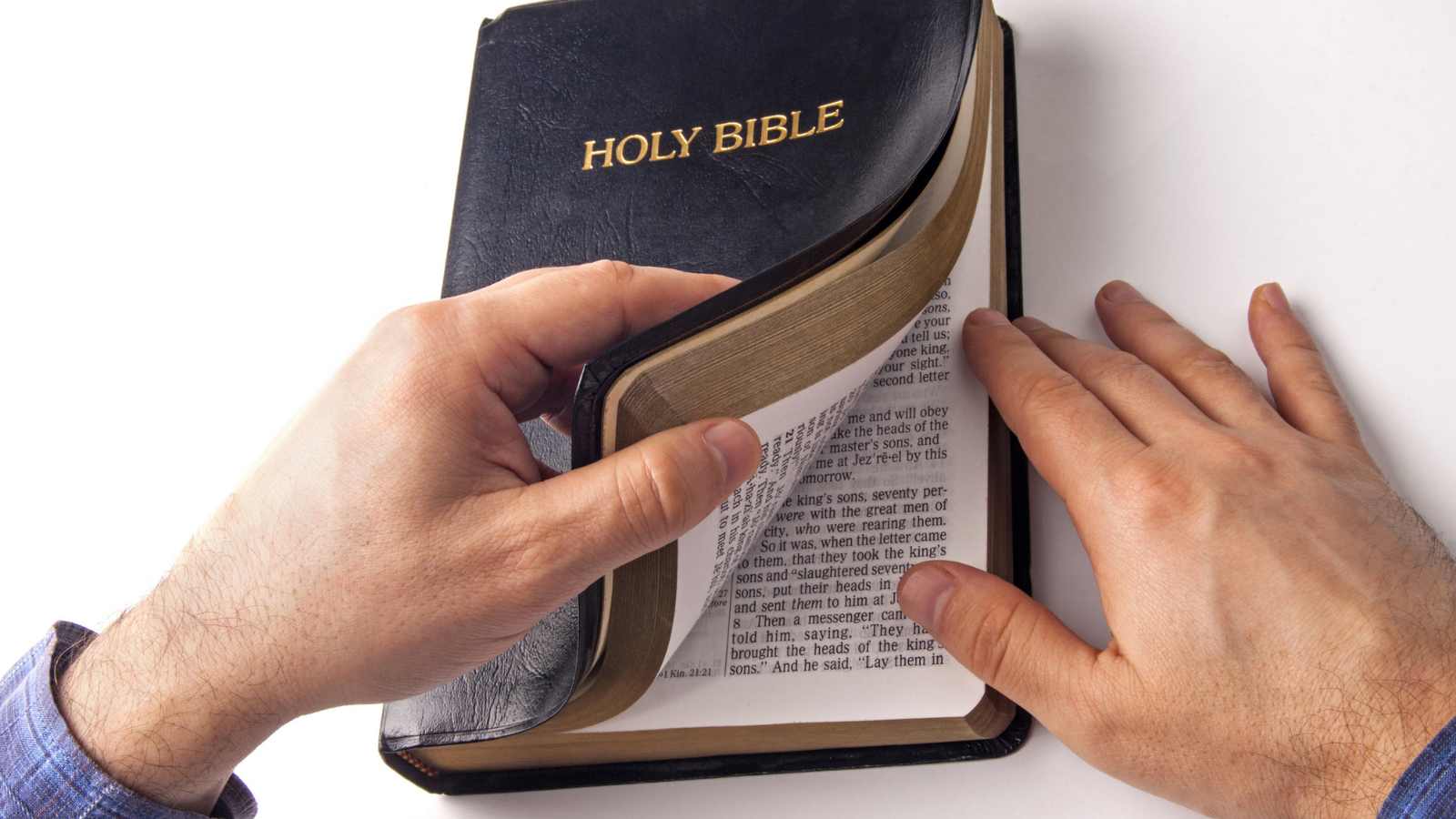
Plenty of biblical figures questioned, argued, and wrestled with God openly. The Psalms alone are full of frustration, confusion, and emotional honesty. Many churches actively encourage discussion and doubt as part of spiritual growth.
Asking hard questions is often seen as engagement, not rebellion. Silence, not curiosity, tends to worry leaders more.
Also on MSN: 13 common myths about Christianity, debunked
“Christians are all judgmental.”

This one usually stings because many Christians already worry about living up to their values. Christians rank hypocrisy among the biggest problems in the church.
In a Barna Group report, 42% of people with no religious affiliation said hypocrisy was the main reason they doubt Christian beliefs. In comparison, 24% of non-Christians and 22% of Christians gave the same response.
Most people of faith are far more self-critical than judgmental toward others. Quiet acts of kindness rarely make headlines. The loudest voices aren’t always the most representative.
“Church is only for perfect people.”

Most Christians will laugh softly at this one. Churches are full of people who openly admit they’re figuring things out as they go.
Many attend precisely because they feel messy, tired, or uncertain. The idea of perfection tends to come from outside, not inside. If perfection were required, most pews would be empty.
“Church is just about money.”

Yes, money conversations exist, and sometimes they’re handled poorly. But most churches operate on modest budgets and rely heavily on volunteer labor.
The majority of church funds go toward community services, staff support, and basic operations. Many Christians give quietly and sacrificially without ever talking about it. That part doesn’t fit the stereotype as neatly.
“You take the Bible literally all the time.”

Biblical interpretation has layers, including history, poetry, metaphor, and context. Many Christians are taught to read scripture thoughtfully, not flatly.
Seminaries spend years training leaders in interpretation, language, and cultural background. Literalism exists, but it isn’t universal. Nuance is more common than people assume.
“Science and Christianity can’t coexist.”

Save this article
This idea sticks around despite a long history of overlap. Many early scientists, including Isaac Newton and Gregor Mendel, were devout Christians.
Today, Pew Research finds that 62% of highly religious Americans say science and religion are mostly compatible. Faith and curiosity often share the same space. It’s not always an either-or situation.
“Faith is just a crutch.”

People lean on many things during hard seasons: therapy, routines, relationships, and belief systems. Faith can provide resilience during grief and stress.
For many Christians, belief isn’t about avoiding pain but surviving it. Calling it a crutch often ignores the work happening underneath.
“Christians hate anyone who’s different.”

This one usually comes from painful real-world examples, which makes it complicated. Many churches are actively reevaluating how they treat marginalized groups.
Progress is uneven, but it’s happening. Painting everyone with the same brush shuts down that conversation fast.
“You must be against modern culture.”

Most Christians live fully immersed in modern life, streaming shows, working jobs, and raising families like everyone else. Cultural engagement looks different depending on the person and community.
Some embrace change, others move cautiously, and many land somewhere in between. Christianity has adapted across centuries and continents. It’s rarely frozen in one moment.
“Christianity is dying anyway.”

Globally, Christianity is actually growing, especially in Africa, Latin America, and parts of Asia. The number of Christians worldwide will continue to rise through population growth alone.
What’s changing is where Christianity looks influential and how it’s practiced. Decline in some regions doesn’t tell the whole story.
Key takeaways

Many comments Christians hear repeatedly are oversimplifications, not outright attacks. Faith communities are more diverse, self-reflective, and internally critical than outsiders often realize.
Thoughtful conversations usually start when assumptions are replaced with curiosity. A little listening goes much further than a well-worn line.
Disclaimer – This list is solely the author’s opinion based on research and publicly available information. It is not intended to be professional advice.
Disclosure: This article was developed with the assistance of AI and was subsequently reviewed, revised, and approved by our editorial team.
20 Odd American Traditions That Confuse the Rest of the World

20 Odd American Traditions That Confuse the Rest of the World
It’s no surprise that cultures worldwide have their own unique customs and traditions, but some of America’s most beloved habits can seem downright strange to outsiders.
Many American traditions may seem odd or even bizarre to people from other countries. Here are twenty of the strangest American traditions that confuse the rest of the world.
20 of the Worst American Tourist Attractions, Ranked in Order

20 of the Worst American Tourist Attractions, Ranked in Order
If you’ve found yourself here, it’s likely because you’re on a noble quest for the worst of the worst—the crème de la crème of the most underwhelming and downright disappointing tourist traps America offers. Maybe you’re looking to avoid common pitfalls, or perhaps just a connoisseur of the hilariously bad.
Whatever the reason, here is a list that’s sure to entertain, if not educate. Hold onto your hats and explore the ranking, in sequential order, of the 20 worst American tourist attractions.





