

Does it feel like everyone is just… ruder these days?
A 2024 Pew Research survey found that nearly half (47%) of Americans think people in public are ruder now than before the pandemic. About 34% say they see this rude behavior “almost always or often.”
But are we really ruder? Or did the rulebook just get tossed out the window? Our “always-on” mobile connectivity and a massive social trend toward “informalization” haven’t just bent the rules—they’ve completely rewritten them.
The old, stuffy rules might be dead, but that doesn’t mean manners are.
As etiquette expert Peggy Post said, the rules of etiquette change, but manners—which she defines as a “sensitive awareness of the feelings of others“—remain constant. We just have a new (and much weirder) way of showing it. Here are 13 “old-fashioned” rules that nobody seems to follow anymore.
Sending a handwritten thank-you note

Remember these? That little stack of cards you got after your birthday, forcing you to write a note to your great-aunt for a check? Yeah, that’s pretty much gone. Why? This isn’t just about speed. It’s a skill-based decline. Many schools have dropped cursive from their curricula. It’s hard to follow a rule when you’re literally not taught the tool to do it.
But here’s the truly fascinating part. Because handwritten notes are now so rare, their power has skyrocketed. Businesses have caught on. They note that this rarity gives them a “higher response rate” and “uniqueness.” It’s no longer a social obligation; it’s now a potent tool for intention that creates a “genuine connection.”
Being strictly punctual
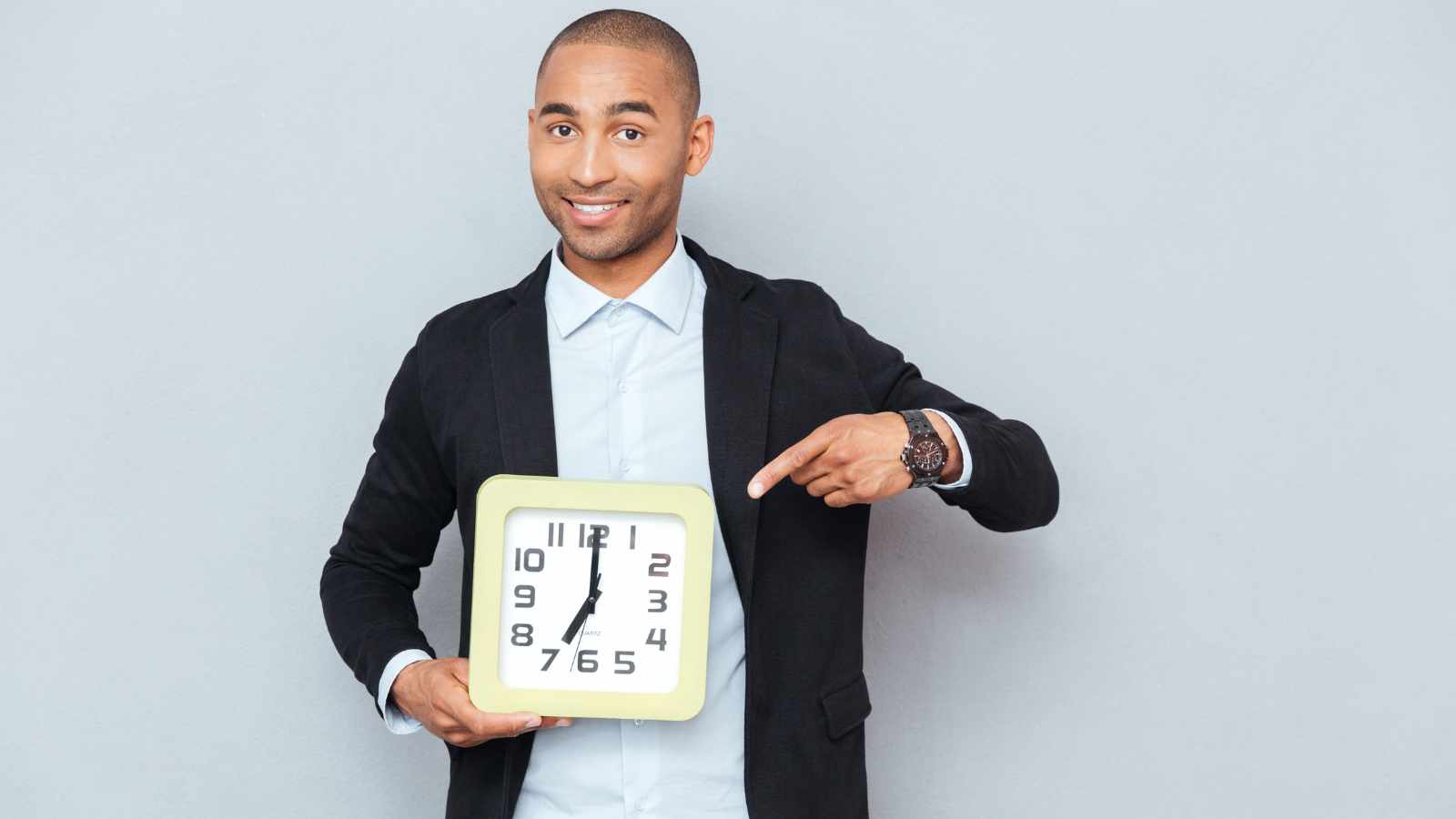
Being “on time” used to mean being five minutes early.
Now, “on time” seems to mean “I’m just pulling into the parking lot” or “my Zoom is connecting.” This isn’t just a Gen Z thing, but they are leading the charge on “time flexibility.”
A 2024 study found that nearly half of people aged 16-26 said arriving 5 to 10 minutes late is just as acceptable as being on time. Millennials aren’t far behind, at 40%.
Meeting Canary founder Laura van Beers says, “It appears that being ten minutes late is now the equivalent of being on time, especially for the younger generation.” Technology is the culprit and the enabler. We’re later than ever, but we’re also “hyper-connected.”
Because we can send a “running 5 min late!” text, we feel we have mitigated the rudeness. The technology creates a social “permission slip” for lateness. This trend was supercharged by remote work. When your “commute” is just opening a laptop, “tardiness” becomes abstract.
The old rule of punctuality is losing the battle against the new demand for productivity.
Leaving a voicemail

Leaving a voicemail in 2025 is seen as passive-aggressive. It’s the digital equivalent of leaving a flaming bag on someone’s porch.
It’s not just you; Gen Z is “killing” voicemail.
Why? It’s all about the “tax.” Leaving a voicemail imposes an “attention tax” (requiring someone to stop and listen) and a “memory tax” (no searchable record). A text or a Slack message is instant, searchable, and efficient.
But this isn’t just about efficiency; it’s about anxiety.
One expert noted that younger people are “more avoidant about making simple phone calls” and find it “nerve-wracking.” A text is asynchronous. A voicemail is a one-sided, recorded performance.
The “death of voicemail” is a symptom of a broader preference for communication that can be controlled and edited.
Answering the phone with a cheerful “Hello?“

The old rule: You answer the phone with a prompt, polite greeting. The new trend (especially with Gen Z): You answer… and just wait. A silent pause. According to workplace analyst Patrice Williams-Lindo, this isn’t rudeness.
It’s “less a lack of etiquette and more a shift in how Gen Z navigates power, privacy and presence.” She calls it a “form of boundary setting.” This is a direct, logical response to the world we live in. We are all raised in a world “overflowing with robocalls, scams and emotionally charged conversations.” An unknown call is now “guilty until proven innocent.”
The pause is a defensive move, a “digital survival” tactic.
Williams-Lindo also notes that a “cheery or corporate ‘hello’ can come across as disingenuous or emotionally performative.” Gen Z “values emotional clarity over politeness.” They’d rather be seen as rude for a second than be inauthentic.
Keeping your phone off the dinner table

This rule is currently at war with itself. Everyone hates it, but everyone does it.
A whopping 56% of people say it’s “at least mildly annoying“ when others use their phones at the table. The real victim here is the family dinner.
Family dinners are a known “protective factor for adolescents.”
But the same research notes a “decline in family meal frequency,” attributed in part to “in-home distractions such as… mobile devices.” This “minor” etiquette breach isn’t so minor. It’s actively eroding a foundational social structure by breaking our “interpersonal connection.”
Following a strict office dress code

Remember “business formal“? Suits? Pantyhose? The “great casualization” combined with the remote-work boom has pretty much killed it.
A 2025 Monster poll found that 43% of American workers report having no dress code at all. For the 57% who do have one, it’s a free-for-all. 61% of them say the code has recently shifted. Only 6% of those with a code are “business formal.” The vast majority (63%) are “business casual.“
The old argument was that casual dress leads to a “casual work ethic.” The pandemic was a massive, global experiment that disproved this. Research found employees in casual clothes had “higher levels of concentration.”
This is no longer an “etiquette” issue; it’s a business issue.
A strict dress code is now a direct financial liability.
Using formal titles like ‘Mr.’ or ‘Ms.’ at work

When was the last time you called your boss “Mr. Johnson?” Unless you work in a very formal field, it’s likely never.
This rule has been dead for decades.
In one forum, users noted that even in the 1990s, they never called a boss by an honorific, outside of the military or a courtroom. This is the clearest example of a broader sociological trend called “informalization.”
We’ve moved, as a society, to be “less constrained in… behavior.” Dropping formal titles is a classic symptom. But here’s where it gets weird. We’ve become less formal… and less engaged. We dropped formal titles to be more of a “team.” Yet, global employee engagement declined to 21% in 2024. In the US, it’s flat at 32%.
A 2025 survey found nearly half of leaders would give up their title just to feel engaged. The “fix” of informal titles was superficial. It didn’t address the real, “deeper organizational challenges.”
Keeping your elbows off the table
“Elbows off the table!” You can probably hear your grandmother’s voice right now. This rule is a pure holdover from a bygone era. It dates back to medieval times!
In crowded medieval halls, elbows on the table could mean knocking over a drink or be seen as a “sign of aggression… ready to fight.” The rule is dead, but the principle behind it is not.
Etiquette expert Diane Gottsman translates this for the modern day.
Save this article
Elbows on the table are still rude, not because of a “rule,” but because it’s “rude to lean into or reach over someone else’s personal space.” It’s about “boundaries.”
Even if you don’t care, someone else does.
Gottsman warns, “People make judgments based on what they see.” You might be silently judged by a “clued in” boss or client.
Using formal email greetings and sign-offs

“Dear Sir or Madam.” “Yours sincerely.”
These are now email relics. The new standard is “Best.” It’s professional without being “pretentious.” An expert in 2025 email etiquette said, “Tone is invisible but powerful.” The new email etiquette is less about formality and more about strategy.
The new “good manners” for email is respecting the other person’s time.
Good etiquette is now a “strategic tool.” It’s about a “clear subject line, a direct opening, a scannable body.“
A long, formal, flowery email is now considered ruder than a short, direct one.
This has created a new generational minefield. A Gen Z employee sending “Take it easy, breezy!” to a Boomer client who expects “Regards” is a communication breakdown waiting to happen.
Formally introducing people

The old rule was a social minefield. You had to introduce the person of “lower status” to the person of “higher status.” Example: “Mrs. CEO, I’d like you to meet Mr. Jacobs, our new intern.”
This rigid, class-based system is gone.
But the function of an introduction is vital. As Butler John Robertson says, “You don’t get a second chance to make a first impression.” We’ve become so informal (calling bosses by first names) that we’ve lost the script, leading to “awkward handshake… or confusion about names.”
The Emily Post Institute has updated the rule. The new etiquette is to “try to find some topic the two people have in common.” For example: “Sam, I think you and Jake share a passion for Italian wine.”
The rule has evolved from “acknowledging status” to “creating a bridge.”
Waiting for your turn to speak

We all know an “interrupter.”
Research identifies this as one of the “top three conversation killers.”
But it’s not always malice. Often, it’s anxiety. Interrupting can be a function of “social anxiety.” The brain’s “fight-or-flight” response is triggered by the “fear of being judged or losing your chance to speak.” You interrupt to “relieve the physiological discomfort.” Of course, sometimes it’s just about power.
Psychologists note that a “desire to control a conversation“ or “direct or speed up a discussion” leads to interruptions. In our high-stress world, people are either too anxious to wait or too controlling to listen.
Holding the door for someone
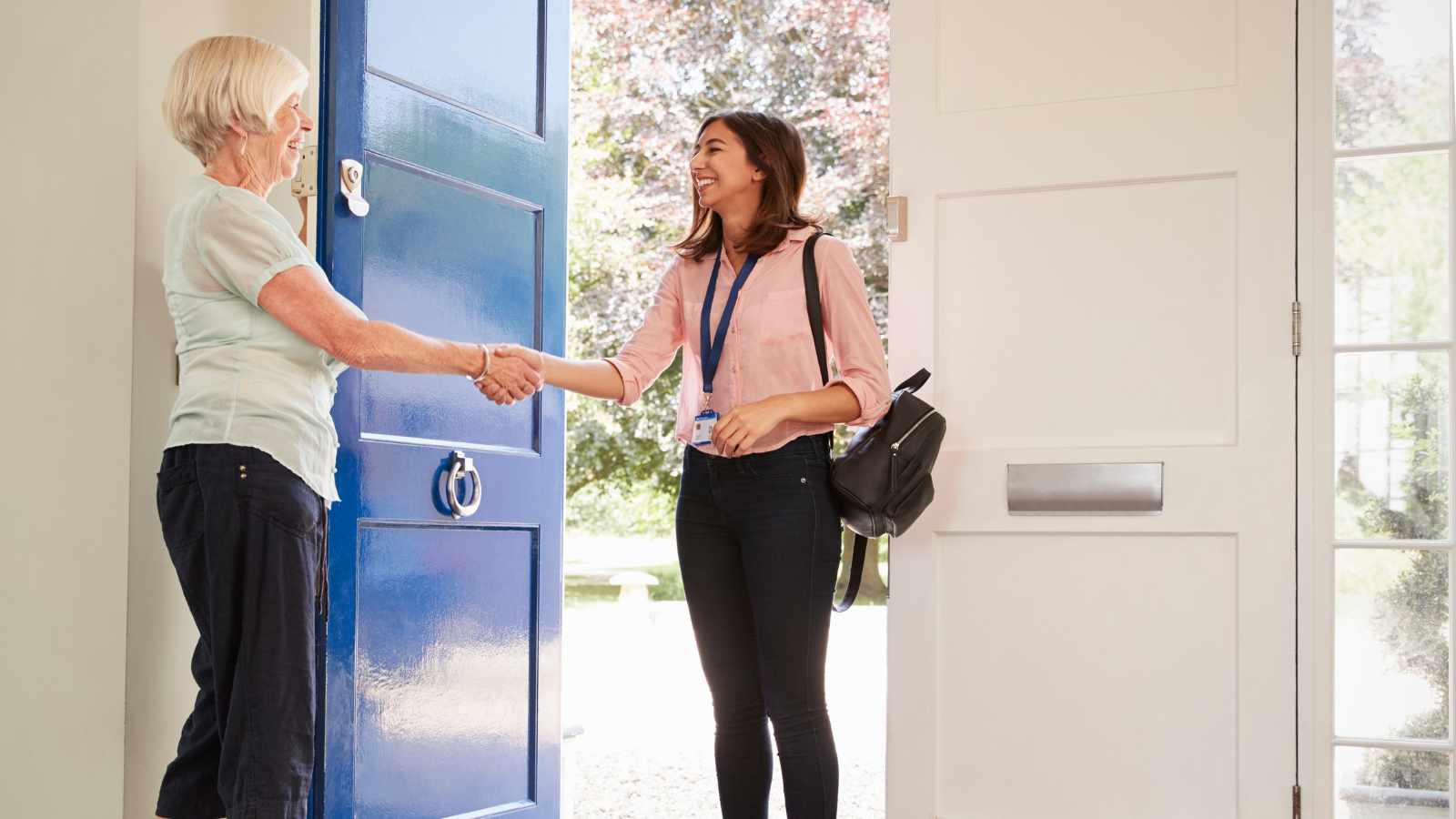
This used to be simple. Now, it’s a social-justice landmine. The old rule: Men hold the door for women. The critique: This is “benevolently sexist.“ It implies women are “weaker, helpless, or unable to open doors for themselves.” The result is a total breakdown of the rule.
But science has a fascinating answer for what we actually do.
A 2011 study found that door-holding isn’t about etiquette. It’s a rapid, subconscious “calculation of the odds.” We hold the door when our brain calculates that the “total effort expended by the two” people will be less than if we each opened it ourselves. It’s “social cooperation.”
The gendered rule is dead, but the polite rule is not. The new, unwritten rule is: you hold the door for anyone close enough that your brain says it’s more efficient.
RSVPing on time (or at all)

This one drives every party host insane. You send an invitation. You get… silence. Or worse, the “RSVP-yes-and-no-show.”
Technology made it easier to RSVP, which somehow made it less important.
Today, 75% of event planners use digital invitations like Evite or Paperless Post. The digital medium devalued the message. Evite is known for “casual invites.” Even fancy Paperless Post is still just a “text, or link.” This has changed the “social contract.” It feels less like a firm commitment and more like a “maybe” on a Facebook event.
The rule is so dead that we now need software to do its job.
We’ve had to build technology with “up-to-the-minute RSVP tracking” and “automated reminders” just to hound people for a reply that “old etiquette” used to guarantee.
Key Takeaway
So, are we ruder? A 2024 Pew survey says 47% of us think so. But the rules are changing faster than we are.
Technology and a move toward “informalization” didn’t kill manners—they just killed the old, rigid rules. The new “golden rule” of etiquette is about people, not policies. As expert Lisa Grotts says, “Good manners are all about helping people, including yourself, feel comfortable no matter the situation.” It’s not about which fork you use; it’s about making sure everyone feels respected and seen.
Disclaimer – This list is solely the author’s opinion based on research and publicly available information. It is not intended to be professional advice.
Disclosure: This article was developed with the assistance of AI and was subsequently reviewed, revised, and approved by our editorial team.
15 foods from the ’60s most Boomers loved with a passion

15 Foods From the ’60s Most Boomers Loved With a Passion
The 1960s were a period of profound social and cultural transformation in America. As the baby boomer generation came of age, they embraced new ideas, fashion trends, and music styles. And when it came to food, some beloved dishes defined this era.
Here are 15 foods from the ’60s that most boomers loved passionately.
14 things that label you as ‘uneducated’ on social media

14 Things That Label You as ‘Uneducated’ on Social Media
Welcome to the digital world, a place as intriguing as treacherous, where your online persona can instantly charm or alarm others. In this realm, your social media presence is your calling card, a digital mirror reflecting your thoughts, beliefs, and, perhaps, inadvertently, your level of education. Yet, fear not! This guide is here to help you navigate the vast ocean of social media with grace and wisdom.





