

Most people assume they know what will make them happy. A promotion, a new home, a bigger paycheck, a dream vacation, or a major life milestone all seem like obvious sources of future satisfaction. Yet decades of research suggest that humans are surprisingly bad at predicting how they will feel once those goals are achieved.
Psychologists call this “affective forecasting”—our ability to predict future emotions—and study after study shows we routinely get it wrong. We tend to overestimate how happy positive events will make us, underestimate how quickly we adapt to change, and overlook the everyday factors that have the greatest influence on long-term well-being.
The result is a common cycle of anticipation, achievement, and unexpected disappointment. In many cases, the problem is not that the outcome failed to deliver. It is that our expectations were built on an inaccurate forecast of what satisfaction would actually feel like.
These eight psychological insights help explain why happiness is often harder to predict than we think—and why the things we chase are not always the things that fulfill us.
Your Brain Overestimates Emotional “Impact”
Affective forecasting research has long shown that people exaggerate how intense and how long their future emotions will be. Psychologists Daniel Gilbert and Timothy Wilson famously called this pattern impact bias. Across lab experiments and longitudinal studies, people predict towering highs from positive events and crushing lows from negative ones.
When researchers follow up after those events occur, the feelings are usually milder and shorter-lived than expected. A promotion feels good, but not forever. A setback hurts, but not endlessly. Because predictions are inflated, real satisfaction often feels underwhelming by comparison.
You Adapt Faster Than You Expect
Hedonic adaptation describes the human tendency to drift back toward a baseline level of well-being after changes in circumstances. This effect shows up across income, health, relationships, and environment. The initial boost fades as the new normal sets in.
One striking example comes from an urban development experiment published by economists at MIT and Harvard. Families randomly assigned to improved slum housing reported a jump in life satisfaction of about half a standard deviation shortly after moving.
Eight months later, roughly 60 percent of that gain had disappeared. The homes were still better, but the feelings had adapted.
Losses Hurt More Than Gains Help
Studies on expectation and well-being consistently find an asymmetry. When reality falls short of expectations, satisfaction drops sharply. When reality exceeds expectations, the boost is smaller.
Research published in ResearchGate shows that unmet expectations are more strongly linked to lower well-being than met expectations are to higher well-being.
This mirrors the broader principle of loss aversion, first described by Daniel Kahneman and Amos Tversky. Falling short hurts more than overachieving delights. As a result, optimistic forecasts set people up for sharper disappointment than delight.
You Forget Everyday Friction
Cognitive analyses of forecasting argue that people focus on the peak image of a future event and neglect the texture of daily life around it. The move is imagined, not the commute. The new role is pictured, not the inbox. The purchase is visualized, not the maintenance.
When reality arrives, routine hassles, competing emotions, and logistical friction dilute the joy. Research summarized in Psychological Science suggests that these neglected details explain much of the gap between predicted and experienced happiness. The mind previews the highlight reel, not the full episode.
Expectations Quietly Move Once You “Get There”

Large panel datasets show that expectations are not fixed. When people do better than expected, they tend to raise the bar for what they expect next. When they do worse, they lower it. Economists studying life satisfaction in European household panels have documented this rolling adjustment over time.
The result is that satisfaction becomes a moving target. What once felt like a dream outcome becomes ordinary once expectations climb. The goalposts shift, often without conscious awareness, making it feel as though satisfaction slipped away rather than adapted.
You Predict Feelings From Simulations, Not Reality
Neuroscience research suggests that forecasting relies on mental simulations that reuse some of the same frontal brain regions involved in real emotional experience. The brain tries to rehearse the future using fragments of past feeling.
In a laboratory study published in Nature Human Behaviour, participants predicted their emotional responses to upcoming scenarios. They did so while undergoing brain imaging.
Save this article
When the scenarios later occurred, their reported emotions were consistently less extreme than predicted. The simulated emotion and the lived emotion did not fully line up, revealing a built-in forecasting gap.
You Underestimate How Context Will Change You=
Forecasts are made from today’s perspective, with today’s priorities, coping skills, and constraints. Reviews in Trends in Cognitive Sciences note that people rarely account for how they themselves will change over time.
Experiments on decision making show that when people face real trade-offs, new information, or altered circumstances, their preferences and feelings shift. The future self who experiences the outcome is not identical to the present self who imagined it. Satisfaction depends on that future context, not today’s guess.
You Don’t Learn From Your Forecasting Mistakes
A marketing and psychology paper titled “Why Don’t We Learn to Accurately Forecast Feelings?” argues that people receive surprisingly poor feedback. It focuses on the idea that feedback about forecasting errors is limited or unclear. Life does not clearly label which disappointments were due to bad outcomes and which were due to bad predictions.
Memory also smooths the record. Past forecasting errors fade, while the narrative of what happened remains. Without clear correction, people keep using the same mental shortcuts, staying confidently wrong about what will satisfy them next.
Key Takeaway
Satisfaction is hard to predict because the brain is a poor fortune teller about future feelings, and it quietly shifts the goalposts once reality arrives. Expectations inflate emotion, adaptation dulls it, and context changes the meaning of outcomes.
The mismatch is not personal failure but human design, and knowing that can soften disappointment while sharpening wiser expectations.
More articles:
- Forget Coding: These 14 Remote Jobs Now Rival Tech Salaries in 2026
- 12 ways Gen X accurately foresaw the future
- Why future generations will struggle more than ever
Disclosure: This article was developed with the assistance of AI and was subsequently reviewed, revised, and approved by our editorial team.
Like our content? Follow us on Newsbreak
Fibonacci and the Future: How Ancient Math Powers Modern Technology

It’s wild to think that a math puzzle from the 1200s is now helping power AI, encryption, and the digital world we live in.
Every November 23, math lovers celebrate Fibonacci Day, a nod to the numerical sequence that begins 1, 1, 2, 3. At first glance, it seems like a simple progression. Each number is the sum of the two before it, creating a pattern that continues indefinitely. Yet this simple idea, first written down in 1202, has become a foundational principle across science, design, and technology. From digital encryption to artificial intelligence, the Fibonacci sequence is proof that even ancient math can power the modern world. Learn more.
Why Octopuses Could Hold the Key to Future Science and Medicine
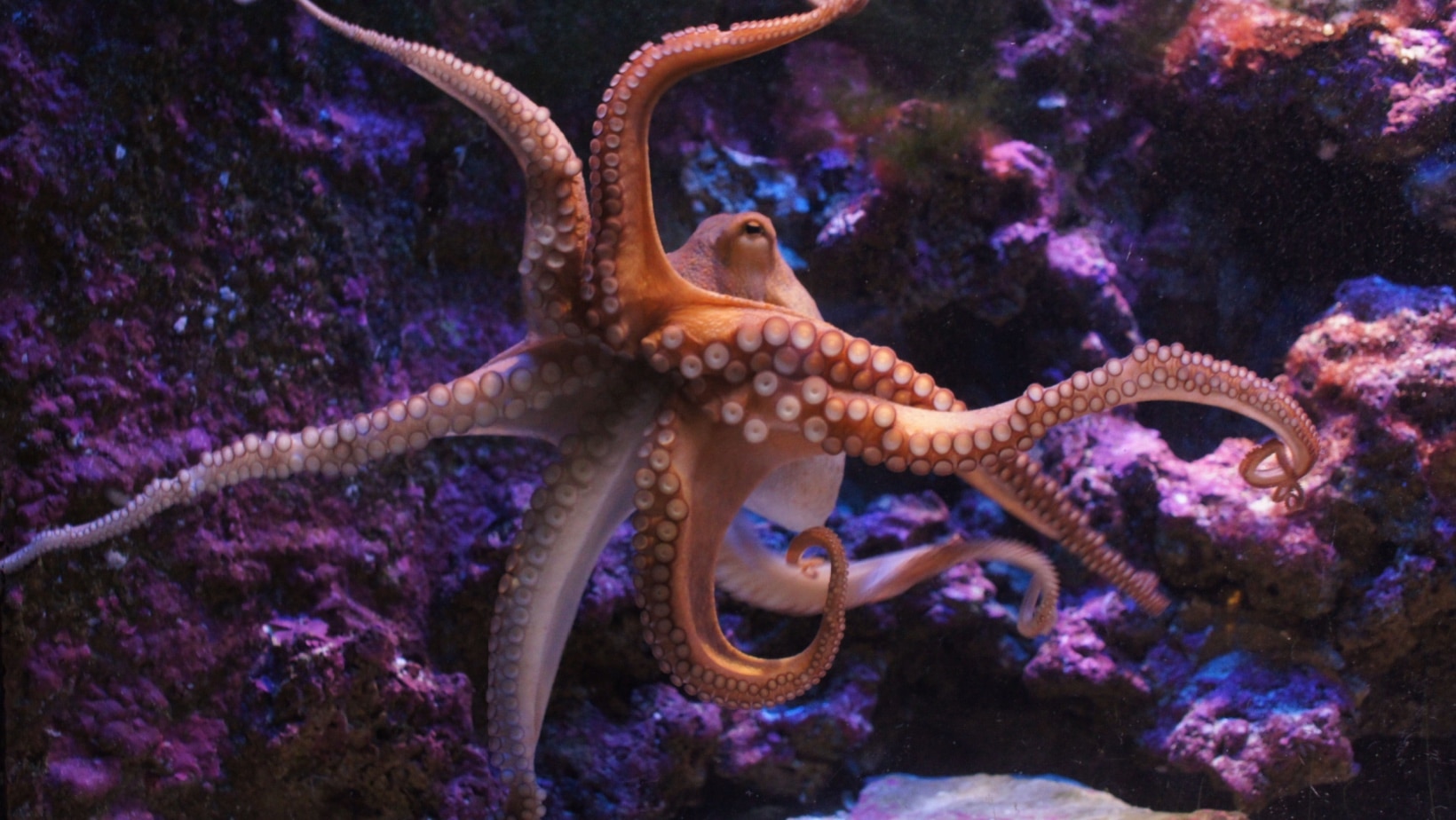
On World Octopus Day, researchers are revealing how this blue-blooded marvel could unlock breakthroughs in robotics, medicine, and even our understanding of consciousness.
On October 8, World Octopus Day reminds us that some of the ocean’s most mysterious creatures are not just fascinating to watch, they may also shape the future of human science and medicine. With three hearts, blue blood, and an intelligence that rivals many mammals, octopuses are already rewriting what we thought we knew about invertebrates.But researchers are also finding that these animals could hold practical secrets that inspire new technologies, improve medicine, and even change how we think about consciousness. Here are ten areas where octopuses could influence our future in surprising ways. Learn more.
15 childhood behaviors that could signal future problems

Childhood is a journey filled with emotions and experiences, but certain behaviors can signal deeper challenges. The National Institutes of Health reports that the prevalence of mental, behavioral, and developmental disorders in children in the United States rose from 25.3% to 27.7% between 2016 and 2021. That means nearly one in four children is grappling with issues such as anxiety, depression, or learning disabilities.
Experts emphasize the importance of recognizing initial signs to intervene promptly with necessary help and prevent a prolonged struggle. For parents and caregivers, recognizing these red flags early can make all the difference in a child’s well-being and future success. The road from childhood behavior to adult outcomes isn’t always direct, but trends show that some behaviors strongly predict later challenges. Eradicating the problem will involve awareness and early intervention so that children can have a brighter future. Learn more.





