

For centuries, archaeologists have uncovered inscriptions, ancient cities, monuments, and artifacts that offer remarkable glimpses into the world described in the Bible. While archaeology cannot prove matters of faith, it can help illuminate the historical settings, cultures, rulers, and places that appear throughout Scripture.
Some discoveries have confirmed the existence of people or locations once known only from biblical texts. Others have provided new context for familiar stories, helping historians better understand the political, religious, and cultural world of the ancient Near East. In many cases, these findings have sparked lively discussion among archaeologists, biblical scholars, and readers alike.
Whether you approach the Bible as a sacred text, a historical document, or both, these discoveries demonstrate how ongoing archaeological research continues to deepen our understanding of the ancient world.
Here are 12 archaeological discoveries that have fascinating connections to the Bible.
Evidence of King David’s kingdom
For a long time, some historians questioned whether King David was a real figure or more of a symbolic character. Then in 1993, the Tel Dan Stele was discovered in northern Israel with an inscription referring to the “House of David.”
This was the first archaeological evidence of David outside the Bible, and it changed the debate in a big way. Scholars noted that the writing style and stone origin matched the era described in the Old Testament. It doesn’t answer every question, but it supports the idea that David was indeed a historical ruler.
The Dead Sea Scrolls
The discovery of the Dead Sea Scrolls in the late 1940s remains one of the biggest breakthroughs for biblical studies. These ancient manuscripts, some dating back more than 2,000 years, include some of the oldest known versions of Hebrew scriptures. What surprised researchers most was how consistent many of the texts were with later versions of the Bible.
This suggests that the transmission of these writings over centuries was more stable than people expected. For many scholars, the scrolls confirmed the deep historical roots of key biblical passages.
Pontius Pilate inscription
Pontius Pilate is a familiar figure from the New Testament, but for years, historians wondered if he was truly the Roman governor portrayed in the Gospels. That shifted in 1961 when an inscription bearing his name was found on a stone in Caesarea Maritima.
The carving identified him as prefect of Judea, matching biblical descriptions. This discovery added tangible evidence to a figure often argued about. It also strengthened confidence in the political backdrop described in the New Testament.
The Pool of Siloam
In 2004, construction workers in Jerusalem stumbled upon step-like stone structures that turned out to be the Pool of Siloam. This location is mentioned in the Gospel of John, where Jesus healed a blind man. Archaeologists confirmed the pool dated to the Second Temple period, aligning with the timeframe of the story.
Its size and design were even more elaborate than earlier scholars expected. For many readers, it brought a familiar biblical story into sharper, physical focus.
The seal of King Hezekiah
In 2015, archaeologists uncovered a clay seal impression bearing the name of King Hezekiah of Judah. Hezekiah is well known in the Bible for religious reforms and resisting Assyrian invasion.
The seal’s discovery in Jerusalem marked the first time his royal imprint was found in a controlled excavation. Its iconography matched what historians knew about his reign. This find strengthened confidence in the biblical accounts describing him as a historical king.
Evidence of the Babylonian destruction of Jerusalem
The Bible describes Babylon’s attack on Jerusalem in 586 BCE as devastating for the people of Judah. Excavations in the City of David uncovered ashes, arrowheads, and broken pottery from that exact period. Researchers found charred wood and collapsed building stones, indicating a large-scale destruction consistent with the biblical account.
The artifacts match Babylonian military tools described in records from that era. This gave historians a clearer picture of a major turning point in Jewish history.
The Moabite Stone
The Moabite Stone, also known as the Mesha Stele, was discovered in 1868 in modern-day Jordan. It contains a long inscription from King Mesha of Moab, mentioning battles with the Israelites.
The text parallels events described in 2 Kings, particularly conflicts between Moab and Israel. It even references the Israelite god Yahweh by name. For historians, it offered rare confirmation from an outside source of interactions described in the Bible.
Nazareth’s first-century remains
Some critics once claimed that Nazareth didn’t exist during Jesus’ lifetime. But archaeological digs uncovered first-century homes, pottery, and agricultural tools in the area.
Researchers concluded that Nazareth was a small, quiet village of fewer than 500 residents at the time. The discoveries support the biblical portrayal of Jesus growing up in a modest and somewhat isolated community. It may have been tiny, but it was real.
The Hittite civilization
The Bible references the Hittites frequently, yet for centuries historians thought they were fictional because no evidence of them existed. That changed in the early 1900s when archaeologists uncovered Hittite ruins and royal records in modern-day Turkey.
Save this article
The writings revealed a highly organized empire that once rivaled Egypt and Assyria. Today, more than 30,000 Hittite tablets have been discovered. This turned a once-dismissed biblical group into a fully recognized ancient civilization.
The city of Jericho’s fallen walls
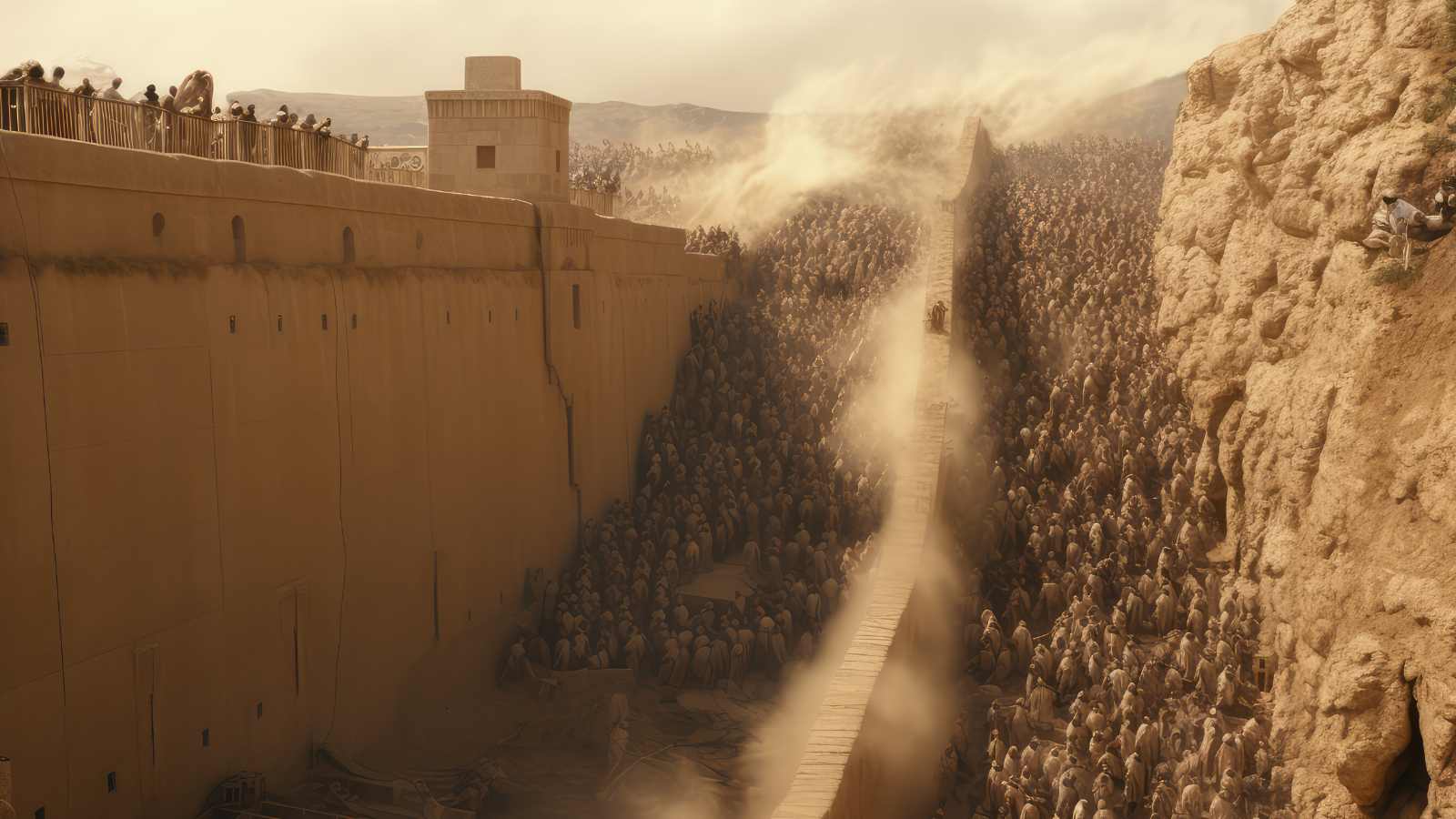
Jericho is one of the Bible’s most dramatic settings, especially with the story of its collapsing walls. Archaeologist Kathleen Kenyon once argued that the destruction didn’t match biblical timing, but later studies reopened the conversation. In the 1990s, radiocarbon testing suggested the city’s walls fell around 1550 BCE, which some scholars say aligns more closely with revised biblical chronologies.
Excavations also revealed layers of intense burning, indicating a sudden destruction. It’s still debated, but the evidence supports parts of the biblical narrative more than people expected.
The “Yahweh” temple inscription in Arabia
In 2019, archaeologists published findings about a 2,800-year-old inscription from the Arabian Peninsula referencing “Yahweh of Samaria.” This wording matches biblical descriptions of how people in the northern kingdom of Israel worshipped during that time.
The inscription was found alongside symbols linked to ancient Israelite culture. Scholars said it offered rare evidence of Yahweh worship outside Israel’s borders. It also showed how far cultural and religious practices had spread.
Archaeological evidence of crucifixion
For a long time, historians lacked physical evidence confirming the Roman practice of crucifixion described in the New Testament. In 1968, a tomb in Jerusalem revealed the heel bone of a man who had been crucified, with a nail still embedded. Additional examples have been found since then.
These discoveries confirmed that crucifixion was used exactly as ancient texts described. While not tied to a specific biblical figure, the findings support the broader historical setting of the Gospels.
Key takeaways
Discoveries like these don’t settle every debate, but they show how archaeology can bring ancient stories into clearer view. Each finding adds a piece to a larger historical puzzle, helping scholars understand the world described in the Bible.
For many people, these discoveries deepen curiosity rather than end it. And they remind us that the ancient world still has stories to tell if we’re patient enough to look.
More articles:
- 12 times religion did more harm than good
- 13 common fears that make it hard for people to let go of religion
- Religion across America by state: where faith is strongest and where it’s declining
12 reasons why religion is making a comeback in some regions

The modern world promised answers through progress, but the persistence of faith suggests many are still searching for something science can’t supply.
For decades, sociologists confidently predicted that faith would fade away as technology and science advanced. They assumed that modernization would inevitably lead to a godless society. However, reality has thrown a curveball at those predictions, with religion showing surprising vitality in unexpected corners of the globe. Learn more.
10 ways experts separate cults from religions

Religion is a fundamental part of human culture, yet not all spiritual groups are created equal.
Sociologists estimate that less than 1% of religious organizations meet the criteria experts classify as cults, but their influence can be disproportionately powerful and sometimes harmful. Learn more.
10 reasons millions reject traditional religion for New Age beliefs

Across America and many other parts of the world, people are reshaping how they view faith and spirituality.
A recent Pew Research Center analysis found that about 4 in 10 U.S. adults say they have become more spiritual over time, while fewer say they’ve become more religious, signaling a cultural transformation in belief systems. Learn more.





