

It’s wild to realize how many things women had to put up with in the ’70s that would spark instant outrage today.
Looking back at the 1970s often conjures images of bell-bottoms, disco balls, and a carefree spirit that defined a generation. However, for women living through the decade, daily life involved a surprising number of legal and social barriers that would spark outrage now. The fight for equality was not just about big protests but about the right to do basic things like open a bank account or wear pants to work.
Many freedoms we take for granted are actually recent. While the era’s music and movies are iconic, life for women was restrictive and frustrating. Understanding these hurdles deepens our appreciation for rights won by previous generations.
Getting A Credit Card

You might assume that earning a paycheck was enough to secure a line of credit, but banks in the early 70s disagreed. A woman often needed her husband to co-sign for her card, regardless of how much money she made on her own. Financial independence was effectively impossible because institutions treated adult women as dependents who could not be trusted with budgets.
This humiliating practice only ended after significant political pressure forced the government to step in. The Equal Credit Opportunity Act of 1974 finally made it illegal for banks to discriminate against applicants based on their sex or marital status. Before this law, a single woman was often viewed as a financial ghost by the major lenders.
Staying Employed While Pregnant

Announcing a pregnancy today usually leads to a baby shower, but in the 70s, it often led to unemployment. Employers could legally fire a woman simply because she was expecting a child, treating motherhood as a disqualifying condition for work. Many women hid their bumps under loose clothing for as long as possible to keep their paychecks coming.
The law eventually caught up with the reality that women could be both mothers and employees. The Pregnancy Discrimination Act of 1978 amended the Civil Rights Act to prohibit sex discrimination based on pregnancy. This legislation stopped companies from forcing women to choose between their careers and their families.
Serving On A Jury

We view jury duty as a civic obligation now, but at one time, women were actively discouraged or barred from serving on juries. States argued that a woman’s place was in the home and that listening to criminal cases was too sensitive for her delicate nature. This exclusion meant that female defendants rarely faced a jury of their actual peers.
The Supreme Court finally ruled that this practice violated the Sixth Amendment right to a fair trial. In the 1975 case Taylor v. Louisiana, the court decided that systematically excluding women from jury pools was unconstitutional. It took a lawsuit to prove that women were citizens capable of weighing evidence and delivering a verdict.
Accessing Birth Control If Single

The sexual revolution was in full swing, yet the law lagged regarding who could access contraception. In several states, a single woman could not legally obtain the pill because she was not part of a married couple. Your relationship status dictated your ability to control your own reproductive health.
This intrusion into private life was challenged and eventually overturned by the highest court in the land. In 1972, the Supreme Court ruled in Eisenstadt v. Baird that unmarried people had the same right to possess contraception as married people. The decision confirmed that the right to privacy applied to individuals, not just married couples.
Running The Boston Marathon

Distance running was considered a sport solely for men, with officials claiming women were too fragile to handle 26.2 miles. Women who wanted to run often had to do so in secret or face physical removal from the course. The idea that a woman could endure such a physical test was seen as medically impossible by the old guard.
Barriers began to crumble as women proved their strength on the pavement despite the hostility. Women were not officially allowed to enter the Boston Marathon until 1972, five years after a race official famously attacked Kathrine Switzer for running it. Crossing that finish line was a victory for every woman who had been told she was too weak to compete.
Refusing Sex In Marriage

The concept of consent within a marriage was practically non-existent in the legal system for most of the decade. If a husband forced himself on his wife, the law did not recognize it as a crime because the marriage contract implied permanent consent. A woman had no legal protection from assault if the perpetrator happened to be the man she married.
Changing these laws was a slow and painful process that varied state by state. South Dakota became the first state to make marital rape a crime in 1975, followed by Nebraska in 1976. Recognizing this act as a crime was a crucial step in establishing that a woman’s body belongs to her alone.
Attending Ivy League Schools

An education from a top-tier university is a massive investment in one’s future, but the doors to the Ivy League were largely closed to women. Prestigious institutions like Columbia and Dartmouth were male-only enclaves that refused to admit female students. Smart, ambitious young women were denied entry to the country’s best classrooms simply because of their gender.
The pressure to modernize eventually forced these historic colleges to open their gates. Dartmouth finally began admitting women in 1972, while Columbia did not become co-educational until 1983. The integration of these campuses changed the academic atmosphere and opened new paths for female leadership.
Save this article
Wearing Pants To The Office

Walk into any office today, and you will see women wearing slacks, but this was a serious violation of dress codes in the 70s. Women were expected to wear skirts or dresses to maintain a “professional” and feminine appearance. Choosing comfort over tradition could get you sent home or even fired.
The battle for the right to wear trousers was fought in HR offices across the country. It wasn’t just about fashion; it was about being viewed as a worker rather than a decoration. Pants represented a practical shift toward being taken seriously in a male-dominated workspace.
Dealing With Workplace Advances

Women in the 70s frequently dealt with unwanted touching and comments from male bosses with no legal recourse. The term “sexual harassment” was not even widely used or understood as a legal concept until the middle of the decade. Enduring abuse was often seen as just part of the cost of being a working woman.
Activists began to give language to this experience, which helped women realize they were not the problem. The term “sexual harassment” was coined in 1975 by activists at Cornell University to describe this pervasive issue. Naming the problem was the first step toward creating policies that actually protected employees.
Keeping Her Maiden Name

Getting married often meant legally erasing your former identity, whether you wanted to or not. Many states required a woman to use her husband’s surname to register to vote, get a driver’s license, or open a bank account. Your name was considered temporary until you found a man to give you a new one.
Women fought back in court to retain their names and their independent legal identities. It was a symbolic and practical battle to prove that a woman did not become property once she said “I do.” Keeping your own name became a powerful statement of autonomy in a traditional society.
Getting A No-Fault Divorce
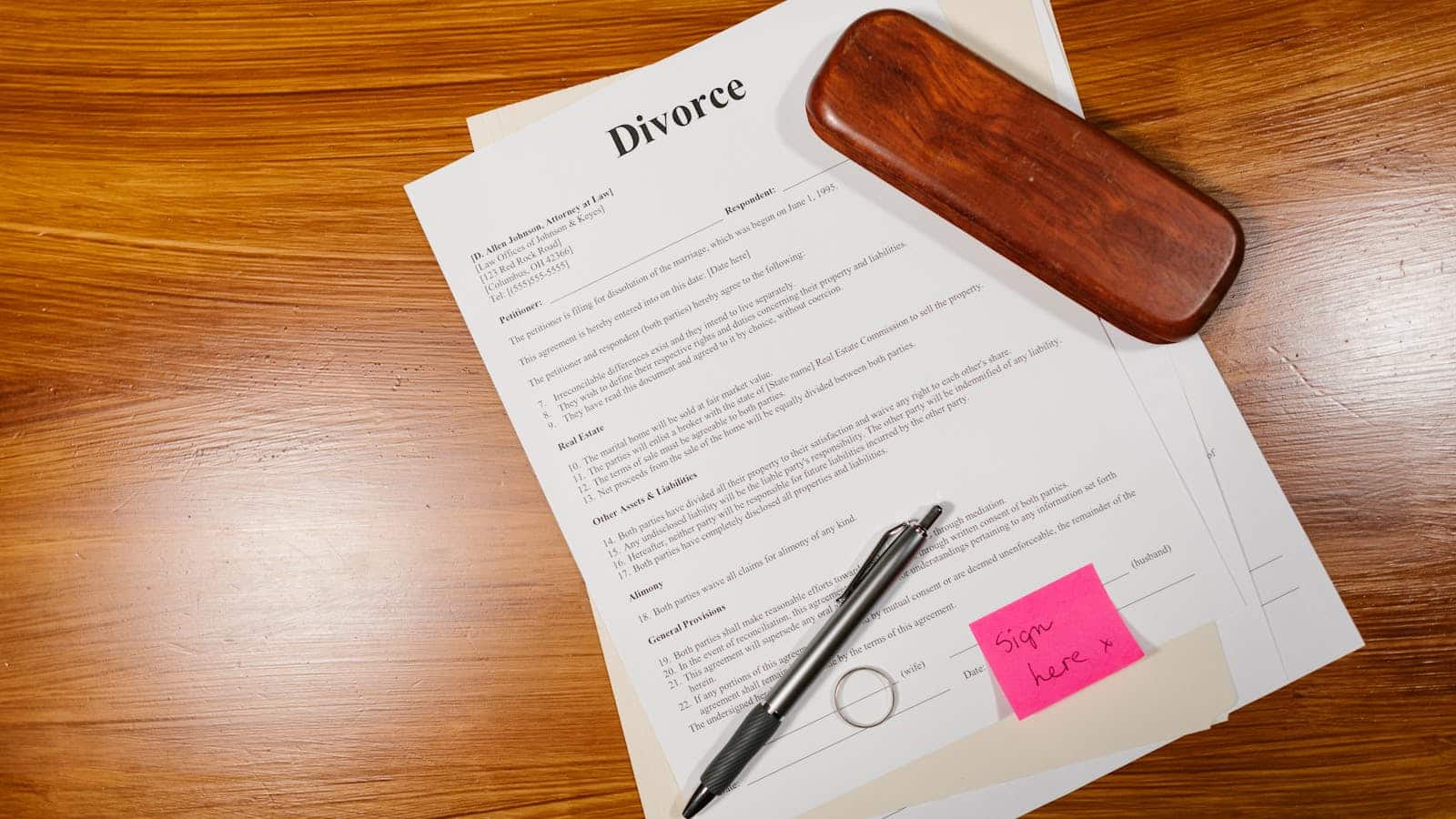
Ending a marriage used to require proving that one spouse had committed a specific wrongdoing, like adultery or abuse. If a couple fell out of love or were unhappy, they were often legally stuck together. The legal system forced couples to fabricate conflicts to get permission to separate.
The introduction of no-fault divorce laws changed the way relationships ended in America. California passed the first no-fault divorce law in 1970, allowing couples to divorce for irreconcilable differences. This shift gave women the freedom to leave unhappy marriages without dragging their private lives through the mud.
Playing Organized Sports

Schools poured funding into boys’ athletic programs while girls were often left with cheerleading or nothing at all. The idea of a girl getting a scholarship for playing soccer or basketball was practically unheard of. Athletic potential was wasted because schools refused to recognize the value of female sports.
Federal law eventually stepped in to level the playing field for young female athletes. Title IX was passed in 1972, prohibiting sex-based discrimination in any school or other education program that receives federal money. This law opened the floodgates for millions of girls to compete, sweat, and win just like the boys.
Key Takeaway

We often look back on the 1970s with nostalgia, but for women, it was a decade of fighting for basic human dignity. The ability to control your own money, body, and career was not a given; it was a prize that had to be won.
These changes did not happen by accident; they were the result of tireless effort by women who demanded more. Their courage is the greatest gift they could have left for the generations that followed. We honor their legacy by refusing to let those hard-won rights slip away.
Disclaimer: This list is solely the author’s opinion based on research and publicly available information. It is not intended to be professional advice.
Disclosure: This article was developed with the assistance of AI and was subsequently reviewed, revised, and approved by our editorial team.
Like our content? Be sure to follow us
The 15 Things Women Only Do With the Men They Love

The 15 Things Women Only Do With the Men They Love
Love is a complex, beautiful emotion that inspires profound behaviors. We express our love in various ways, some universal and others unique to each individual. Among these expressions, there are specific actions women often reserve for the men they deeply love





