

Every bar has posted rules: no serving minors, no outside alcohol, no smoking where it’s prohibited. Most customers know those.
Then there are the unwritten rules.
These are the habits and expectations that regulars pick up over time and that bartenders notice immediately. They are rarely posted on a sign, but they help determine whether a busy night runs smoothly or turns into a series of unnecessary frustrations.
In an industry that serves millions of customers every week, bartenders become experts at reading people. They quickly learn who understands the rhythm of a crowded bar, who treats staff with respect, and who creates avoidable problems for everyone around them.
Fortunately, good bar etiquette is not complicated. Most of it comes down to awareness, patience, and basic courtesy. Here are 12 unwritten bar rules that experienced patrons and bartenders wish everyone followed.
1. Tip Like a Regular, Not a Tourist
Tourists tip like they’re buying a souvenir. Regulars tip like they’re paying rent on their favorite seat.
Recent tipping guides from places like Bankrate say the norm at the bar is about 1 dollar per beer or wine, 1–2 dollars for mixed drinks, or around 18–20 percent of your tab, especially for cocktails that take real effort to make. Bar managers quoted by Fox News say that “standard” tip quietly crept up over the years from 15 percent to 18 percent and now to 20 percent as the expectation for bartenders.
So 20 percent isn’t baller behavior anymore. It is just the entrance fee to being taken seriously. The tourist is hoping for a free shot. The regular is building a relationship one quiet tip at a time.
2. Don’t Wave Cash Or Yell
Busy bar. Shaking tins. Printer screaming. Someone butchering an 80s song. This is when the amateurs start waving twenties in the air like they are hailing a taxi.
Bartenders in online communities say some of their most hated behaviors are exactly that: waving money, shouting across other people, trying to be the loudest voice in the room to get served. JohnMartin’s in Miami says stand where you can be seen, make eye contact, give a quick smile or nod, then wait. The same piece calls out the folks who get the bartender’s attention only to stand there and debate their order while the entire line behind them dies a little inside.
Regulars treat the bar like a conversation, not a competition. You do not have to perform to get a drink. You just have to act like the bartender is a person with a job.
3. Have Your Order Ready Before You Get To The Rail
If you are already at the bar, that is not the time to discover you are “not sure what you want.” That is the time to know.
Service pros point out that one of the biggest things slowing everything down is people who finally get to the front and then start squinting at the menu or turning to their friends for a committee vote.
At the same time, more bars are going cashless and digital with QR menus and app ordering specifically to make service quicker and cut down how long each person takes at the point of sale. All that shiny tech does nothing if you reach the rail and suddenly develop amnesia.
Regulars read the menu first, decide first, then step up. You are not defending a thesis. Say the order, pay, slide out of the way, and let the next person live.
4. Respect The Weird Little “Seat Ownership” Rules
Every bar has that one stool in the corner that feels like it belongs to someone. Regulars feel that. The trick is not turning that feeling into entitlement.
Bartenders told VinePair that good regulars often end up with “their stool,” but they are defined more by how they act than where they sit. A good regular adds to the vibe and never acts like the furniture owes them anything.
If someone is clearly settled with food down, tab open, and friends halfway into a story, regulars do not hover behind them like a haunting or try to guilt them out of the seat with heavy sighs.
You can have a favorite spot without turning into a bar goblin. The room remembers who shares, not who claims.
5. Don’t Camp On A Prime Seat For One Sad Drink
There is always that person who nurses a single soda for three hours at the busiest part of the bar. Somewhere in the back, a manager’s spreadsheet is crying.
In bartender forums, you see the same complaint again and again: people camping on high-value bar seats while spending basically nothing. On the business side, bars using cashless and analytics tools track spend per seat, and those low spend squatters jump off the screen as a problem.
Regulars do the math without needing software. If they are staying a while, they keep ordering. If they are basically done drinking, they move to a less prime spot so someone else can take the money seat.
Think of it this way. That stool is on commission. If you are going to sit on it for half the night, help it hit its quota.
6. Learn The Bartender’s Name
There is a very fine line between “guy who is always here” and “actual regular.” Knowing the bartender’s name puts you on the right side of that line.
Bartenders told VinePair that a good regular is not about how often they show up, or how much they drink, but about the respect they show. One bartender said a good regular is “not measured by volume but by substance” and that what matters is the respect they bring to the staff and the space. When someone like that screws up, staff admit they may react sharply, but the recovery is fast because the regular takes the feedback, adjusts, and does not turn it into a drama.
“Hey, Jamie, how are you holding up tonight?” hits different from “Hey, you, more vodka.” Names are free. Respect is free. The way people treat you after you use them is not.
7. Let The Bar Set The Volume
There is loud and then there is “shouting into the void loud.” Once you cross that line, you are not just annoying. You are altering how everyone drinks.
A study summarized in nightlife research found that when the sound level in a pub went from about 72 decibels to 88, people started ordering drinks 22 percent faster and ended up drinking around 14 percent more.
A University of Sussex field experiment mentioned in the same summary showed that under louder music, people finished their drinks 18 to 30 percent quicker and felt less drunk, so they realized they were impaired about 23 minutes later than they should have. So the more the room turns into a shouting match, the more the whole place slides into faster, sloppier drinking.
Save this article
Regulars take the volume as a hint, not a challenge. If the music is high, they lean in instead of screaming. If the place is mellow, they do not try to turn it into a festival with just their voice.
8. Keep Your Phone On “Chill,” Not “Main Character”
Your phone can turn any bar into a meeting, a therapy session, or an improv show with unwilling extras. Regulars know when to holster it.
Yelp’s dining etiquette report found that phone use at the table is one of the big etiquette flashpoints. Around 80 percent of people said phones should stay away on dates, and roughly half said they stash them when eating with friends.
Phone etiquette guides say the same thing in different words. No speakerphone, no loud videos, no phone parked on the table like a centerpiece because it drags everyone’s attention away and makes the whole moment feel less present. One study highlighted in those guides found that people who kept their phones on the table were more distracted, less engaged and actually enjoyed the meal less, even though they only touched the phone for about 11 percent of the time.
At the bar, regulars step away for long calls, keep texting quick and think twice before filming staff like they are props. The night is real even if it never hits your story.
9. Don’t Treat Staff Like Entertainment Or A Dating App
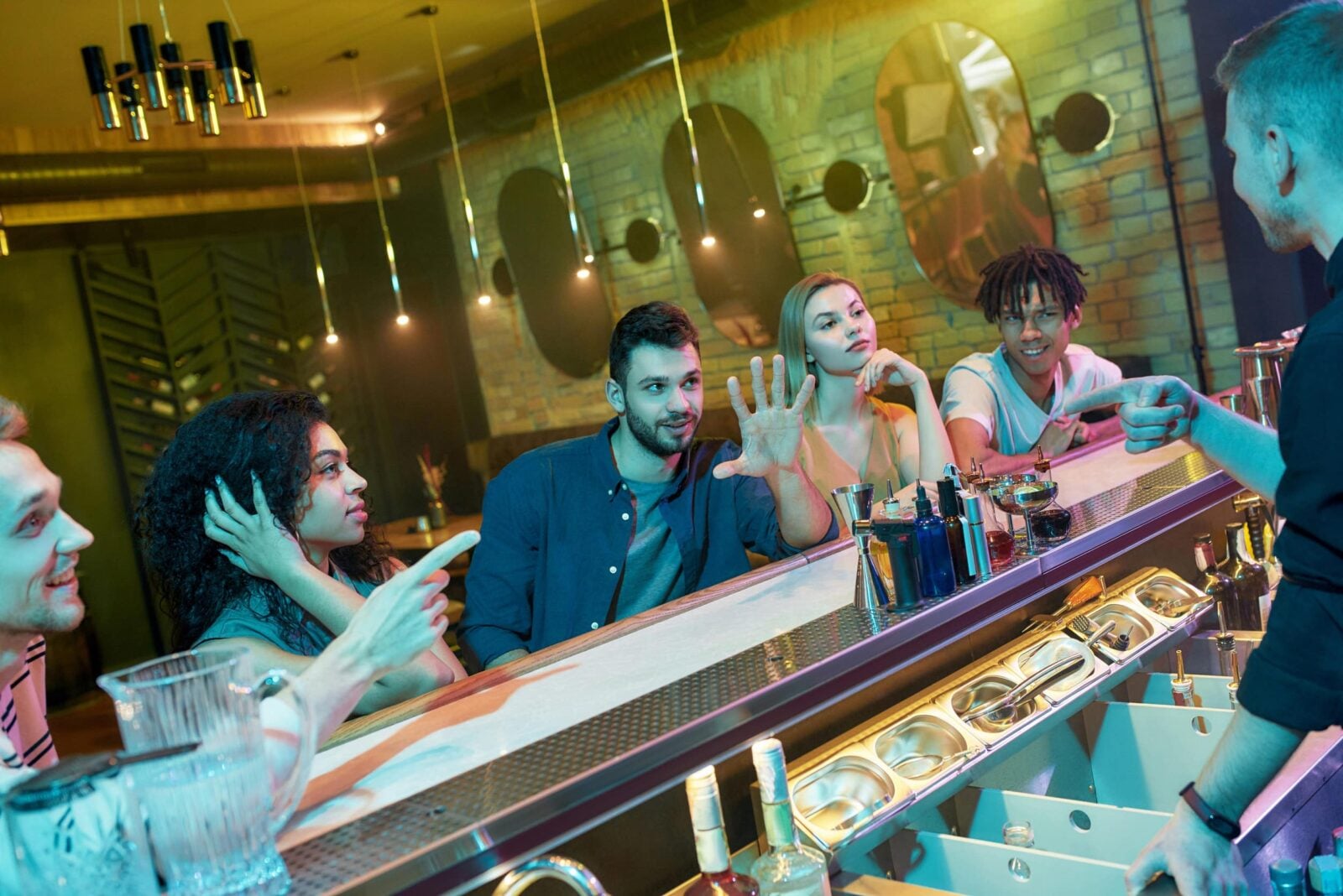
Friendly is welcome. Flirty can be fine. Trapping someone behind a bar in your personal romance plot is an instant “nope.”
Modern bar etiquette guides, including ones from places like JohnMartin’s Miami, specifically call out unwanted advances, crude comments and relentless flirting toward bartenders or other guests as a huge problem. Staff remind people that everyone is there to have a good time and feel safe, and that kind of behavior wrecks the vibe for more than just the target.
Regulars know there is a power difference here. The person making your drink is at work, watched by bosses and cameras, and cannot just walk away from you even if they want to.
So the rule is simple. If the interest is not clearly mutual, you back off. Regulars flirt with the energy of the room, not with people who are stuck behind the bar.
10. Go With The House Flow On Payments
Bars are slowly turning into small test labs for payment tech. You do not have to love that, but you can at least not be the one person arguing with the future while everyone waits behind you.
More nightlife spots are going cashless to speed up service, tighten security and keep better track of spending. Operators and payment companies brag that these systems cut down lines and make nights run smoother, but that only works when people show up ready with cards, mobile wallets or prepaid club cards, not a handful of crumpled bills.
Regulars figure out quickly whether a place prefers open tabs, pay as you go, app ordering or QR menus and just roll with it.
You are not losing a battle with technology by tapping your card. You are just getting your drink faster.
11. Take It Calmly If You Get Cut Off
Everyone thinks they are fine. The bartender is usually the one who knows when they are not. What happens next is your whole reputation.
Bartenders told VinePair that even their favorite regulars sometimes go too far, drink too fast or cross a line. The thing that separates the good ones is how they react when the bartender says “hey, that is enough.” A good regular might get a sharper tone than usual, but the recovery is quick. They accept it, maybe look a little embarrassed, grab some water, close the tab and head home. That tells staff they can set boundaries with you without expecting a fight.
The regular move is not to argue. It is to say “you’re right, thanks,” order the ride and go home with your dignity and your invite to come back intact.
12. Add To The Atmosphere, Don’t Drain It
Some people use a bar like a vending machine. The regulars bartenders love act more like part of the ecosystem.
In interviews, bartenders told VinePair that good regulars are the ones who add to everyone’s experience, not just their own. That might look like saying hi to staff, sliding over so a couple can sit together, toning down the language when kids wander in, or gently nudging tense moments away from the edge instead of stirring them up. Another guide described ideal regulars as treating the bar almost like their home, not because they own it, but because they care about how it feels.
Regulars do not just drink in a place. They help make it somewhere people actually want to come back to. Staff see that. Other guests feel it, even if they never quite put it into words.
Learn these, and you stop being just “the person at stool three.”
More articles:
- Why dating apps can feel like everyone is competing for the same few people
- Avoid dating these 13 women at all costs: they’re a waste of time
- 12 reasons some men are saying they’re done with dating
13 truths of dating a much younger woman

An IPSOS poll found that nearly 4 in 10 U.S. adults (39%) say they’ve dated someone with an age gap of 10 years or more. Men are notably more likely than women to have dated a younger partner, 25% compared to 14%.
The image of the distinguished older gentleman with a vibrant younger partner is a classic romantic trope. While these relationships can be exciting and fulfilling, they come with unique challenges that go beyond public opinion. The reality of bridging a significant age gap requires more than just chemistry and attraction. Read more.
12 Reasons Why Dating Is Falling Apart for Men—And How Bad It’s Really Become

Wifesun/123RF
A study from the Pew Research Center found that 47% of U.S. adults say dating has gotten harder in the last decade.
Dating has changed drastically over the years, and many men are feeling its effects. Once seen as a straightforward process of meeting, courting, and building relationships, dating today seems more complicated than ever. With shifting social dynamics, evolving gender roles, and new technologies, many men find themselves struggling to navigate the modern dating landscape. As a result, frustrations are mounting, and men are increasingly asking: What’s really going wrong? Learn more.





