

Texas looks deep‑red on election maps. Republicans have held every statewide office for decades and still dominate the Legislature.
But when you look past who wins and dig into registration, turnout, and margins, Texas starts to look more like a competitive state that hasn’t fully woken up yet.
A record number of voters… who aren’t voting
Texas hit record voter registration in 2024, with more than 18 million people on the rolls, according to the Texas Secretary of State. Yet only about 61% of those registered Texans actually cast ballots, as The Texas Tribune has reported.
Research by Rice University’s Kinder Institute shows that in the 2022 midterms only about 65.2% of voting‑age Texans were registered at all, and just 47% of adults voted.
That leaves millions of potential voters on the sidelines.
Those non‑voters are not a random slice of the population. They’re more likely to be younger, live in large metro areas like Houston or Dallas, and come from communities of color, groups that lean more Democratic in national polling and in youth‑vote research from Tufts’ CIRCLE project.
Under the hood, Texas looks more purple
Texas doesn’t register most voters by party, but analysts can estimate “modeled” party affiliation using voter files, precinct returns, and surveys.
Nonpartisan resources such as USAFacts and state‑level dashboards like the Independent Voter Project’s data hub show that Texas has a large bloc of independents and soft partisans, not just firm Republicans.
When researchers factor in demographics and national survey data, the underlying electorate looks much more balanced than election‑night maps suggest.
In some modeled scenarios, once you account for non‑voters who look like Democratic‑leaning voters elsewhere, Texas starts to resemble a purple state with a turnout problem, not a permanently red one.
GOP wins are getting tighter
Republicans still win statewide, but their margins are shrinking.
In the 2018 U.S. Senate race, Republican Sen. Ted Cruz beat Democrat Beto O’Rourke by fewer than three points.
In 2022, Gov. Greg Abbott won reelection by about 11 percentage points, per official 2022 gubernatorial returns and Politico’s results map. That’s a solid margin, but not the kind of landslide that once defined Texas Republican politics.
The county‑level maps tell the rest of the story: Democrats dominate big urban counties like Harris (Houston), Dallas, Travis (Austin) and Bexar (San Antonio), while Republicans pile up votes in smaller, rural counties.
Turnout is everything
So why does Texas still look so red? Turnout.
Save this article
Older, whiter, more rural voters—who lean Republican—show up at higher rates. Younger, more diverse metro‑area voters—who lean Democratic in CIRCLE’s 2024 analysis—show up less consistently.
In Harris County, for example, only about 58.8% of registered voters cast ballots in the 2024 general, and participation dropped to roughly 42.9% in the 2022 midterms.
When half of the adults in your largest county sit out, the state will look redder than it really is.
Recent primary cycles suggest that may be changing.
Early‑vote numbers reported by CNN and a turnout deep‑dive from NPR show record Democratic primary participation, especially in heavily Latino and urban counties.
Texas isn’t as “safe” as it looks
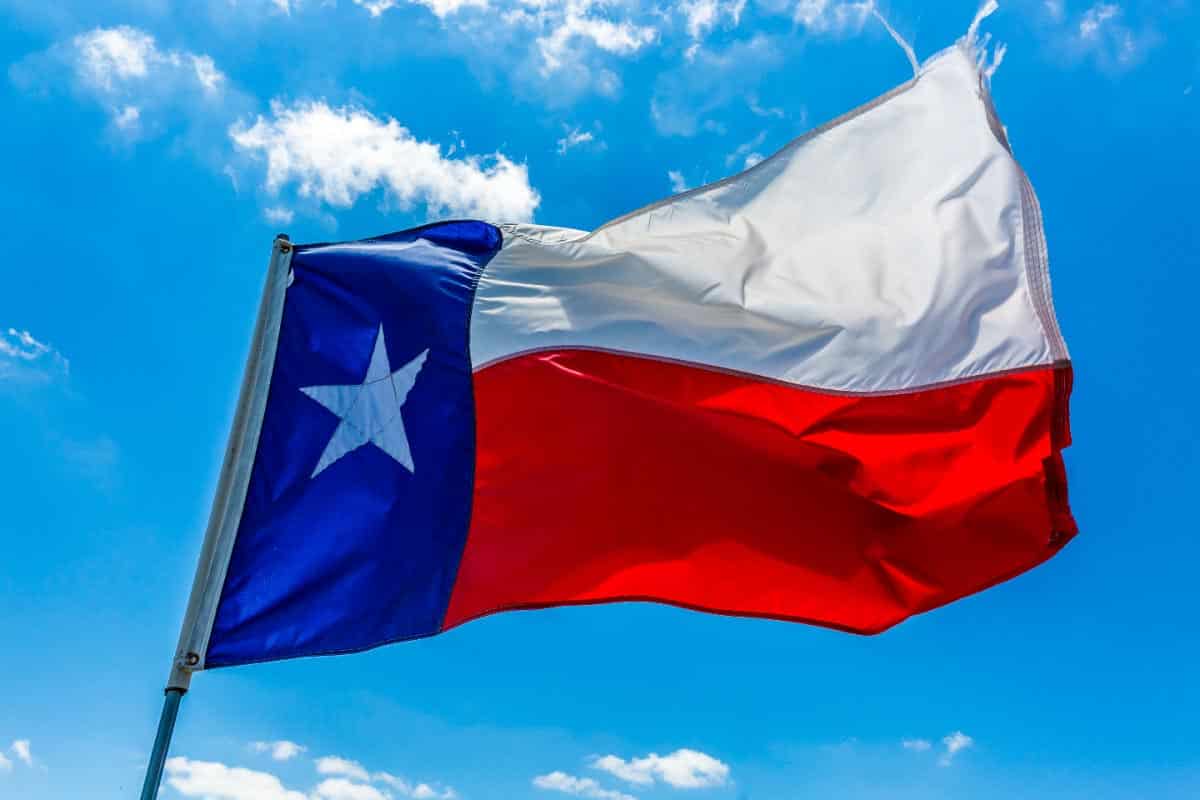
Republicans still have a clear edge in Texas today.
But shrinking margins, rapid demographic change, and millions of low‑propensity, left‑leaning voters mean the state is less “solid‑red” and more “soft‑red” than the map suggests.
For GOP leaders, that creates a real risk of overconfidence: assuming Texas is locked down because it has been locked down.
If Democrats ever close the registration and turnout gap—even slightly—the state could become genuinely competitive, fast.
What The Numbers Mean
Texas doesn’t stay red because Republicans dramatically outnumber everyone else; it stays red because the voters most likely to back Democrats still aren’t voting at the same rates as older, rural, Republican‑leaning Texans. As that changes, the map will, too.
What do you think?
Do you think Texas still deserves its “solid‑red” label, or are you seeing something different where you live—at your polling place, in your county, in your friend group? Share what you’re seeing on the ground in the comments, especially if you’ve changed how often you vote or how you identify politically.





