

A good report card can bring instant relief. But it doesn’t always tell the full story.
Across the country, academic progress has quietly slipped in recent years. According to the Annie E. Casey Foundation, most key education indicators have worsened since 2019, including reading and math performance, preschool participation, and attendance.
Teachers are seeing the impact firsthand. A 2025 report from Pearson found that a significant share of students are not fully prepared for the next stage of learning, even when grades suggest otherwise.
That’s where the disconnect begins. The surface may look stable, but underneath, important skills can be slipping. Here are 13 gaps that often go unnoticed, and why they matter more than many parents realize.
How is a Good Education Defined?
The painful part is how easy it is to mistake these misses for “normal.” Education Week, drawing on Brookings research, found that 60% of students say they learn a lot in school, but 78% of parents think their children do. The same gap shows up in affection for school itself: 41% of students say they love school, while 71% of parents think they do.
There is a wide calm between the kitchen table and the classroom door. This list lives inside that silence, where schools miss things, parents miss things, and kids carry more than adults can see.
The “Reading-by-Third-Grade” Cliff
Reading trouble does not always look dramatic. Sometimes it looks like a child who behaves well, guesses cleverly, and slides from grade to grade with just enough grace to avoid alarms. Yet the 2024 NAEP reading results show that 40% of fourth graders scored below NAEP Basic, and 33% of eighth graders did too, the highest share on record for eighth grade.
That means millions of children are moving through school without a steady grasp of main ideas, sequence, and meaning. The cliff is real because once the curriculum speeds up, weak decoding and shaky comprehension stop being a single-subject problem and start touching science, history, and every worksheet that asks a child to read before they can think.
This is where parents often get fooled by calm surfaces. A child can memorize sight words, use context clues, and still miss the sturdy reading engine underneath. Annie E. Casey’s long-cited literacy research found that children who are not reading proficiently by third grade are four times more likely to leave high school without a diploma.
Reading expert Timothy Shanahan puts the human side of that truth plainly: “Never give up on a child who is struggling to read. With the right help, they can overcome any obstacle.” That line matters because schools often wait for failure to become obvious, and parents often wait for teachers to say the word “behind.” By then, precious time has already slipped under the floorboards.
The Hidden Math-Concept Gap
Math trouble has a sneaky talent for hiding under correct answers. A child can memorize steps for long enough to pass a quiz and still not understand place value, fractions, proportion, or the feel of numbers themselves. Curriculum Associates reported in 2025 that academic recovery has stalled and achievement gaps have widened, with the lowest-performing students still drifting furthest behind, especially in math.
The same pattern appears outside the United States as well. India’s ASER 2024 findings reported that half of Class 5 students could not read Class 2 text, an indication that early skill gaps rarely stay in one box. They spread. They stack. Then algebra arrives like a locked door.
Parents often spot math gaps only when tears show up around homework, yet the real trouble usually starts years earlier. A child who never developed number sense can look “fine” while quietly following recipes rather than reasoning. That is why low-end performance matters so much.
The National Assessment Governing Board said in 2025 that students at the 10th percentile declined in eighth-grade science and twelfth-grade math and reading, and NAEP’s college-readiness tabulation found only 33% of twelfth graders were prepared for college math in 2024, down from 37% in 2019. When schools race through content, and parents focus on grades, conceptual weaknesses get dressed up as temporary struggles. It is usually something deeper.
The Social-Emotional Skill Deficit
A child can bring home an A and still be falling apart within the quiet spaces that no report card measures. Pearson’s 2025 School Report found that teachers rank independence, self-motivation, social maturity, emotional literacy, and mental health among the biggest barriers to readiness.
In secondary education, self-motivation ranked first at 77%, followed by independence at 65% and social maturity at 62%. That matters because schools still reward finished work more easily than they reward self-regulation, recovery after failure, or the ability to stay steady under pressure. Parents see the polished assignment on the counter. They do not always see the panic that came before it.
Education Week reported in early 2026 that teachers are seeing more students struggle to control emotions, advocate for themselves, and handle in-person social life, even as schools try to teach those skills more directly. A separate January 2025 EdWeek piece on SEL noted that a little more than half of U.S. states have adopted K-12 social-emotional standards, which sounds substantial until you remember how uneven implementation can be from district to district and classroom to classroom.
This is one of the biggest blind spots in modern parenting. Good grades can exist alongside weak coping. A child can look “busy” and still not know how to handle stress, boredom, conflict, or the long-term pain of being wrong in front of others.
The Online Behavior Gap
Screens create a strange illusion of competence. A child who can search quickly, tap fast, and submit work on time can still be deeply disengaged from learning. RAND reported in August 2025 that chronic absenteeism in the 2024 to 2025 school year remained above prepandemic levels, and in roughly half of urban districts, more than 30% of students were chronically absent.
Brookings also noted that absenteeism remains almost double pre-COVID levels, with about one in four students missing more than 10% of school days each year. That is not a small attendance issue. It is a giant warning flare telling us that access and participation are no longer the same thing.
The online-behavior blind spot grows because adults often treat logging in, submitting work, and sitting in class as proof of engagement. It is not. Education Week found in 2025 that parents across every demographic group tend to overestimate how much their children enjoy school and how engaged they feel there.
By twelfth grade, only 44% of students said they learned a lot in school, while 75% of parents believed they did. That gap is not only about optimism. It shows how easy it is for schools to reward compliance and for parents to confuse activity with attention. Kids can move through digital school life as apparitions, visible on paper and half absent in spirit.
The Life-Skills Void (Budgeting, Jobs, DIY)
Many students can write an essay, but freeze at a job application, a budget sheet, or a basic interview question. Pearson’s 2025 survey found that 40% of students say money management is missing from their education. Another 29% lack job-search or interview skills, and 33% want more help with public speaking.
These are not fringe complaints; they point to a curriculum focused on test scores over daily life. Schools teach students to answer prompts. Life asks them to read a lease, compare costs, ask good questions, and handle embarrassment without falling apart.
The public knows this gap is real, even if the timetable still treats it as optional. A 2025 NEFE poll found that 83% of U.S. adults want personal finance required for high school graduation, 82% wish they had been required to take such a course, and 61% say their own high school did not offer one.
NEFE president Billy Hensley said the latest poll “reinforces long-standing support for financial education.” It does, and it also exposes a quiet absurdity. Families are begging for practical preparation, students are naming the same missing pieces, and schools still treat many of those skills as decorative extras rather than the scaffolding of adult life.
The Digital-Literacy and AI Gap
Children are learning inside tools that many adults barely understand. Common Sense Media reported in 2024 that 7 in 10 teens had used at least one generative AI tool, while just 37% of parents whose teens used AI thought their child had done so.
It also found that 49% of parents had not discussed generative AI with their teen, and about six in 10 teens said their school had no rules for AI use or were unsure whether rules existed. That is not a small policy lag. That is a full-speed collision between new technology and old adult assumptions.
The pace is getting faster. RAND reported in March 2026 that the share of middle school, high school, and college students using AI for homework jumped from 48% in May 2025 to 62% in December 2025. In the same report, 67% of students agreed that greater use of AI in schoolwork would harm critical thinking. That gives this gap a double edge.
Schools are behind on policy, parents are behind on awareness, and students themselves already sense the trade-off. The child at the kitchen table may not be cheating in the cartoon-villain sense adults fear. They may be slowly outsourcing thought, sentence by sentence, and nobody has taught them where help ends and hollowing out begins.
The Motivation Gap
Some children stop trying loudly. Others do it with perfect manners. They finish enough to stay off the radar, then quietly build a private story about themselves that sounds like this: I am bad at school, I am not smart, I can survive by doing the minimum. Pearson’s 2025 report puts numbers under that feeling.
Teachers named self-motivation as one of the biggest readiness barriers across phases, with 59% in primary and 77% in secondary. That matters because motivation is often treated like personality when it is frequently a response. Kids pull back after years of confusion, low confidence, or repeated effort that never seems to pay off.
The national trend at the lower end makes this harder to ignore. The National Assessment Governing Board said in 2025 that students at the 10th percentile declined in eighth-grade science and twelfth-grade math and reading, even as college-going intentions ticked up. That split tells a harsh story.
More students still hope for a bigger future, but many are reaching for it with a weaker academic footing and thinner confidence. Parents often see a child who looks lazy, detached, or distracted. Schools often see a child who is “capable but inconsistent.” Underneath, some of those students have simply stopped believing that effort changes the ending.
The Practical-Life-Skills Blind Spot
This gap sits next to the money-skills gap, but it has its own texture. It is the child who can solve for x and still cannot read an insurance form, plan meals for a week, compare phone plans, or understand the basic maintenance that keeps a home and body running.
Save this article
Pearson found that one in three school students wanted lessons tied more closely to everyday life, and 37% of secondary students wanted more creative or practical skills built into learning. Parents can miss this because schools still reward abstract success so beautifully. A student can look polished on paper and still feel useless the first time real life hands them a problem with no word bank at the bottom.
Public opinion keeps pressing in the same direction. NEFE’s 2025 polling found that 65% of adults chose spending and budgeting as the most important financial topic schools should teach, and 79% of retirees agreed. Those numbers are more than a civics-style wish list. They are a confession from grown-ups who know how expensive ignorance becomes.
Parents often assume children will “pick it up later,” but later arrive with rent due, groceries rising, and first jobs that expect confidence on day one. If school cannot make room for the plain mechanics of adult life, families pay the bill later in stress, debt, and delayed independence.
The Special-Needs and LD Gap
This is one of the saddest gaps because it turns real need into private shame. Pearson’s 2025 report found that in primary education, teachers named special educational needs and disabilities as the top factor holding unready students back at 79%, with SEND support at 62%.
That means schools themselves are saying large numbers of children need better-tailored help than they are getting. Yet families still hear struggle described as immaturity, weak effort, carelessness, or a need for more tutoring. A child can spend years carrying the wrong story about their own mind simply because the adults around them never paused to ask a deeper question.
The National Center for Learning Disabilities warned in 2025 that up to 40% of people with learning difficulties are not diagnosed in childhood, and a rapid evidence review for the U.K. government noted that children with specific learning difficulties and related learning needs experience problems commonly with working memory. Those two points belong together. Missed identification not only delays services but also harms them. It changes self-belief. Parents may chase extra homework help while the actual issue sits within language processing, attention, or memory load. Schools may label the child as inconsistent. The child often labels themselves broken.
The Early-Disadvantage Gap
Some children arrive at school already carrying a head start or a headwind. England’s 2025 disadvantage report from the Education Policy Institute found that the gap among five-year-olds stood at 4.7 months of learning in 2024, up from 4.6 months in 2023 and wider than in the years just before the pandemic. The Department for Education’s 2024 to 2025 early years profile said 68.3% of children reached a good level of development, which means almost one in three did not.
That is the hard truth many parents miss. By the time school starts, the story has already begun. Some children enter the room with more language, more regulation, more background knowledge, and more practice being read to and talked with.
The same early-years data shows how stubborn inequality can be. Nesta’s analysis of the new figures found that only 51.3% of children eligible for free school meals reached a good level of development, compared with 71.8% of children not eligible, a gap of 20.5 percentage points.
That number is not only a technical policy detail. It follows children forward. Parents often start worrying in middle school, or when grades dip in upper elementary, but some of the roots go back to the first miles of life and the first days of school. If schools do not build stronger bridges early, later interventions end up working against gravity.
The Testing-Gap Problem
Parents trust scores because scores look solid. They arrive in neat columns, with color bands and confident language, and they seem to promise clarity. That trust gets shaky when standards move around. Reporting in 2024 from The 74 showed that some states were lowering testing standards or adjusting cut scores, and CRPE’s 2025 State of the American Student warned that inflated test results, opaque report cards, and grade inflation can leave families with a false sense of progress.
That is the honesty problem. A child can look “on track” inside a soft local system while national measures tell a harsher story. National benchmarks still pierce the fog. NAEP’s 2024 college-readiness estimate found that just 33% of twelfth graders were prepared for college math, down from 37% in 2019, and NAGB said 35% were prepared in reading, also down from 37%. Those are not tiny dips.
They are signs that the polished language of progress can sometimes hide a smaller truth. Parents deserve honesty, even when it stings. Schools do too. If the mirror keeps flattering the child instead of showing them clearly, no one gets the chance to fix what is slipping.
The Equity Gap
This list has stayed close to the home front, but the wider world matters here because education never lives inside borders alone. UNESCO reported in March 2026 that 273 million children and young people worldwide are out of school, representing about one in six school-age children.
Its 2024 cost-of-inaction work also warned that children lacking basic skills could cost the global economy $10 trillion a year by 2030. Those are astonishing numbers, yet they sharpen the point rather than blur it. Hidden learning gaps are not just private family headaches. They are structural failures with economic, social, and moral weight.
The global lens also helps parents in better-resourced settings see their own blind spots with more humility. UNESCO’s 2024 materials said 57% of the world’s children still lack basic skills, and the 2026 GEM report linked the rise in out-of-school numbers to population growth, crises, and shrinking budgets.
That is the long shadow behind every local conversation about reading, absenteeism, readiness, and early support. A child does not need to be out of school to be underserved by the school system. Plenty of children are physically present and still being quietly left behind.
The Parent–Teacher “Perception” Gap
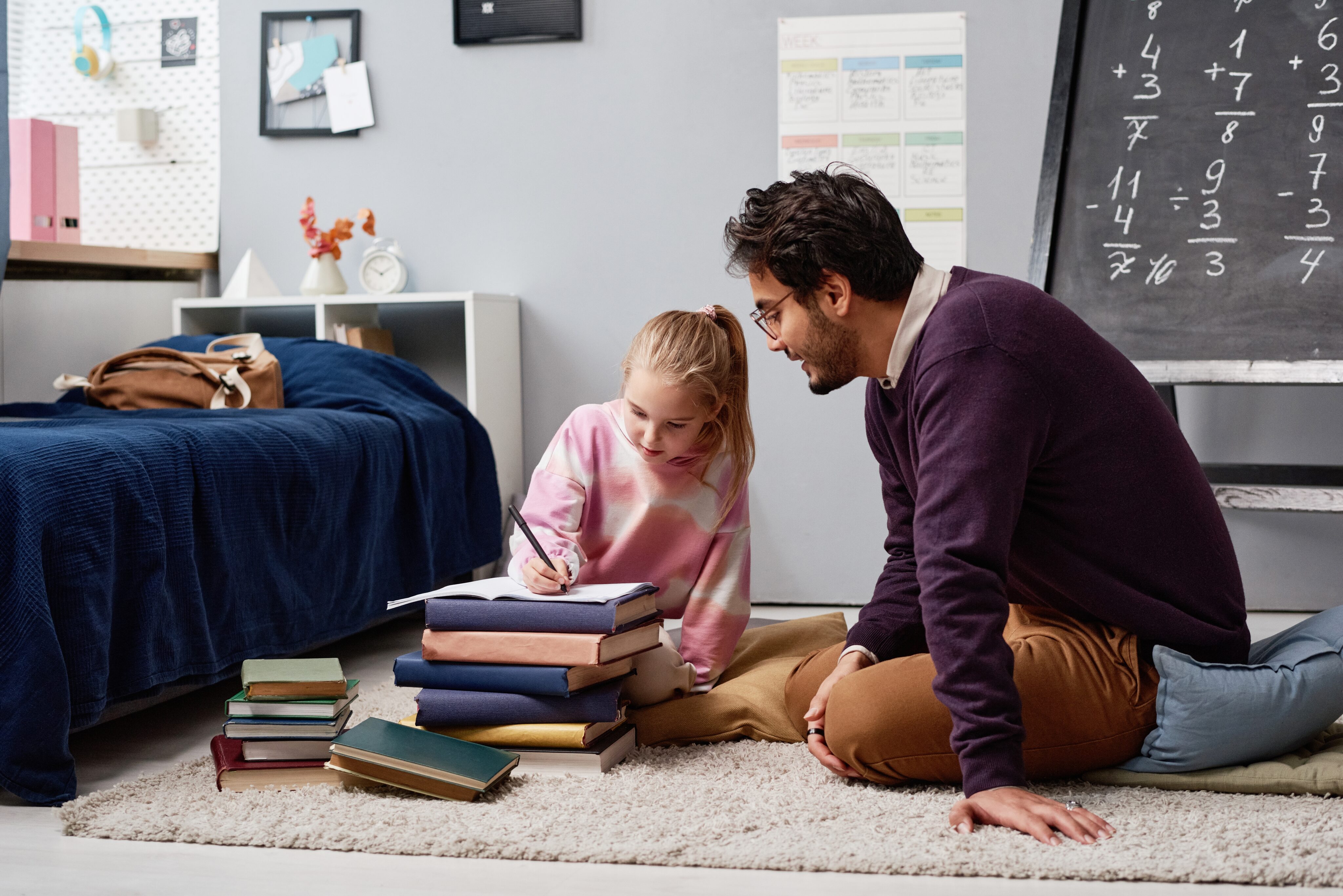
This final gap may be the one that hurts most because it lives inside love. Parents are usually not careless. They are busy, hopeful, tired, and trying to believe that if nobody has called with bad news, things are mostly okay.
Yet Brookings researchers Rebecca Winthrop and Jenny Anderson wrote that parents “consistently overestimate the quality of learning experiences that students report having in school.” Education Week laid out the numbers in plain daylight: 41% of students say they love school, compared with 71% of parents who think they do, and by twelfth grade, only 29% of students say they love school most of the time, while 61% of parents believe they do. That is not a tiny misunderstanding. That is a canyon.
Pearson’s 2025 report helps explain what parents are missing. Teachers keep pointing to writing struggles, low independence, weak motivation, attendance issues, critical thinking, and digital well-being as factors that hold students back. Schools miss some of it because grades can hide it.
Parents miss some of it because children often save their most polished version for home or their most shut-down version for no one at all. If this piece has a pulse, it is here: do not let the absence of obvious failure fool you. The quiet signs matter too, and they usually arrive long before a crisis does.
Reflective Close
A report card is a narrow window. It can show you a number and still hide the weather. Right now, the weather is telling us plenty: three of four education indicators have worsened since 2019, about one in three students is not ready for the next stage, according to teachers, and the parent-student perception gap can stretch to more than 30 points by the end of high school.
That does not call for panic. It calls for sharper attention, better questions, and a disposition to look past neat grades into the messier heart of learning. Children do not need adults who scare easily. They need adults who notice early.
Key Takeaways
The missing pieces here form a pattern. Reading weakness still hits hard, with 40% of fourth-graders below Basic on the NAEP. Math understanding remains uneven, and only 33% of twelfth graders were prepared for college math in 2024.
Life skills, financial fluency, digital judgment, emotional management, and early support keep showing up as blind spots in Pearson, NEFE, RAND, Brookings, and UNESCO data.
The message is simple enough to carry home: if you judge your child’s education by grades alone, you may miss the very things that shape adulthood most. The better move is slower, closer, and more honest. Ask harder questions. Listen past “fine.” Keep looking.
Read more:
- Why the modern education system is making so many Americans fear for their children’s future
- 10 places in the U.S. where education systems are collapsing
- 12 States Leading The Nation In Education
- As AI Reshapes Education, Here Are 12 Career Strategies Women Can Use Now
Disclosure: This article was developed with the assistance of AI and was subsequently reviewed, revised, and approved by our editorial team.
Like our content? Follow us on Newsbreak.
These 12 Countries Are Revolutionizing Sex Education—The U.S. Didn’t Make the List

What happens when people are taught to love and respect their bodies?
Comprehensive sex education empowers individuals with knowledge, promotes healthy relationships, and fosters respect for oneself and others. Around the world, several countries have implemented progressive approaches to sex education, setting exemplary standards. Here’s a look at 12 nations leading the way. Unsurprisingly, the US is nowhere in sight. Learn more.





