

A coin that costs nearly four times its value to produce is forcing Americans to rethink what a penny is really worth.
So, it’s really happening. The humble penny, that little copper-colored coin jingling at the bottom of your purse or getting stuck in your car’s cup holder, is on its way out. And honestly? It’s about time.
In 2024, it cost the U.S. Mint a staggering 3.69 cents to make a single one-cent coin, according to CoinNews. This isn’t some new problem, either. It’s the 19th year in a row that making a penny has cost more than the penny is actually worth.
Think about that. It’s like spending almost four dollars to print a one-dollar bill. The Department of Government Efficiency (DOGE) estimated that this little coin cost taxpayers over $179 million in just one year.
As Wake Forest University economics professor Robert Whaples puts it, “It’s time to eliminate the penny. It saves the taxpayers money, and year over year those savings add up”. But with roughly 114 billion pennies still floating around out there, the big question is… what do we do with them all? Don’t worry, we’ve got you covered.
Cash them in the smart way
Your first thought is probably to haul that giant water jug full of pennies to the bank. Good instinct. But there’s a smart way and a not-so-smart way to do it. Your two main options are the big green machine at the grocery store or your local bank.
Coinstar is super convenient. You just dump your coins in and, boom, you get a voucher. But that convenience comes at a steep price. They charge a service fee of up to 12.9% plus a transaction fee of around $0.99. On $50 worth of pennies, you could lose over $7. Ouch.
The Coinstar hack? Skip the cash option. You can choose an eGift Card for places like Amazon, Apple, or The Gap, and the fee is usually waived. You can also donate to charity, but there’s a little catch. While you don’t pay a fee, Coinstar keeps a processing fee of 7.5% to 10% of your donation for itself.
Your best bet is usually your own bank or credit union. Most will exchange rolled coins for free if you’re a customer. Some even have their own coin-counting machines. The only catch is you might have to roll them yourself. Policies can vary, so a quick call to your local branch is always a good idea before you lug that heavy jar across town.
Hunt for hidden treasure in your change jar
Okay, stop seeing that pile of pennies as just a few bucks. Start seeing it as a pile of lottery tickets. Most are worth exactly one cent, but some rare pennies are worth an absolute fortune. We’re talking life-changing money.
You just have to know what to look for. The big money is usually in coins with super low mintage numbers, a fascinating backstory, or a significant minting error. These aren’t just old coins; they’re historical accidents.
The most valuable pennies are often the ones that were never supposed to exist. Consider the legendary 1943 Bronze Cent, accidentally made from copper instead of steel to conserve copper for World War II. One of these sold for an incredible $1.7 million. Or the 1955 Doubled Die Cent, where the letters and numbers are dramatically doubled. Even a worn one can be worth over $1,000.
Invest in their copper value (with a catch)
Here’s a fun little secret. Pennies made before 1982 are worth more than one cent. A lot more. Up until the middle of 1982, pennies were made of 95% copper. But as the price of copper shot up, the U.S. Mint switched to making them with a core of 97.5% zinc and just a thin copper plating.
Because of today’s copper prices, the actual metal in a single pre-1982 penny is worth about double its face value, sometimes even more. Some estimates put the copper value at around three cents per penny.
But before you start dreaming of melting them down into a shiny copper bar, here’s the massive catch: it’s illegal. Under U.S. law, you cannot melt pennies or nickels to profit from their metal. The penalty is no joke: a fine of up to $10,000, up to five years in prison, or both.
So why do people hoard them? They’re making a bet. Not on the price of copper, but on a future change in U.S. law. They’re speculating that once the penny is officially gone, the government might lift the melting ban, and they’ll be able to cash in. It’s a long-term, high-risk gamble.
Unleash your inner artist with DIY projects
Who says pennies are just money? For crafty people and DIY enthusiasts, they’re a stunning and affordable art supply. That beautiful coppery glow can turn a boring piece of furniture or a plain floor into a work of art.
The most famous project is the penny floor, which can make a room look like a million bucks (for a lot less). One TikTok creator estimated her gorgeous patterned floor would take about 65,000 pennies, or $650, to complete. People also use them to cover tabletops, create stunning backsplashes, or make intricate mosaics.
The real magic is in the different shades of pennies, from brand-new and shiny to old and tarnished. This allows you to create incredible ombre and gradient effects in your designs.
Want to control the color? You can! A quick soak in some white vinegar and salt will make old pennies bright and shiny again. If you let them air dry after the soak, they’ll develop a beautiful, bright turquoise patina called verdigris.
Donate them to a cause you care about
That jar of pennies sitting on your dresser might not seem like much. But when your small change is combined with everyone else’s, it can create a tidal wave of good.
Charities have known this for years. Penny drives are an incredibly powerful fundraising tool, precisely because they feel so accessible.
And they really work. The Leukemia and Lymphoma Society raised over $150 million through school penny drives. In Canada, a campaign by Free The Children and RBC raised 140 million pennies—that’s $1.4 million—which was enough to provide 56,000 people with clean water for life.
Dagmar Serota, who founded a nonprofit that uses penny drives, explained it perfectly: “Pennies are easy to ask for and they are easy to give.” It’s a low-pressure way for anyone, especially kids, to get involved in making a difference.
There’s even some science behind it. The famous psychologist Dr. Robert Cialdini found that simply adding the phrase “Every penny will help” to a donation request dramatically increased the number of people who gave. It makes the act of giving feel small and achievable, breaking through the “action paralysis” that can stop people from donating.
Sort them as a hobby for fun and potential profit
Looking for a new hobby that’s part treasure hunt, part meditation, and could actually make you a few bucks? Welcome to the surprisingly addictive world of penny sorting.
The main goal is simple: separate the valuable pre-1982 copper pennies from the less valuable post-1982 zinc ones. You can do it the low-tech way by weighing them. All you need is a sensitive digital scale. The older copper pennies weigh 3.11 grams, while the newer zinc ones weigh only 2.5 grams.
Save this article
You can also use the sound test. Drop a penny on a hard surface. The copper ones will make a higher-pitched “ring,” while the zinc ones make a dull “clunk.”
If you get really serious, you can even buy an automated sorter. Machines like the Ryedale Penny Sorter use an electronic sensor to check the metal content of each coin, separating hundreds per minute and saving you a ton of time.
Level up your life with practical penny hacks
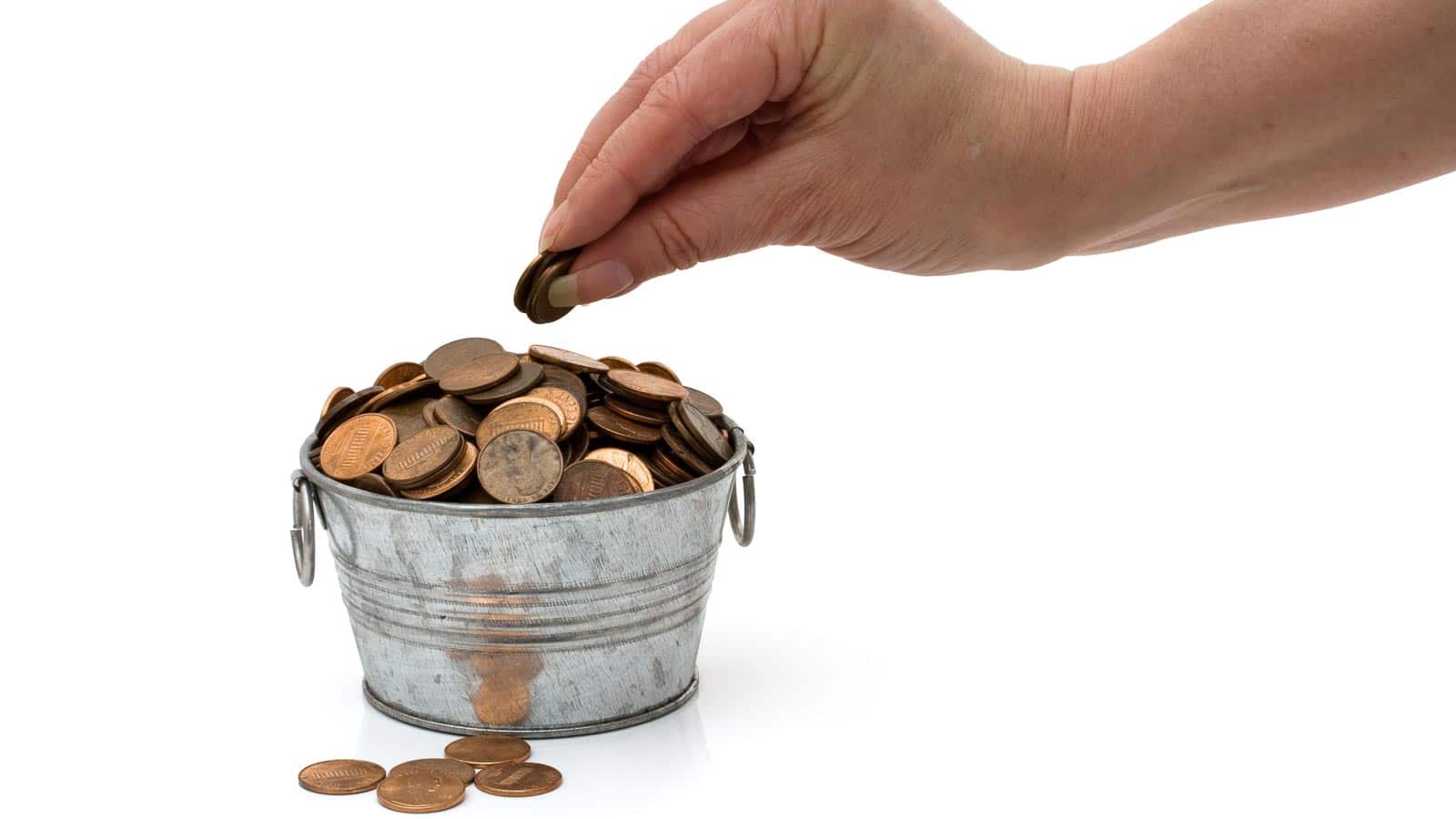
The penny’s career as currency might be over, but its life as a super-useful household gadget is just getting started. Its uniform size, weight, and durability make it the perfect fix for a bunch of annoying little problems.
Got a wobbly table at a restaurant? A penny is the classic shim. It’s way more stable than a folded-up napkin, and you can stack a few to get the height just right. Some people even use a dab of hot glue to make the fix permanent at home.
Pennies are also surprisingly heavy when you have a bunch of them. You can use that weight to your advantage. You can sew a few pennies into the bottom hem of your curtains to make them hang perfectly straight and stop them from blowing around.
Planning to blind-bake a pie crust? You don’t need to buy special pie weights. Just line your crust with parchment paper or foil and fill it with clean pennies. They’ll keep the crust from bubbling up, and you can reuse them forever. It’s a great example of how an object’s value isn’t just about money, but about its usefulness in the right situation.
Repel garden slugs (maybe)
This is one of those classic garden hacks that gets passed down for years. Can a border of pennies really keep slugs and snails from turning your hostas into Swiss cheese? Well, the science is a little… slimy.
The theory makes sense. The copper in pennies is supposed to react with a slug’s slime, giving the little critter a tiny, unpleasant electric shock that makes it turn around.
Many gardeners swear by this trick. Some create decorative “penny balls” for their garden beds, while others just lay a simple barrier of pennies around their most vulnerable plants. If you’re going to try it, you’ll want to use pre-1982 pennies to get that higher copper content.
But here’s the thing: the evidence is all over the place. Some video experiments show slugs and snails crawling right over pennies without a care in the world. One Reddit user even found that copper tape only seemed to work when it was wet.
So, will it work for you? Maybe! It’s a great example of folk wisdom meeting science. It’s a low-cost, chemical-free experiment, and for many gardeners, just the act of trying something is half the fun.
Key Takeaway
The penny’s future is now clear: no new pennies will be minted. The decision comes after years of debate over the coin’s cost, which has risen to several times its one-cent face value and costs taxpayers millions of dollars annually.
Before cashing in that jar of loose change, however, it pays to take a closer look. Certain rare pennies, including error coins and unusual mintings, can be worth hundreds, thousands, or even hundreds of thousands of dollars to collectors.
Older pennies also have a special appeal. Pennies minted before 1982 contain 95 percent copper, giving them an intrinsic metal value that exceeds their face value. Although federal regulations prohibit melting U.S. coins for their metal content, these copper pennies remain popular with collectors and those who believe they may hold greater value in the future.
Even without new production, the penny is unlikely to disappear anytime soon. Billions remain in circulation, and the coin continues to find new life in charity drives, educational activities, crafts, collections, and countless household uses. Its days at the U.S. Mint may be ending, but its place in American culture is not.
More articles:
- 12 Reasons People Believe America Is Completely Falling Short
- 12 things that used to be free but now cost money
- 10 money habits boomers see as normal that can lead to financial trouble
8 subtle ways money stress shows up in your gut and your eating

Money stress is quietly reshaping how millions eat, sleep, and digest—often showing up first in their gut before their bank balance.
Money worries rarely stay neatly contained in your bank account or your budget spreadsheet. For many adults over 45, financial pressures from aging parents, grown children, housing costs, or healthcare bills spill over into sleep, mood, and everyday choices around food. You might notice that on the days when you are most anxious about bills, you feel more knotted up in your stomach, have more heartburn, or find yourself eating whatever is closest without really tasting it. Learn more.
These 10 middle-class money rules were gospel in 1990—now they’re financial sabotage

The playbook that once promised stability for the middle class has slowly turned into a blueprint for falling behind.
Think back to the days of neon windbreakers and dial-up internet when financial advice felt simple and safe. Your parents probably handed you a set of money rules that seemed practically guaranteed to build wealth over time. You were told to go to college, buy a house, and faithfully stash cash into a savings account until retirement. That classic playbook worked beautifully for a completely different economy that simply no longer exists. Learn more.
12 money habits that can make your savings run out faster

Saving money has become more challenging for many Americans as living costs continue to rise. Recent data from Trading Economics show the U.S. personal Costs continue tosaving rate has fluctuated between about 3% and 5% in recent years, significantly lower than the historical average of above 8% seen in earlier decades.
Financial surveys reveal that many households struggle to maintain emergency funds. According to the Federal Reserve’s Survey of Household Economics and Decision making, nearly 37% of Americans say they would have difficulty covering an unexpected $400 expense without borrowing or selling something. Learn more.





