The same scriptures that convince billions that Jesus is God lead Jehovah’s Witnesses to a very different conclusion.
Walking past a bustling street corner on a Saturday morning, you have likely spotted a cart featuring colorful pamphlets and smiling volunteers. Jehovah’s Witnesses are famous for their persistence, yet their specific beliefs about Jesus often surprise those who stop to chat. While most Christian denominations view Jesus as God Incarnate, Witnesses hold a distinct position that he is God’s Son but not Almighty God himself.
This theological stance sets them apart from the billions of Christians worldwide who primarily adhere to the Nicene Creed and the doctrine of the Trinity. Understanding their perspective requires diving into how they interpret specific Bible verses and the historical context they prioritize over church tradition. It is a fascinating look at how different groups can read the same book and draw entirely different conclusions.
Jesus Is The Archangel Michael

A lesser-known belief is that Jehovah’s Witnesses identify Jesus as Michael the Archangel in his pre-human and post-human existence. They link verses describing Michael as the leader of God’s army to the descriptions of Jesus leading the angels. For them, being an archangel is a high honor, but it is definitely not the same as being the Almighty God.
This connection reinforces the idea that Jesus is the chief of the angels, a created servant, rather than the object of worship. It integrates various prophetic visions in Daniel and Revelation into a single, consistent narrative. This interpretation provides a clear identity for Jesus that aligns perfectly with their non-Trinitarian framework.
The Translation Of John 1:1

Jehovah’s Witnesses use their own Bible translation, the New World Translation, which renders the famous verse John 1:1 differently than most other versions. Instead of saying “the Word was God,” their text reads “the Word was a god,” implying Jesus has divine qualities but is not the Almighty. This slight grammatical shift changes Jesus’s identity from the Creator to a mighty creature.
Scholars debate Greek grammar here, but Witnesses maintain that the absence of a definite article in the original text justifies their reading. They argue that this better aligns with the rest of scripture, in which Jesus is portrayed as subordinate to his Father. Interestingly, the organization translates its literature into 750 languages to disseminate this specific understanding globally.
Jesus As The Firstborn Of Creation

One of their core arguments comes from Colossians 1:15, which calls Jesus the “firstborn of all creation.” Witnesses interpret this literally to mean that Jesus was the very first person God created before anything else existed. To them, if God made Jesus, he cannot be God himself because God has no beginning.
They view Jesus as the master worker who helped create everything else, but he remains a separate being from Jehovah. This belief actually aligns with some surprising public opinions outside their faith. The Gospel Coalition cites a survey by Ligonier Ministries that found that nearly 73% of American adults agreed that Jesus is the first and greatest being created by God.
The Father Is Greater Than The Son

When discussing their faith, Witnesses frequently cite Jesus’s words in the Gospel of John, where he states, “The Father is greater than I.” They take this statement at face value to prove a hierarchy exists within the heavens. If Jesus were truly equal to God in every way, they argue, he would never have made such a clear distinction.
This verse is a cornerstone for their theology because it establishes a clear ranking between the two divine figures. They believe this reflects a relationship of a loyal son to a loving father rather than two parts of a single deity. With a peak of over 9 million active publishers worldwide in 2024, this teaching is being shared in millions of conversations daily.
Jesus Prayed To God
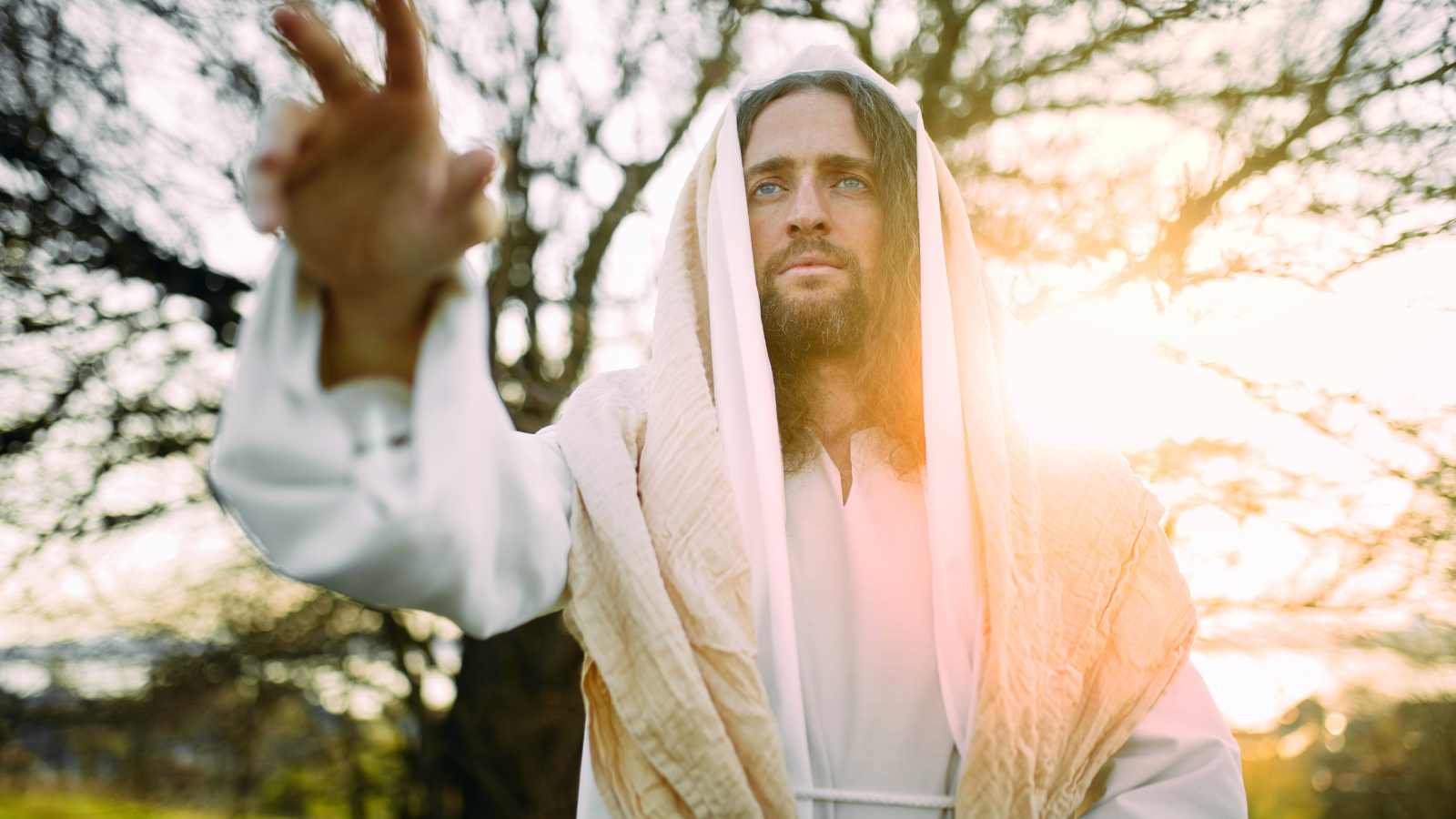
Another logical point they raise concerns the numerous instances in the Gospels in which Jesus prays to God. They ask a simple but provocative question: if Jesus is God, was he talking to himself? Witnesses believe these prayers demonstrate genuine communication between two individuals with distinct wills.
They highlight the moment in the Garden of Gethsemane when Jesus asks that the cup pass from him but submits to God’s will. This moment of submission is key to their understanding that Jesus serves a higher authority. According to Pew Research, less than 1% of U.S. adults identify as Jehovah’s Witnesses, yet this specific argument often stumps those they meet at the door.
God Cannot Die

Save this article
The Bible states that God is immortal and from everlasting to everlasting, a quality that Witnesses emphasize. They argue that when Jesus died on the cross, or the torture stake as they call it, he was truly dead for three days. If Jesus were God, they reason, the universe would have been left without its sustainer during that time.
They believe that God resurrected Jesus, which again implies that one is the agent and the other the recipient of the action. This separation of roles is critical to their view of the ransom sacrifice. In 2024, over 21 million people attended the Memorial of Christ’s death, showing that many non-members are curious about their view of Jesus’s sacrifice.
Subjection In The Future

Witnesses often turn to 1 Corinthians 15:28, which describes the end of days when Jesus hands the Kingdom back to his Father. The verse says the Son himself will be subjected to the One who subjected all things to him. They see this as definitive proof that Jesus’s position is temporary and subordinate to Jehovah’s eternal rule.
This future event confirms for them that equality with God was never the goal or the reality for Jesus. It depicts a loyal administrator completing his assignment and returning authority to the ultimate source. Their monthly reports indicate that they conduct approximately 7.4 million Bible studies, during which they guide students through complex verses.
The Holy Spirit Is Not A Person

The doctrine of the Trinity requires three persons, but Witnesses teach that the Holy Spirit is merely God’s active force. They compare it to electricity or radio waves that God sends out to accomplish his will. By removing the personality of the Holy Spirit, the “three-in-one” concept of the Trinity is logically incoherent.
They point out that the Bible does not record a conversation between Jesus and the Holy Spirit. This absence of dialogue supports their view that the Spirit is a tool rather than a being equal to the Father and the Son. This teaching simplifies their theology and removes the mystery that often surrounds the doctrine of the Trinity.
The History Of The Trinity Doctrine

Witnesses are quick to point out that the word “Trinity” does not appear in the Bible. They argue that the doctrine was developed gradually over centuries, heavily influenced by Greek philosophy and political pressure. They view the Council of Nicaea in 325 C.E. as the turning point where apostasy corrupted pure Christian teachings.
By rejecting church tradition and focusing solely on their Bible interpretation, they feel they are returning to the roots of first-century Christianity. They see the Trinity as a confusing man-made addition that obscures the true nature of God. This restorationist approach is the firm foundation for their entire religious worldview.
God Is Not A God Of Confusion

Finally, Witnesses appeal to reason, citing the Bible verse that says God is not the author of confusion. They argue that the Trinity is a confusing mystery that cannot be explained or understood by standard logic. They believe the truth about God should be simple enough for a child to grasp.
Their model of a Father, a Son, and an active force is linear and straightforward. They regard this simplicity as a hallmark of divine truth, in contrast to complex theological creeds. This appeal to logic helps them maintain a unified belief system across their global community.
Disclaimer – This list is solely the author’s opinion based on research and publicly available information. It is not intended to be professional advice.
Like our content? Be sure to follow us.
How Total Beginners Are Building Wealth Fast in 2025—No Experience Needed

How Total Beginners Are Building Wealth Fast in 2025
I used to think investing was something you did after you were already rich. Like, you needed $10,000 in a suit pocket and a guy named Chad at some fancy firm who knew how to “diversify your portfolio.” Meanwhile, I was just trying to figure out how to stretch $43 to payday.
But a lot has changed. And fast. In 2025, building wealth doesn’t require a finance degree—or even a lot of money. The tools are simpler. The entry points are lower. And believe it or not, total beginners are stacking wins just by starting small and staying consistent.
Click here, and let’s break down how.