

Think you know the Bible? Think again. It’s packed with more plot twists, moral dilemmas, and head-scratching moments than a season of your favorite prestige TV show.
We’re in a strange but fascinating moment with the Bible in America. On the one hand, sales are booming. According to Circana BookScan, Bible sales increased by a whopping 22% from 2023 to 2024. Millennials, who were once the least engaged generation, are now leading a surge in Bible use, with the number of Millennial Bible users jumping from 30% in 2024 to 39% today.
But here’s the twist. While more of us are picking up the book, fewer are taking every word literally. A 2022 Gallup poll revealed a record-low 20% of Americans believe the Bible is the literal word of God—that’s half of what it was in the 1980s. In fact, for the first time, more Americans (29%) believe it’s a collection of “fables, legends, history, and moral precepts” than believe it’s literally true.
This is all happening as our views on religion’s role in public life are shifting. After years of decline, a majority of Americans (59%) now hold a positive view of religion’s influence on society, a significant jump since 2019.
More than ever, people are engaging with the Bible not as a simple rulebook, but as a complex, challenging text that forces us to confront difficult questions about faith, morality, and meaning.
The Binding of Isaac: When God asks for the unthinkable

You probably know this one. After decades of waiting for a son, God commands Abraham to take that very son, Isaac, up a mountain and sacrifice him as a burnt offering. At the very last second, an angel intervenes and stops him.
This is, without a doubt, one of the most terrifying stories in the Bible. It presents a God who tests faith by demanding an act that seems monstrous and immoral. It makes you ask: Is faith, as philosopher Søren Kierkegaard wondered, a “teleological suspension of the ethical,” where loving God means you might have to do something unthinkable?.
But many modern Jewish scholars, such as the late Rabbi Lord Jonathan Sacks, argue that this reading misses the point entirely. The story isn’t an endorsement of blind obedience; it’s a radical takedown of the pagan idea of child sacrifice.
Rabbi Sacks argued the real test wasn’t whether Abraham would kill Isaac, but whether he would “give him over to God.” It was about Abraham renouncing the pagan idea that he owned his son. This story establishes a revolutionary notion that underpins Western civilization: parenthood is guardianship, not ownership, and a child is an individual, not property.
Jephthah’s daughter: A tragic story of human sacrifice?

Here’s a story that’s even more unsettling because there’s no last-minute rescue. A warrior named Jephthah makes a rash vow: if God gives him victory in battle, he’ll sacrifice the first thing that comes out of his house to greet him. He wins, and his daughter—his only child—runs out to meet him.
The text says he “did with her according to his vow.” So, did an Israelite judge actually perform a human sacrifice, and did God just let it happen? The text is horrifyingly ambiguous.
Scholars are deeply divided. Some believe Jephthah was tragically, foolishly bound by his word. But there’s another way to read the vow. The original Hebrew can be translated as the first thing to greet him: “shall be the Lord’s, OR I will offer it up as a burnt offering.”
That little word “or” changes everything. It suggests two possibilities: an animal would be sacrificed, but a person would be consecrated to God.
The slaughter of the Canaanites: Unpacking a command for genocide
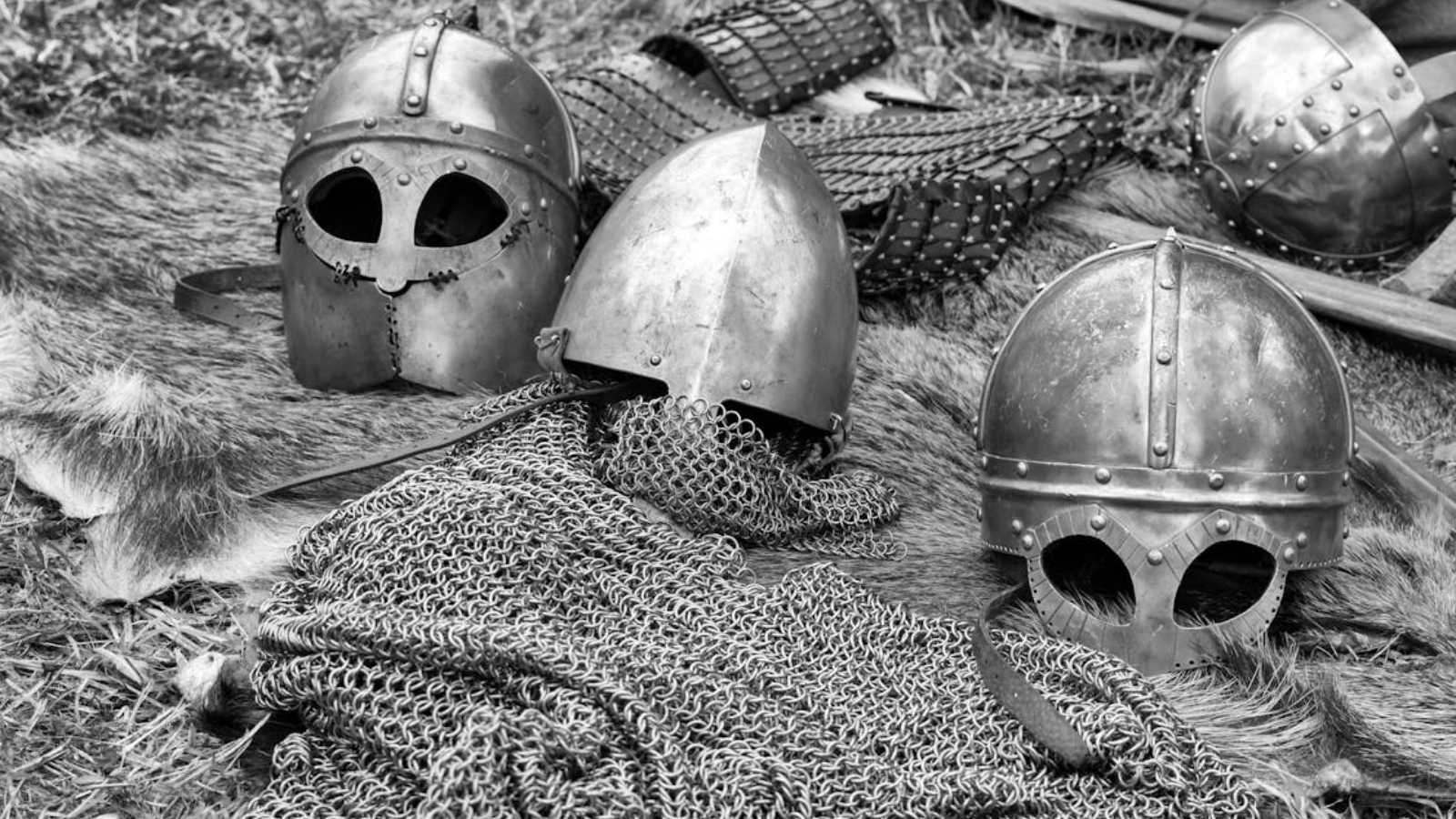
This one is tough. In books like Deuteronomy and Joshua, God commands the Israelites to “utterly destroy” the Canaanite nations, showing them no mercy and leaving nothing that breathes alive. For modern readers, this is perhaps the single most morally troubling command in the Bible. It reads like a divine mandate for ethnic cleansing.
Scholars offer a few ways to understand these passages, none of them simple. One view is that this was a divine judgment on a “morally bankrupt” culture that practiced things like child sacrifice, not a war based on ethnicity. Theologian John Currid notes that when Israel fell into the same practices, they too were violently ejected from the land.
Another view is that this was standard, over-the-top military hyperbole for the Ancient Near East. It was a way of saying “we won a decisive victory,” not a literal description of killing every single person. These difficult passages may be a key reason why biblical literalism is declining, pushing believers to find more nuanced ways to read the text.
The story of Job: Why do good people suffer so much?

Job is a blameless and upright man. But in a heavenly courtroom scene, Satan challenges God, claiming Job is only faithful because he’s been blessed. God permits Satan to destroy everything Job has—his wealth, his children, and his health.
The book tackles the eternal question: if God is good, why do innocent people suffer?
The book’s purpose isn’t to provide a neat formula for why suffering occurs; it’s to dismantle the simplistic idea that suffering is always a direct punishment for sin. It critiques a “transactional faith”—the idea that if you’re good, God will reward you. Instead, it argues for a faith grounded in trusting God’s wisdom, even when it’s completely incomprehensible.
The imprecatory psalms: When prayers wish for violent revenge

Sprinkled throughout the Psalms are prayers that are… well, not very nice. They’re called “imprecatory psalms,” and they call down curses on enemies. The most infamous is Psalm 137:9, which says of Babylon: “Blessed shall he be who takes your little ones and dashes them against the rock!”.
How can these vengeful prayers be in the Bible? They seem to fly in the face of the New Testament command to “love your enemies”. But scholars suggest we’re misreading their purpose. First, they are prayers, not actions. The psalmists are handing their rage and desire for justice over to God, the only one who has the right to judge.
These psalms provide a biblically sanctioned way to process trauma by articulating rage directly to God, which can be profoundly therapeutic for victims of injustice.
The curse of Ham: How a Bible story was twisted to defend slavery

After the great flood, Noah gets drunk and passes out naked. His son Ham “sees his father’s nakedness.” When Noah wakes up, he curses Ham’s son, Canaan, saying, “a servant of servants shall he be to his brothers”.
This strange story became, as scholar David Goldenberg puts it, the “single greatest justification for Black slavery for more than a thousand years”. Pro-slavery advocates argued that Ham was the ancestor of all Black people and that this curse was a divine mandate for their enslavement. Modern biblical scholarship is unanimous: this interpretation is a complete distortion of the text.
First, Noah curses Canaan, not Ham. Second, the Bible doesn’t say Ham was Black. Third, the descendants of Canaan were the people living in the Levant—Israel’s geopolitical rivals—not sub-Saharan Africans. And fourth, it was Noah’s drunken curse, not God’s divine decree.
The great flood: A global reset or a local catastrophe?

Save this article
You know the story: God sees that humanity is wicked, so he decides to flood the entire Earth, saving only Noah, his family, and pairs of every animal on a giant ark. A literal, global flood presents enormous scientific problems, and there is no geological evidence for such an event. This has led to a significant split in how people read the story.
Interestingly, the biblical story has stunning parallels with much older Mesopotamian flood myths, like the Epic of Gilgamesh. Most scholars believe the Israelites adapted these widespread stories for their own theological purposes. A key difference is the why. In Mesopotamian myths, the gods flood the earth because humans are too noisy. In Genesis, the flood is a direct response to human moral corruption.
Elisha and the bears: Did God really kill 42 kids for a bald joke?

The prophet Elisha is walking to Bethel when a group of “youths” taunts him, “Go on up, you baldhead!” Elisha curses them, and two bears emerge from the woods and maul 42 of them. On the surface, this story is appalling. It looks like a grumpy prophet getting his feelings hurt and calling on God to murder a bunch of kids.
But this is a classic case where a bad translation creates a moral problem. First, they weren’t “little children.” The Hebrew word na’arim is also used to describe soldiers and royal officials. This was likely a large, hostile mob of young men.
Second, it wasn’t just a bald joke. “Go on up” was likely a sarcastic reference to Elisha’s mentor, Elijah, who had just “gone up” to heaven. It was a death threat: “Get lost and die like your master”. And this happened at Bethel, the center of an idolatrous cult that opposed the worship of God.
Jesus and the fig tree: A bizarre moment of divine anger?

On his way into Jerusalem, a hungry Jesus sees a fig tree with leaves but no fruit. He curses it, and the tree withers and dies. Mark’s Gospel even notes that “it was not the season for figs,” which makes Jesus’s anger seem even more irrational.
This isn’t about a hungry savior with a vendetta against fruit trees. It’s a symbolic act—an enacted parable—with a powerful message.
Throughout the Old Testament, the fig tree is a common symbol for the nation of Israel. The tree looked promising from a distance—it had leaves—but it was barren. This was a perfect metaphor for Israel’s spiritual state at the time. The Temple was bustling with religious activity (the “leaves”), but Jesus found it to be spiritually corrupt and empty (no “fruit”).
The message is clear: the cursing of the tree is a prophetic sign of the coming judgment on the fruitless Temple system.
The scapegoat: The strange ritual of sending a goat into the wild

As part of the Day of Atonement ritual in Leviticus 16, the high priest took two goats. One was sacrificed as a sin offering. The priest would then lay his hands on the second goat, confess all the sins of Israel over it, and send it out into the wilderness to a place called “Azazel”.
It’s a bizarre ritual. What does it mean to put sins on a goat? And who or what is “Azazel”?
The ritual is a two-part symbolic act. The first goat deals with the expiation of sin—the price is paid. The second goat, the scapegoat, symbolizes the complete removal of sin. By sending the goat away, the community was given a powerful visual of their sins being carried away, never to be seen again.
In Christianity, the entire ritual is seen as a powerful prefigurement of Jesus Christ. Jesus is both the sacrificed goat (whose blood pays for sin) and the scapegoat (who carries our sins away). This ancient ritual understood something profound about human psychology: for forgiveness to be complete, we need to feel not just pardoned, but cleansed.
Key Takeaway
So, what do we make of all this? If you’ve ever felt that the Bible is too strange, too violent, or too contradictory, you’re not alone—and you’re on the right track.
The data shows a fascinating shift in America: people are buying Bibles more but believing in them less literally. This suggests we’re moving past a need for simple, straightforward answers. These challenging stories are a big reason why. They force us to dig deeper, to question our assumptions, and to wrestle with some of the biggest questions of life.
Ultimately, the Bible’s enduring power might not be in providing a clear rulebook, but in offering a complex, profound, and sometimes troubling library of texts that demand we think, feel, and argue with them. And in a world of easy answers and short attention spans, that might be exactly what we need.
Disclaimer – This list is solely the author’s opinion based on research and publicly available information. It is not intended to be professional advice.
Disclosure: This article was developed with the assistance of AI and was subsequently reviewed, revised, and approved by our editorial team.
Like our content? Be sure to follow us.
14 Things That Label You as ‘Uneducated’ on Social Media

14 Things That Label You as ‘Uneducated’ on Social Media
Welcome to the digital world, a place as intriguing as treacherous, where your online persona can instantly charm or alarm others. In this realm, your social media presence is your calling card —a digital mirror reflecting your thoughts, beliefs, and, perhaps inadvertently, your level of education. Yet, fear not! This guide is here to help you navigate the vast ocean of social media with grace and wisdom.
Don’t Swipe Until You Read This: The 7 Best Credit Cards for 2025 Ranked by Rewards

The 7 Best Credit Cards for 2025 Ranked by Rewards
There’s this moment that sticks with me—standing at a checkout line, swiping my old card like I always did, and thinking, “Wait… why am I not getting anything back for this?” I wasn’t traveling on points. I wasn’t getting cash back. I was just spending. Sound familiar?
Look, the truth is, credit cards can work for you—if you choose the right one. And in 2025, you’ve got some advantageous options that can actually boost your bank account. From travel lovers to grocery haulers, there’s something for everyone.
Let’s break down the best credit cards out there this year—the ones that actually give back.





