

You know that feeling when you just can’t stop eating that bag of chips? Turns out, that’s by design.
We need to talk about ultra-processed foods (UPFs). These aren’t just foods; they’re industrial formulations made using cheap ingredients and substances you’d never keep in your kitchen, like emulsifiers, artificial flavors, and refined sugars. This isn’t about blaming you or your willpower. It’s about recognizing that powerful, highly-funded corporate science is working hard to make these products irresistible.
The food system is built around corporate profit, not your nutritional health, and the statistics prove how effective this manipulation really is. Over half of the total calories consumed by the average American consumer, 55.0%, come from these ultra-processed products, according to the CDC’s National Health and Nutrition Examination Survey (NHANES) for August 2021–August 2023.
That means UPFs are the default for most of us. This reliance on processed junk is even more frightening for kids. Youth ages 1–18 consume a significantly higher percentage of calories from UPFs, averaging 61.9%.
This high consumption explains a lot of our public health crises. Dr. Devries noted that these “alarming statistics go a long way to explain the record-breaking prevalence of obesity” and type 2 diabetes in the U.S. If policies rely only on individual discipline, we’re going to lose this battle. The system has to change because UPFs are already deeply entrenched in our global diets.
The “bliss point” engineering: Making food addictive

Food companies don’t just hire cooks; they employ sensory scientists who specialize in making food hyper-addictive. They are searching for the “bliss point,” which is the mathematically perfect ratio of fat, sugar, and salt that triggers maximum pleasure in your brain.
This goes far beyond just tasting good. The goal is to engineer the food to “hijack the brain’s reward system” and keep people compulsively hooked. This level of intentional engineering is why many of these foods are considered hyperpalatable—exceptionally appealing to the human palate.
The strategic combination of high fat, sugar, and salt is designed to stimulate the brain’s reward system intensely. This surge of reward chemicals can actually “bypass your hunger” signals, driving you to eat much more than you physically need.
It’s a physiological loophole that guarantees overconsumption. The process alters the food’s structure, often making it softer and easier to chew and swallow. This rapid consumption means your body’s natural fullness signals—the ones that rely on time and chewing effort—are overridden or delayed.
So, when you can’t stop eating that second serving, it’s because the food was intentionally designed to silence your natural biological controls.
Serving size deception: Shrinking the truth

Ever notice how a package of chips or cookies claims to have an impossible number of servings? That’s the serving size scam in action.
Manufacturers intentionally use unrealistically tiny portions as the official serving size on the nutrition label. A cookie package might list “half a cookie” as one serving, for example. This manipulation is a direct marketing strategy. It allows them to report lower values for fat, sodium, and calories on the label.
This makes the product look healthier than it actually is, sometimes even allowing companies to claim it is “light” or “diet” on the front of the package. The problem is that real people don’t eat half a cookie.
When consumers are presented with a larger portion, they fail to intuitively assess or consume the appropriate, tiny serving size. They just eat what’s in front of them, effectively doubling or tripling their actual intake of nutrients and calories.
This variability is key to confusing you at the store. One study found that, for similar products like creamy cheeses, the largest serving size was 6 times the smallest. This variability makes it extremely hard to compare Product A against Product B, pushing you toward the option that looks deceptively “lighter” on paper.
The sugar-splitting strategy: Hiding the proper dose

We know that ingredients must be listed by weight, meaning the most prevalent ingredient goes first. Ultra-processed food companies figured out a way to hack this rule.
To avoid having “sugar” listed as the number one or two ingredient, they use a strategy called sugar splitting.
They divide the total sugar content into multiple smaller amounts, each listed under a different name. Instead of listing 20 grams of “sugar,” they might list 5 grams of “dextrose,” 5 grams of “molasses,” 5 grams of “agave nectar,” and 5 grams of “cane crystals.” Individually, these aliases appear harmlessly lower on the ingredient list. But when you combine them, they make up the majority of the food’s composition.
This tactic exploits the fact that busy shoppers generally check only the first few items on an ingredient list. This cognitive trick helps push the actual primary constituent down the list, ensuring the first few items appear less threatening. Your defense against this must be comprehensive scanning. You need to scan the entire list for clusters of sweeteners, because the combined load is the real problem.
Chemical obfuscation: Ingredients that need a phd

A simple rule: if you can’t pronounce the ingredients, the product is likely ultra-processed and heavily altered from its original form.
Food companies rely on complex chemical language to list stabilizers, flavor enhancers, and preservatives. Dr. Devries, a noted expert, observed that UPF ingredients are often “more familiar in a chemistry lab” than they are in a home kitchen. This confusion is totally strategic. When consumers see a long list of unfamiliar ingredients—say, 15 or 20 names—they often skip the detailed evaluation entirely.
This allows companies to include genuinely questionable additives under complex names. For example, Diacetyl is a chemical used to give products a buttery flavor without using actual butter. Another common preservative is Butylated hydroxytoluene, often listed simply as BHT, which prevents oils from oxidizing. Sodium benzoate is another long-named additive used as a preservative in sodas and sports drinks.
Interestingly, this chemical phobia also provides cover for harmless ingredients. For instance, alpha-tocopherol (Vitamin E) has a very long chemical name. By including a mix of scary-sounding names, the company ensures consumers are too overwhelmed to distinguish between a token nutrient and a harmful chemical.
The health halo effect: Misleading front labels

Always remember this golden rule: The front of the food package is pure marketing designed to trigger an emotional purchase.
Companies create a deceptive “Health Halo” by plastering buzzwords like “Natural,” “Wholesome,” or “Made with Real Fruit” across the packaging. Shoppers are often busy and rely on these easy cues—rules of thumb—to quickly judge healthfulness.
This is a powerful cognitive shortcut. When you see “Natural,” it immediately “short-circuits” a detailed evaluation of the product’s actual sugar and fat content. The term “Natural” is particularly misleading because it has no official FDA definition or regulation. It tells you virtually nothing specific about the product’s actual health value. This successful deception fuels huge market trends.
This isn’t just about misleading you; it’s about profit. Consumers are willing to pay a premium for products labeled “natural,” even if the ingredient list is identical to that of a cheaper, non-haloed item. This manipulation generates higher margins while distracting you from the long list of additives on the back.
Packaging color psychology: Tricking your brain

Every color on a food package is a calculated psychological weapon. Marketers manipulate the exterior packaging specifically to influence your perception and purchasing behavior.
This manipulation is based on hard science. Studies show that human perception is significantly influenced by color, prioritizing it 80% more than the object’s shape in the initial moments of observation.
For “vice foods“—snacks characterized by taste but unhealthiness—companies overwhelmingly use warm colors. Colors like red and yellow are frequently used because they are known to attract attention and increase purchase intent. Red is particularly effective because it’s associated with excitement, energy, and, most importantly, appetite stimulation. Yellow often signals happiness and warmth.
The goal of this highly specialized behavioral science is to induce a physiological state and emotional connection right at the shelf. They want to trigger an impulsive purchase linked to excitement and consumption before your rational brain can kick in to read the nutrition facts. This pre-cognitive persuasion ensures the ultra-processed product is perceived as inherently desirable and urgent to buy.
Save this article
The convenience trap: Speed over substance
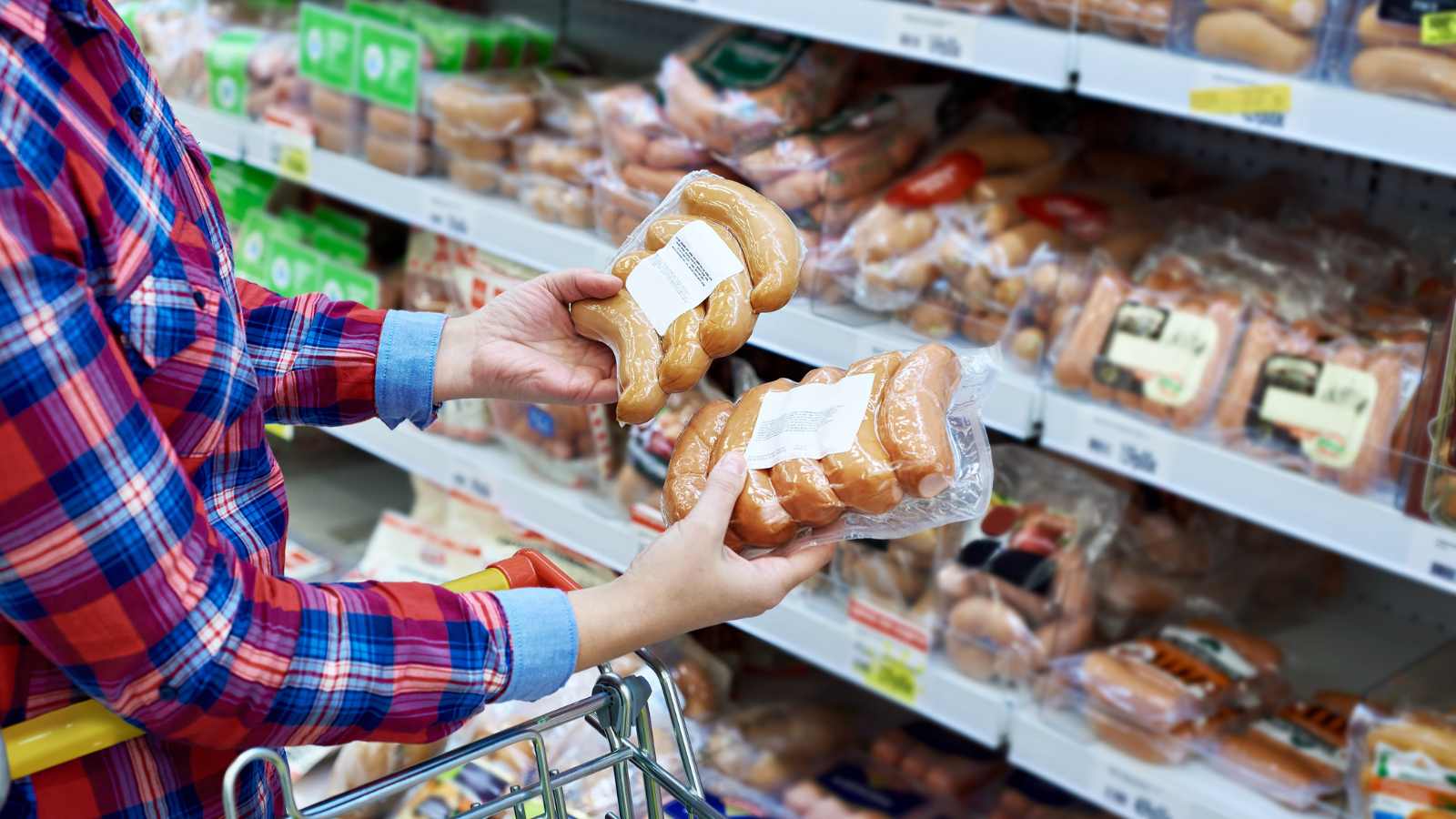
Ultra-processed foods have become the default solution for modern, busy life. If you’re low on time, constrained by budget, or just rushed, UPFs are often the easiest choice.
This reliance isn’t accidental; companies thrive on the speed of urban life, where quick, easy preparation is paramount. They offer low-cost, shelf-stable, rapid meal solutions that fill a major consumer need.
The ubiquity of these products is staggering: nearly half (45.7%) of all food advertisements tracked in weekly circulars were for highly processed foods. A recent national analysis confirmed that about 50% of all food purchases in U.S. households are ultra-processed.
This creates a systemic problem, especially for vulnerable populations. The constraints of limited access and affordability often lead low-income households to consume exceptionally high amounts of UPFs. This reliance extends even to home cooking. Ultra-processed foods now account for over half of the calories adults consume, even when they prepare meals at home.
The food system has successfully positioned these cheap, quick UPFs as the economic and logistical default, forcing consumers to actively pay more or spend more time to choose whole, unprocessed alternatives.
Fortified illusion: Adding back what they stripped out

You might think a label that says “fortified” or “enriched” is a healthy signal, but often it’s just a deception designed to cover up a problem.
Industrial processing techniques are brutal. They strip the food of its natural vitamins, fiber, and valuable nutritional density. To counteract this, companies add back cheap, synthetic vitamins as a nutritional smokescreen. They can then legally claim the product is “Fortified!” even though the nutritional foundation is still empty.
The added nutrients don’t magically negate the overall negative impact of the ultra-processed base.
For instance, many products are labeled “fruit-flavored” but contain no actual fruit, only chemicals designed to mimic the taste. They might then add Vitamin C back, creating a technically compliant “Fortified” claim while the product remains high in sugar and additives.
This creates an illusion of nutritional balance that is deeply misleading. It tricks the consumer into believing the product offers nutritional complexity when it’s really just a heavily altered base with a cheap additive supplement.
Engineering mouthfeel: The pursuit of “irresistible crunch.“

Food scientists don’t stop at taste; they intensely study texture and mouthfeel through sensory science. They work to design the “perfect crunch” or the smoothest, fastest-dissolving texture.
This is a critical strategy for maximizing your intake. Industrial processing often makes foods much softer and easier to consume quickly.
The less effort required to chew and swallow, the more volume you can consume before your body registers fullness. This is how they weaponize texture.
UPFs are typically low in fiber, which also accelerates gut transit time, further hindering satiety signals. By minimizing chewing effort and fiber content, the food promotes rapid consumption, actively overriding your natural physiological cues. This biological lag time ensures you’ve consumed large portions before your brain gets the message to stop. The resulting engineered texture is intentionally designed to be irresistible, encouraging consumers to overeat consistently.
Digital targeting: Advertising to your kids (a lot)

This is the most concerning tactic: aggressive digital targeting of young people when they are most vulnerable. Big Food spends approximately $14 billion annually on food advertising in the U.S., with over 80% of it promoting fast food, sugary drinks, and unhealthy snacks.
They use highly sophisticated digital tracking, social media influencers, and interactive marketing, such as games, to target youth on platforms like Instagram, TikTok, and YouTube.
The World Health Organization (WHO) confirms this aggressive and pervasive marketing negatively affects children’s food choices and shapes their long-term dietary norms. It makes them more likely to choose unhealthy options, normalizing poor consumption habits.
This strategy ensures future profit by conditioning consumers early. Companies often use “targeted marketing” to reach children and vulnerable communities of color with their least healthy products. This tactic actively widens existing health disparities. Experts are clear that only mandatory, government-led regulation, not voluntary industry guidelines, can protect children from this harmful marketing.
Key Takeaway

Ultra-processed food is designed to be irresistible using corporate sensory science, not cooking. Companies leverage the “bliss point,” tiny serving sizes, hidden sugar aliases, and manipulative, child-targeted digital marketing to ensure massive profit through overconsumption. Your key defense? Ignore the marketing on the front label, flip the package over immediately, and consistently choose real foods with short ingredient lists you recognize.
Disclaimer – This list is solely the author’s opinion based on research and publicly available information. It is not intended to be professional advice.
Disclosure: This article was developed with the assistance of AI and was subsequently reviewed, revised, and approved by our editorial team.
Like our content? Be sure to follow us.
15 Foods From the ’60s Most Boomers Loved With a Passion

15 Foods From the ’60s Most Boomers Loved With a Passion
The 1960s were a period of profound social and cultural transformation in America. As the baby boomer generation came of age, they embraced new ideas, fashion trends, and music styles. And when it came to food, some beloved dishes defined this era.
Here are 15 foods from the ’60s that most boomers loved passionately.
12 Laws And Rules About Food In Other Countries

12 Laws And Rules About Food In Other Countries
Food is more than just nourishment; it’s a reflection of culture, tradition, and, in many cases, the law. Around the world, various countries have established distinct food regulations that may surprise travelers and food enthusiasts alike.
These laws reveal how deeply societies value what ends up on their plates. Here are 12 fascinating food laws and rules from around the globe that show just how diverse and sometimes unexpected our relationship with food can be.





