

Eating used to follow a rhythm shaped by time, place, and people. Today, meals bend around screens, schedules, and convenience, often happening on the go or between notifications. Modern life has not just changed what we eat but how we experience meals, from where they happen to how much attention we give them.
Based on a report by The Healthcare Review at Cornell University, more than 50% of adults eat while watching television. That shift reflects a broader change in eating habits driven by technology, work culture, and lifestyle speed. Understanding these patterns helps explain why meals feel different now and why those changes matter.
Snacking Is Replacing Sit-Down Meals

Across high-income countries, traditional meals are steadily giving way to grazing. The National Library of Medicine reports that snacks are far more likely than main meals to be eaten alone, on couches, or in front of screens, and they tend to be higher in calories and lower in micronutrients.
Structured meals naturally limit random all-day eating. Modern schedules, however, push people toward constant nibbling, turning food into background activity rather than a focused pause in the day.
Meals in the Car Are the New Normal

Direct Line Group estimates that nearly four million parents feed their children meals in the car each month, averaging about seven car seat meals per family.
Breakfast leads the trend, followed closely by lunch and dinner. Parents consistently cite a lack of time between activities and not having time to eat at home. The shift carries nutritional consequences, but it also erodes the social rituals that meals once provided.
Food Delivery Apps Are Rewriting Home Cooking

The global online food delivery market is projected to generate roughly $1.54 trillion by 2026, according to market analyses from Statista. Convenience now rivals cooking skill as the defining feature of a good meal.
The idea of a home-cooked meal has blurred. For many households, food eaten at home no longer means food prepared there. Delivery has untethered eating from both kitchens and schedules, encouraging spontaneous and less structured meal patterns.
Ghost Kitchens Shape What Shows Up on the Table

Many delivery menus are powered by ghost kitchens and virtual restaurants that operate without dining rooms. Industry research from Euromonitor shows that these models optimize menus for transport, favoring foods that travel and reheat well.
Algorithms increasingly influence what people eat. Demand forecasting, trend prediction, and delivery logistics quietly nudge choices. Dinner is often shaped less by culinary tradition and more by data optimized for speed, consistency, and profitability.
Meal Skipping as a Time Management Tool

Systematic reviews in journals such as Nutrients show that breakfast is the most commonly skipped meal, especially among young adults. Reported prevalence ranges from about 14 to nearly 90 percent, depending on the population. Lack of time is cited more often than weight control or cost.
The National Library of Medicine reports that skipping meals leads to higher intake later in the day and poorer diet quality overall. What begins as a time-saving strategy often ends in larger, less regulated eating as hunger rebounds.
Screens at the Table
Save this article
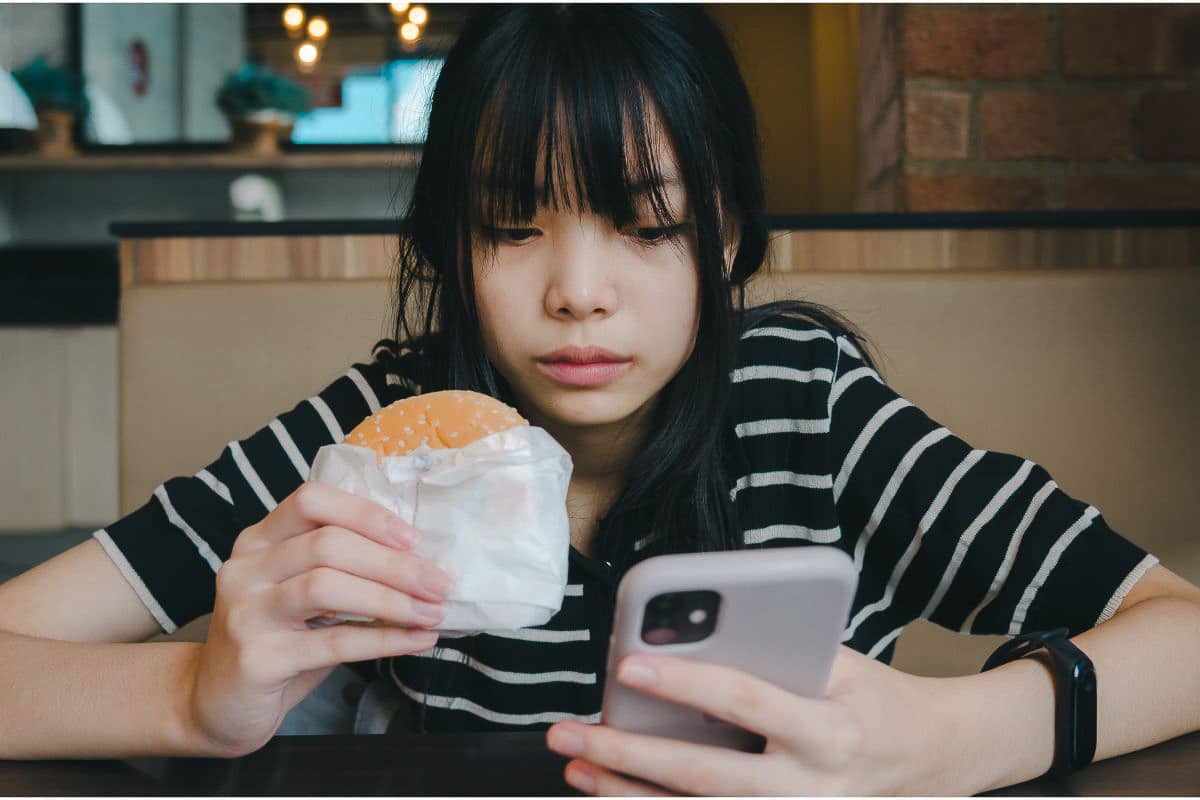
Research on family meals published in Public Health Nutrition documents a steady shift toward eating with screens, whether televisions, phones, or tablets. Snacks are particularly likely to be consumed in front of screens, a pattern linked to weaker awareness of hunger and fullness cues.
Screen-dominated meals undermine both diet quality and social benefits. Conversation, pacing, and modeling healthy habits fade when attention is split, turning meals into another task rather than shared time.
Kids Learn Snack Culture from Adults

Commentators and pediatric nutrition researchers increasingly describe a never-ending snack culture. Market data show Millennial parents driving growth in snack foods used as mini meals, including bars, yogurt, nuts, and chips.
Children learn eating patterns by observation. Structured meals teach balance and portion awareness. Constant snacking teaches that food accompanies boredom, transit, and stress rather than marking intentional breaks.
Work and School Push Eating to the Margins

Surveys of parents and workers cited by Home Start consistently show that meals are being squeezed between commutes, practices, and meetings. The same UK data on car meals report that over one-fifth of parents do not always have time to eat at home.
Research on irregular eating patterns finds higher rates of meal skipping among young adults and those with low schedule control. Meals become something to fit into leftover calendar space rather than anchors around which days are built.
Online Food Culture Shapes Cravings in Real Time

Social media and delivery platforms expose users to a constant stream of food imagery, discounts, and recommendations. Behavioral studies note that this real-time exposure increases impulsive, craving-driven choices.
Instead of planning meals and shopping accordingly, many consumers now decide what to eat based on what is trending or promoted. Weekly planning gives way to on-demand decision-making, guided by algorithms rather than appetite or routine.
The Meaning of the Family Meal Is Shifting

The National Library of Medicine links family meals to improved diet quality and psychosocial outcomes. Extension specialists also note that what qualifies as a family meal is changing. Takeout eaten together or reheated plates shared at the same table now count.
Even imperfect shared meals provide structure and reduce all-day grazing. Modern life is not eliminating the family meal so much as remixing it, quietly altering both nutrition and the role food plays in daily life.
Key Takeaway

Modern eating has not changed in one dramatic leap. It has shifted through small, practical adjustments to time pressure, technology, and convenience. Meals have become mobile, flexible, and fragmented.
Understanding these changes matters because how people eat shapes not just nutrition, but attention, connection, and daily rhythm. The future of food may be less about new ingredients and more about reclaiming moments to stop and eat on purpose.
Disclosure: This article was developed with the assistance of AI and was subsequently reviewed, revised, and approved by our editorial team.
Disclaimer – This list is solely the author’s opinion based on research and publicly available information. It is not intended to be professional advice.
Like our content? Be sure to follow us





