Mary Magdalene’s story reveals how easily history can be reshaped when assumption is allowed to stand in for evidence.
Mary Magdalene stands as one of the most recognized yet misunderstood figures in religious history, often viewed through a lens of centuries-old myths rather than historical fact. Recent cultural debates and Hollywood films have only added to the confusion, mixing scriptural truth with fictional drama to create a character barely recognizable from the Bible.
Scholars and historians have worked hard to peel back these layers of legend, revealing a woman who was a central supporter of Jesus rather than the penitent sinner depicted in art. Getting to the truth requires setting aside these long-held assumptions and looking at the evidence with fresh eyes, free from the biases that have colored her story for generations.
She Was A Prostitute

The idea that Mary Magdalene was a sex worker is perhaps the most pervasive myth of all, originating not from the Bible but from a specific sermon given in the sixth century. In 591 AD, Pope Gregory the Great delivered Homily 33, which conflated her with an unnamed sinner, cementing a reputation that has lasted for over 1,400 years.
There is absolutely no scriptural evidence to support the claim that she sold her body for money or lived a scandalous life before meeting Jesus in Galilee. Modern scholars agree she was simply a follower healed of illness, yet the stigma remains so strong that many still automatically associate her name with repentance from sexual sin.
She Was Jesus’s Wife

Pop culture loves a good romance, and the theory that Mary and Jesus were secretly married has generated massive profits for authors and excitement for conspiracy theorists. This idea gained huge traction after the publication of The Da Vinci Code 403, which sold over 80 million copies worldwide and convinced many readers that this fiction was secret history.
Historians and theologians have repeatedly debunked this claim, noting that Jewish texts and early Christian writings would have likely mentioned a wife if one existed. The texts often cited to support this theory are from centuries later and use metaphorical language about spiritual partnership, rather than literal evidence of a wedding ceremony or a secret bloodline.
She Was The Sinful Woman Of Luke

Many people confuse Mary with the unnamed woman in Luke 7 who weeps and washes Jesus’s feet with her hair, assuming they are the same person because of their proximity in the text. This mistaken identity happens because Mary is introduced in Luke 8, immediately after the story of the sinful woman, leading readers to incorrectly merge two distinct characters.
The Bible actually distinguishes clearly between the woman who anointed Jesus in Galilee and Mary Magdalene, who is described primarily as a witness to the resurrection. According to a 2025 Barna Group report, biblical literacy is rebounding, with 42% of U.S. adults reading scripture weekly, which may finally help clear up these textual mix-ups.
She Was Mary Of Bethany

Another common mix-up involves combining Mary Magdalene with Mary of Bethany, the sister of Martha and Lazarus, who famously sat at Jesus’s feet to listen to his teaching. While both women were named Mary and were devoted disciples, they lived in different towns and appear in narratives that are completely different throughout the New Testament.
Mary of Bethany lived near Jerusalem, while Mary Magdalene traveled with the disciples through the region of Galilee, making them distinct figures in the gospel accounts. Treating them as one person diminishes the individual importance of each woman, as the gospels present them as separate witnesses with their own unique relationships to Jesus.
She Was A Poor Outcast

The popular image of Mary Magdalene often paints her as a destitute woman living on the fringes of society, saved from poverty by her association with the traveling group. In reality, scripture describes her as a woman of means who used her own financial resources to support the ministry of Jesus and his disciples.
Her hometown was a thriving commercial center, and archeological findings suggest she likely came from a background of wealth and social standing rather than poverty. In 2009, archaeologists in her hometown of Magdala discovered a first-century synagogue with an ornate stone table, indicating the city was a wealthy and significant Jewish hub.
Magdala Is Her Last Name

It is easy to assume “Magdalene” was a surname in the modern sense, but in the first century, people were identified by their father’s name or their town of origin. The title identifies her as “Mary of Magdala,” a fishing town on the western shore of the Sea of Galilee, distinguishing her from the many other Marys in the Bible.
This geographical tag implies she was a prominent enough figure in her community to be known simply by her city, rather than by a husband or father. Calling her “Magdalene” is similar to calling Jesus “The Nazarene,” serving as a locator that grounds her in a specific place and cultural context.
She Was A Minor Character

Save this article
Because the twelve male disciples receive the most attention, casual readers often view Mary as a background extra who only appears in the crucifixion and resurrection scenes. However, she is mentioned 12 times in the Gospels, more than most of the apostles, highlighting her significant role in the early movement.
She was a constant presence during the ministry, a witness to the death, and the primary messenger of the resurrection news, making her indispensable to the story. Early church leaders acknowledged her importance, but over time, her status was minimized in favor of the male leadership structures that developed in later centuries.
She Wrote The Fourth Gospel
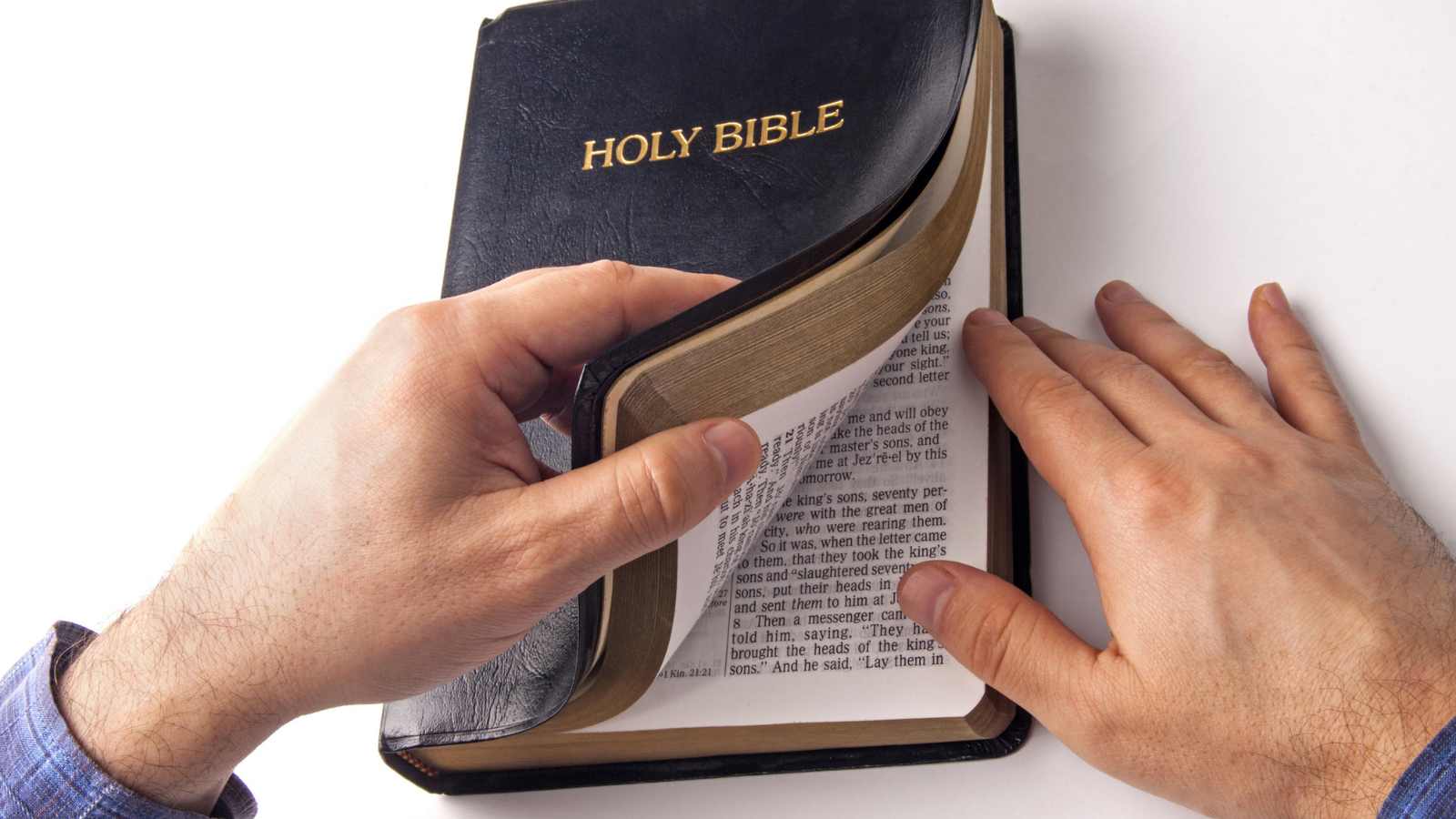
A fringe theory holds that the Gospel of John, often attributed to the “Beloved Disciple,” was actually written by Mary Magdalene to preserve her intimate knowledge of Jesus. While intriguing to those who want to elevate her intellectual contribution, the linguistic and historical evidence overwhelmingly points to a different author for this text.
There is a separate “Gospel of Mary,” a Gnostic text discovered in the 19th century, but it is a later writing that focuses on philosophical dialogue rather than history. Confusing these texts muddies the waters, distracting from the very real and verified role she played as the first person to proclaim the risen Christ to the others.
She Fled To France

A medieval legend claims that after the resurrection, Mary Magdalene escaped the Holy Land on a rudderless boat and landed in southern France to live as a hermit. This story became incredibly popular in the Middle Ages, drawing thousands of pilgrims to French shrines, but it lacks any historical basis from the first century.
Most historians believe she likely remained in the East, potentially moving to Ephesus with other early believers, rather than embarking on a voyage across the Mediterranean. The French legend served a political purpose for local churches in the 12th century, who wanted to claim a connection to a biblical saint to boost their prestige.
The Church Hated Her

Some modern critics argue that the Catholic Church maliciously erased her role to suppress women, but history is more nuanced than a simple conspiracy of silence. While her reputation was damaged by the prostitute myth, the Church has historically venerated her as a saint and a heroine of the faith for two millennia.
Recent moves have corrected the record and restored her rightful status alongside the male apostles in the official church calendar and liturgy. On June 10, 2016, the Vatican issued a decree raising her memorial to a Feast, formally placing her celebration on the same level as those of the other twelve apostles.
She Was Young And Single

Artistic masterpieces almost always depict Mary Magdalene as a young, beautiful woman with long flowing red hair, reinforcing the idea of a youthful, unattached follower. The Bible gives no description of her age or physical appearance, and she could easily have been an older woman, perhaps a widow or a matriarch of independent means.
We assume she was young because of romanticized legends, but a wealthy, mature woman would have had the freedom and resources to travel that a young girl would not.
Disclaimer – This list is solely the author’s opinion based on research and publicly available information. It is not intended to be professional advice.
Like our content? Be sure to follow us.
How Total Beginners Are Building Wealth Fast in 2025—No Experience Needed

How Total Beginners Are Building Wealth Fast in 2025
I used to think investing was something you did after you were already rich. Like, you needed $10,000 in a suit pocket and a guy named Chad at some fancy firm who knew how to “diversify your portfolio.” Meanwhile, I was just trying to figure out how to stretch $43 to payday.
But a lot has changed. And fast. In 2025, building wealth doesn’t require a finance degree—or even a lot of money. The tools are simpler. The entry points are lower. And believe it or not, total beginners are stacking wins just by starting small and staying consistent.
Click here, and let’s break down how.