

Christmas has a way of turning even the most practical person into a believer in a little magic. For instance, a report by The Hill notes that about 21% of U.S. adults say they believe in Santa Claus, while belief among children is much firmer.
Makes sense why I still remember staring out the window as a kid, convinced I’d catch Santa swooping by—even though I could barely stay awake past 9. Those stories shaped our excitement, our imaginations, and honestly, our patience levels.
So let’s revisit the myths that defined our childhood holidays and still warm our hearts today.
Santa delivering presents to every kid in one night
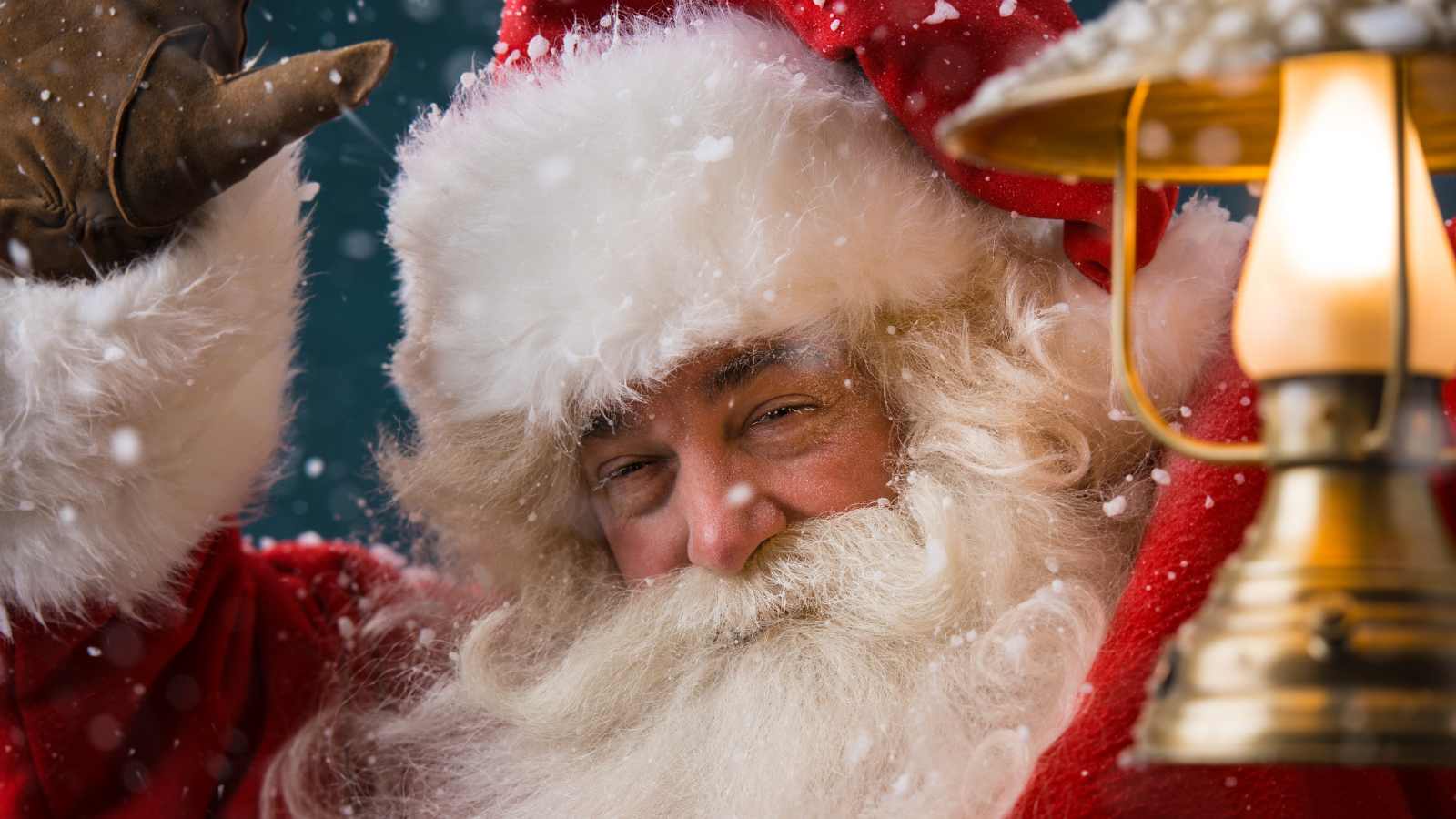
This was the ultimate childhood belief, and honestly, some of us still do the math each year just for fun. Kids across the U.S. imagined Santa zooming across 510 million square miles of land on Christmas Eve, thanks to a fleet of reindeer with near-supernatural speed.
NORAD even tracks Santa annually—something they’ve done since 1955, when a misprinted phone number led kids to call the Continental Air Defense Command accidentally. The whole tradition has grown so big that NORAD now gets over 100,000 calls every Christmas season.
Isn’t it wild how one small printing error turned into one of the most beloved holiday traditions?
Rudolph being Santa’s original reindeer

Many of us thought Rudolph had been leading the sleigh forever. But he was actually created in 1939 by a Montgomery Ward copywriter named Robert L. May for a promotional booklet. More than 2.4 million copies of the first Rudolph story were distributed that first year, making him an instant holiday icon.
His glowing red nose? That was May’s attempt to help children feel seen, especially those who felt different. Kids didn’t know any of that history—we just knew that Rudolph was the brave one who saved Christmas during a foggy night.
Reindeer being able to fly naturally

This might be one of the most delightful myths we have ever believed. Reindeer are real animals—strong, fast, and capable of migrating more than 3,000 miles a year.
But flight? That part comes from early European tales in which magical winter animals had supernatural abilities. The idea stuck because it added a sense of wonder to Santa’s journey every Christmas.
Also on MSN: Christmas gifts older adults genuinely desire but rarely receive
Elves making every toy by hand in a workshop

Plenty of us pictured these tiny, cheerful elves hammering away at wooden trains, stuffed bears, and dollhouses all year long. The image was so vivid that it shaped countless holiday specials and children’s books.
In reality, the “Santa’s workshop” myth grew in popularity during the 19th century, especially after artwork by Thomas Nast, one of America’s most influential illustrators. His drawings in Harper’s Weekly helped solidify the idea of elves as Santa’s loyal toy makers.
Still, imagining them working around the clock made the North Pole feel like the happiest workplace possible.
Santa knowing exactly who’s naughty or nice

So many of us tried to be on our best behavior every December because the “naughty list” felt so real. The idea comes from old European traditions that connected gift-giving with good behavior.
It became more firmly rooted in the American imagination through songs like “Santa Claus Is Coming to Town,” released in 1934. Even now, parents still use it as their secret Christmas holiday behavior-management tool.
Gifts magically appearing under the tree overnight

There was something enchanting about waking up to a pile of presents that seemed to appear out of thin air. Many American households embraced the tradition during the late 19th and early 20th centuries as Christmas trees grew popular. The idea became iconic thanks to department stores that used elaborate holiday window displays to fuel excitement.
By 1920, major cities like New York and Chicago had turned holiday displays into full-blown spectacles. Kids didn’t know any of this history, of course—they just knew something magical happened while they slept.
Santa sliding down every chimney with ease

Save this article
As kids, we never questioned how a grown man fit down millions of chimneys in one night. But the chimney tradition goes back centuries, rooted in European folklore that believed magical beings could enter homes through chimneys.
The idea became popular in America in the early 1800s thanks to Clement Clarke Moore’s “A Visit from St. Nicholas,” better known as ’Twas the Night Before Christmas. It painted a whole new picture of Santa entering homes with a kind of cheerful ease. Looking back, it’s funny how none of us questioned how apartment buildings fit into the story.
Snow being guaranteed on Christmas morning

So many childhood movies convinced us that Christmas morning would be covered in sparkling snow. But only about 26% of the U.S. experiences a white Christmas, according to NOAA climate data. That number has decreased in many regions due to warmer winters over the past few decades.
Even so, the dream of snowfall remains a core part of holiday nostalgia for millions. It makes you wonder how many kids ran to the window, hoping to see a snowy wonderland.
Santa reading every letter personally

Writing letters to Santa was a cherished ritual, complete with crayons, stickers, and maybe a cookie bribe. The tradition dates back to the 1800s, when postal services encouraged children to send letters during the holidays.
Today, the USPS’s Operation Santa handles thousands of letters each year and connects families in need with volunteers. Kids still imagine Santa poring over every word with deep care. That belief alone kept many of us writing long after we learned cursive.
The North Pole being a cozy, bustling holiday village

Most of us imagined the North Pole as a bright, warm, glowing little town full of gingerbread-lined streets. In reality, the geographic North Pole sits on shifting Arctic ice with no permanent settlement. But the myth of a busy North Pole village spread through Victorian literature and 20th-century marketing, especially from companies leaning into holiday storytelling.
Coca-Cola’s Christmas ads in the 1930s made the concept even more mainstream, giving Santa a permanent “home base.” The real Arctic may be freezing and empty, but in our childhood minds, it was pure magic.
Christmas lights guiding Santa to your home

Some kids grew up believing Christmas lights helped Santa find their house more easily. It’s adorable when you think about it, especially since lights became widespread only after Thomas Edison displayed the first strand in 1880.
Their popularity exploded after 1903 when General Electric started selling affordable light kits. Today, more than 150 million sets of holiday lights are sold every year in the U.S. alone. So maybe—just maybe—Santa really does appreciate the glow.
Carolers showing up spontaneously like a musical surprise

Growing up, many of us imagined carolers wandering from house to house spreading cheer like it was the most common thing in the world. The tradition actually dates back centuries to “wassailing,” where groups sang in exchange for food or drink.
While caroling still happens, it’s far less common today, especially in large cities. Still, the idea of opening your door on Christmas to a friendly group harmonizing “Silent Night” remains a sweet holiday fantasy.
Key takeaways

Christmas myths are woven into our childhood memories and help keep the season feeling magical, no matter our age. Many of the stories we loved grew from history, marketing, folklore, and creative imagination.
Even as adults, revisiting these myths reminds us why the holidays feel warm and joyful. And honestly, life could always use a little more wonder—so why not hold onto the parts that made us smile most?
Disclaimer – This list is solely the author’s opinion based on research and publicly available information. It is not intended to be professional advice.
Disclosure: This article was developed with the assistance of AI and was subsequently reviewed, revised, and approved by our editorial team.
20 Odd American Traditions That Confuse the Rest of the World

20 Odd American Traditions That Confuse the Rest of the World
It’s no surprise that cultures worldwide have their own unique customs and traditions, but some of America’s most beloved habits can seem downright strange to outsiders.
Many American traditions may seem odd or even bizarre to people from other countries. Here are twenty of the strangest American traditions that confuse the rest of the world.





