

Remember when families actually sat down to dinner every night? Yeah, me neither.
Those days feel like ancient history now, don’t they?
With only 38% of Gen Z reporting having daily family meals growing up, compared to 84% of the Silent Generation, it’s clear that family life has undergone significant changes. (American Enterprise Institute)
However, it’s not just dinner time that has evolved. Some of the quirky traditions our parents and grandparents swore by now seem, well, let’s say they’d raise a few eyebrows at today’s family gatherings.
From singing “Happy Birthday” to Jesus (yes, really) to arguing over TV channels on assigned “odd/even days,” these traditions create a picture of family life that’s both charming and entirely out of sync with today’s standards.
The nightly family dinner ritual

Once upon a time, families gathered around the dinner table every single night, like clockwork, with no phones, no distractions, just good old-fashioned conversation and whatever Mom had cooked up.
This tradition was so ingrained that to miss dinner was a crime in the family. But today, less than half of kids eat regular family meals.
Between soccer practice, work, and the chaos of modern life, sitting down together every night seems about as realistic as everyone wearing matching pajamas to breakfast.
The statistics are pretty telling here; we’ve dropped from 73% of children living in traditional two-parent families in 1960 to only around 46% today. When family structures are this diverse, it is nearly impossible to maintain rigid dinner schedules.seemed universal now seem pretty specific to certain households.
The great TV channel wars

Before streaming services provided us with an abundance of entertainment options, families had to argue over the remote control.
Some genius parents came up with the “odd/even day” system. Kids born on odd dates got to pick shows on odd days, even-date babies ruled the even days. This elaborate system of television diplomacy looks absolutely ridiculous today.
The notion of fighting over one TV channel seems as outdated as having only four channels to choose from.
Birthday celebrations for Jesus at Christmas

Here’s one that will make you do a double-take. Many families, regardless of their religious beliefs, sang “Happy Birthday” to Jesus on Christmas Day and served him an actual birthday cake.
It was sweet in its own way, but today’s families, especially the 16% who are in completely secular marriages, might find this tradition a bit… much.
As interfaith and secular marriages become increasingly common (compared to just 3% of secular couples married before 1972), some of these once-universal religious traditions are fading or being reinterpreted in more inclusive ways.
The mysterious “sweat bag” game

Some family traditions were born from pure chaos, and “Sweat Bag” is a perfect example. Someone tosses a wet plastic grocery bag, and it accidentally hits a family member.
“Boom,” a tradition is born. Families would purposely get bags wet and toss them about during gatherings with everyone screaming and laughing until they couldn’t breathe.
A 2022 NIH study found that family rituals significantly strengthen family systems, explaining about 15% of the variation in cohesion and 19% in adaptability, showing that traditions promote stronger and more resilient families.
The spoon-hanging initiation

Want to join the family? First, you’ve got to prove you can balance a spoon on your nose. This bizarre hazing ritual was a legitimate requirement in some households, complete with photographic evidence for posterity.
Every family gathering included the ceremonial spoon-hanging, at which new boyfriends, girlfriends, and in-laws had to prove themselves committed to family silliness.
Today’s families may find this tradition too much for the newbies who are already nervous about making a good impression.
Dollar store christmas exchanges

Born of financial necessity but developed into a beloved tradition, some families made giving gifts at Christmas affordable by shopping exclusively at dollar stores.
What began as a budget-conscious decision ultimately evolved into something beautiful, prompting people to be creative and thoughtful rather than merely expensive. In an age where the average American family spends hundreds on Christmas gifts, this tradition seems quaint and refreshingly genuine.
In recent years, American families have increased their holiday spending, with total holiday retail sales reaching approximately $994.1 billion in 2024, more than double the $467.2 billion reported in 2004.
Themed holiday movie marathons

Halloween was spent on Chinese takeout and watching horror movies. Christmas was a time of watching the same three movies year after year. Some families made holidays particular cultural events with non-negotiable entertainment lineups.
While streaming services have given us endless options, these families stuck to their traditions, serving the same food, watching the same movies, and observing the same customs year after year.
It showed a sense of predictability and comfort that today’s option-paralyzed families might actually envy.
Movie quote traditions

Save this article
Some families developed automatic responses to everyday phrases. Say “it’s possible,” and someone would instantly reply, “pig” — a running joke inspired by The Princess Bride.
These inside jokes created strong family bonds, but they could also be awkward outside the family circle. One unfortunate ten-year-old learned this the hard way after calling his teacher a pig in class.
Dr. Rod Martin, a humor researcher, highlights that shared laughter through inside jokes builds cohesion and resilience, especially in high-stress environments.
Peppermint pancake Christmas trees

Here’s where creativity met practicality in the cutest way possible. Some families made peppermint pancakes on Christmas Eve, hung them in ziplock bags on the Christmas tree, and reheated them for breakfast on Christmas morning.
This tradition solved multiple problems at once: the logistics of Christmas morning were simplified, kids were involved in the preparation, and something special was created.
Modern families—often balancing multiple households, dietary preferences, and the pressure to present a picture-perfect image—might find this charmingly simple tradition a refreshing reminder of what really matters.
Annual family dog shows and critiques

Without cable or internet, some families invented their own entertainment, which made the Thanksgiving dog show a big family event.
Everyone gathered to tease the owners’ outfits and cheer on their favorite dogs; a simple TV program became a 20-year tradition. This represents something we’ve lost the ability to find deep entertainment in simple, shared experiences.
Today’s families may struggle to imagine gathering around one screen for anything that isn’t carefully curated and algorithm-approved.
Data show that 68% of consumers visit family entertainment centers for immersive social experiences, underscoring families’ craving for connection in an era fragmented by algorithm-driven content and device use.
Limited entertainment options for bonding

Back then, everyone had to agree on what to watch, since there weren’t many alternatives. This naturally encouraged negotiation, compromise, and shared experiences.
Modern families now have endless entertainment options — but something has been lost in the process.
When everyone can watch whatever they want, whenever they want, on their own devices, those moments of collective decision-making and shared viewing simply disappear.
Sunday family picnic expeditions

Extended family picnics were a standard Sunday activity for many families. Aunts, uncles, cousins, and grandparents would all pack up and head to the same park every week like clockwork.
Today’s scattered families, with 53% of adults ages 25-54 married (down from 67% in 1970), make these weekly gatherings logistically difficult if not impossible.
Between divorced parents, blended families, work schedules, and geographic distance, keeping extended family traditions going each week is a coordinated effort that would make a military operation jealous.
The nuclear family as default

Perhaps the most “absurd” tradition of all was that of the nuclear family. That families would follow the natural path of two married parents raising their biological children in one household, until death do them part.
With the number of adults in the 25-49 age range with a spouse and children now at 37% (compared to 67% in 1970), this once-standard family structure has become one of many possibilities.
The assumption that there’s a “normal” way of family now seems as outdated as rotary phones.
Disclaimer – This list is solely the author’s opinion based on research and publicly available information. It is not intended to be professional advice.
Like our content? Be sure to follow us
14 Things That Label You as ‘Uneducated’ on Social Media

14 Things That Label You as ‘Uneducated’ on Social Media
Welcome to the digital world, a place as intriguing as treacherous, where your online persona can instantly charm or alarm others. In this realm, your social media presence is your calling card, a digital mirror reflecting your thoughts, beliefs, and, perhaps, inadvertently, your level of education. Yet, fear not! This guide is here to help you navigate the vast ocean of social media with grace and wisdom.
16 Grocery Staples to Stock Up On Before Prices Spike Again
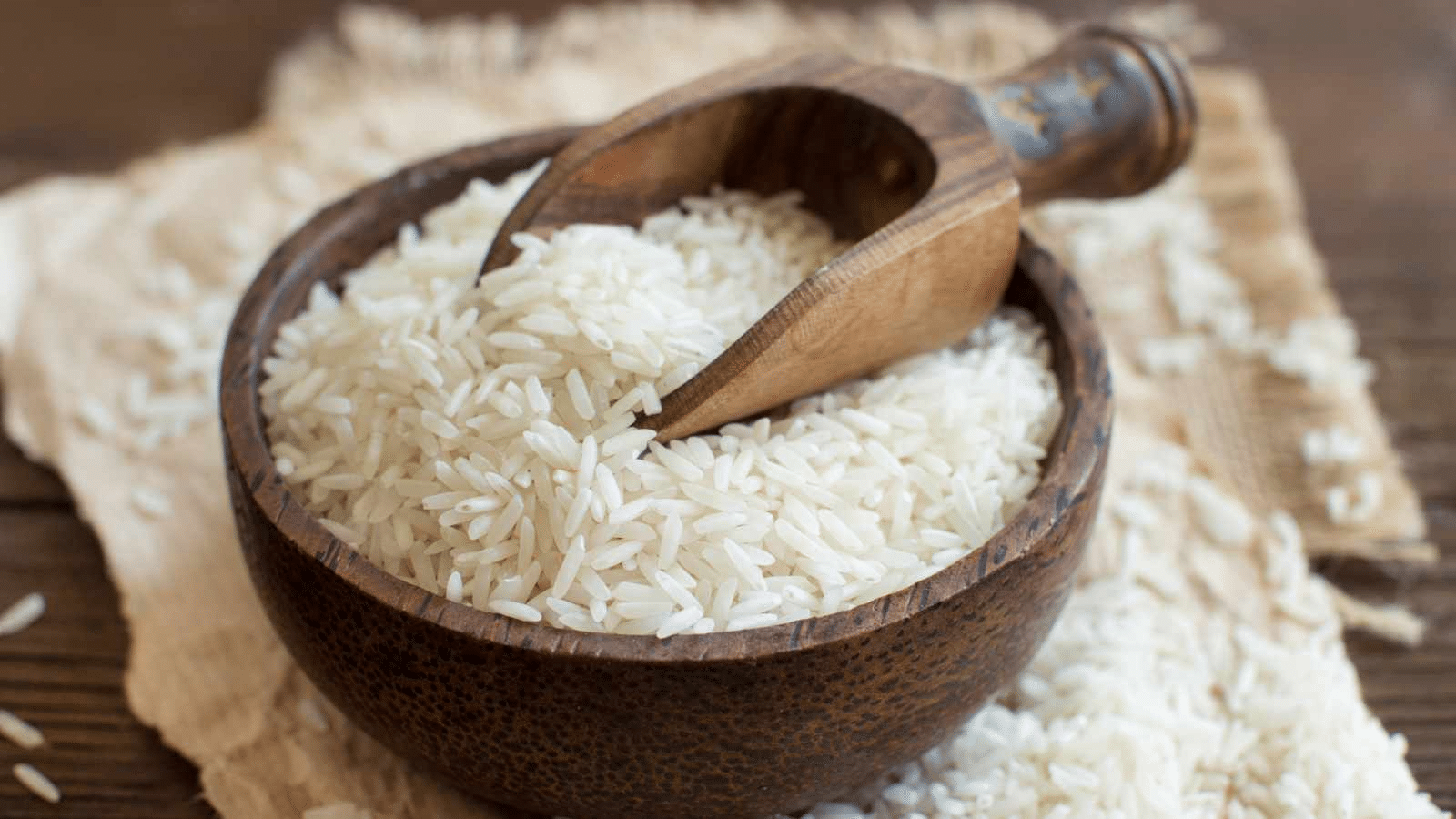
16 Grocery Staples to Stock Up On Before Prices Spike Again
I was in the grocery store the other day, and it hit me—I’m buying the exact same things I always do, but my bill just keeps getting higher. Like, I swear I just blinked, and suddenly eggs are a luxury item. What’s going on?
Inflation, supply-chain delays, and erratic weather conditions have modestly (or, let’s face it, dramatically) pushed the prices of staples ever higher. The USDA reports that food prices climbed an additional 2.9% year over year in May 2025—and that’s after the inflation storm of 2022–2023.
So, if you’ve got room in a pantry, freezer, or even a couple of extra shelves, now might be a good moment to stock up on these staple groceries—before the prices rise later.





