

We’ve all seen that coworker who’s always busy but rarely makes an impact; sometimes, we’ve been that person. It may seem like an individual issue, but it’s actually widespread.
This isn’t just about missing deadlines; it’s an economic drain. Gallup reports that disengaged employees cost the global economy $8.8 trillion annually, equivalent to 9% of global GDP. In the U.S., the annual loss is estimated to be $450-$550 billion.
The problem is worsening: employee engagement has dropped to a decade-low. Gallup’s 2024 data show that just 31% of U.S. employees feel engaged, down from 36% in 2020—approximately 8 million fewer employees are engaged today.
So, what are the warning signs? These 14 habits aren’t just quirks; they’re red flags that signal deeper issues, from burnout to bad management. Spotting them is the first step to fixing the real problem.
They’re Chronically Late or Absent

We all have those mornings when unexpected events delay us. An occasional late arrival is normal. But when it becomes a pattern, it’s a red flag.
It’s not just about being late; it disrupts teams and costs billions of dollars. Poor punctuality costs the U.S. over $3 billion a year. Absenteeism is even more costly, reaching $225.8 billion—approximately $1,685 per employee.
As author Karen Joy Fowler put it, “Arriving late is a way of saying that your own time is more valuable than the time of the person who waited for you”. It sends a clear message to the team that their schedules don’t matter.
A shift from punctuality to chronic lateness is often a sign of employee disengagement, not just a time-keeping issue. Gallup reports that disengaged employees have a 37% higher rate of absenteeism. A reliable employee becoming consistently late signals a need for managerial attention and support, rather than just reprimand.
They’re Master Procrastinators

Most people procrastinate occasionally, but some employees habitually put off important tasks, instead favoring low-impact busywork.
Procrastination isn’t minor; it carries a big cost. Approximately 88% of workers admit to procrastinating for at least an hour daily, resulting in a loss of $10,396 in annual productivity per employee. Workers lose an average of 2 hours and 11 minutes daily.
Modern psychology reframes procrastination not as a time management problem, but as an emotion regulation problem. It’s often a symptom of deeper issues like anxiety, fear of failure, perfectionism, or even ADHD. The employee isn’t necessarily lazy; they may be overwhelmed by the task, afraid of being judged, or struggling with low self-esteem. A manager who only sees laziness is missing the real story and the chance to provide support, like clarifying expectations or breaking down large projects, that could actually solve the problem.
They Constantly Miss Deadlines

A missed deadline isn’t just a schedule slip; it breaks trust and disrupts projects. It delays dependent tasks, forcing teammates to scramble, causing frustration and burnout.
Interestingly, this is often a top-down problem. A 2023 report found that 64% of employees lose up to two hours a week due to a lack of clear deadlines from leadership, creating a culture where timelines are viewed as mere suggestions.
Consistently missed deadlines are rarely an individual’s fault alone. They often signal a systemic breakdown in planning, resource allocation, or communication from the top. When a team member misses a deadline, the first question shouldn’t be “What’s wrong with you?” but “What’s wrong with our process?”
They Live in “Fauxductivity” Mode

Ever see someone frantically typing emails, hopping between meetings, and keeping their Slack status permanently green, yet they never seem to produce any actual results? Welcome to the world of “fauxductivity”, the art of looking incredibly busy while accomplishing very little of value.
This performative work is more common than you think. A recent survey by WorkHuman found that 37% of managers and 38% of executives admit to faking productivity. For many, it’s a survival tactic. Two-thirds of workers say they feel forced to perform “busyness” because their company culture rewards constant activity over tangible outcomes.
When employees feel they are being watched but not trusted, they optimize for the appearance of work rather than focusing on deep, meaningful tasks. Fauxductivity is a direct, albeit dysfunctional, response to a low-trust, high-surveillance work culture. It’s a sign that the company is measuring the wrong things.
Their Desk (and Digital Life) Is a Mess

A cluttered desk, a chaotic desktop, an inbox with 10,000 unread emails- these aren’t just personality quirks. They are black holes for productivity.
A disorganized employee loses time and focus. IDC data found that the average knowledge worker spends almost two hours daily just searching for information. Add a messy workspace, and another 40 minutes can be lost looking for a sticky note.
Chronic disorganization often signals mental overwhelm. When workload and information exceed capacity, both physical and digital systems can fail. A messy desk may indicate that the employee is overloaded and needs support—not just a cleanup.
They’re a Communication Black Hole

You send an email. Days go by. You send a follow-up. Crickets. When you finally get a response, it’s vague and unhelpful. Dealing with a communication black hole is infuriating and a massive productivity killer.
The stakes are incredibly high. A study by leadership consultancy Fierce, Inc. found that 86% of employees and executives cite a lack of effective communication as a primary cause of workplace failures. On the other hand, teams that communicate effectively can increase their productivity by as much as 25%.
While an individual can certainly be a poor communicator, a widespread communication problem is almost always a failure of leadership and culture. It signals a lack of clear channels, expectations, and psychological safety. When you see an employee who is a “communication black hole,” it’s worth investigating if they are simply mirroring a culture where information is hoarded and clarity is a rare commodity.
They Practice “Social Loafing” in Teams

Ever been in a group project where one or two people do all the heavy lifting while others do little to contribute? That’s “social loafing,” a psychological phenomenon where people tend to exert less effort in a group setting than when working alone. It’s the “someone else will do it” effect in action.
Social loafing is well known; research shows that as group size increases, individual effort tends to decrease. 39% of employees say collaboration is lacking in their organizations. It’s common in virtual teams, where accountability is easier to avoid.
Social loafing thrives when individual contributions are invisible or unvalued. It’s not that people are inherently lazy; it’s that they feel their personal effort won’t be noticed or rewarded, so they conserve their energy. The solution is to make individual roles, responsibilities, and successes visible, even within a team project, so that no one gets lost in the crowd.
They Avoid Taking Initiative

This is the employee who does their job, and only their job. They stick strictly to their job description, never volunteering for new projects, never offering ideas, and never going beyond the bare minimum.
This is a classic sign of disengagement. Gallup reports 50% of employees globally are “not engaged”—the so-called “quiet quitters” who have mentally checked out. Often, the root cause is a lack of recognition. A stunning 66% of employees say they would leave their job if they didn’t feel appreciated. A lack of initiative signals a complete lack of emotional investment.
But it can also be a sign of a low-trust environment. Employees often stop taking initiative because they’ve been conditioned to believe it’s not safe. Past ideas may have been ignored, or they’ve seen proactive colleagues punished for well-intentioned mistakes. An employee who doesn’t take initiative may not be unmotivated; they may be acting rationally in an environment where the safest bet is to keep a low profile.
They’re Always Making Excuses

Save this article
“The traffic was bad.” “I’m waiting on an email from Steve.” “This project is more complicated than we thought.” Unproductive employees often have a ready-made excuse for why something isn’t done, deflecting responsibility by blaming external factors instead of taking ownership.
This avoidance tactic is surprisingly common. In 2022, people in the U.S. searched Google for “excuses to miss work” a whopping 2.2 million times—a 1,884% increase from 2020. This lack of accountability poses a significant challenge for leaders, with 25% of managers citing it as one of their top concerns.
However, chronic excuse-making is often a learned behavior in a workplace that harshly punishes failure. When mistakes lead to blame instead of learning, employees naturally develop defense mechanisms to protect themselves. A culture of excuses is often a direct reflection of a culture of blame. To foster accountability, leaders must first create an environment where it’s safe to admit mistakes.
They’re a Meeting Hog

We all know this person. Their calendar is a solid wall of back-to-back meetings, many of which they scheduled themselves. They either call endless, pointless meetings or derail the ones they attend, sucking time and energy from everyone else.
This isn’t just annoying; it’s costly. Meetings have tripled since 2020, with employees averaging 11.3 hours per week. However, 72% of meetings are considered ineffective, and 71% of senior leaders find them unproductive, resulting in an annual cost of $399 billion to the U.S. economy.
An over-reliance on meetings is a clear sign that an organization’s fundamental work processes are broken. Meetings become a clumsy substitute for clear roles, asynchronous communication, and decisive action. The person who constantly calls meetings may be trying to get work done within a dysfunctional system that offers no other tools.
They’re a Constant Source of Negativity

A persistently negative attitude is more than just a downer; it’s a contagion that can poison team morale, kill creativity, and drive away top performers.
This has a real financial cost, draining U.S. businesses of $3 billion a year. It’s a key ingredient in a toxic work environment, as a survey from the American Psychological Association revealed that 19% of workers say they experience it. People in these environments are more than three times as likely to suffer harm to their mental health.
As organizational psychologist Adam Grant explains, “Negativity is like a virus; it can spread quickly and silently, affecting not only the individual but the entire organization”. There’s a popular saying among managers that captures this perfectly: “Nothing will kill a great employee faster than watching you tolerate a bad one”.
But chronic negativity is often a direct result of an employee feeling unheard, undervalued, or frustrated by legitimate problems. The complaints may be the only way they know how to signal that something is wrong. A manager’s first response shouldn’t be to silence the negativity, but to investigate it. The complainer might actually be a canary in the coal mine.
They’re Easily Distracted by… Everything

In today’s workplace, the ability to focus is rare. Unproductive employees often struggle against constant digital or physical interruptions.
Distractions are costly. It takes over 23 minutes to refocus after an interruption. Seventy-nine percent of U.S. workers get distracted within an hour, and 59% struggle to focus for 30 minutes. One study published by Harvard Business Review found that workers toggle apps 1,200 times a day, losing nearly four hours a week just to refocus.
We often frame distraction as a personal failure of willpower, but it’s more accurately a product of a work environment designed for interruption. “Always-on” communication platforms and open-plan offices create a state of continuous partial attention. To solve the distraction problem, companies must architect an environment that protects focused work, rather than just telling employees to “try harder.”
They Take “Break Time” to a New Level

There’s a critical difference between restorative breaks that boost productivity and excessive breaks that amount to time theft. Unproductive employees consistently blur that line, turning a 15-minute coffee run into a 45-minute disappearance.
This affects 75% of U.S. businesses and costs up to $400 billion a year. Employers lose 4.5 hours per week per employee to time theft, including long breaks. Even a small daily break overage in a 25-person team can cost over $10,000 each year.
Of course, breaks are essential. But when employees consistently abuse that virtue, it’s often a sign that they don’t respect the work, their colleagues’ time, or the company’s goals. It’s a behavioral manifestation of the psychological detachment that defines disengagement. The real issue to address is why the employee doesn’t feel their work is important enough to return to on time.
They Work Too Much (Hello, Burnout!)

This one might seem counterintuitive, but the workaholic who is always “on” is often deeply unproductive. Their long hours are a classic case of diminishing returns, leading to burnout, more mistakes, and lower-quality work.
Productivity is about value, not hours. Experts recommend breaks every 1–2 hours, but workaholics often skip them, leading to burnout—a form of mental, physical, and emotional exhaustion recognized by the World Health Organization.
Workaholism is often a cultural phenomenon, praised as dedication but actively fostered by companies that reward “face time” over efficient and high-quality output. The employee who works too much is often the star pupil of a dysfunctional culture. To fix their unproductivity, the organization must shift its values from celebrating hours logged to celebrating results achieved.
Key Takeaway

If there’s one lesson from these 14 habits, it’s this: unproductivity is most often a warning sign of deeper workplace issues, not just laziness.
These behaviors are symptoms of deeper problems: plummeting employee engagement, widespread burnout, a lack of clear goals, or a culture that rewards the wrong things. According to Gallup, a staggering 70% of the variance in team engagement is determined solely by the manager.
If you notice these habits in a colleague or yourself, focus less on blame and more on curiosity about the root causes. The real path to higher productivity is not working harder, but addressing the environment: create an engaged, clear, and supportive workplace where people can thrive.
Disclaimer – This list is solely the author’s opinion based on research and publicly available information. It is not intended to be professional advice.
16 Grocery Staples to Stock Up On Before Prices Spike Again

16 Grocery Staples to Stock Up On Before Prices Spike Again
I was in the grocery store the other day, and it hit me—I’m buying the exact same things I always do, but my bill just keeps getting higher. Like, I swear I just blinked, and suddenly eggs are a luxury item. What’s going on?
Inflation, supply-chain delays, and erratic weather conditions have modestly (or, let’s face it, dramatically) pushed the prices of staples ever higher. The USDA reports that food prices climbed an additional 2.9% year over year in May 2025—and that’s after the inflation storm of 2022–2023.
So, if you’ve got room in a pantry, freezer, or even a couple of extra shelves, now might be a good moment to stock up on these staple groceries—before the prices rise later.
6 Gas Station Chains With Food So Good It’s Worth Driving Out Of Your Way For
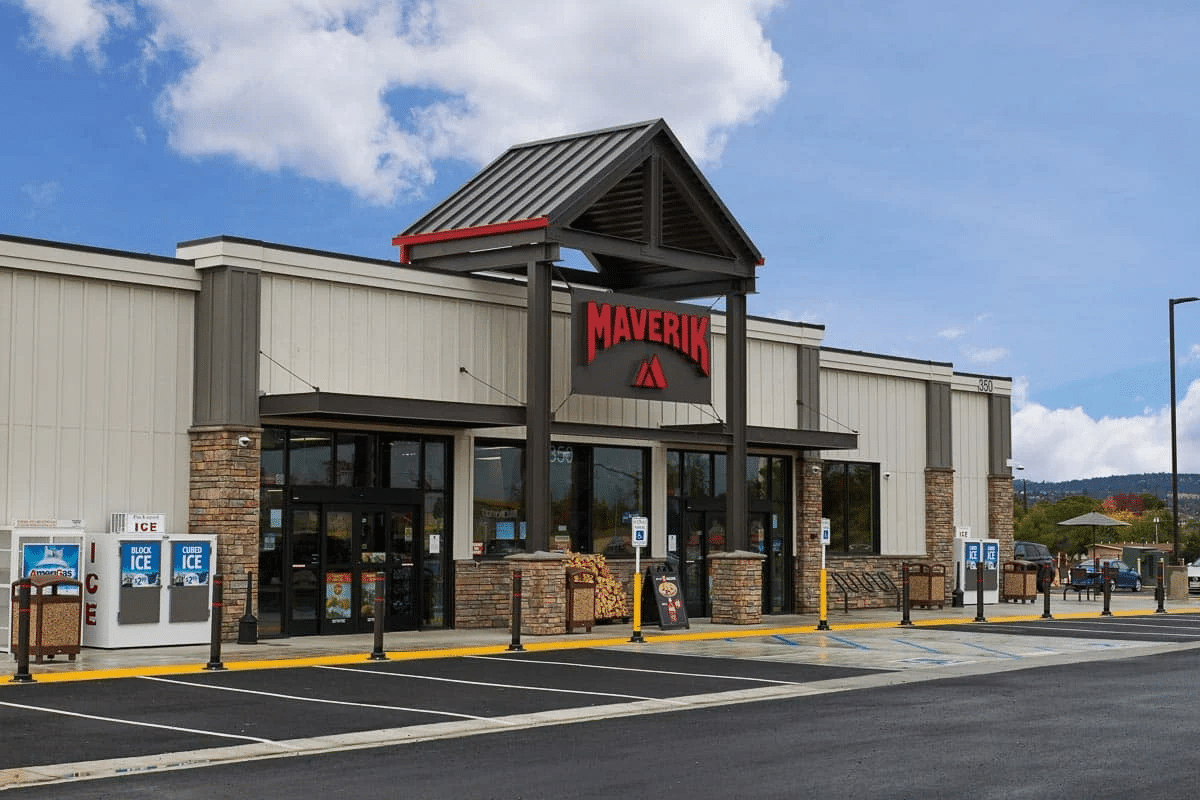
6 Gas Station Chains With Food So Good It’s Worth Driving Out Of Your Way For
We scoured the Internet to see what people had to say about gas station food. If you think the only things available are wrinkled hot dogs of indeterminate age and day-glow slushies, we’ve got great, tasty news for you. Whether it ends up being part of a regular routine or your only resource on a long car trip, we have the food info you need.
Let’s look at 6 gas stations that folks can’t get enough of and see what they have for you to eat.





