If you’ve ever watched a millennial lose it over a grocery app crash or blinding LED headlights, trust me—it’s not just them being dramatic.
Millennials use an average of 8.4 social media accounts, spending 2 hours and 25 minutes every day. There is a lot of digital noise to sort through every day. In the meantime, 86 percent of millennials remain social media users, always connected to a world that never stops buzzing, pinging, and demanding answers.
However, the point is that here, this online overload forms a special cocktail of stress. You have to live in a hyperlinked world, attempting authenticity, simplicity, and genuine human connection. The result? The things that bother us day-to-day strike in a new way than it was in the past.
Those LED headlights that feel like staring into the sun

This isn’t just about comfort. These lights actually interfere with your vision at night and increase the risk of driving. While older generations may dismiss it as the next generation of technological advancement, millennials have been raised with technology, which was meant to improve life, not to blind them further.
Something about modernized technology that introduces more issues than it resolves is especially irritating.
The unspoken rule that everything must be documented online

Do you remember that you could eat a meal without having to take a photo of it? Millennials were at the very end of that period, and they miss it more than they would like to admit. The demand to record all experiences, from coffee to concerts, turns authentic experiences into writing sessions.
This is not being anti-social media. It has to do with the wearying sense that life is not truly being lived unless it is being aired. Many millennials are torn between the desire to share something and the desperate need to have moments that are theirs and do not require cameras to capture them.
When touchscreens replace physical buttons

Striking glass, rather than a real button, is very unsatisfying. Millennials recall the rewarding sensation of typing on physical keyboards and the feel of actual control. Everything is a touchscreen these days, from car dashboards to refrigerators, and even in restaurants, where you can order food on a touchscreen.
It is not a matter of being old-fashioned. It is losing the bodily relation between action and effect. When you press a real button, you know that it worked. When using touchscreens, you are often left wondering if it has been registered or if you need to make another attempt. A certain amount of uncertainty accumulates from hundreds of daily communications.
Grocery shopping has become a full-contact sport

Far behind us are the times of pushing a cart into the aisles and meandering through them. Grocery shopping is now a strategic operation that should be planned like a military process. You need the store app with digital coupons, your own bags, because the planet isn’t saved by chance, and the patience to learn how to use self-checkout machines set up by people who have never bought groceries in their lives.
Combine this with the pressure to price-shop among various apps as you stand in the cereal aisle, and what once was a simple purchase turns into a multi-app conundrum. Millennials value efficiency and environmental sustainability, but they remember that in the past, people did not need a smartphone or a computer science degree to buy food.
The constant judgment of life choices

All millennials were raised with this adage: In my day, we never needed avocado toast and fancy coffee. The suggestion that their generation is experiencing these issues due to poor spending habits, rather than economic realities, is especially offensive, as it fails to consider the numbers.
Millennials entered the labor market during the Great Recession, struggled to afford housing costs that have significantly exceeded income growth, and faced student loan debt that their predecessors could not have even imagined. It is off-putting and deafening to be lectured on the importance of financial responsibility whilst living in an economy with entirely different rules than those of their parents.
Doomscrolling becomes an accidental hobby

You open your phone to check the weather, and somehow you have been 47 minutes deep into depressing news stories. This has become what is now known as doomscrolling: the unintended hobby of a generation that was brought up believing that access to information could improve the world.
Instead, the backdrop of anxiety that is difficult to shake is produced by the daily onslaught of world disasters, political unrest, and social injustice. Millennials believe it is their responsibility to be aware of what is happening in the world, but the overwhelming amount of bad news is often debilitating rather than empowering.
Being labeled as entitled or lazy by default

There is no single generational stereotype that hurts more than being labeled entitled or lazy. Millennials are working harder than past generations and engaging in multiple jobs or side hustles to make a living. They are better educated than all the preceding generations, but they have been accused of demanding decent salaries and work-life balance.
Such mislabeling can be especially exasperating since it downplays valid issues concerning workplaces, housing affordability, and wealth disparity. It is only natural to become defensive when what your generation has been going through is explained away as a personality defect rather than a systemic problem.
Watching simple pleasures disappear

Remember postcards? Informal eating that did not need booking several weeks beforehand? Shops where you could really window shop without feeling you have to rush and get out? Millennials have seen numerous forms of straightforward enjoyment being commercialized or eliminated.
It is not nostalgia just because it is nostalgic. It laments the death of the spontaneous and simple parts of daily life. Everything requires planning, applications, accounts, and optimization. In some cases, you want to browse a bookstore without being asked three times to enter your email address.
The love-hate relationship with constant connectivity

Millennials were the first to discover social media, adopt smartphones, and base their careers on digital contact. Yet they also recall times when connectivity wasn’t so ubiquitous, and the present situation of always-on connectivity seems exceptionally debilitating.
The pressure to reply to messages instantly, remain connected across various platforms, and sustain digital relationships alongside face-to-face ones poses a mental burden that has never existed before. Most millennials are seeking a digital detox, not because they are averse to technology, but because they need to spend some time away from screens.
Navigating toxic social interactions that masquerade as normal

Social media has turned passive-aggressive communication into an art, and millennials are growing increasingly frustrated with deciphering the meaning behind subtweets, indirect posts, and comments, often requiring them to read between the lines. The age of technology has made it possible to be cruel and still deny responsibility.
This transcends internet communication as well. Generally, Millennials are less tolerant of toxic behavior than older generations, as they were raised with a greater understanding of mental health and effective communication models. It is especially exhausting to have to interact with individuals who have not yet reached these standards.
Save this article
Multitasking has become the enemy of focus

Multitasking was a skill that Millennials had been told was beneficial, so they learned to do it. Research has now demonstrated that, in practice, continuous task-switching reduces productivity and causes more stress, leaving many feeling misled into a less efficient way of working.
The anger is not only about productivity but also about losing the ability to concentrate on individual tasks. Reading a book without the constant urge to check the phone every few minutes makes many millennials nostalgic about times when they could spend hours with a book without the need to look at their phone.
The pressure to be perfect at everything

Social media has created a highlight reel culture in which everyone appears to be succeeding every day. Millennials are under pressure not only to perform well at work, but also to maintain flawless relationships, perfect health, environmental awareness, political engagement, and aesthetically pleasing Instagram feeds.
This perfectionism extends to a fear of error. Growing up with the Internet implies that mistakes can be captured on screen, shared, and saved indefinitely. Each choice seems more important, which causes anxiety over decisions that were made with far less attention in past generations.
Feeling misunderstood and isolated despite constant connection

Those who are the most connected generation in history are ironically the ones who feel most lonely. Despite having hundreds of social media connections and continuous contact via the Internet and digital channels, many millennials still experience absolute isolation and feel misunderstood by both older and younger generations.
It is not just a matter of fewer friends. It is a story of being in between generations: too old to follow Gen Z trends, too young to have the views of the boomer, and likely to be overlooked by both. The syndrome of being the middle child in a family creates a form of social displacement.
Watching social norms change faster than anyone can keep up
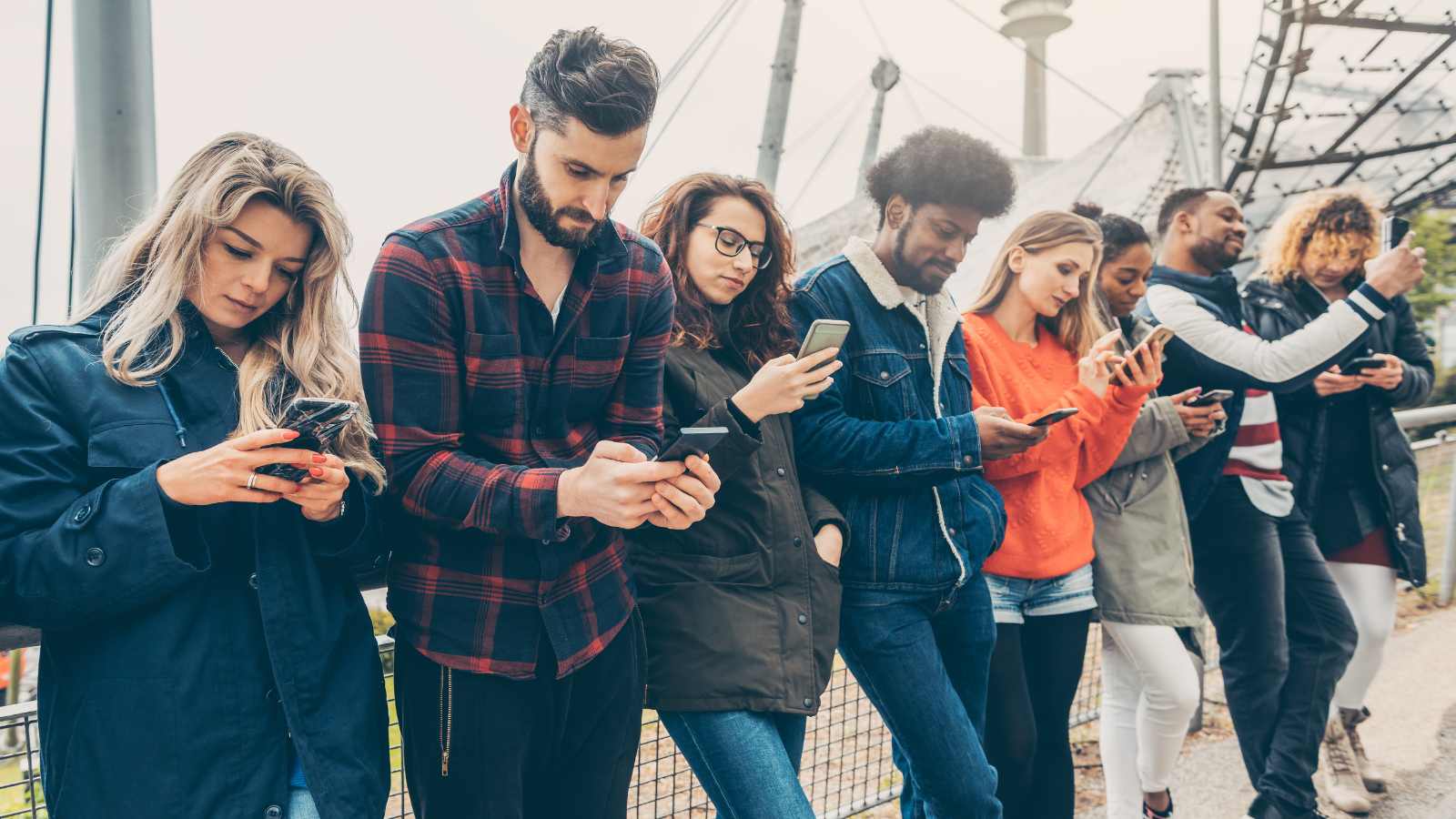
Millennials have experienced a rapid shift in social expectations, encompassing everything from dating and careers to family life. Although they usually welcome gradual change, the ever-changing nature of social norms is tiresome at times.
Something acceptable five years ago may be an issue today. Staying in touch with evolving expectations without inadvertently offending anyone requires being vigilant at all times. This is not an anti-progress message — it is the intellectual exhaustion that comes from having to navigate an ever-changing social landscape.
The expectation to always be productive and optimized

Hustle culture informed millennials that all time needs to be work-related, all leisure activities need to be turned into income, and all talents should be used to move up the career ladder. This has produced a generation that can hardly exist without thinking they should be doing more with their time, which they believe is essential.
The desire to make all things optimal, including sleep, nutrition, workouts, and relationships, reduces life to an ongoing enhancement project and no longer a pleasure to be experienced. Most millennials are overworking themselves, not because they are overworked, but because they are trying to make everything in their lives perfect.
Caring deeply about issues that others dismiss

Millennials have been taught that they can make a difference in the world, which is why they are deeply concerned about environmental devastation, societal injustices, and corporate fraud. This strong sense of caring leads to frustration when they meet people who do not seem concerned with issues that appear morally significant.
The lack of alignment between the values of the millennium and societal action leads to a persistent state of low-level outrage. It is especially frustrating to see the destruction of the environment unfold as people argue over whether climate change exists, or to see inequality exist. People say that it is not a problem, especially when you have been taught that awareness is power.
Death by a thousand minor annoyances

In addition to major frustrations, millennials face numerous minor irritations, which, although seemingly insignificant on their own, combine to create a significant stressor. Excessively bright LED lighting in shops, technology interfaces that are needlessly complex to navigate, subscriptions that require more effort to cancel than to subscribe initially, and systems meant to encourage customers to interact with one another instead of human service.
These are not huge issues in life, but they do reflect an overall trend of efficiency over human experience. The slightest inconvenience serves as a reminder that much of the convenience one enjoys comes at the cost of comfort, and optimization often overlooks the things in life that truly make it enjoyable.
Key takeaway

What makes millennials uncontrollable is not LED headlights or touchscreen keyboards; it is the signs of a generation navigating a world of rapid technological change, while human needs have not kept pace at the same speed. Millennials desire the convenience of contemporary technology without it taking away the authenticity, straightforwardness, and sincerity that make life worth living.
The second time you come across a millennial who is losing his temper over what might seem to be a trivial thing, you will understand that it is likely not about that specific thing. This is regarding the outcome of growing up in a world created for efficiency rather than humanity. And honestly? It is a fairly understandable thing to be annoyed about.
Disclaimer–This list is solely the author’s opinion based on research and publicly available information. It is not intended to be professional advice.
Don’t swipe until you read this: The 7 best credit cards for 2025 ranked by rewards

The 7 Best Credit Cards for 2025 Ranked by Rewards
There’s this moment that sticks with me—standing at a checkout line, swiping my old card like I always did, and thinking, “Wait… why am I not getting anything back for this?” I wasn’t traveling on points. I wasn’t getting cash back. I was spending. Sound familiar?
Look, the truth is, credit cards can work for you—if you choose the right one. And in 2025, you’ve got some advantageous options that can actually boost your bank account. From travel lovers to grocery haulers, there’s something for everyone.
Let’s break down the best credit cards out there this year—the ones that actually give back.
10 simple habits to recharge your mind and body

10 Simple Habits to Recharge Your Mind and Body
These 10 simple habits to recharge your mind and body demonstrate that sustainable wellness starts with everyday choices, not drastic changes.
And if you’re looking for an easy way to support those habits, try pairing your morning ritual with a wellness-focused coffee.