

The American road trip holds a near mythic place in travel culture, promising freedom, discovery, and stories that unfold mile by mile.
Despite changing travel habits, road trips remain central to American tourism because they combine movement, scenery, and personal freedom in one experience.
According to AAA, nearly 80 percent of U.S. leisure trips are taken by car, a clear sign that the open road still defines how people explore the country. Highways cut through deserts, hug coastlines, and climb mountain passes, turning the journey itself into the destination rather than a means to an end.
Some routes have earned legendary status through scenery, history, and the memories made along the way. Drives like Route 66 or the Pacific Coast Highway shape how travelers see America and how America sees itself. These iconic road trips capture the spirit of movement and possibility, offering experiences that linger long after the final mile marker passes in the rearview mirror.
Route 66
U.S. Route 66 was established in 1926, stretching roughly 2,500 miles from Chicago to Santa Monica and crossing eight states. The National Park Service now oversees Route 66 preservation initiatives. It describes the route as a primary artery for westward migration during the Dust Bowl and a catalyst for roadside America.
Today, it survives as a patchwork of preserved segments and revived towns. Stops like Cadillac Ranch in Texas and neon corridors in New Mexico function as a living museum of twentieth-century travel. Route 66 endures not because it is efficient but because it remembers.
Pacific Coast Highway
California’s Pacific Coast Highway, composed largely of Highway 1 with portions of U.S. 101, runs approximately 600 to 650 miles along the state’s edge. Visit California and the California Department of Transportation consistently promote it as one of the world’s most scenic coastal drives.
From Big Sur’s cliffs to redwood forests in the north, the road compresses ecosystems into a single ribbon of pavement. As electric vehicle charging networks expand along coastal corridors, the trend is noted in Federal Highway Administration alternative fuel infrastructure plans. The route has become both a nostalgic and forward-looking journey.
Blue Ridge Parkway
The Blue Ridge Parkway extends 469 miles between Shenandoah National Park and Great Smoky Mountains National Park. Managed by the National Park Service, it is officially marketed as America’s Favorite Drive and designed for scenery rather than speed.
With trucks prohibited and speed limits hovering around 45 miles per hour, the parkway encourages pauses. Overlooks like Linville Falls and Craggy Gardens offer access to hundreds of trails and picnic areas, reinforcing the idea that this road is meant to be savored, not conquered.
U.S. Route 1
U.S. Route 1 runs approximately 2,369 miles from Fort Kent, Maine, to Key West, Florida, according to the Federal Highway Administration. It traces the Atlantic seaboard through historic towns, major cities, and shifting coastlines.
Its southernmost stretch, the Overseas Highway in the Florida Keys, turns Route 1 into a spectacle of bridges and open water. Framed this way, the road becomes an Atlantic spine, connecting lighthouses to palm trees in one continuous line.
Natchez Trace Parkway
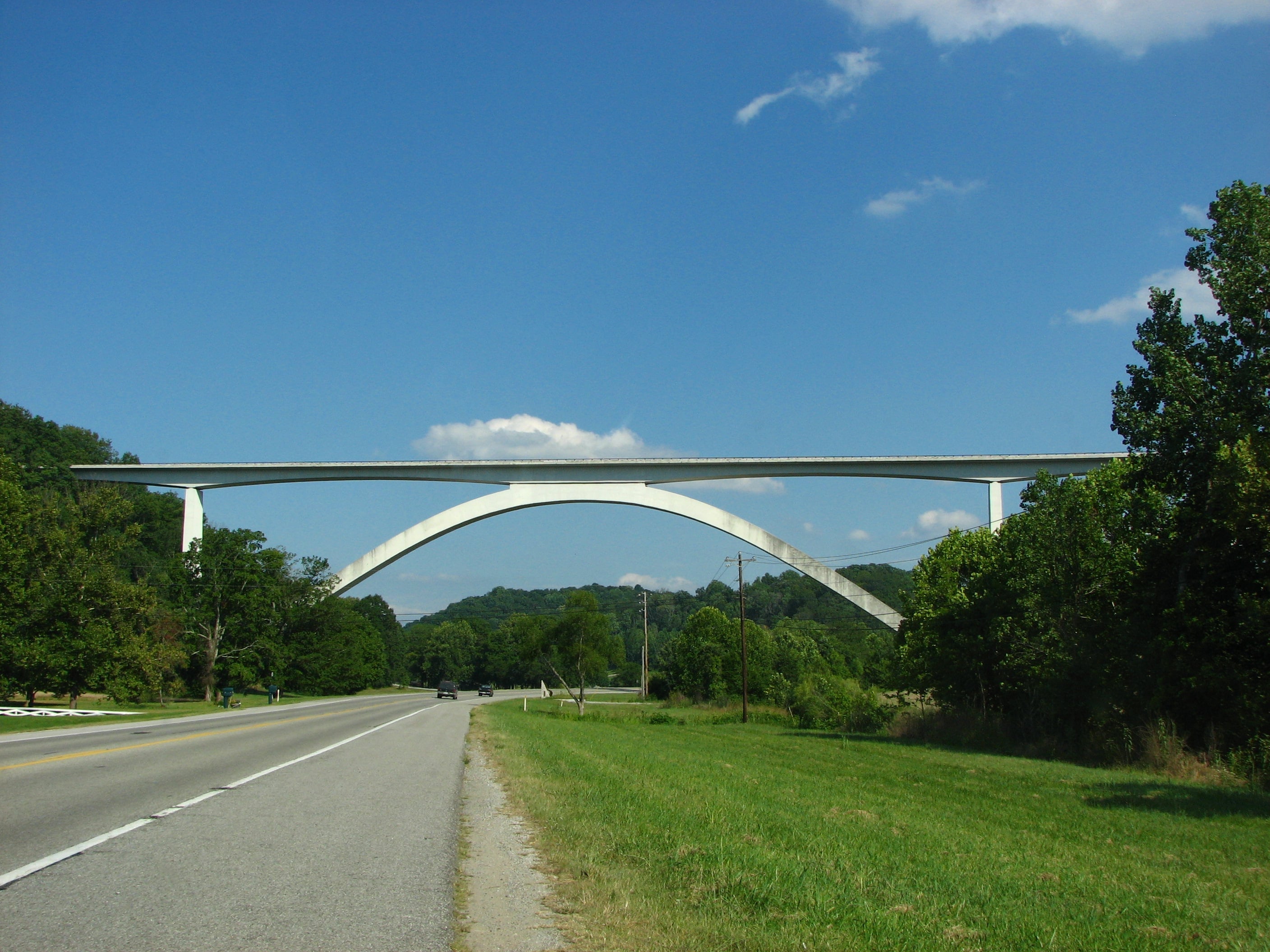
The Natchez Trace Parkway follows a 444-mile corridor between Nashville and Natchez, based on routes used by Native American tribes and later by traders and settlers. The National Park Service manages the parkway as a protected scenic byway.
There are no billboards, no commercial exits, and no rush. Interpretive sites explain prehistoric travel, early American commerce, and Civil War history. The road invites a slower form of tourism, one that prioritizes reflection over accumulation.
Great River Road
The Great River Road traces the Mississippi River for roughly 3,000 miles through ten states, from Minnesota to Louisiana. It is designated a National Scenic Byway and All-American Road by the Federal Highway Administration.
Save this article
Because it follows a network rather than a single highway, travelers choose their own segments. River towns, agricultural plains, and music centers create a narrative of American life shaped by water. The road is less about arrival than alignment with the river itself.
Alaska Highway
The Alaska Highway runs approximately 1,390 miles from Dawson Creek, British Columbia, to Delta Junction, Alaska. Built during World War II and now maintained by Canadian and Alaskan authorities, it remains one of North America’s most iconic wilderness drives.
Long distances between services and frequent wildlife sightings demand preparation. Travel editors often describe it as a reminder that road trips once required maps and patience. Even now, it retains the feeling of a frontier crossed deliberately.
Florida Keys Overseas Highway
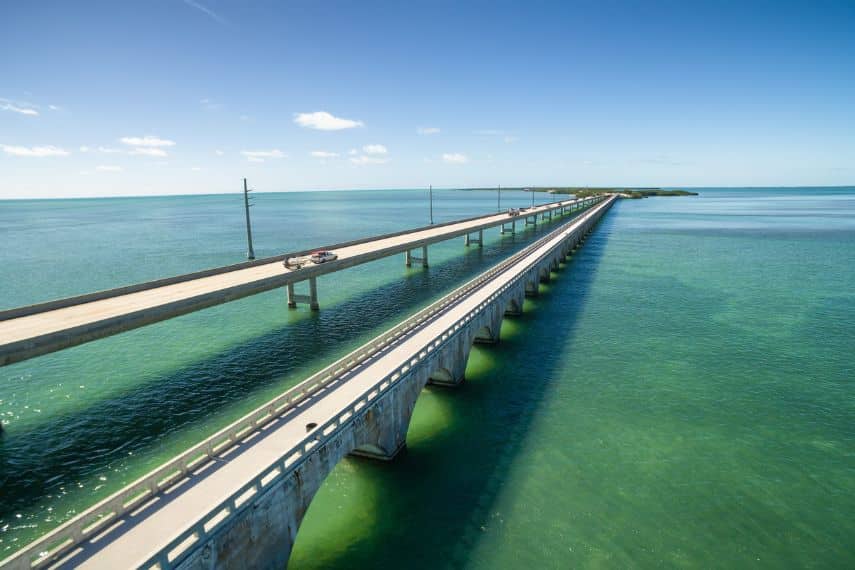
Seven Mile Bridge Florida
The Overseas Highway spans about 113 miles from mainland Florida to Key West, crossing 42 bridges, including the Seven Mile Bridge. The Florida Department of Transportation highlights it as one of the most visually dramatic roads in the country.
The ocean surrounds the drive for long stretches, blurring the boundary between road and sea. As the southern terminus of U.S. Route 1, it functions both as a destination and a finale. Sunrise and sunset feel like bookends rather than events.
Key Takeaway
Data from the Federal Highway Administration and AAA confirms what culture has long suggested. The American road trip persists not out of habit but meaning.
These routes endure because they offer something increasingly rare: time, continuity, and a sense that movement itself can still be the destination.
More articles:
- 11 charming Southern cities where you can retire on $1,400 a month
- Top 12 worst cities in America
- These 12 U.S. cities are growing so quickly residents feel overwhelmed
Disclosure: This article was developed with the assistance of AI and was subsequently reviewed, revised, and approved by our editorial team.
Like our content? Be sure to follow us on Newsbreak.
The most expensive cities to live in the world
ElmaNuffic/Pixabay
As inflation bites worldwide, a new ranking reveals the cities where simply getting by now costs a small fortune.
Curiosity about the cost of living often leads us to wonder just how far our paychecks would stretch in different corners of the globe. With inflation tightening its grip globally, the price of essentials like housing, transport, and even a simple morning espresso has skyrocketed in major metropolitan hubs. For many American families, watching these financial trends offers a fascinating, if somewhat shocking, glimpse into the global economy. Learn more.
12 Most Tourist-Friendly Cities Around the World

Alex Agrico/Pexels
Data from Statista shows that Istanbul welcomed over 20 million international visitors in 2023 and London nearly 19 million, yet newer traveler surveys suggest the cities people remember most are the ones where locals actively help, smile, and make strangers feel at home.
When it comes to travel, some cities go above and beyond to make visitors feel welcome and comfortable. Whether it’s their easy public transport, friendly locals, or top-tier hospitality, these cities stand out as tourist-friendly destinations. Learn more.





