

Religion continues to shape politics, culture, healthcare, and public life around the world. According to Pew Research Center, roughly 84% of the global population identifies with a religious tradition, making faith one of the most influential social forces on the planet.
While most religious organizations operate with little public controversy, some movements have attracted sustained legal, ethical, or public-policy scrutiny because of specific beliefs, organizational practices, or conflicts with governments. Questions surrounding medical decision-making, financial transparency, religious freedom, and the rights of members have repeatedly placed certain groups at the center of court cases and public debate.
Understanding these controversies doesn’t necessarily mean judging the religions themselves. It means examining how faith, law, and society sometimes collide in ways that continue to shape public policy around the world.
Here are 12 religious movements that have generated significant legal, ethical, or social controversy—and the issues that continue to surround them.
Church of Scientology
The Church of Scientology is infamous due to its under-the-radar operation as well as its aggressive defense strategy towards its critics. Scientology has an estimated 11,000 churches in 167 countries worldwide. But independent estimates put the number of active Scientologists at around 30,000, well below the church’s figures.
It remains in the limelight for its Fair Game policy, its practice of harassing critics, and its use of high-profile celebrities such as Tom Cruise. The legal wrangles and allegations of maltreatment by its former members have made Scientology one of the most scrutinized organizations.
The treatment of its members, especially on its finances and on mental health, is a concern of the U.S. government and other independent watchdogs.
Jehovah’s Witnesses
The Jehovah’s Witnesses, which have about 9.2 million active members around the globe, have been under intense scrutiny over their rejection of blood transfusions and their neutrality on political issues. This has led to numerous legal proceedings in many parts of the world, with opponents claiming that such beliefs pose a threat to life and are detrimental to social engagement.
Their annual Memorial gathering, attended by over 20 million people worldwide, has been an indication of the magnitude and reach of their religion. Moreover, their manner of dealing with sexual abuse cases and the fact that they have an internal judicial system have subjected them to social as well as legal criticism. Although the group’s follower count is high, its position on medical and other social issues keeps it in the spotlight of both professionals and the media.
Falun Gong (Falun Dafa)
Falun Gong is a mystical movement that emphasizes meditation and moral principles based on Buddhist teachings. So even though it had millions of followers in China, the Chinese government outlawed the group in 1999, claiming that its rapid expansion was a menace. To this day, experts pay attention to the Falun Gong because of the human rights violations that the members continue to experience, especially in China, where members are harassed, arrested, and tortured.
The United Nations has raised its eyebrows over such violations, given that the cases of forced organ harvesting and other human rights violations have continued to come up. Although its central organization continues to operate in the United States and other nations, its oppression in China is also a central theme of the overseas human rights movements.
Unification Church (“Moonies”)
The Unification Church, or the Moonies as it is commonly called, was founded by Sun Myung Moon in South Korea and has attracted significant attention due to its mass wedding ceremonies and effective political connections. It is estimated that the movement has millions of members worldwide, and its political power has been especially felt in the U.S., where it has been lobbying to enact conservative policies.
The controversial mass marriage practices, in which thousands of couples are married simultaneously, have raised questions about how the group recruits and controls its members. Nevertheless, the church still has power, even after the critics, through its system of related organizations, including the Universal Peace Federation, which lobbies world leaders in the global arena.
Raelian Movement
Raelism is a UFO-based religion, which was established in the 1970s by Claude Vorilhon, who argued that humanity was an invention of extraterrestrial beings, the Elohim. This movement has attracted attention to its scandalous views about cloning, human evolution, and alien life. Raelism supports human cloning as a way of improving human society, and this view has put it at odds with the mainstream religious and scientific fraternities.
The movement has 50,000-100,000 followers worldwide and continues to propagate its ideologies through publications and open gatherings. The Raelian clamor towards scientific and technological progress, including cloning, has kept the group in the focus of bioethicists as well as religious watchdogs.
International Society for Krishna Consciousness (Hare Krishnas)
The Hare Krishna movement, or the International Society for Krishna Consciousness (ISKCON), has more than 800 temples and 120 eco-villages worldwide. The group is marked explicitly by its shared residential set-ups and the mode of recruitment, which, according to some critics, is very closed.
ISKCON is well known for its quest to disseminate the vegetarian ideology and Eastern religious spirituality, but has gained a reputation for feeding more than 1.2 million children every day through its numerous food relief programmes in India.
Despite ISKCON’s positive public image as a public service organization, the recruitment of new members is still under expert scrutiny, particularly regarding its impact on younger generations and the organization.
The Family (a.k.a. The Fellowship)
The Family, or The Fellowship, is a secretive Christian network with enormous influence in U.S. politics. The company is best known for coordinating the National Prayer Breakfast in Washington, D.C., which has become one of the major gatherings of political leaders on both sides of the aisle.
Although it goes under the radar, the influence of The Family in American politics cannot be overstated, as its members are reported to have affected policy-making and developed political connections. The organization operates in the background, with prayer and secret meetings among the tools used to accumulate power.
Save this article
New Apostolic Reformation (NAR)
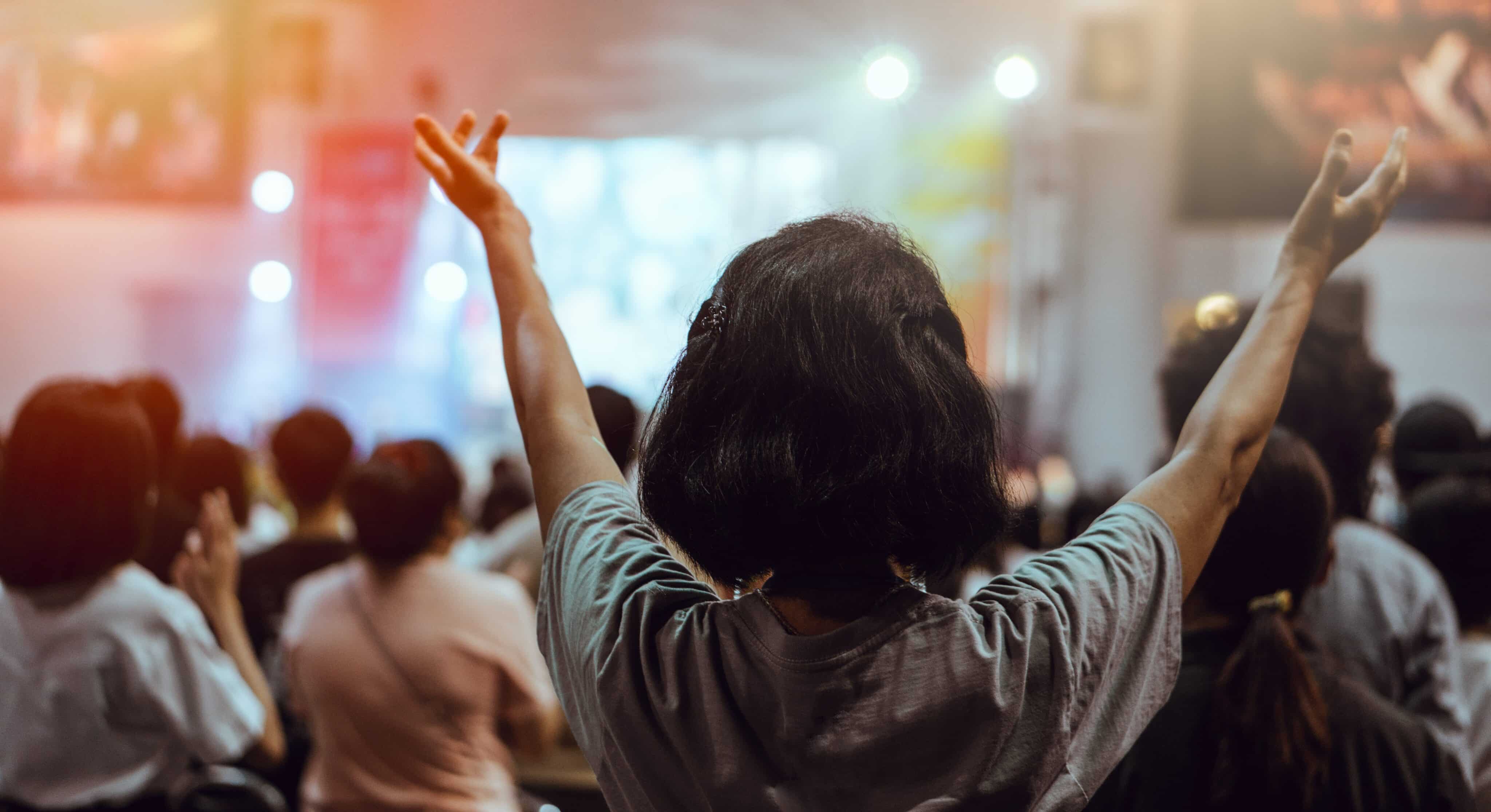
via Shutterstock.
The New Apostolic Reformation (NAR) is a disorganized evangelical movement that has taken root in U.S. politics to a significant degree over the past few years. NAR leaders are confident in the influence of contemporary apostles who can directly address God, and they state that God should guide political leaders to effect change.
The group has been increasing its power considerably, particularly since it leads movements such as the ReAwaken America Tour, which propagates conservative values and advises the former administration.
Scholars are still keeping a close eye on NAR’s growing political activity due to the overlap between its religious beliefs and the U.S. political arena. According to a 2021 Pew Research study, the movement has helped shift evangelical Christianity toward greater political activity.
Shincheonji Church of Jesus (South Korea)
During the COVID-19 pandemic, Shincheonji Church of Jesus was recognized in other countries for its role in the virus’s spread in South Korea. The non-compliance of the church with the safety measures led to the infection of thousands of its members, resulting in over 5,000 cases being confirmed.
The South Korean authorities traced the outbreak to the church, thereby making it one of the chief agents of pandemic transmission in South Korea. By 2020, the group had more than 200,000 members worldwide, with South Korea and Southeast Asia among the most widespread. There have been experts monitoring the church’s operations as it continues to grow, raising concerns about its impact on society’s health.
House Church Movements in China
In China, house churches or underground Christian organizations have expanded at a very high rate, even after the government started to crack down on them. It has been estimated that there are 50 million to 70 million Christians who serve outside the reach of the government, and their services are a secret so that they are not persecuted.
Such groups are continuously harassed, arrested, and their places of worship forced to close. This notwithstanding, the Chinese house churches have thrived, and new members are always joining. The Human Rights Watch claims that the Chinese government still persecutes underground movements and, as a result, there are still concerns about religious freedoms in the area.
Key Takeaway
These movements draw attention to the intersection of human rights, politics, and religion. With the international scope of Scientology to the underground house churches in China, these two groups have put forward pertinent questions on the freedoms of religious beliefs, rights and freedoms of the law, and the political leverage. Analysts keep a close watch on these organizations, particularly as they expand worldwide and influence their operations.
They are controversial for their practices and political involvement, which are the subject of ongoing research and discussion. These groups demonstrate how modern religion still influences our world, whether through its impact on legislation or through government opposition.
More articles:
- 12 times religion did more harm than good
- 13 common fears that make it hard for people to let go of religion
- Religion across America by state: where faith is strongest and where it’s declining
12 reasons why religion is making a comeback in some regions

The modern world promised answers through progress, but the persistence of faith suggests many are still searching for something science can’t supply.
For decades, sociologists confidently predicted that faith would fade away as technology and science advanced. They assumed that modernization would inevitably lead to a godless society. However, reality has thrown a curveball at those predictions, with religion showing surprising vitality in unexpected corners of the globe. Learn more.
10 ways experts separate cults from religions

Religion is a fundamental part of human culture, yet not all spiritual groups are created equal.
Sociologists estimate that less than 1% of religious organizations meet the criteria experts classify as cults, but their influence can be disproportionately powerful and sometimes harmful. Learn more.
10 reasons millions reject traditional religion for New Age beliefs

Across America and many other parts of the world, people are reshaping how they view faith and spirituality.
A recent Pew Research Center analysis found that about 4 in 10 U.S. adults say they have become more spiritual over time, while fewer say they’ve become more religious, signaling a cultural transformation in belief systems. Learn more.





