

The highest-ranked universities consistently generate something beyond academic prestige: thriving cities that attract talent, investment, and cultural energy from around the world.
World-class universities do more than deliver top-tier education. They shape the cities around them, creating places that feel young, walkable, and culturally alive. According to the QS World University Rankings, the highest-ranked universities consistently attract international students, research funding, and cultural investment that extend far beyond campus gates. Over time, this influence helps transform surrounding towns into destinations known for ideas as much as scenery.
The best university towns balance academic intensity with charm and livability. Historic streets, cafes filled with debate, green spaces, and strong local identity turn study into a way of life rather than a phase. These ten universities stand out not only for global reputation, but for the distinctive towns that host them. Together, they show how great education and great places often grow side by side.
University of Oxford, Oxford
The University of Oxford sits comfortably in the global top tier, ranked within the top three in the QS World University Rankings 2025. That position reflects centuries of accumulated academic gravity, from foundational work in philosophy and medicine to modern research dominance across the sciences and humanities.
But Oxford works as a city because it bends around students. Its medieval core is compact and bikeable, stitched together by libraries, riverside paths, and pubs that double as seminar rooms after dark. With the United Kingdom ranking second worldwide for the number of top 100 universities according to QS data, Oxford draws a deeply international student body that keeps the ancient streets young.
University of Cambridge, Cambridge
Cambridge follows close behind its rival, ranked fifth globally in the QS World University Rankings 2025. Its reputation rests on research output, Nobel Prize alumni, and a culture of intense academic focus that has shaped disciplines from physics to economics.
The town itself feels like a self-contained academic ecosystem. Colleges cluster along the River Cam, where students punt past chapel spires between lectures. According to QS student destination profiles, Cambridge benefits from the United Kingdom’s concentration of elite universities, giving the city a cosmopolitan feel despite its small size.
ETH Zürich, Zürich
ETH Zürich ranks seventh worldwide in the QS World University Rankings 2025 and stands as Europe’s premier institution for engineering, computer science, and natural sciences. Albert Einstein once studied here, and the university still trades on that blend of rigor and ambition.
Zürich regularly scores near the top of global quality of life indices compiled by organizations like Mercer and appears in student city analyses for safety, transit efficiency, and access to nature. ETH students can finish lab work and reach a lakeside swim or Alpine trail within an hour, merging elite academics with weekend-scale adventure.
National University of Singapore, Singapore
The National University of Singapore ranks eighth globally in the QS World University Rankings 2025, placing it at the top of Asian institutions across multiple ranking systems. Its strength lies in research intensity and close ties to regional industries in finance, biotech, and technology.
Singapore itself consistently ranks highly in international student city reports published by QS, particularly for safety, infrastructure, and employment outcomes. As a dense island city, it offers a seamless blend of campus and urban life, where hawker centers, green parks, and waterfronts sit minutes from lecture halls by metro.
University of Melbourne, Melbourne
The University of Melbourne appears consistently within the global top 50 across major ranking systems, including QS and Times Higher Education subject tables. It anchors Australia’s international academic reputation, particularly in law, medicine, and the arts.
Melbourne was ranked first in a 2023 global student city assessment with a score of 4.68 out of 5, according to international education consultancy data. City profiles emphasize live music, public transport, coffee culture, and festivals, creating a campus experience woven directly into urban life rather than sealed off from it.
University of Toronto, Toronto
The University of Toronto is widely ranked among the world’s leading research universities, with particular strength in medicine, artificial intelligence, engineering, and humanities, according to QS subject rankings. Its scale mirrors its ambition, spread across multiple downtown campuses.
Toronto appears repeatedly in global student city rankings for diversity and safety, with a safety index of nearly 59 in international city benchmarking data. Nearly half the city’s residents are foreign-born, according to Statistics Canada, giving students an everyday immersion in global culture alongside strong job prospects in tech, finance, and media.
University of Edinburgh, Edinburgh
The University of Edinburgh typically ranks within the global top 30 to 40 in major league tables, reinforcing Scotland’s reputation for research-driven universities. Its influence stretches across medicine, artificial intelligence, and philosophy.
Edinburgh ranked tenth in the QS Best Student Cities 2023 list and is described as a compact capital with an outsized cultural footprint. Walkable historic neighborhoods, nearby hills and coastline, and the annual Edinburgh Festival Fringe turn exam season into a backdrop for the world’s largest arts festival.
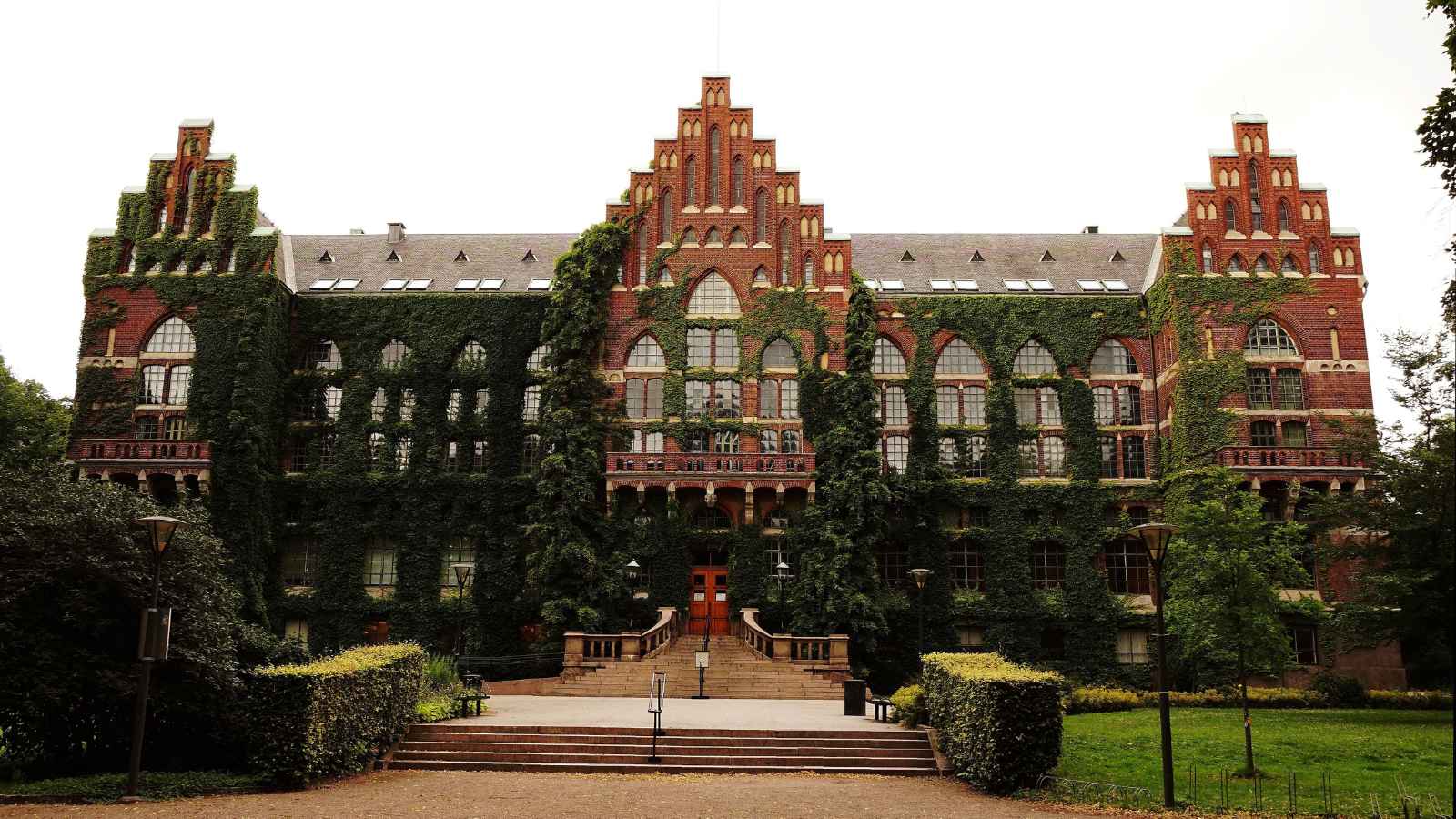
Lund University, Lund
Save this article
Lund University ranks solidly in global league tables and stands as one of Sweden’s most respected research institutions. Alongside Uppsala University, it represents the country’s classic model of a student-led town.
In a 2023 student city evaluation, Uppsala scored 4.33 out of 5 for student experience, praised for affordability, green space, and transit access. Towns like Lund and Uppsala are dominated by students on bicycles, with social life organized through historic student nations that host dinners, debates, and late-night events year-round.
Masaryk University, Brno
Brno ranked fourth in a global student city study with a score of 4.55 out of 5, noted for affordability, safety, and a dense calendar of student-led festivals such as Majales. The city hosts several universities, with Masaryk University as its academic anchor.
High student density gives Brno a youthful rhythm, while lower living costs set it apart from Western European university cities. City benchmarking reports consistently highlight its walkability, nightlife, and value, making it a realistic fantasy for students who want culture without constant financial pressure.
McGill University, Montreal
McGill University frequently appears within the global top 30 of QS World University Rankings, with strong international standing in medicine, law, and sciences. Alongside Université de Montréal, it defines the city as one of North America’s most academic urban centers.
Montreal ranked ninth in a 2023 global student city assessment with a score of 4.45 out of 5 and regularly places near the top of QS Best Student Cities for affordability and culture. City profiles emphasize its bilingual character, festivals, nightlife, and neighborhoods like the Plateau, where student life spills onto sidewalks year-round.
Key Takeaway
Global rankings identify academic excellence, but the best university experiences live at the intersection of learning and place. When prestige meets walkable streets, cultural density, and student-centered cities, universities become destinations rather than credentials.
The strongest study-abroad fantasies are built not just on reputation, but on how a city makes daily life feel while you earn it.
More articles:
- People who have low intelligence usually think this way
- If these 11 things irritate you, you may have unusually high intelligence
- 12 everyday habits people link to low intelligence
10 behaviors that may seem cold but indicate strong emotional intelligence

Emotional intelligence is often confused with being constantly friendly, agreeable, and available to everyone at all times. However, true emotional mastery involves regulating your own energy and making decisions that protect your well-being, even if they appear detached to others.
People with high EQ understand that sustainable kindness requires firm boundaries that can sometimes be misinterpreted as coldness. Learn more.
17 ways intelligence shapes a preference for solitude

Society tells us that being social is the key to happiness. And with a loneliness epidemic on our hands—a 2024 Harvard report found that 21% of U.S. adults feel lonely—the advice to “get out there” is louder than ever.
Even before the pandemic, about half of American adults reported measurable levels of loneliness. But what if that advice is just… wrong? At least for some of us. Learn more.
The declining intelligence of American students

You know that sinking feeling when you realize something’s seriously wrong? That’s exactly what education experts are experiencing right now. American students aren’t just struggling—they’re hitting rock bottom in ways we’ve never seen before. In 2024, only 35% of U.S. 12th graders demonstrated proficiency in reading, which is a record low since the reading assessment was first given in 1992.
The numbers don’t lie, and honestly, they’re pretty scary. We’re talking about test scores that would make your high school guidance counselor cry. But here’s the thing—this isn’t just about numbers on a page. This is about a generation of kids who might graduate without the basic skills they need to, well, function as adults. Learn more.





