Backhanded compliments may sound polite, but new research shows they can undermine confidence and drive burnout at scale.
A compliment can sparkle on the surface and still leave a sting underneath. Some remarks sound sweet for a second, then settle in like grit under the skin. Harvard Business School researchers found that backhanded compliments often land harder than plain praise, and in one experiment, the harshest stereotype-based version scored 5.49 on the insult scale, while a straightforward compliment scored just 1.23.
That gap says a lot. These lines are common, polished, and easy to mistake for kindness, yet they can still bruise long after the conversation ends. And this is bigger than one awkward exchange.
Women and microaggressions
McKinsey and LeanIn’s 2024 report, drawing on data from more than 1,000 companies and over 480,000 people across the past decade, found that women who face microaggressions at work are 4.2 times more likely to almost always feel burned out, 2.7 times more likely to consider leaving, and 4.5 times more likely to believe their gender will make it harder to move ahead.
As the report put it, microaggressions have a macro impact on women’s experiences. That is why the wrong compliment can do more than create one uncomfortable moment. It can chip away at confidence, trust, and a sense of belonging.
You’re articulate for someone your age
This one sounds polished, almost thoughtful, and that is what makes it slippery. The praise is not really about how clearly the person spoke. It is to your surprise that they spoke that clearly at all. Harvard’s study found that backhanded compliments tied to stereotypes were the most offensive, and recipients often knew they were meant as praise but still felt insulted.
Age-based remarks like this can hit younger people in meetings and older people in everyday life with the same message: “You exceeded my low expectations.” That is not admiration. That is bias in a velvet jacket. A cleaner alternative is simple and stronger: “I liked how clearly you explained that.”
You’re strong for a girl
A compliment should not shrink the person it claims to lift. The phrase “for a girl” drags gender stereotypes into the room and makes the praise conditional. It turns strength into an exception instead of a trait.
McKinsey’s 2024 report shows women still face the same rate of microaggressions they did five years ago, and those repeated signals wear people down over time. This line belongs to that family. It sounds playful to the speaker, but it quietly suggests the standard for women is lower, softer, and weaker. That can sting in the gym, at work, in school, or anywhere effort deserves to stand on its own. A better version keeps the dignity intact: “You handled that with real strength.”
More to read:
- 13 Compliments Older Generations Think Are Kind But Irritate Younger People
- 12 Compliments Men Give Curvy Women And What They Really Mean
- 12 witty Boomer comebacks that instantly defuse rude comments
You don’t even look divorced, disabled, or 40
This one is wrapped in a smile and built on an insult. It works by implying that a divorced person, a disabled person, or someone over 40 is supposed to look tired, damaged, or somehow less appealing.
Harvard’s research found that backhanded compliments reduce positive emotions, and participants consistently rated them as more insulting than standard compliments. This kind of remark is a clean example of why. It flatters one detail while quietly insulting an entire category of people. It also tells the listener that your idea of their identity was bleak from the start.
You do not need to drag a life stage or condition into the sentence at all. Try this instead: “You look great today.” It says the kind part and leaves the stereotype in the trash.
You’re so quiet, I never thought you’d be so qualified
Office culture loves confidence theater. People who speak fast, speak first, and speak often are treated as if they own competence by default. So when someone says this to a quieter coworker, the hidden message is obvious: “I thought your personality meant you had less value.”
In Harvard’s study, one kind of backhanded compliment was received as an insult at 3.71 on the scale, far above the straightforward compliment condition at 1.23, and that gap helps explain why this line feels so sour. It punishes introversion while pretending to reward skill.
Quiet people do not need surprises. They need recognition without a side of disbelief. Say “Your work on that project was impressive.” That gets to the point without stepping on the person.
You’re pretty brave to speak up like that
Sometimes this line comes after someone says something smart in a meeting, names a problem in a group chat, or pushes back in a conversation. It sounds like applause. It often lands like a warning.
The word brave can turn a normal act of participation into something risky, unusual, or out of character, especially for women, younger staff, or people from marginalized groups. McKinsey’s 2024 data make the stakes clear: women who experience microaggressions are 2.7 times more likely to consider leaving and 4.2 times more likely to almost always feel burned out.
Comments like this help create that climate by framing speaking up as dangerous rather than normal. A more respectful choice is: “Thanks for saying that. It added a lot.” That supports the idea, not the stereotype.
You’re so much more fun than other women
This is the “not like the others” compliment, and it always leaves a mess in its wake. It works by praising one person by insulting a larger group. That is a poor bargain. Harvard Business School researchers found that recipients often recognize the speaker’s friendly intent and still experience the comment as insulting.
That matters here because the structure of the sentence is the problem. It says, “You’re great because you escaped the worst traits of your kind.” That is not a connection. That is comparison masquerading as charm. In everyday friendships and dating, this kind of line can sound intimate for a moment before feeling hollow. A better option is direct and grown-up: “I really enjoy spending time with you.”
You’re surprisingly good with tech
Surprise is often the leak that reveals bias. This line is usually aimed at older adults, women, or people whose background does not fit someone else’s lazy idea of “tech-savvy.” The praise is not really praise. It is astonishing in a business-casual shirt.
In Harvard’s experiments, backhanded compliments were rated as less complimentary than they were intended to be, with one set landing at 3.94 for how much they felt like a compliment, versus 6.31 for a straightforward compliment.
Save this article
That explains why this line can make a person stiff even while they smile. It tells them your first assumption was failure. A better sentence is plain and respectful: “That walkthrough was clear and really helpful.”
You should smile more
This one has been hanging around for years, and it still sounds pushy every time. It is often aimed at women in public, at work, or in service roles, and it treats someone’s face like a public utility. That is why it feels less like a compliment and more like a command.
McKinsey’s workplace research found that women still face persistent microaggressions, and the effects are not abstract. The report ties those experiences to higher burnout and stronger thoughts of leaving. “Smile more” fits the pattern because it suggests that the listener’s value lies partly in how pleasant they look to others.
That is a heavy thing to smuggle into a sentence dressed as friendliness. A better line is tied to what the person actually did: “Your calm energy helped today.”
You’re so mature for your age
Adults say this to teens and young adults as if they are handing out a gold star. What some young people hear instead is, “I like you most when you are less like your peers and more like what I find comfortable.” It can also saddle someone with extra emotional labor before they are ready for it.
Harvard-affiliated coverage of the backhanded compliment research quoted Professor Michael Norton, saying, “No one wants to be just a blank,” meaning no one wants to be flattened into a stereotype or category first and then evaluated from there.
That is exactly what this phrase can do. It sounds admiring, yet it quietly asks the person to age out of themselves. Try something more grounded: “You handled that responsibility really well.”
You don’t look like you’d be into leadership
This line reveals the work of stereotypes. Appearance becomes proof, identity a shortcut, and the person in front of you shrinks to a guess.
McKinsey’s 2024 report notes women facing microaggressions are 4.5 times more likely to feel gender blocks advancement. Such comments nurture that feeling by suggesting interests and expertise belong to someone else by default.
It’s especially awkward professionally, where credibility is earned. The fix: respond to content, not looks. Say, “I really liked your take on that issue.” That shows attention, not assumption.
You’re so pretty, you could be a model
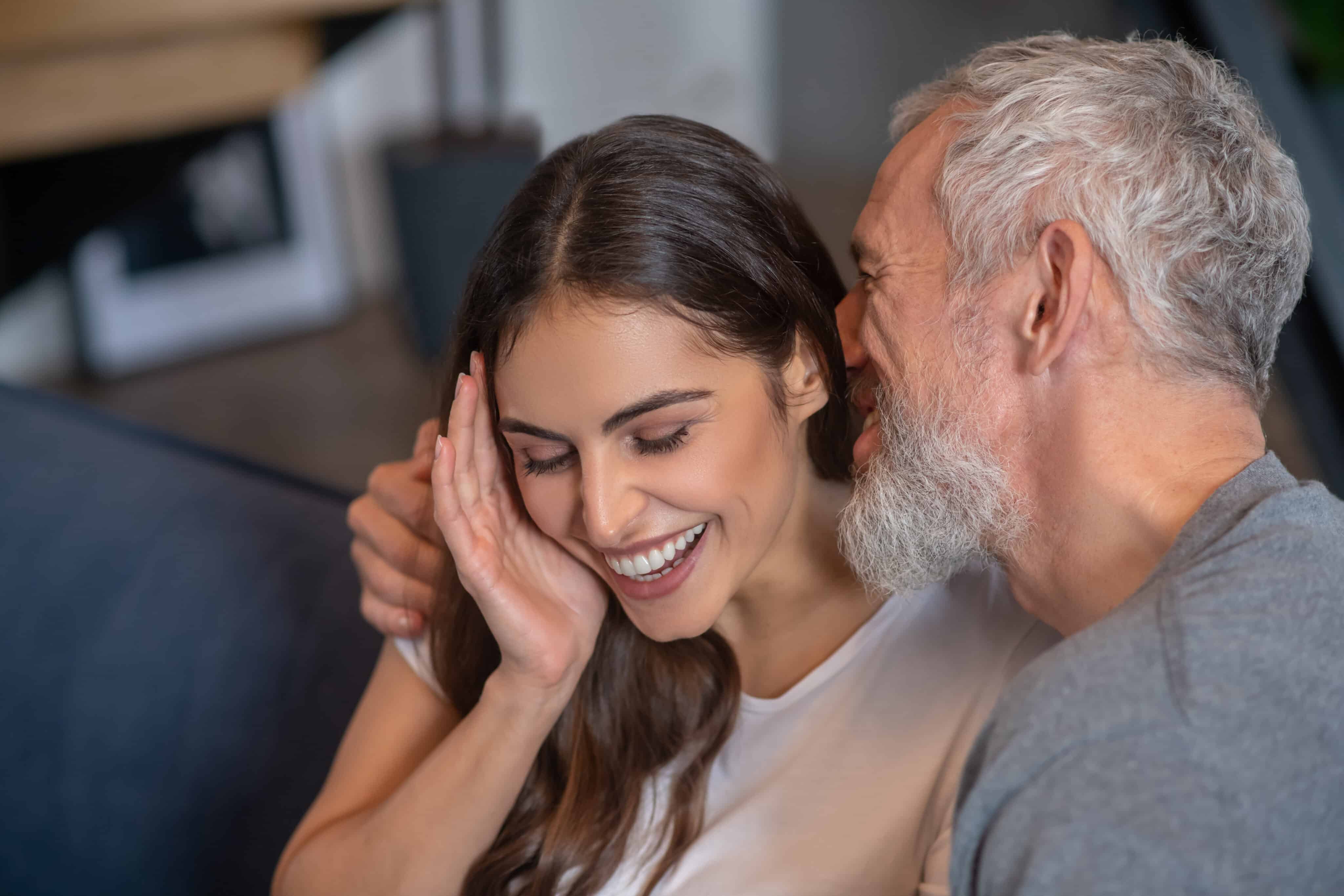
There are settings where this might pass as harmless flirtation. At work, during a serious conversation, or in a context where someone wants to be recognized for their mind, it can feel like a trapdoor opening under the floor.
The compliment lifts appearance and quietly sidelines competence. Harvard’s paper found backhanded compliments lowered positive emotions, and in another test, participants who received them found the speaker significantly more offensive than those who got direct compliments.
Beauty-focused praise is not always backhanded, of course, but in the wrong context, it can still shrink a person’s status to something decorative. That is why many women describe these comments as diminishing rather than flattering. A more respectful line keeps the person whole: “You’re a great teammate, and I trust your judgment.”
You’re so easy to work with, it’s like talking to a guy
This one sounds friendly until you hear what it rewards. The sentence suggests that smooth collaboration is somehow masculine and that femininity is the standard being escaped. That is not inclusion. That is praise through erasure.
McKinsey’s 2024 data show that women facing microaggressions are 2.7 times more likely to consider leaving and 4.5 times more likely to feel their gender will block advancement, which helps explain why lines like this linger. They tell women they are easiest to value when they feel less like women at all.
In everyday life, the phrase has a cousin in “you’re one of the guys,” which carries the same tired logic. There is a cleaner option: “Working with you is straightforward and productive.” Same warmth, zero insult tucked inside.
Key takeaways
The most disrespectful compliments are rarely loud. They work through surprise, stereotype, comparison, and control.
Harvard’s research shows backhanded compliments are often received as more insulting than direct compliments, and stereotype-based ones land the hardest.
McKinsey and LeanIn’s 2024 workplace data show that repeated microaggressions can shape burnout, trust, and even people’s decision to leave their jobs. That is why “I meant it nicely” does not settle the matter. Impact has its own math.
The better compliment is usually the simpler one. Praise the work, the clarity, the thought, the effort, the judgment, or the presence. Skip the surprise. Skip the stereotype. Skip the comparison to a group you are quietly insulting in the same breath. A good compliment should feel like a door opening, not a mirror cracking.
Disclosure: This article was developed with the assistance of AI and was subsequently reviewed, revised, and approved by our editorial team.
Like our content? Follow us on Newsbreak.
If you played youth sports in America, you probably still have these 12 intensely competitive mentalities

Long after the whistles stop and the cleats are packed away, the relentless drive learned in childhood sports keeps shaping how many adults chase wins in everyday life.
Growing up on American fields and courts leaves a lasting mark on your personality. You probably spent your weekends eating orange slices and listening to intense pep talks from passionate coaches. Those early mornings and late nights shaped how you view success and failure today. Learn more.