

Jessie Cave spent years building a career across acting, comedy, illustration, and writing, including a role in one of the biggest film franchises on the planet. Then came a very different payday: more than £15,000 in a single day for brushing her hair on OnlyFans.
The 39-year-old British actress, best known for playing Lavender Brown in the final three Harry Potter films, said in August 2026 that she earned more in one year on the subscription platform than across her entire acting career.
It is the kind of comparison built for internet disbelief, except Cave’s explanation is rooted in something far more ordinary: bills, childcare, debt, home repairs, and work that was no longer keeping pace with what her family needed.
She said the decision came from “a point of complete desperation,” and the pressures she named will be familiar to many working parents. There was no grand career reinvention. There was a family running out of practical options.
The Career That Preceded the Breaking Point
Beyond Harry Potter, Cave had built a broad creative life in acting, comedy, illustration, and writing. Then it stopped supporting her family.
She had been working across those fields for nearly two decades when a difficult stretch set in: professional rejection, postnatal depression, grief, and mounting financial strain. She and her fiancé, comedian Alfie Brown, were raising four children in a one-bedroom London flat.
A callback audition she had hoped would work out went nowhere. “I had a breakdown and I thought, that’s it with acting, I give up. But also we have no money,” she said. There was debt to clear and work at home that could not wait, including what Cave described as arsenic/lead wallpaper and a roof that needed replacing.
She needed income now, not eventually.
Why Another Job Was Not the Answer
Cave did not dismiss conventional work. She calculated it, and the calculation came up short.
“I couldn’t go and, say, work in a supermarket because I can’t afford the childcare,” she mentioned in her interview, “and also I don’t want people shouting Harry Potter spells at me as I work at Tesco.”
If childcare costs more than a shift pays, taking the shift does not fix the financial problem. Retraining offered no cleaner exit.
Cave had already been posting hair videos on Instagram and had noticed the comments they attracted. A hair-focused subscription page gave her something the other options could not: work she could produce at home, on her own schedule, without adding paid childcare to the cost of earning money.
What She Actually Posts
Cave’s OnlyFans is built entirely around her hair, and the rule she set on day one has not changed.
“I’m starting an onlyfans for my hair. It’s niche even for me. Join me on this strange new journey,” she wrote on Instagram in March 2025. On her podcast Before We Break Up Again, she was equally specific: “I’m launching an OnlyFans, it’s not a sexual one. It’s a fetish. Fetish doesn’t necessarily mean sexual.”
Her rule for the page leaves little room for confusion: “Hair is the main character.” Subscribers pay $6 a month for videos of Cave, fully clothed, brushing her hair, braiding it, tying it in a ponytail, or dressing in costumes. She also earns through paid messages from individual subscribers.
“It’s just a job, at the end of the day,” she said.
The Numbers She Did Not Expect
Cave entered the platform expecting a short-term bridge and a modest paycheck. She got significantly more than either.
Save this article
“I thought I’d make five grand, be on it for a few months and it would buy me time to work out what we’re going to do,” she added. Her first post reportedly brought 3,500 subscribers, and her first day on the platform produced more than £15,000, approximately $20,200.
The audience changed once people understood what the page would, and would not, contain. Her subscriber count dropped after it became clear she would not post explicit content, but a loyal core stayed.
The real surprise was how the money stacked up against Cave’s acting career. “I’ve earned more, easily, than my entire acting career within one year,” she said. No total figure was provided for either her OnlyFans income or her lifetime acting earnings, so the size of the gap remains unquantified beyond that statement.
A Consequence She Had Not Anticipated
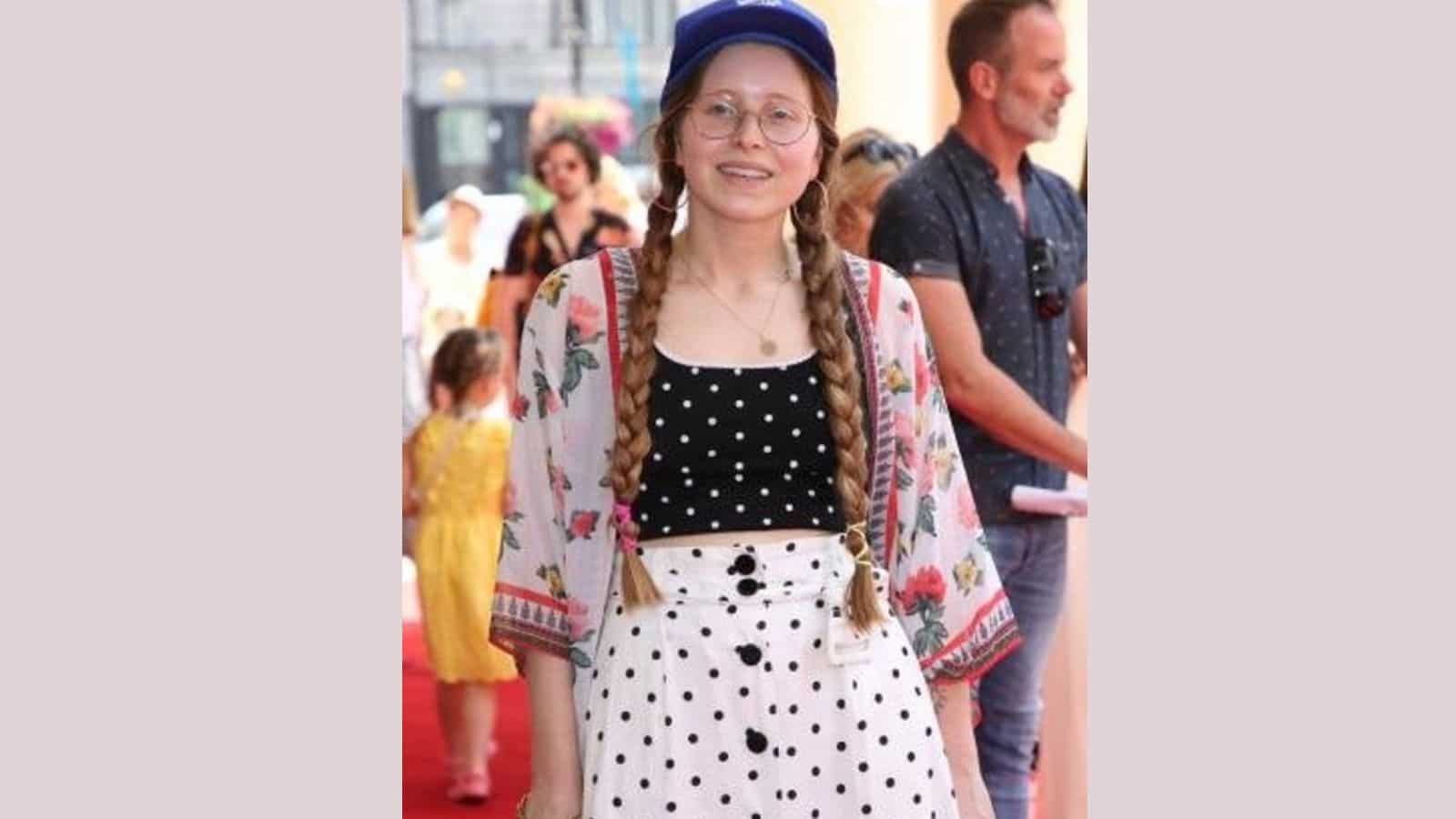
Cave’s OnlyFans presence cost her at least one professional booking, even though her content has never included nudity.
In September 2025, Cave wrote on Substack that she had not been booked for a Harry Potter fan convention because of her OnlyFans presence. She wrote that the organizers explained their decision this way: the franchise is “a family show and OnlyFans is affiliated with porn.”
The convention was not named in her post, no organizer responded publicly, and no event date was reported. That left Cave in an unusually specific professional bind. Her page had been built around non-explicit hair content from the start. The objection concerned the platform carrying that content, rather than nudity appearing on Cave’s page.
The job solving one financial problem had created a consequence in another part of her career.
Wider Context, Specific Conditions
Cave is not the first performer to turn to OnlyFans during financial difficulty, but the specifics of her situation are unusually well-documented.
Drea de Matteo, known for The Sopranos, said she joined while close to losing her home. British singer-songwriter Kate Nash started a page to fund a European tour, and in the UK, a court ordered that a portion of Katie Price’s site earnings go toward debt repayments. Amanda Bynes joined OnlyFans in 2025, saying she planned to connect with fans directly and would not post explicit content.
Cave’s circumstances came with unusually concrete arithmetic: childcare made retail work impractical, a degree was financially out of reach, debt needed clearing, and home repairs could not wait. The income option that fit those conditions happened to involve a camera, a subscription page and a lot of hair brushing.
She has said she has no plans to expand into explicit content, and her format, by her own account, has limits. For now, that format has produced more income than her acting career.
How has the gap between what a job pays and what it actually costs to do it shaped a decision you have made about work or income?





