

Dragons appear in stories as enormous reptilian creatures with wings, claws, armored bodies and, in many traditions, the ability to breathe fire. Science has found no evidence that an animal matching the classic fantasy dragon ever existed. But the surprising part is that nature has produced several creatures—and several biological abilities—that come remarkably close to individual pieces of the dragon description.
Giant reptiles really did fly. Enormous land reptiles existed. Animals today can produce venom, corrosive chemicals and extraordinarily hot defensive sprays, while fossils of creatures unlike anything alive today have been discovered throughout human history.
Put those pieces together and the dragon becomes biologically fascinating. The complete creature remains mythical, but surprisingly little about its individual features is completely foreign to nature.
Giant flying reptiles really did exist
Perhaps the most dragon-like animals known from the fossil record were pterosaurs. They were not dinosaurs, but flying reptiles that lived alongside dinosaurs and evolved a remarkable range of sizes and body forms.
Some were small enough to fit comfortably in a person’s hands, while the largest species became among the biggest animals known to have achieved powered flight.
Quetzalcoatlus and other giant azhdarchid pterosaurs are estimated to have reached wingspans around 10 to 11 meters. A scientific analysis of giant pterosaur flight examined how animals of that scale could have launched and remained airborne.
Their anatomy differed considerably from fantasy dragons. Pterosaur wings were membranes supported primarily by an enormously elongated fourth finger rather than the bat-like wings commonly drawn on modern dragons.
Still, if a human could somehow have stood beneath one of the largest species in flight, the experience might have looked much closer to seeing a mythical flying reptile than most living animals ever could.
Takeaway: Enormous flying reptiles were real, and some reached dimensions that would look astonishing even today. They were pterosaurs rather than dragons, but they show that reptilian animals of dragon-like scale could evolve powered flight.
A dragon-sized reptile is not biologically impossible
The enormous body size usually given to dragons is not the most unrealistic part of the legend. The fossil record contains reptiles that reached sizes far beyond anything living on land today.
Some sauropod dinosaurs became tens of meters long, while giant marine reptiles and prehistoric crocodilian relatives also reached extraordinary proportions.
Modern reptiles offer smaller reminders of that potential. Komodo dragons can reach roughly three meters in length, and large crocodilians are powerful enough to make stories about giant reptilian predators easy to understand.
The difficult biological question is not if a giant reptile could exist. It is if one animal could combine enormous size with sustained flight, heavy armor, powerful limbs and the other characteristics assigned to dragons without becoming too heavy to fly effectively.
Evolution often forces trade-offs. A body optimized for enormous terrestrial strength is not automatically optimized for flight.
Takeaway: Nature has repeatedly produced very large reptiles, so giant size alone does not make dragons biologically absurd. Combining that size with the full package of dragon abilities would be much more difficult.
Fire breathing is the hardest feature to explain
No known animal can breathe flames, and there is no fossil evidence showing that an extinct vertebrate evolved a biological flamethrower. Of all the classic dragon traits, this is the one with the weakest support from known animal biology.
Creating fire would require several difficult things to happen safely inside one animal. It would need to produce or store combustible chemicals, prevent those chemicals from reacting prematurely, expel them in a controlled direction and somehow ignite them without burning its own mouth, throat or respiratory system.
That sounds fantastical, but one living animal shows that part of the chemistry is not completely beyond evolution.
Bombardier beetles store chemical precursors separately and mix them inside specialized reaction chambers when threatened. A 2025 study described how the reaction produces a hot, chemically irritating spray that can reach temperatures close to 100°C.
The beetle does not produce fire. But it demonstrates that animals can evolve internal chemical systems capable of rapidly generating heat, pressure and a directed defensive jet.
Takeaway: No animal is known to breathe fire, and science has no evidence that dragons did. Bombardier beetles show that evolution can still produce surprisingly sophisticated chemical weapons inside living organisms.
Could an animal theoretically evolve something closer to fire?
In principle, biology can produce flammable substances. Living organisms generate methane, hydrogen and other chemically energetic compounds, but turning those substances into a controlled flame is a very different challenge.
The animal would need an ignition mechanism. Electric animals such as electric eels prove that biological tissues can generate substantial electrical discharges, but combining such a system with a flammable spray would create enormous risks to the animal itself.
Evolution also needs intermediate stages that provide some survival or reproductive advantage. A chemical spray can gradually become hotter or more irritating over generations, as defensive systems demonstrate. A fully developed biological flamethrower would require a plausible sequence of useful intermediate steps.
Researchers therefore cannot say that every imaginable fire-producing mechanism violates chemistry or physics. They can say there is no evidence that evolution has ever produced the kind of controlled flame weapon associated with dragons.
Takeaway: A fire-breathing animal is easier to imagine chemically than to explain evolutionarily. Nature provides separate pieces of the idea, but no known species has ever combined them into actual flame production.
Dragon myths may have drawn on very real animals
People who created early dragon stories lived alongside snakes, crocodiles, large lizards and other predators capable of becoming terrifying when seen up close. Some historical dragon descriptions may have developed partly from encounters with animals that later storytelling exaggerated.
A historical study examining ancient accounts of “great serpents” found that real animals, particularly large pythons and whales, contributed to some Western stories that later developed dragon-like characteristics.
Different cultures also imagined dragons very differently. Some were serpentine and wingless, some lived in water, some were associated with storms or rain and some became winged, fire-breathing monsters.
That diversity makes it unlikely that every dragon story traces back to one forgotten animal species. Real creatures, mythology, symbolism and generations of storytelling could all have contributed.
Takeaway: At least some ancient dragon-like stories appear to have incorporated observations of real large animals. The dragon tradition as a whole is much broader than one biological explanation.
Fossils could have made the stories even more convincing
Imagine finding an enormous fossil skull or gigantic bones centuries before anyone understood dinosaurs or extinction. Interpreting those remains as evidence of monsters would not have been an unreasonable conclusion with the knowledge available at the time.
Scholars have long considered the possibility that discoveries of large fossils influenced certain dragon, griffin and giant traditions.
There are historical examples of fossil remains being connected with legendary creatures. In some cases, bones displayed as evidence of dragons were later identified as belonging to extinct mammals or other animals.
This does not prove that fossils created dragon mythology worldwide. The origins of dragon stories vary between places, and many probably developed without dinosaur fossils playing any role.
But fossils could certainly have reinforced the belief that enormous reptilian or monstrous creatures had once lived.
Save this article
Takeaway: Ancient fossil discoveries may have strengthened some dragon traditions because people were encountering the remains of real extinct giants without modern paleontology to explain them. That does not mean every dragon myth began with fossils.
Pterosaurs would have looked astonishingly dragon-like from a distance
The resemblance between pterosaurs and popular dragons becomes especially interesting when you imagine seeing the animal alive rather than looking at its skeleton in a museum. A giant pterosaur had a long neck, large skull, enormous wings and a reptilian evolutionary background.
Some giant species probably spent considerable time walking on all four limbs and hunting on the ground before taking flight.
Their wings, body coverings and overall anatomy were not those of medieval European dragons, and there is no evidence humans ever encountered living non-avian pterosaurs. Pterosaurs disappeared long before humans appeared.
Still, they prove that evolution once produced giant flying vertebrates with combinations of features that would seem fantastical if scientists only knew them from stories.
This is one reason the scientific answer to the dragon question is more interesting than simply saying “no.”
Takeaway: Humans did not live alongside pterosaurs, but giant species show that nature once produced flying animals with strikingly dragon-like proportions. Some fictional features are much less biologically impossible than they initially appear.
What about dragon wings and six limbs?
The classic Western dragon often has four walking limbs plus a separate pair of wings, giving it six major limbs. That body plan creates another biological problem because known land vertebrates inherited the basic four-limb structure of their distant ancestors.
Birds and bats solve flight by modifying their forelimbs into wings. Pterosaurs did the same through a completely different wing design.
A creature with four normal legs and two additional vertebrate-style wings would require a major departure from the developmental body plan shared by known tetrapods.
This does not make six-limbed animals impossible in nature. Insects commonly have six legs and may also have wings, but their evolutionary history and body architecture are completely different.
A more biologically plausible dragon would therefore probably resemble a pterosaur or bat, with two hind limbs and forelimbs modified into wings, rather than having four legs plus another pair of wings.
Takeaway: The popular six-limbed dragon body plan has no known precedent among vertebrates. A four-limbed dragon with its forelegs modified into wings would fit known vertebrate biology much better.
Could dragons have disappeared without leaving fossils?
Fossilization is rare, so scientists do not expect to find remains of every species that ever lived. That fact sometimes leads to the argument that dragons could have existed without leaving any fossil evidence.
For a small, geographically restricted species, a missing fossil record is entirely possible. The argument becomes much harder for a widespread population of enormous animals supposedly interacting with humans across long periods.
Large animals need breeding populations, food and habitats. They leave bones, teeth, eggs, footprints, waste and other biological traces. If giant flying, fire-breathing reptiles had existed recently enough to inspire direct human eyewitness accounts, scientists would expect some physical evidence beyond legends and artwork.
Nothing matching the complete mythical dragon has been found.
The absence of evidence alone cannot logically prove that no unusual animal ever existed. But when combined with an extensive fossil record and modern biological knowledge, there is currently no scientific basis for treating traditional dragons as a lost zoological species.
Takeaway: Fossil records are incomplete, but a widespread population of enormous dragon-like animals would be expected to leave multiple forms of physical evidence. Scientists have found no such evidence for the classic dragon.
Nature already has creatures that sound made up
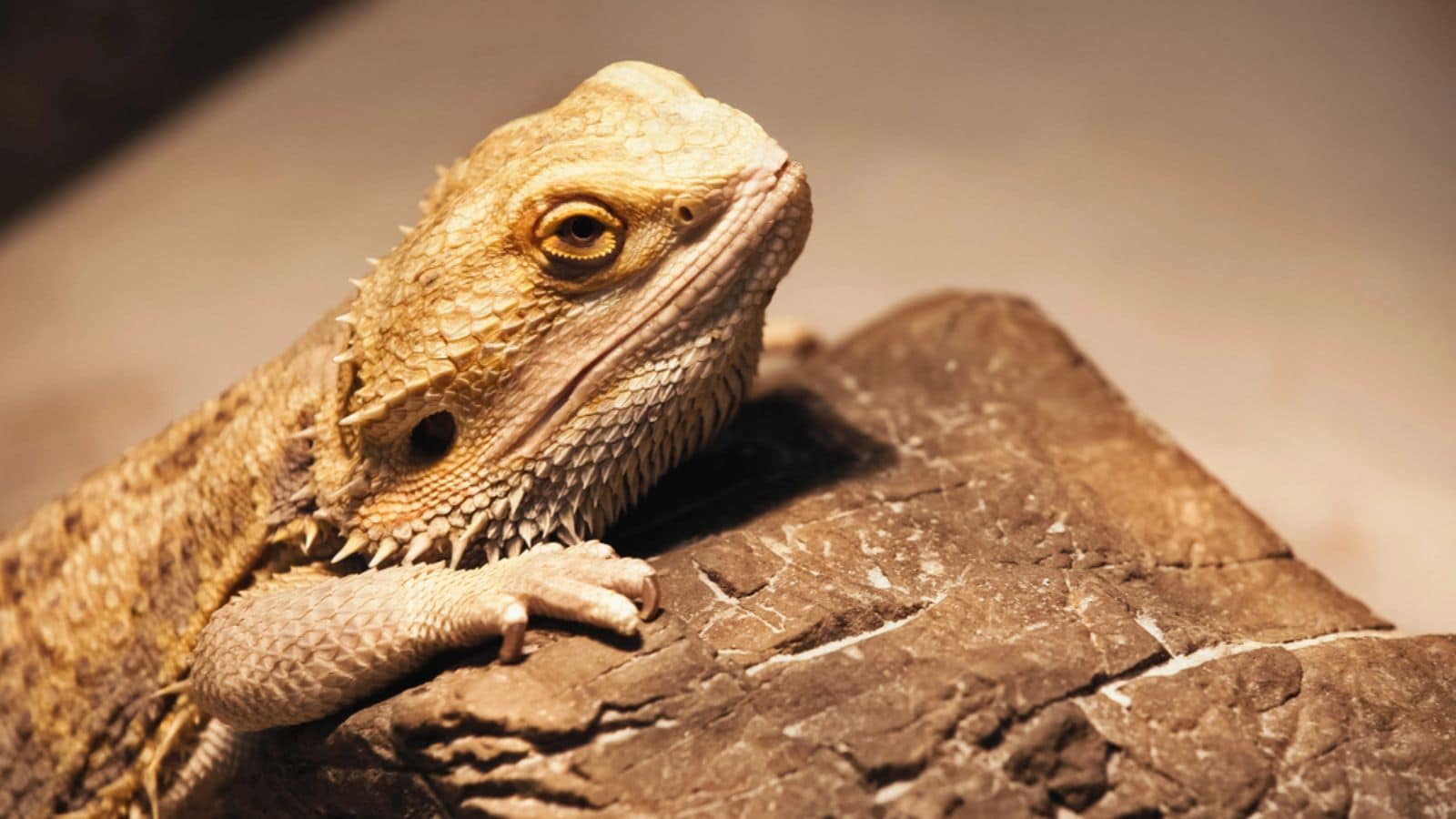
Part of what makes dragons compelling is that many of their individual abilities resemble things animals genuinely do. Nature contains gliding reptiles, venomous lizards, electric fish, armored reptiles, giant flying animals in the fossil record and insects capable of firing near-boiling chemical sprays.
A person unfamiliar with those animals might reasonably think some descriptions were invented.
Evolution has repeatedly produced solutions that can look almost mechanical: explosive chemical chambers, electrical organs, powerful venom delivery systems and intricate flight structures.
The difference is that real animals usually specialize. A bombardier beetle has its chemical weapon but is tiny. A giant pterosaur could fly but did not breathe fire. A crocodile has armored skin and powerful jaws but no wings.
The mythical dragon combines many extreme adaptations into one animal.
Related: 6 Terrifying Animal Facts You Won’t Believe Are Real
Takeaway: Many dragon-like abilities exist separately in real animals. What science has never found is one creature possessing the extraordinary combination that mythology gives to dragons.
So could dragons have ever existed?
If by “dragon” we mean the enormous, winged, fire-breathing creature familiar from fantasy, there is no scientific evidence that such an animal ever lived. The fossil record has produced giant reptiles and spectacular flying animals, but nothing that matches the complete dragon package.
The more surprising answer is that a less fantastical dragon would be much easier to imagine biologically.
A large reptilian animal could exist. Giant reptiles unquestionably did. Flying reptiles also existed, and chemical defense mechanisms capable of producing intense heat exist in animals today.
Strip away literal fire breathing, six-limbed anatomy and some of the most exaggerated size claims, and a creature that humans might comfortably call a dragon becomes much less difficult to imagine.
That may be part of why the legend has survived so effectively. Dragons combine features nature really has produced, just not all in the same animal.
Science has not found dragons.
But nature has come closer to inventing one than you might expect.
Question for you. Which dragon feature seems hardest for you to imagine evolving naturally: fire breathing, enormous size, flight or the combination of all three?





