If you have been managing irritable bowel syndrome (IBS) with a low FODMAP diet but still have lingering symptoms, you may have come across the term “histamine intolerance” online and wondered whether you now need a low-histamine diet on top of low FODMAP.
It is an understandable question. IBS and histamine intolerance share symptoms—bloating, abdominal discomfort, and altered bowel habits—which makes it easy to assume the two conditions are one and the same.
They are not the same condition, and layering a second restrictive diet onto an already-restrictive one is not a step to take lightly; unnecessary restriction carries real risks, from nutritional gaps to disordered eating. This article clarifies what histamine intolerance is (and is not), how it relates to IBS, and how low FODMAP and low histamine differ as tools.
What Is Histamine?

Histamine is a naturally occurring compound with several important roles in the body. It is best known for its part in the immune response, released during allergic reactions and inflammation to produce familiar symptoms like itching, redness, and swelling. But its role extends well beyond allergies.
In digestion, histamine helps regulate stomach acid and gut motility. In the nervous system, it acts as a neurotransmitter, influencing wakefulness and alertness. In other words, histamine is not an unwanted substance the body needs to avoid; it is a normal, necessary signaling molecule.
Histamine comes from two sources: the body’s own production (endogenous, largely from mast cells and basophils) and food (dietary histamine), with levels varying by how a food is processed, fermented, or stored; aged and fermented foods tend to be higher, fresh foods lower. This dual source is why histamine intolerance relates to how the body processes both what it makes and what it eats.
What Is Histamine Intolerance?
Histamine intolerance describes a cluster of symptoms thought to result from an excess of histamine in the body, or an impaired capacity to break it down. Unlike IBS, it lacks a widely accepted clinical definition or validated diagnostic criteria. Clinicians generally agree some people experience histamine-related symptoms, but there is no consensus on prevalence, mechanism, or diagnosis.
The leading theory centers on an enzyme called diamine oxidase, or DAO, responsible for breaking down histamine consumed in food. When DAO activity is reduced or insufficient, dietary histamine is not cleared efficiently and can build up, triggering symptoms.
Reported symptoms are wide-ranging, spanning gastrointestinal and non-gastrointestinal complaints:
- Gastrointestinal: bloating, abdominal pain, diarrhea, nausea
- Non-gastrointestinal: headaches or migraines, skin flushing or hives, nasal congestion, fatigue
Two points are worth clarifying. First, histamine intolerance is not a food allergy: it does not involve an IgE-mediated response and is not life-threatening. Second, there is no standardized diagnostic test; blood tests for DAO activity exist but are not well validated, so symptom-tracking or elimination diets remain the most common approach.
The DAO Enzyme and Histamine Metabolism
DAO is produced mainly in the lining of the small intestine, where it breaks down histamine from food before it can be absorbed in large amounts. When this process works efficiently, dietary histamine is cleared without causing symptoms.
Several factors are thought to affect DAO activity, including genetics, gastrointestinal conditions that damage the intestinal lining (untreated celiac disease, inflammatory bowel disease [IBS]), and medications known to inhibit DAO function. Alcohol can also interfere with histamine breakdown, one reason wine and beer are frequently reported as triggers.
Direct measurement of DAO activity in the gut is not routinely available, and blood-based DAO tests have not been shown to reliably correlate with symptoms, so a diagnosis is, in practice, usually made by exclusion and pattern recognition rather than a definitive test.
DAO supplements are available to support histamine digestion, taken before meals to supplement the enzyme the gut may not be producing enough of. Evidence here is more encouraging than for DAO testing itself: an observational study following 82 people with histamine intolerance who took a DAO supplement before their main meal for four weeks found a significant reduction in symptom severity from the first week, with many participants reporting more than 50% symptom improvement.
A broader review counts roughly twenty studies on low-histamine diets and DAO supplementation to date, describing the results as promising. DAO supplements are best viewed as a reasonably promising supportive measure rather than a definitive treatment, and should be used as part of a broader, guided approach rather than as a stand-alone fix. As usual, we suggest that you work alongside a Registered Dietitian (RD) or equivalent in your country, who will work alongside your medical doctor.
Overview of IBS
Irritable bowel syndrome (IBS) is a well-characterized gut-brain disorder (DGBI), involving disrupted communication between gut and brain rather than visible structural damage. It is diagnosed using established clinical criteria (the Rome V criteria) and is one of the most common gastrointestinal conditions seen in practice.
Three features are central to how IBS develops. Visceral hypersensitivity means the gut perceives normal processes, like gas or stretching, as painful. Altered motility affects how quickly food moves through the digestive tract, contributing to diarrhea, constipation, or a mix. And the gut-brain axis means stress and other psychological factors can directly influence gut symptoms, and vice versa.
Common symptoms include abdominal pain tied to bowel movements, bloating, and changes in stool frequency or form. Unlike histamine intolerance, IBS has decades of clinical research behind it, including strong evidence supporting the low FODMAP diet as an effective management strategy.
Where Histamine and IBS Overlap

It is easy to see why IBS and histamine intolerance get confused for one another: bloating, diarrhea, abdominal pain, and nausea appear on both lists, and both conditions wax and wane with food intake, stress, and other triggers.
There are a few plausible mechanisms behind this overlap:
- Gut Motility: histamine can influence how quickly the gut moves, compounding motility changes already present in IBS.
- Gut Nerves: histamine can interact with nerve endings in the gut wall, potentially amplifying IBS-related visceral hypersensitivity.
- The Microbiome: certain gut bacteria produce histamine as a byproduct, and microbiome shifts common in IBS may influence local histamine levels.
Despite these plausible connections, overlap in symptoms and mechanisms does not mean the two conditions are the same. A person can have IBS without any histamine-related component, and the reverse is also possible. Recognizing the overlap explains why symptoms feel confusing—it is not a reason to assume one diagnosis explains the other.
Key Differences: IBS vs. Histamine Intolerance
Despite the symptom overlap, IBS and histamine intolerance sit on very different scientific footing. IBS has clearly defined diagnostic criteria, a large research base, and evidence-based treatment pathways, including low FODMAP, shown to reduce symptoms in most people who follow it correctly.
Histamine intolerance, by contrast, is less clearly defined: no consensus diagnostic criteria, no validated test, and limited high-quality research into its prevalence or management. This does not mean histamine-related symptoms are not real; it means the evidence base is thinner and recommendations must be more cautious.
It is also possible for the two to coexist. Someone with confirmed IBS may notice symptoms that flare with high-histamine foods. The goal then is not to treat the two as interchangeable, but to address them in order, starting with the diet backed by the strongest evidence.
Low FODMAP Diet vs. Low Histamine Diet
The low FODMAP diet restricts fermentable carbohydrates that draw water into the gut and are rapidly fermented by gut bacteria, producing gas and distension, triggering significant pain and bloating in people with visceral hypersensitivity. It is structured in three phases—Elimination, Challenge/Reintroduction, and Integration/Personalization. Its effectiveness for IBS is supported by randomized controlled trials.
The low histamine diet, by comparison, restricts foods naturally high in histamine or that trigger histamine release. It is far less standardized: “high histamine” food lists vary by source, and there is no agreed-upon protocol for how long to restrict or how to reintroduce foods.
The two diets work through different mechanisms: low FODMAP addresses fermentation and motility patterns specific to IBS; low histamine addresses a suspected, less-proven issue with histamine load and clearance. Assuming one means you should follow the other is not supported by the evidence.
Food Considerations

Save this article
Because the two diets target different compounds, the foods they restrict overlap in some places and diverge sharply in others:
- High-histamine foods: aged cheeses, cured meats, fermented foods (sauerkraut, kimchi, kombucha, yogurt), wine and beer, and leftovers.
- Histamine-releasing foods: citrus fruits, strawberries, tomatoes, chocolate, and shellfish don’t necessarily contain high histamine themselves but may trigger the body’s own mast cells to release it.
- High-FODMAP foods: garlic, onion, wheat, certain legumes, some dairy, and fruits like apples and cherries are high in fermentable carbohydrates such as fructans, lactose, polyols, or excess fructose.
Some foods appear on both lists—garlic and onion are high FODMAP and also histamine-releasing—while others concern one diet but not the other (aged cheese is high histamine but low FODMAP; wheat is the reverse). This is why individualized assessment matters more than generic lists.
Combining Low FODMAP and Low Histamine Diets
The roadmap below illustrates what a structured trial can look like in practice.
For people who have properly completed low FODMAP—including reintroduction—but still have persistent symptoms, exploring a histamine-related pattern may be a reasonable next step. This is different from starting both diets at once, or adding low histamine restrictions before low FODMAP has had a fair, structured trial.
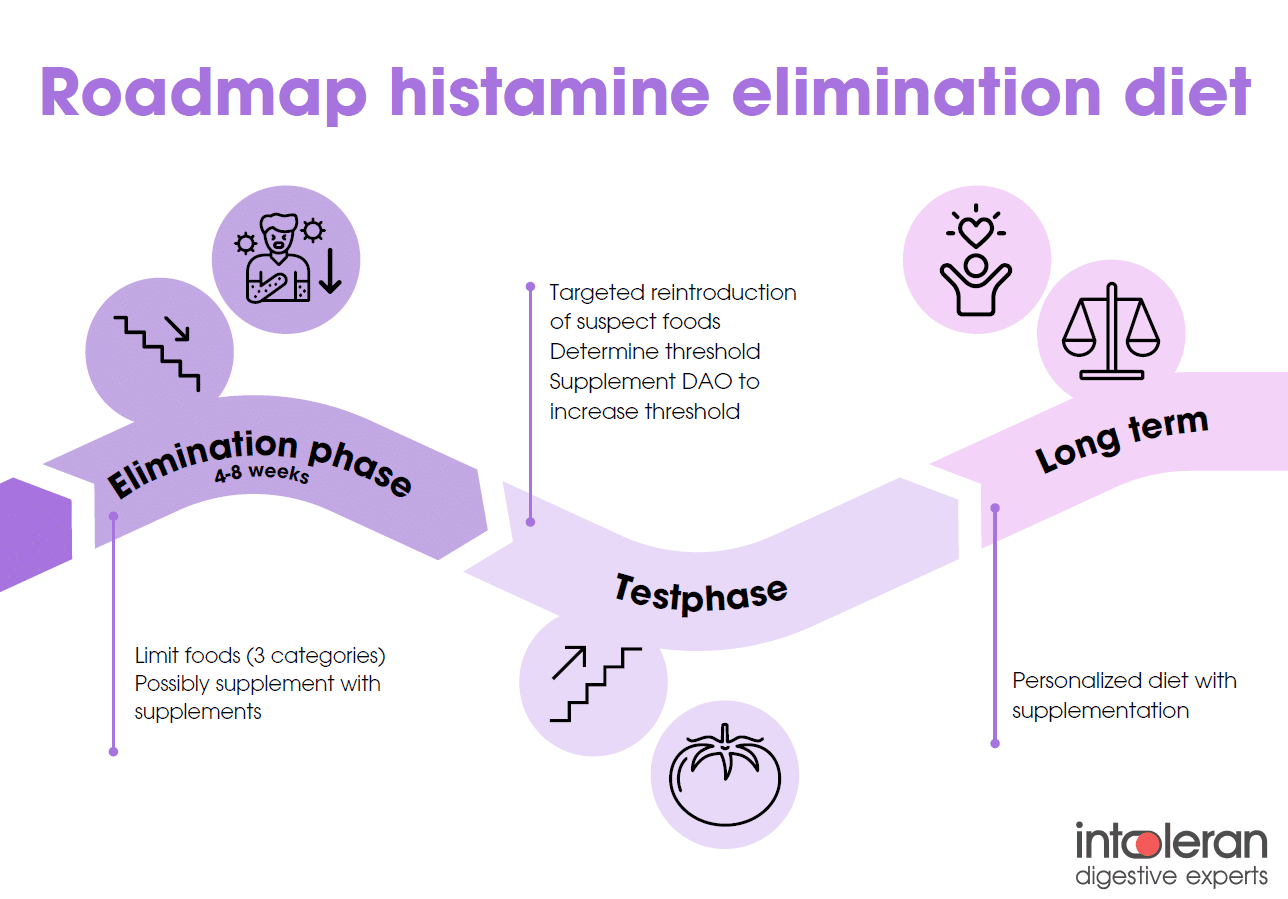
In the diagram above, during the elimination phase, the three categories are:
- Histamine liberators: foods that can trigger the body to release its own histamine, even when they aren’t especially high in histamine themselves.
- DAO blockers: foods and substances that inhibit the DAO enzyme, which is what breaks histamine down (alcohol is a well-known example).
- Histamine-rich foods: foods that are naturally high in histamine, typically aged, fermented, cured or leftover foods.
As far as adding supplements during the elimination phase, we suggest the steps stay separate: start with the low-histamine diet on its own to establish a clean baseline, and only once symptoms have settled, introduce DAO as a distinct step so its effect can be seen on its own. This is the test phase as shown in the diagram. DAO is really meant as support when reintroducing or handling higher-histamine meals, rather than something needed during the strict elimination phase itself.
Note that combining two restrictive diets carries real risks. Over-restriction can shrink the range of foods someone eats untilmeals become stressful or unsustainable. Nutritional inadequacy is also a concern: stacking exclusions increases the risk of missing fiber, calcium, B vitamins, and other nutrients in commonly restricted food groups.
If combining the two is being considered, it should be a short-term, structured trial—not open-ended restriction—with a clear plan for reintroducing foods. Working with a dietitian is strongly encouraged: a dietitian can design a trial that isolates variables and protects nutritional adequacy.
Supplements and Medications

DAO supplements are taken shortly before meals to support the breakdown of dietary histamine before it is absorbed. Timing matters, since the supplement needs to be present in the gut alongside the meal.
Antihistamines work through a different mechanism: rather than helping the body break down histamine, they block histamine receptors, reducing symptoms. This can offer relief, but addresses downstream effects rather than the underlying reason histamine may be elevated or poorly cleared. Antihistamines are not a substitute for dietary or lifestyle strategies aimed at the root cause.
Other Influencing Factors
Symptoms related to histamine and IBS rarely exist in isolation from the body’s broader physiology. Hormones play a documented role: estrogen influences histamine release and can affect DAO activity, which is part of why some people notice symptom fluctuations across the menstrual cycle, perimenopause, or pregnancy.
Stress is another significant factor, given its influence on the gut-brain axis. It can worsen IBS symptoms directly and may also affect mast cell activity and histamine release, making it hard to disentangle a “histamine” trigger from a stress flare.
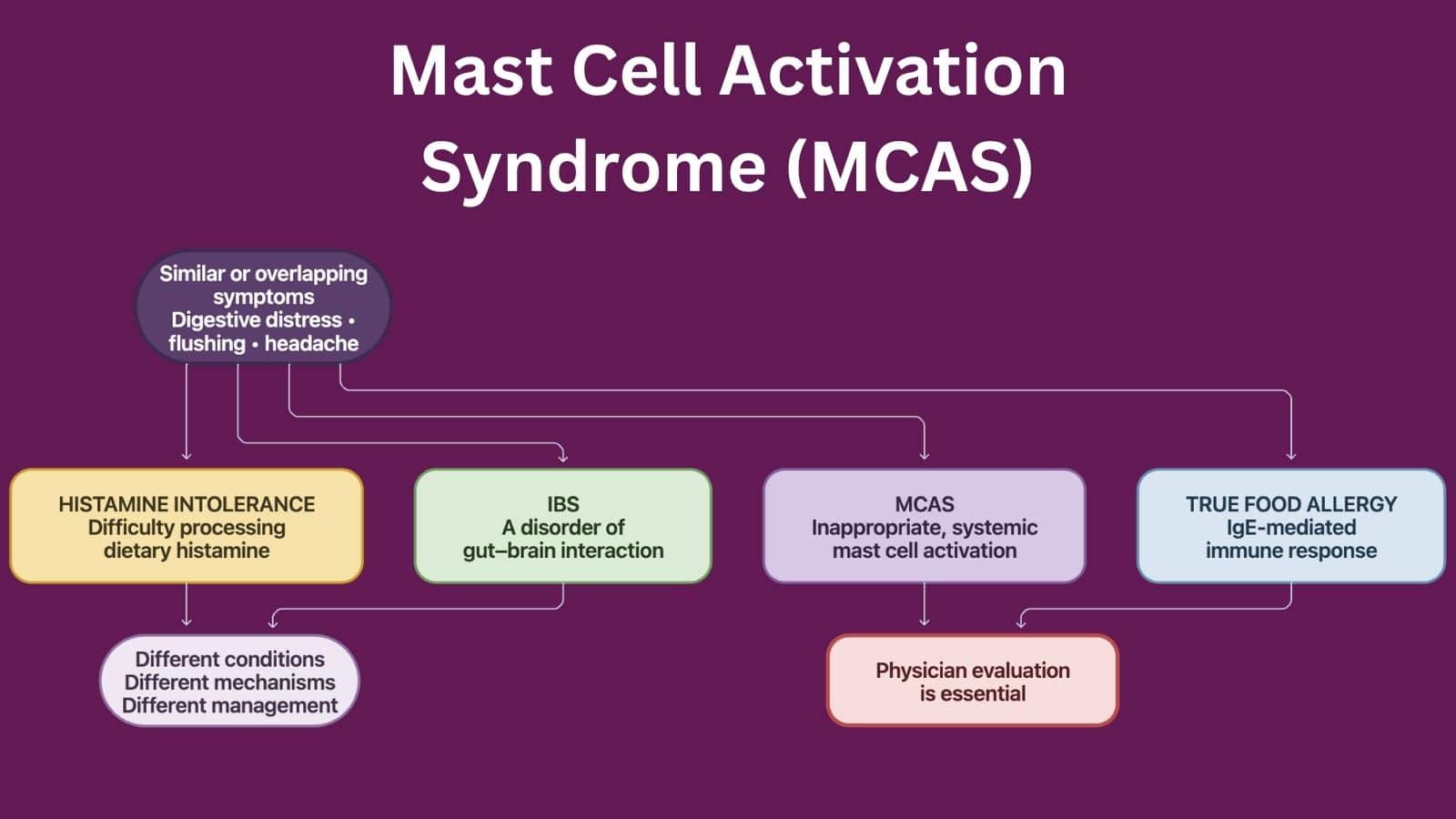
Worth briefly mentioning are related conditions: mast cell activation syndrome (MCAS), a distinct, more complex condition involving inappropriate mast cell activity, and true food allergies, which involve a separate IgE-mediated mechanism. Both differ from histamine intolerance and IBS and warrant physician evaluation rather than self-diagnosis.
Taken together, these factors underscore that digestive symptoms are typically multifactorial; diet is one lever among several, rarely operating independently of hormones, stress, sleep, and overall health.
The biggest risk here is not histamine or IBS themselves; it is the tendency to keep adding restrictions in search of relief. Combining restrictions without a clear plan can shrink the list of the foods appropriate for you, increase anxiety around eating, and, in some cases, resemble disordered eating patterns.
A Practical Approach
For those navigating this situation, a simple framework helps avoid restrictive assumptions:
- Confirm an IBS diagnosis with a medical doctor, using the Rome V criteria, and rule out conditions that mimic IBS.
- Implement the low FODMAP diet properly, working through all three phases—Elimination, Challenge/Reintroduction, and Integration/Personalization—rather than staying in Elimination indefinitely.
- Evaluate remaining symptoms honestly once personalization is complete. Many people find significant relief through low FODMAP alone.
- If symptoms persist and a histamine-related pattern seems plausible, consider it as a next step, ideally with dietitian support, rather than as a default add-on.
Preventing Over-restriction
The biggest risk here is not histamine or IBS themselves; it is the tendency to keep adding restrictions in search of relief. Combining restrictions without a clear plan can shrink the list of the foods appropriate for you, increase anxiety around eating, and, in some cases, resemble disordered eating patterns.
Three practices help guard against this:
- Challenge/Reintroduction Phases: any elimination diet should have a defined endpoint and a structured process for testing foods back in.
- Dietary Variety: a wide range of foods supports microbiome diversity and nutritional adequacy; the goal should be the least restrictive diet that manages symptoms, not the most restrictive one.
- Professional Guidance: a dietitian can distinguish a genuine trigger from a coincidental association and catch early signs that restriction is becoming counterproductive.
When to Seek Help

A Registered Dietitian, ideally with gastrointestinal experience, is the right first point of contact for most people navigating IBS and suspected histamine-related symptoms. They can guide the low FODMAP process, evaluate whether a histamine pattern is genuinely present, and protect nutrition and quality of life along the way.
A gastroenterologist should be involved to confirm an IBS diagnosis, rule out other conditions, and manage any red-flag symptoms (unintended weight loss, blood in the stool, nighttime symptoms) that fall outside typical IBS presentation.
In general, if symptoms are persistent, unclear, or not responding to a properly implemented low FODMAP diet, that is the signal to seek professional support rather than self-managing through trial and error.
The Takeaway
IBS and histamine intolerance are distinct conditions that share some symptoms and, in some people, may coexist. IBS is backed by clear diagnostic criteria and a strong evidence base, including low FODMAP as an effective management strategy. Histamine intolerance remains loosely defined, with no standardized test and a thinner research foundation.
That difference matters: low FODMAP should generally be the first, evidence-based step for IBS symptoms, with a histamine-focused approach considered only afterward, cautiously, and ideally with professional guidance, not adopted reflexively because of overlapping symptoms or information found online.
Above all, avoid unnecessary restriction. Every additional exclusion carries a cost, worth paying only when there is a clear reason to believe it will help. Working with a dietitian and prioritizing an evidence-based, personalized approach is the most reliable path to lasting relief without sacrificing nutrition or quality of life.
Resources
- Comas-Basté, O., Sánchez-Pérez, S., Veciana-Nogués, M. T., Latorre-Moratalla, M., & Vidal-Carou, M. C. (2020). Histamine intolerance: The current state of the art. Biomolecules, 10(8), 1181. https://doi.org/10.3390/biom10081181
- O’Connor, M. E., Terradillos-Guillén, A., Gálvez-Martín, P., & Martínez-Puig, D. (2023). Observational study to assess the efficacy and safety of diamine oxidase (DAO) supplementation in patients with histamine intolerance (HIT). Clinical Nutrition ESPEN, 58, 741. https://doi.org/10.1016/j.clnesp.2023.09.334