

Horses have a reputation for being calming company, but reputation isn’t proof. Researchers at the University of Colorado Anschutz wanted to know whether spending time around horses could make a measurable difference for children with autism and an additional psychiatric diagnosis.
Their randomized trial, funded by the National Institutes of Health and published in Pediatrics, went beyond the usual question of whether horseback riding helps. The team also looked at what might happen when children learned about horses without ever touching or riding a live one.
The results weren’t quite as straightforward as you might expect. Riding stood out for one particular symptom, while other improvements appeared in children who never got near a saddle.
There was another reason to pay attention. Earlier work in Colorado produced encouraging findings, and the researchers wanted to see whether those results held up at a different riding center.
That history matters, especially for families wondering what these programs can realistically offer.
Three Groups, and One Stuffed Horse
The study set up three groups, and only one of them got in the saddle.
In the randomized trial, one group participated in therapeutic horseback riding. Another completed horse-themed barn activities using a life-sized stuffed toy horse, learning about the animals without direct contact with live ones.
The third group was placed on a waitlist and received neither activity during the study period.
That middle group was particularly important. By separating horse-related learning from actual riding, the researchers could test whether the animal itself was necessary for improvement.
Every participant had autism and a co-occurring psychiatric diagnosis. Robin Gabriels, a professor of psychiatry and licensed clinical psychologist at CU Anschutz and Children’s Hospital Colorado, led the study.
The university announced the findings on Oct. 9.
Riding Stood Out on One Symptom
Hyperactivity was the one area where the saddle made a difference. Children who participated in therapeutic horseback riding showed significantly greater improvement in hyperactivity than those in either comparison group.
The results looked different for irritability, emotional regulation, and social functioning. On those measures, both the riding and barn activity groups performed better than children on the waitlist.
“There is something about riding a horse that is particularly helpful for kids with hyperactivity,” Gabriels said.
Still, the barn group’s progress makes the findings more interesting than a simple endorsement of riding.
Those children never interacted directly with live horses, yet they experienced improvements across several measures. That leaves room for horse-related activities to play a useful role even without direct animal contact.
The university suggests these programs could help children who aren’t ready or able to ride.
Related: 7 Signs of Autism in Adults That Often Go Unnoticed
Why the Team Went to Maine
Colorado came first, so the researchers moved the work across the country.
An earlier study at Hearts & Horses in Colorado had found benefits after eight to 10 weeks of therapeutic horseback riding.
About half the children in that study had another psychiatric diagnosis alongside autism, prompting the researchers to focus specifically on that population in the new trial.
But repeating promising results in the same setting can only tell researchers so much.
This time, they worked at Riding to the Top, a smaller center near Windham, Maine. It meant different instructors, different horses, and different children.
The change gave the team a chance to test whether the earlier findings could be replicated beyond the original program.
Save this article
What the Study Can’t Say Yet
The university’s summary doesn’t specify how many children enrolled, how long the trial lasted, what additional psychiatric diagnoses participants had, or how much hyperactivity improved.
The study also didn’t compare horseback riding with medication. Consequently, it offers no basis for replacing prescribed treatment, and the researchers caution that not every child will benefit.
Another measurement issue to keep in mind. In the earlier trial, a speech therapist assessed language without knowing which group each child belonged to. Parents, however, knew their children’s assignments when rating behavior, something the researchers acknowledged could influence responses.
The newer trial may have used different methods.
Families considering a program should weigh their child’s individual needs, comfort, and safety with their healthcare team.
Not Every Horse Program Is the Same
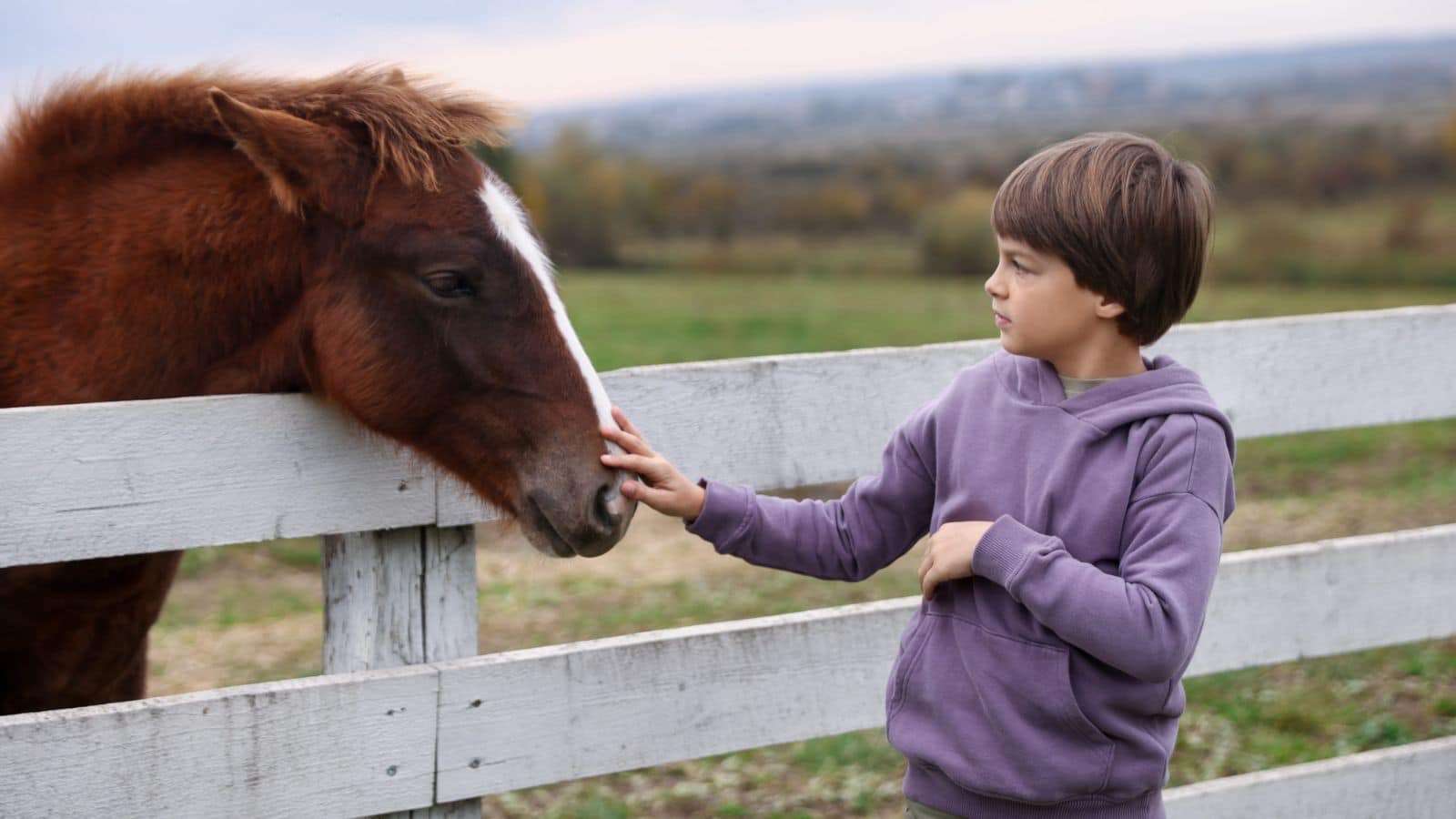
“Horse therapy” covers more ground than the name suggests, and the difference can reach a family’s wallet.
Therapeutic riding, the intervention examined here, involves instructors teaching people with disabilities riding and horsemanship skills.
Hippotherapy is something different. It involves physical, occupational, or speech therapy delivered by a therapist who uses a horse’s movement to address specific treatment needs.
That distinction becomes particularly important when families start asking about insurance.
In 2025, Illinois passed legislation requiring certain health plans to cover medically necessary services, including hippotherapy, that incorporate equine movement into treatment. The requirement applies to policies issued or renewed after Jan. 1, 2027.
Marita Wassman, founder of Ride On St. Louis, explained that stables cannot bill insurance for services unless an occupational or physical therapist, speech therapist, or mental health professional is involved.
A program’s name alone, then, doesn’t establish whether its services qualify for coverage.
The Question Researchers Are Still Chasing
Two follow-up questions remain: how long the gains last and why they happen.
The team’s 2018 follow-up offers reason to be cautious.
Researchers reassessed 64 children from the earlier trial six months later. By then, the riding group no longer maintained its advantage in hyperactivity, while its improvement in irritability remained significant only under a less stringent statistical threshold.
The sample was small, attrition was substantial, and those participants weren’t part of the new trial. Whether ongoing riding sessions could help preserve improvements remains unanswered.
Another challenge is understanding why the intervention works.
In 2020, CU Anschutz and the Maine Medical Center Research Institute received a $2.5 million grant to investigate why horseback riding might benefit autistic children, particularly those with an additional psychiatric diagnosis.
The planned measurements included heart rate, skin response, and saliva cortisol before and after sessions.
Researchers intend to continue examining which elements of horse-based activities account for the observed benefits. No timeline for further findings has been announced.
For families, that leaves an important practical question: which program best suits their child’s needs, and what evidence supports the benefits it promises?
What would you most want to know before signing a child up for a horse-based program?
More Articles You Might Be Interested in:
- 8 Alarming Signs an ’80s Kid Was Struggling With Autism and No One Noticed
- Children Taking GLP-1 Drugs May Face Nutritional Deficiencies, New Study Finds
- Young Teens With Increased Daily Steps Have Better Mental Health, Study Finds





