

The idea that humans use only 10% of their brains is one of the most persistent myths in popular psychology. It suggests that an enormous reserve of unused brainpower is sitting inside our skulls waiting to be unlocked, but modern neuroscience does not support that claim.
Brain scans show activity across much of the brain over the course of normal life, and damage to even relatively small regions can produce noticeable changes in movement, language, memory, vision or personality. The real story is not that 90% of the brain sits idle, but that different networks become more or less active depending on what you are doing.
The myth survives because it offers an appealing possibility: maybe extraordinary intelligence is simply hidden inside everyone. Neuroscience gives us a less magical answer, but one that is arguably more interesting.
Brain scans do not reveal a huge unused 90%
If most of the human brain truly served no purpose, modern brain imaging should reveal vast areas that remain inactive regardless of what a person is doing. Researchers do not see that pattern.
Functional MRI and PET imaging show that different regions become active during speech, movement, memory, emotion, vision, decision-making and even quiet rest. Some regions may be less active during one task and more active during another, but that is very different from being permanently unused.
Neuroscientists have known for years that there is no enormous block of healthy brain tissue simply waiting to be switched on. Scientific American’s review of the myth noted that virtually every part of the brain has a known role and that most of the brain remains active across ordinary daily life.
Takeaway: Brain activity changes from moment to moment, but neuroscience has not identified a giant silent 90% that healthy people never use.
You do not use every brain region at maximum intensity at once
Rejecting the 10% myth does not mean every neuron is firing constantly or every brain region works at full capacity simultaneously. That would be inefficient and potentially dangerous.
When you read, networks involved in vision and language become especially important. When you move your hand, motor and sensory systems become more active, while different networks dominate during memory retrieval, emotional processing or planning.
Even the heart does not contract every muscle fiber at maximum intensity continuously. Biological systems use resources according to what is needed at the moment.
The brain works similarly. Its regions cooperate dynamically rather than remaining fully activated all at once.
Takeaway: Using the whole brain does not mean every part is maximally active simultaneously. Different networks increase or decrease their activity as tasks and internal states change.
Your brain remains busy even when you are doing “nothing”
Sitting quietly with your eyes closed can feel mentally inactive, yet the brain does not simply shut down. Networks continue processing memories, internal thoughts, body signals and information about the surrounding environment.
Researchers have identified what is often called the default mode network, a collection of brain regions that becomes particularly active during internally focused states such as daydreaming, thinking about yourself or remembering past experiences.
Other systems continue controlling breathing, heart rate, posture and basic alertness without requiring conscious effort.
This means rest is not the same as neurological inactivity. Even when you are not solving a problem or deliberately concentrating, the brain remains metabolically and electrically busy.
Takeaway: Quiet rest still involves substantial brain activity because the nervous system continues managing internal thought, memory and essential body functions.
The brain uses a surprisingly large share of the body’s energy
Another problem with the 10% claim is that brain tissue is metabolically expensive. Although the brain represents only a small fraction of total body weight, it consumes a disproportionately large amount of the body’s available energy.
The brain needs continuous supplies of oxygen and glucose to maintain electrical gradients, transmit signals and support communication between neurons.
It would be biologically strange for evolution to maintain a large organ that consumes so much energy if 90% of it served essentially no function.
This does not prove every individual neuron is indispensable, because the brain contains redundancy and can sometimes compensate for injury. It does show why the idea of an enormous useless reserve is difficult to reconcile with biology.
Takeaway: Brain tissue is costly for the body to maintain. The idea that most of this energy-intensive organ exists without serving meaningful functions does not fit what researchers observe.
Brain injuries reveal how much different regions matter
One of the strongest arguments against the myth comes from neurology itself. Damage to relatively small areas of the brain can produce highly specific changes depending on where the injury occurs.
Damage to certain language networks can make speaking or understanding words difficult. Injuries involving visual pathways can affect parts of the visual field, while damage to motor regions can weaken or paralyze particular parts of the body.
Other injuries can alter memory, attention, emotional regulation or the ability to recognize familiar objects and faces.
If 90% of the brain were truly unused, doctors should regularly encounter enormous areas that could be destroyed without producing any noticeable effect. That is not what neurological medicine shows.
Takeaway: Brain injuries reveal that different regions contribute to different abilities, making the idea of vast useless areas difficult to sustain.
Removing brain tissue can sometimes produce surprisingly mild effects
There is an important complication: people can sometimes function remarkably well after losing significant amounts of brain tissue. That might sound like support for the 10% idea, but neuroscientists interpret it very differently.
The brain has some capacity for plasticity, meaning surviving networks can adjust after injury or surgery. This is particularly striking in children, whose developing brains can sometimes reorganize functions after major procedures.
In rare cases of severe epilepsy, surgeons may disconnect or remove substantial portions of one cerebral hemisphere. Some patients later achieve levels of everyday functioning that appear extraordinary given the scale of the surgery.
That does not mean the removed tissue was useless. It means other regions can sometimes adapt and take over parts of its workload, often after intensive rehabilitation and with remaining neurological differences.
Takeaway: The brain can sometimes reorganize after major injury, but compensation does not mean the lost tissue was never being used in the first place.
Neuroplasticity is powerful, but it does not unlock a hidden 90%
The brain’s ability to change is often mixed together with the 10% myth. Neuroplasticity is real, but it refers to the ability of neural networks to strengthen, weaken or reorganize their connections through learning and experience.
When someone learns a musical instrument, practices a language or recovers after some types of neurological injury, the brain can modify existing networks.
This does not normally involve activating huge regions that had previously been completely dormant.
Recent neuroscience has also pushed back against exaggerated claims that the brain can freely repurpose any area for any function. Plasticity has important limits because brain regions retain underlying anatomical and connectivity constraints.
Takeaway: Learning changes how the brain’s existing systems operate. It does not reveal a hidden reservoir comprising the other 90% of the organ.
So where did the 10% idea come from?
The exact origin is difficult to pin down, but the myth appears to have grown from several ideas that were gradually distorted. One possible influence was psychologist William James, who wrote that people often fail to use all of their mental and physical potential.
James was talking about human potential, not claiming that 90% of brain tissue was inactive.
The idea was later transformed in popular self-improvement culture. A 1936 introduction to Dale Carnegie’s How to Win Friends and Influence People attributed the idea that people develop only a fraction of their latent mental abilities to James, helping popularize a more numerical version of the claim.
Early neuroscience may also have unintentionally contributed. Some regions of the brain were once called “silent cortex” because their functions were not obvious when researchers stimulated them, but later work revealed important roles in integration, planning and higher cognition.
Over time, “we do not understand what this brain area does” became confused with “this brain area does nothing.”
Takeaway: The 10% myth probably grew from distorted ideas about unrealized human potential and early misunderstandings about brain regions whose functions scientists had not yet identified.
Movies helped turn the myth into something even bigger
The 10% claim is almost perfect for storytelling because it offers an instant explanation for superhuman ability. If ordinary people use only a fraction of their brains, then unlocking the remainder could supposedly produce extraordinary intelligence, perfect memory or even supernatural powers.
Save this article
Movies such as Limitless and Lucy have used versions of this premise to drive their plots.
There is no neuroscience behind the idea that gradually activating larger percentages of the brain would produce those effects.
In reality, uncontrolled increases in neuronal activity can be harmful. Seizures, for example, can involve abnormal synchronized activity across neural networks, which illustrates that “more brain activity” is not automatically better.
Human cognitive performance depends on efficient coordination and timing rather than simply turning everything on harder.
Takeaway: Popular culture helped the 10% idea survive because hidden brainpower makes a compelling story. Real cognitive performance depends on organized neural activity, not activating increasingly large percentages of tissue.
Glial cells may have helped create another version of the myth
Another misconception sometimes claims the 10% figure came from the belief that only around 10% of brain cells are neurons while the rest are useless supporting cells. The biology does not support that interpretation either.
Glial cells are essential components of the nervous system. Different types help maintain the chemical environment around neurons, produce myelin, participate in immune responses and support communication between brain cells.
Researchers now know that glia are involved in far more than simply holding neurons together.
Even the popular claim that glia outnumber neurons by ten to one across the entire human brain has been revised. Modern cell-counting studies suggest the overall numbers of neurons and non-neuronal cells are much closer than that simplistic ratio implies.
Takeaway: Non-neuronal brain cells are not unused filler. Glial cells perform critical functions that allow neural networks to survive and operate properly.
Having more neurons active would not necessarily make you smarter
The myth also assumes that intellectual ability scales directly with the amount of brain tissue being activated. Neuroscience does not treat intelligence that way.
Expert performance can sometimes involve more efficient neural processing rather than simply greater activation.
A trained musician, athlete or mathematician may solve familiar problems using highly refined networks that require less effort than those of a beginner.
Learning therefore does not necessarily mean making the brain “work harder.” It can mean allowing the brain to work more efficiently.
The quality of communication between regions, the organization of networks and the ability to direct attention can matter more than the raw amount of electrical activity.
Takeaway: Intelligence is not a volume knob controlled by activating more brain tissue. Efficient and coordinated processing can matter more than simply producing more neural activity.
Could we still have untapped mental potential?
This is where a small piece of truth can hide inside the myth. Humans may be capable of improving memory, attention, knowledge and many skills far beyond their current levels, but that does not mean unused brain tissue is waiting to be activated.
Practice changes neural networks. Sleep influences learning and memory, while exercise, education and repeated experience can affect cognitive performance.
People can become dramatically better at skills they initially perform poorly because the nervous system adapts with training.
That is genuine untapped potential.
The difference is that improvement comes from changing how existing brain systems operate rather than switching on anatomical regions that were previously doing nothing.
Related: Why do we cry when we’re happy? What science says
Takeaway: Humans can develop abilities they do not currently possess, but neuroscience explains that through learning and neural adaptation rather than a dormant 90% of the brain.
Scientists still do not understand everything the brain does
Rejecting the 10% myth should not create the opposite misconception that neuroscience has completely mapped the human brain. Scientists still have enormous unanswered questions about consciousness, memory, psychiatric illness and how large networks produce complex thought.
Researchers know far more about some brain systems than others, and new technologies continue revealing interactions that were previously invisible.
Not understanding every function does not mean those areas are unused.
A computer engineer can know that every component in a machine is doing something important without fully understanding every possible interaction among billions of operations occurring across the system.
The brain presents an even more complicated version of that problem.
Takeaway: Neuroscience remains incomplete, but “we do not fully understand the brain” is very different from saying “most of the brain is unused.”
What percentage of the brain do we actually use?
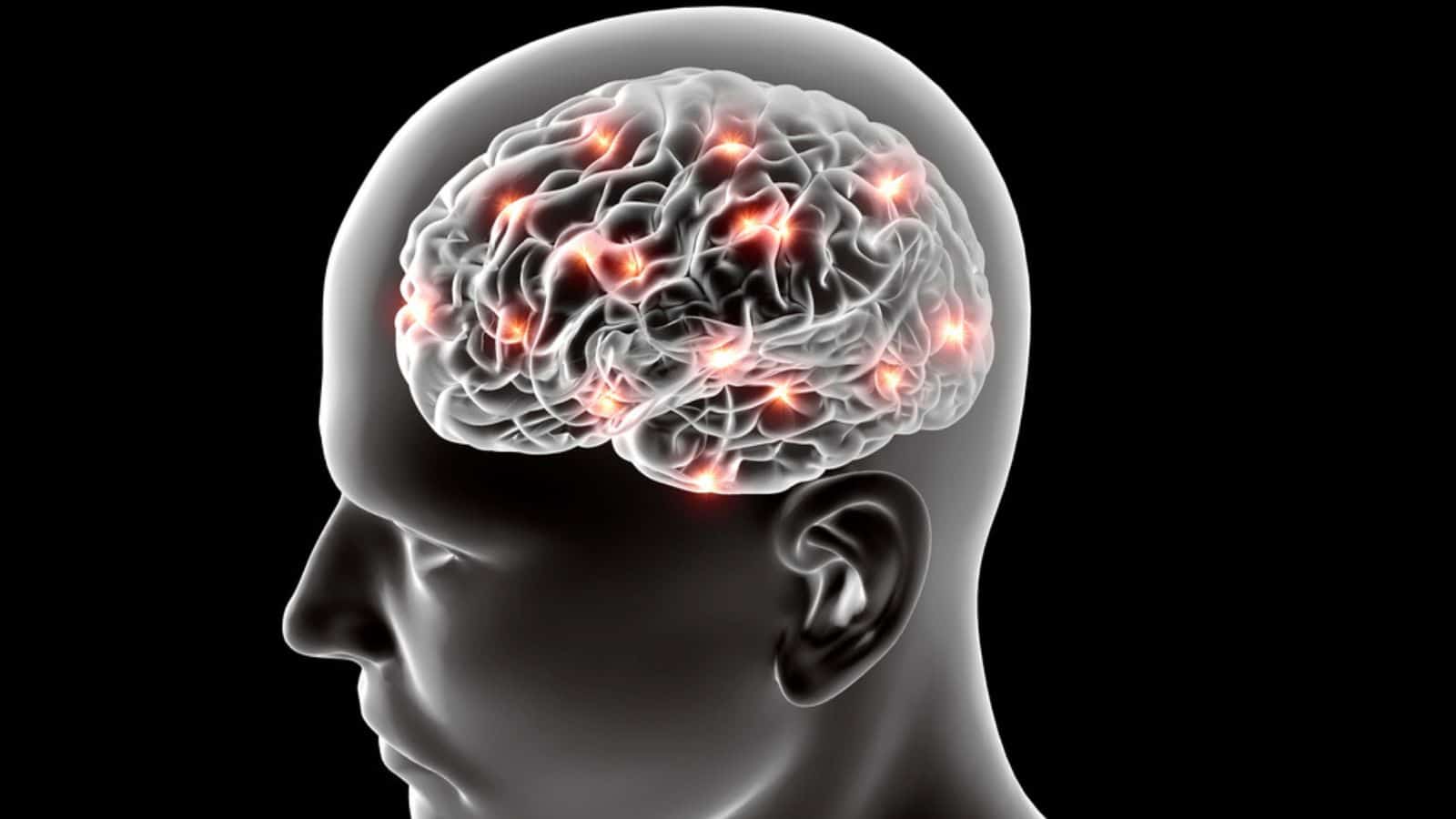
There is no useful scientific percentage that replaces the 10% figure. Humans use essentially all major regions of the brain over time, but not all of them equally or simultaneously.
Different behaviors recruit different networks, while other systems remain active in the background.
Even during sleep, the brain continues cycling through organized patterns of activity rather than shutting down almost completely.
So saying humans use “100% of the brain” can also be misleading if interpreted to mean every neuron fires continuously.
A better description is that virtually every part of a healthy brain has functions and becomes active under appropriate circumstances.
Takeaway: There is no scientifically meaningful single percentage describing how much of the brain you use at one moment. Across normal life, virtually all major brain regions participate in something.
So do we use only 10% of our brains?
No. Neuroscience has found no evidence that 90% of the healthy human brain sits permanently unused. Brain imaging, metabolic demands and the effects of localized brain damage all point toward a highly active organ in which different regions perform different jobs.
The myth survives partly because the alternative sounds exciting. Believing there is a huge hidden reserve makes extraordinary intelligence seem like something we could unlock with the right trick, drug or training program.
Real brain improvement is less dramatic but much better supported.
You can learn, strengthen skills, build new habits and reorganize neural networks through experience. The brain remains capable of meaningful change throughout life, even though there is no secret 90% waiting to be switched on.
The untapped potential is therefore not an unused section of your brain.
It is what the brain you are already using can still learn to do.
Question for you. Which is more surprising: that the 10% claim has survived for so long, or that virtually every major part of your brain already has a job? The real neuroscience may be less fantastical, but it leaves plenty of room for human potential.





