

Sleep can feel like a nightly disappearance. You close your eyes, hours pass without any clear sense of time, and then consciousness seems to return in the morning. That similarity has led some people to compare sleep with a temporary form of death, but biologically the two states are profoundly different.
During sleep, your brain remains active, your heart keeps pumping, your lungs continue exchanging oxygen and your nervous system moves through highly organized stages. Death, by contrast, involves irreversible failure of the systems required to sustain life.
The more interesting question is not if you literally die every night. It is why normal sleep can sometimes create the strange subjective impression that your conscious self vanished for hours.
Sleep is an active biological state
A sleeping person may appear inactive, but the brain is continuously changing between distinct physiological states. Electrical recordings show organized patterns of activity that differ from both wakefulness and severe brain injury.
Normal sleep cycles between non-REM and REM stages several times during the night. Deep non-REM sleep contains prominent slow waves, while REM sleep can show electrical activity that resembles aspects of wakefulness.
A neurological review describes sleep as a sequence of identifiable brain states rather than a period when brain activity simply stops.
Your nervous system is therefore doing something highly structured while you sleep. It is not temporarily shutting down in the way that irreversible death would require.
Takeaway: Sleep is not an absence of brain function. It is an organized neurological state with repeating patterns that scientists can measure throughout the night.
Your brain remains active even when you remember nothing
One reason sleep feels like nonexistence is that you may retain no memory of large portions of the night. Lack of memory, though, does not mean the brain was inactive or that consciousness necessarily disappeared completely.
People often dream during REM sleep and can also report mental experiences after being awakened from non-REM sleep. Many of those experiences are simply forgotten before morning.
Even when there is no remembered dream, brain systems continue regulating breathing, temperature, hormones and responses to the environment.
The gap in your autobiographical memory therefore creates an illusion. To your waking mind, bedtime may seem immediately followed by morning, even though several hours of active biology occurred in between.
Takeaway: You can lose your memory of an interval without ceasing to exist during it. The missing hours of sleep reflect how memory works, not evidence that your brain temporarily died.
Sleep and unconsciousness are not the same thing
Sleep is sometimes casually described as unconsciousness, but researchers make important distinctions between normal sleep, anesthesia, coma and disorders of consciousness. These states produce different brain patterns and different responses to stimulation.
A sleeping person can usually be awakened by sufficiently strong sound, touch or other stimulation. Someone in a coma cannot simply be awakened in the same way.
Sleep also follows predictable cycles controlled by brain networks and circadian systems. The brain actively enters and exits these states rather than suffering a failure that has to be medically reversed.
That reversibility is one of the fundamental differences between normal sleep and death.
Takeaway: Sleep is a regulated state that the brain can naturally exit. Death is not simply deeper sleep because its defining biological changes are irreversible.
Your heart does not stop when you sleep
Death is often associated with the failure of circulation because the brain and other organs depend on blood carrying oxygen and nutrients. During ordinary sleep, circulation continues continuously even though heart rate and blood pressure may change.
Heart rate generally falls during much of non-REM sleep, then becomes more variable during REM sleep. Breathing also changes between sleep stages but continues automatically.
Those changes are normal physiological regulation rather than signs that the body is shutting down.
If circulation stopped for several minutes every night, sleep would cause severe brain injury rather than restoration.
Takeaway: The cardiovascular system remains active throughout normal sleep. A slowing heartbeat is completely different from the permanent loss of circulation associated with death.
Your breathing also continues automatically
You do not normally have to consciously remember to breathe while asleep because brainstem networks regulate respiration automatically. The rate and pattern can change depending on sleep stage, body position and health conditions.
REM sleep often produces more irregular breathing, while non-REM sleep tends to be more stable.
Sleep disorders such as obstructive sleep apnea can briefly interrupt airflow, but even those episodes are pathological disruptions rather than normal features of sleep.
The brain frequently responds to falling oxygen or rising carbon dioxide by triggering partial awakening and reopening the airway.
Takeaway: Breathing during sleep is controlled automatically by living brain circuits. Temporary breathing problems during sleep are medical abnormalities, not evidence that sleep itself is a form of death.
Deep sleep can dramatically reduce awareness
The comparison with death becomes more understandable during deep non-REM sleep because awareness of the outside world can become extremely limited. Sounds that would immediately attract attention while awake may fail to produce any remembered experience.
During deep sleep, large populations of cortical neurons alternate through synchronized patterns of activity, reducing the kind of continuous information integration associated with waking consciousness.
This may help explain why someone can experience hours of sleep with no subjective sense of elapsed time.
Yet the brain can still process certain stimuli and may wake rapidly if something sufficiently important occurs.
The state is therefore reduced responsiveness, not biological absence.
Takeaway: Deep sleep can greatly reduce conscious awareness, which helps create the feeling that you temporarily disappeared. Your brain remains alive and capable of responding throughout the state.
REM sleep looks surprisingly close to wakefulness in some ways
REM sleep makes the idea of sleep as “temporary death” even harder to sustain. During this stage, the brain becomes highly active and vivid dreaming is especially common.
A modern review describes REM sleep as a state combining activated brain activity with rapid eye movements and profound reduction in skeletal-muscle tone.
Heart rate and breathing can become more variable, while emotional and visual brain systems contribute to vivid dreams.
In other words, some nights contain periods when your body lies almost motionless while your brain generates elaborate internal experiences.
Takeaway: REM sleep demonstrates that an apparently motionless sleeping body can contain a highly active brain and complex mental experience.
The body deliberately paralyzes many muscles during REM sleep
One feature that can make sleep seem eerie is REM atonia, a temporary reduction in skeletal-muscle activity that prevents most dream movements from being physically acted out.
Brainstem circuits actively inhibit many voluntary muscles during this stage.
The paralysis is incomplete because breathing muscles, eye muscles and some other systems continue functioning. People may also twitch or move briefly.
When REM atonia persists for a few moments after someone wakes, it can produce sleep paralysis, during which the person becomes conscious before normal voluntary movement fully returns.
That experience can be frightening enough to feel like being trapped between life and death, but it is a known sleep-state transition.
Takeaway: Temporary muscle paralysis during REM is actively produced by the nervous system. It is another sign that sleep involves controlled brain processes rather than biological shutdown.
Sleep performs functions death obviously cannot
Sleep is necessary for healthy brain and body function. Research links it with memory processing, immune regulation, metabolic control and restoration of several physiological systems.
Recent work also continues examining how sleep supports clearance of metabolic waste from the brain. A 2026 review describes increased activity of brain-clearance pathways during sleep and their possible importance for maintaining the neural environment.
Researchers still debate some details of how these clearance mechanisms work, but the broader point is straightforward.
Sleep supports biological maintenance precisely because the organism remains alive and actively regulated throughout the process.
Takeaway: Sleep performs restorative biological functions that depend on active living systems. It is not a temporary cessation of life.
Your metabolism slows, but it does not stop
The body generally uses less energy during sleep than during wakefulness, especially during non-REM sleep. That reduction can make sleep sound superficially like a shutdown state, but metabolic activity continues throughout the night.
A 2026 review describes reduced basal metabolic rate and energy expenditure during non-REM sleep alongside active regulation of brain metabolism.
Cells still consume energy, tissues continue repairing themselves and organs continue performing essential functions.
A dead organism cannot maintain these controlled metabolic processes because the systems coordinating them have irreversibly failed.
Takeaway: Sleep reduces some aspects of energy use while maintaining organized metabolism. Lower activity is not the same as loss of life.
Your brain continues monitoring the environment
Sleeping does not completely disconnect you from the outside world. Your brain continues evaluating sensory information, even though much of it never reaches full conscious awareness.
A parent may awaken quickly to a baby’s cry while sleeping through other sounds of comparable volume. Someone may also wake when hearing their own name or an unusual noise.
This selective responsiveness shows that the sleeping brain is still processing incoming information and deciding, in a broad neurological sense, what deserves attention.
The filtering becomes stronger during deeper stages, but the sensory system is not simply turned off.
Save this article
Takeaway: Your brain continues monitoring the environment during sleep. The fact that certain sounds can wake you quickly shows that sensory processing remains active.
Why does falling asleep feel like consciousness switches off?
There is rarely a remembered moment when you can say, “This is the exact second I became unconscious.” Instead, thoughts become less organized, awareness of the room weakens and memory formation changes as wakefulness transitions into sleep.
The next remembered event may be a dream or waking the following morning.
Because the transition itself is poorly encoded in memory, your subjective experience can resemble a sudden jump across several hours.
This creates one of sleep’s strangest illusions: from the perspective of memory, a long night can feel almost instantaneous.
The body experienced those hours even if your waking autobiographical self retained almost none of them.
Takeaway: Sleep can feel like disappearing because memory does not preserve a continuous record of the night. Subjective time and biological time are not the same thing.
Dreamless sleep raises a deeper philosophical question
The most interesting version of the question concerns periods when you appear to have no conscious experience at all. If there is no dream, no sense of time and no memory, what exactly happened to the conscious “you” during those hours?
Neuroscience can describe brain states during those periods, but the philosophical question of personal continuity goes deeper.
Most theories of personal identity do not require uninterrupted consciousness. Otherwise, anesthesia, fainting and dreamless sleep would repeatedly create entirely new people.
Your body, brain, memories and biological processes maintain continuity across the unconscious interval.
When awareness returns, the same ongoing organism resumes ordinary conscious interaction with the world.
Takeaway: Conscious awareness can be interrupted without requiring the person to cease existing. Biological and psychological continuity extend across periods you do not consciously remember.
General anesthesia creates an even stronger version of the illusion
People undergoing general anesthesia often describe an experience even more dramatic than sleep. One moment they are speaking with medical staff, and what feels like an instant later they are waking after the procedure.
That does not mean they died during surgery.
Anesthetic drugs alter brain activity in ways that suppress conscious experience and prevent memory formation. Doctors continuously monitor circulation, oxygen levels and other vital functions throughout the procedure.
The experience demonstrates something important about consciousness: your sense of elapsed time depends heavily on creating memories of what happened.
Remove awareness and memory formation, and several hours can feel like no time passed at all.
Takeaway: Anesthesia shows that losing conscious awareness can create the subjective impression of instant time travel without the organism ever ceasing to live.
A coma is also different from sleep
The phrase “sleeping like the dead” can blur another important distinction. A coma is a pathological state of unresponsiveness caused by severe brain dysfunction, not an unusually deep version of ordinary sleep.
Comatose patients do not show normal cycles of sleep and wakefulness in the same way healthy sleepers do, and they cannot simply be awakened through ordinary stimulation.
Sleep, by contrast, is built into normal brain physiology.
The fact that humans naturally enter it every day and return through predictable mechanisms separates it sharply from conditions caused by brain injury or systemic failure.
Takeaway: Sleep, coma and death can all involve reduced outward responsiveness, but their underlying brain states and capacity for recovery are fundamentally different.
Brain death is nothing like normal sleep
Brain death involves irreversible loss of the brain functions required for life. Normal sleep preserves those functions and depends on them operating correctly.
A sleeping brain regulates breathing, controls sleep cycles, responds to sensory information and transitions naturally back to wakefulness.
A brain-dead person cannot spontaneously wake because the relevant functions have been permanently lost.
This is why medical professionals do not describe sleep as a mild or temporary form of brain death.
They are fundamentally different biological conditions despite superficial similarities in outward appearance.
Takeaway: Sleep preserves the brain systems necessary for life and awakening. Brain death means those functions have been irreversibly lost.
Sleep may temporarily change consciousness rather than eliminate it
Researchers increasingly treat consciousness during sleep as more complicated than simply “on” or “off.” Dreams clearly demonstrate conscious experience during some periods, and reports after awakenings suggest mental content can also occur outside classic REM sleep.
A 2024 review notes that sleep contains changing relationships between brain activity and conscious experience rather than one uniform state of unconsciousness.
At other points, especially during deep non-REM sleep, conscious experience may become minimal or absent.
Your night may therefore contain repeated transitions between different forms and degrees of awareness.
This is very different from irreversible cessation.
Takeaway: Sleep may repeatedly alter, reduce and restore consciousness rather than simply shutting it off for the entire night.
The resemblance to death has influenced culture for thousands of years
Humans noticed the similarity between sleep and death long before neuroscience existed. Both involve closed eyes, reduced movement and temporary loss of ordinary interaction with the world.
Religious texts, poetry and mythology have often used sleep as a metaphor for death, while awakening becomes an intuitive metaphor for resurrection or renewed life.
The comparison works symbolically because the outward appearance can be strikingly similar.
Biologically, though, the analogy quickly breaks down.
A sleeper is maintaining circulation, metabolism, neural communication and the ability to awaken. A dead body has irreversibly lost the coordinated functions necessary to sustain the organism.
Takeaway: Sleep resembles death strongly enough to become a powerful cultural metaphor, but the resemblance is mostly external rather than physiological.
Related: Is death a black hole with no escape? Science and religion draw very different conclusions
Could sleep tell us anything about what death feels like?
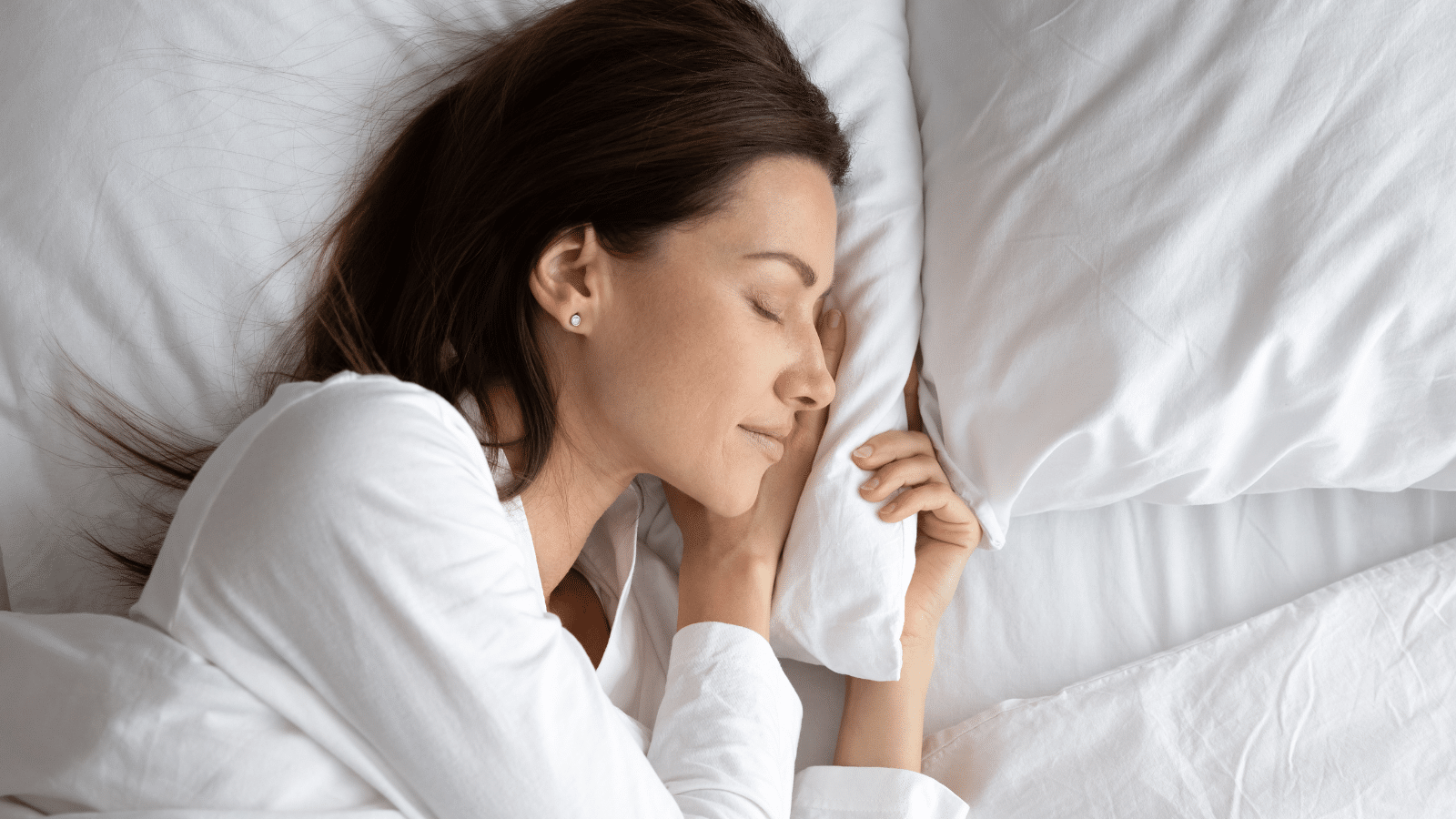
Sleep can show that consciousness may disappear without any remembered sense of time passing. That has led some people to wonder if death might subjectively resemble entering dreamless sleep and simply never waking.
Science cannot confirm that comparison.
A sleeping person retains a functioning brain capable of generating experience and returning to wakefulness. Irreversible death removes the biological system that neuroscience currently associates with conscious experience.
The subjective state after irreversible death cannot be reported back to researchers, which creates the same scientific limit found in debates about the afterlife.
Sleep therefore provides an analogy for interrupted consciousness, not experimental evidence of what death itself feels like.
Takeaway: Dreamless sleep demonstrates how awareness can disappear from memory, but it cannot tell science what happens to subjective experience after irreversible death.
So do we die every night when we sleep?
No. Biologically, sleep and death are radically different states. During sleep, your brain remains active, your heart and lungs continue functioning, metabolism continues and highly organized sleep cycles repeatedly move you between different neurological states.
What disappears temporarily is ordinary waking awareness, and even that does not vanish throughout the entire night because dreaming can involve vivid conscious experiences.
The comparison feels convincing because memory creates a gap.
You may remember closing your eyes and then suddenly remember waking several hours later, with almost nothing in between. Subjectively, it can feel as though you ceased to exist and instantly returned.
Neuroscience shows that the opposite happened.
Your body remained alive, your brain moved through complex cycles and countless processes continued without requiring your conscious attention.
You do not die every night.
You temporarily surrender waking awareness while one of the most active and carefully regulated states in human biology takes over.
Question for you. What feels strangest about sleep to you: losing awareness without noticing the exact moment it happens, dreaming inside a world that feels real or waking with no sense that several hours have passed? Each points to how unusual consciousness itself really is.