

Once the leaves drop in November, many backyard trees reveal something that was hidden all summer: big, messy balls of twigs and leaves wedged among the branches. Plenty of them are exactly what they look like, squirrel nests. Some are not nests at all, but strange growths produced by the tree itself, and others belong to birds. Telling them apart is the kind of slow, screen-free pastime that fits right in with the Boomer habits making a comeback.
Wildlife groups and university extension services offer enough clues to sort one from another. Here are 8 things worth knowing before guessing what is living, or growing, overhead. Bare winter trees are also a reminder to plan for spring, and some gardeners keep going all season with elevated garden beds for fall greens and herbs. Watching squirrels from the window is one of those little rituals that quietly disappear when life gets busy, yet it costs nothing.
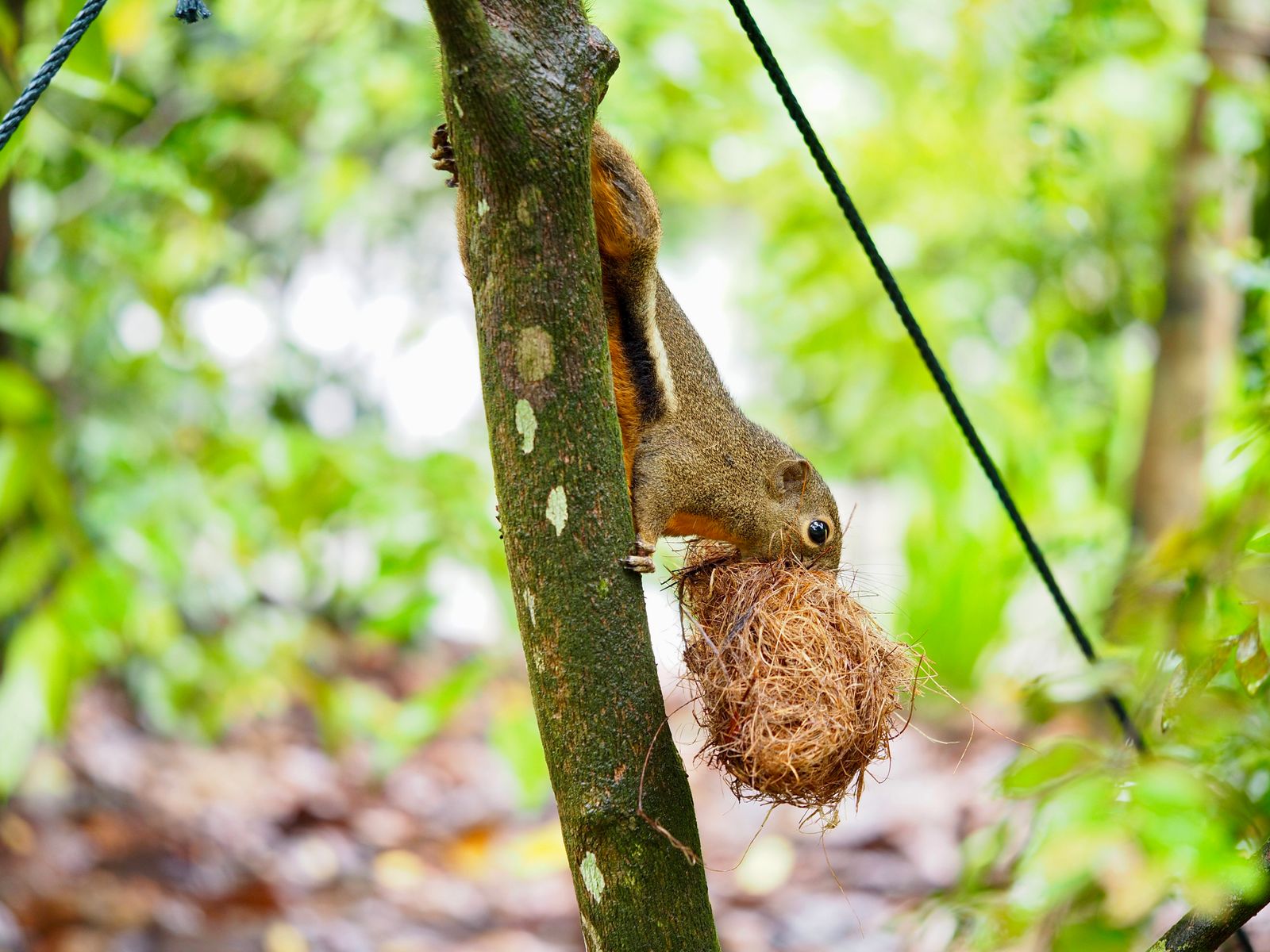
1. Many of Those Leafy Balls Really Are Squirrel Nests
The most common answer is the obvious one. Squirrel nests are called dreys, and eastern gray squirrels build them from twigs, leaves and other natural materials. According to Mass Audubon, dreys can measure one to two feet across and often sit more than 20 feet above the ground.
They are usually built near the trunk or where branches meet. The outside may look like a random pile of leaves, but the inside is lined with softer material such as moss, grass and shredded bark, which helps keep squirrels warm through cold nights.
2. The Nests Were There All Along
A drey that seems to appear overnight in November was probably built months earlier. Many are constructed during summer or early fall, while the canopy still hides them, and they become obvious only once the leaves come down.
The Washington Department of Fish and Wildlife notes that winter is a good time to spot squirrel nests in deciduous trees, and that they commonly sit between 15 and 50 feet above the ground. Several mysterious clumps in a familiar tree have likely been there for a while.
3. Some Clumps Are Actually Part of the Tree
Here is the twist. Some clusters that resemble nests are witches’ brooms, a name that sounds like it came from a Halloween story. According to the Royal Horticultural Society, they form when many shoots grow close together from a single point on a branch, producing a dense, tangled bundle.
Unlike a drey, a witches’ broom is not assembled from collected twigs and leaves. It is living growth from the tree itself, so the ball overhead may be part of the branch rather than an animal’s home.
4. Witches’ Brooms Have Several Possible Causes
There is no single explanation for these growths. The Texas A&M Forest Service says witches’ brooms can be caused by fungi, mites, insects, certain microorganisms, environmental conditions or genetic changes. Normally, a tree’s leading shoots help regulate nearby buds, and when that pattern is disrupted, extra shoots can sprout close together.
The cause is not always obvious from looking. Iowa State University Extension notes that pinning down some causes may require specialized testing, so spotting a broom does not by itself reveal what created it.
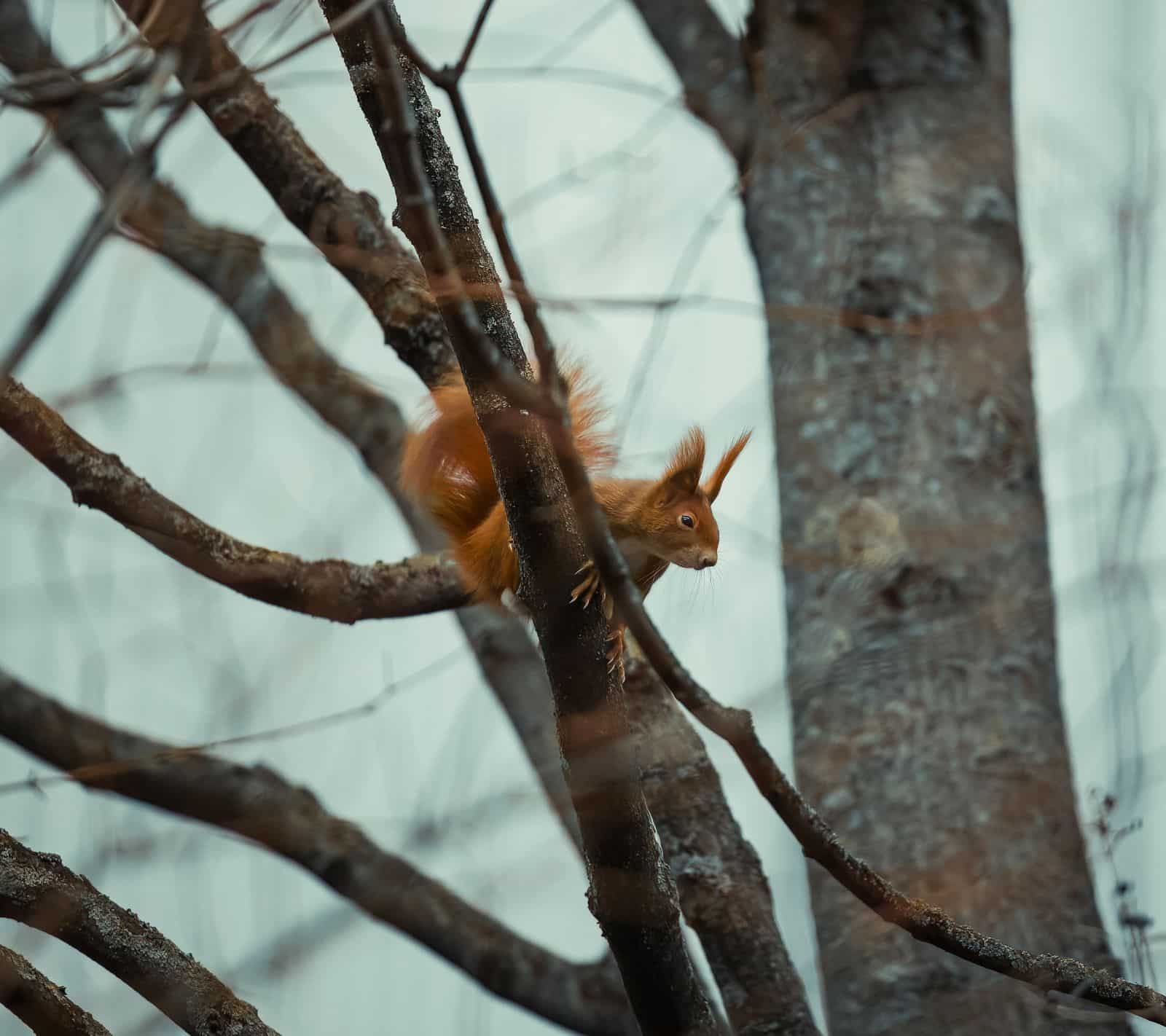
5. The Materials Offer the Best Clues
A closer look at the structure usually settles the question. A squirrel drey tends to be a rounded collection of loosely woven twigs, with dried leaves forming much of the outer surface.
A witches’ broom looks different up close. Instead of separate materials gathered together, it shows many small shoots growing directly from the wood, sometimes with buds or green growth. If the tiny branches sprout from the branch itself, a broom is the likely answer. If the cluster is mostly collected leaves and twigs, a drey is more likely.
6. Some Large Clumps Belong to Birds
Squirrels and odd tree growths are not the only possibilities. Hawks and crows build nests that look more like broad, flat platforms of sticks. Squirrel dreys, by comparison, are rounder and contain plenty of leaves.
That difference helps narrow things down. A flatter collection of bare sticks points toward a bird, while a rounded, leafy bundle fits a squirrel. Looking at shape and materials together works better than judging by size alone.
7. Even Witches’ Brooms Can Shelter Wildlife
Although witches’ brooms are not built as nests, their tangled branches can still give animals a place to rest. Northern flying squirrels are among the animals reported to use them as nesting habitat, so a growth made by the tree can end up serving another creature.
Not every broom holds an animal, though. Some simply remain dense clusters of branches for as long as they last.
8. No Climbing Required
There is no need to climb into the branches for a better view. A pair of binoculars or a phone’s zoom can reveal dried leaves, woven twigs, living shoots and the overall shape from the ground. If the clump looks like a squirrel nest, leaving it alone is the sensible choice. Wildlife specialists quoted by Birds & Blooms advise against disturbing squirrel nests, especially when young squirrels may be inside.
A Second Look at the Backyard
Bare trees reveal all sorts of surprises that stay hidden in warmer months. That big ball of leaves might be a squirrel’s carefully built shelter, a hawk’s nest or an odd growth created by the tree. Many of the leafy clumps seen in late fall really are dreys, but the details tell the story.
Backyard watching fits right in with other cold-season pastimes, from the common winter habits of the ’70s that feel out of place today to a winter forecast check on the countries likely to be coldest this winter. A pair of binoculars by the kitchen window may be all it takes to turn a bare tree into the best show in the neighborhood.
This article was written with the help of AI tools and checked against the sources linked above.




