

Cash still has a place in daily life. It covers a tip, a parking meter, a farmers market stand or a card reader that suddenly stops working. But money planners who spoke to CNBC mostly suggest keeping the amount small, and a growing share of shoppers now go whole weeks without paying for anything in paper bills.
That raises a practical question about the upper limit. A wallet stuffed with more than $200 rarely does anything that a card or a modest backup cannot handle, and it carries risks that plastic does not. Below are 8 reasons the $200 line makes sense for most people on most days, drawn from consumer-protection rules, payment surveys and personal finance guidance.
Readers working on a broader money plan may also find value in this guide on how to save money for an emergency fund, a beginner-friendly look at how credit cards work, and a roundup of wallet-friendly life hacks that make a difference.
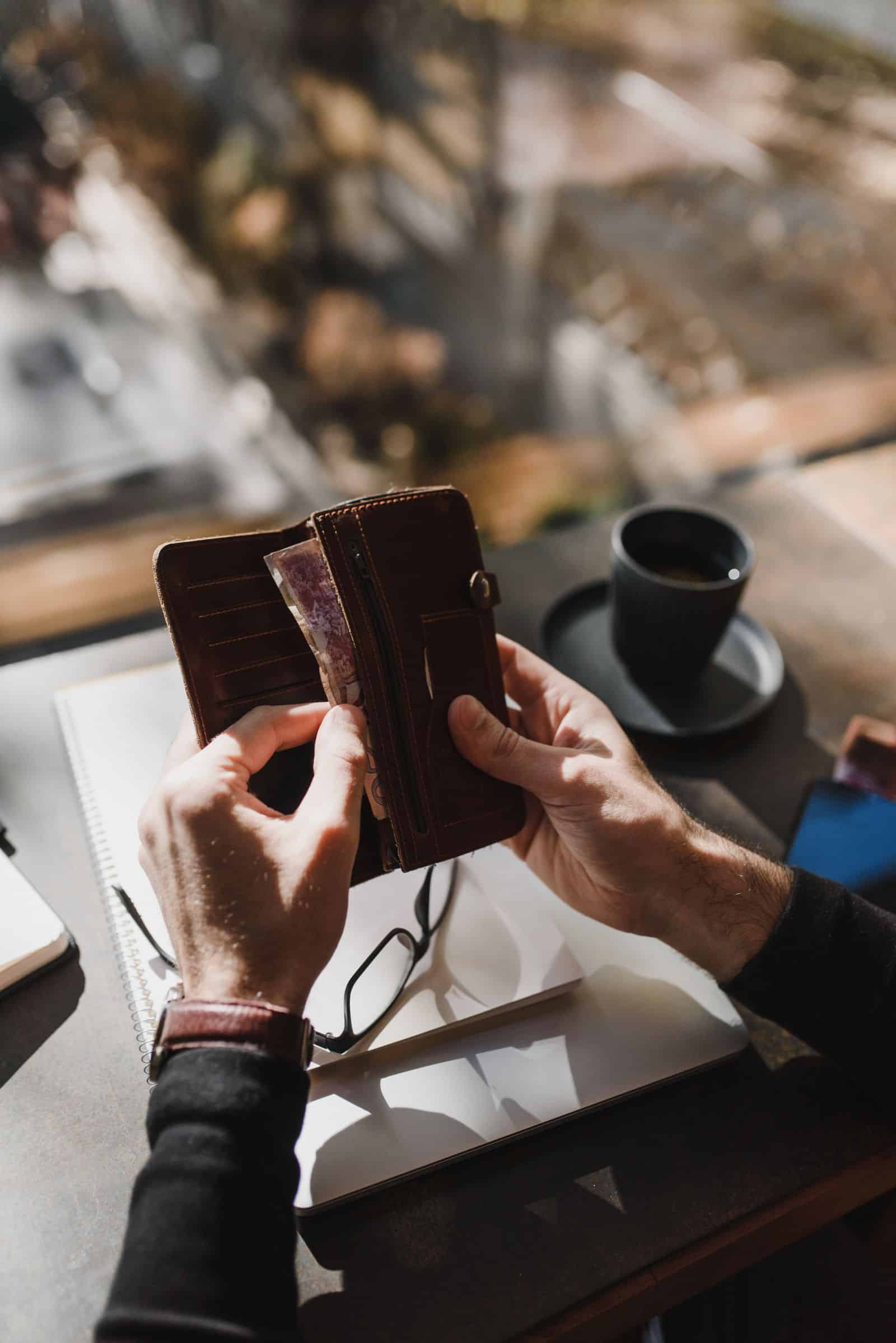
1. Lost Cash Is Usually Gone for Good
A misplaced card can be frozen from a phone in seconds. A misplaced stack of bills cannot. The personal finance team at The Motley Fool points out that losing a wallet means losing whatever money sits inside it, which is the main reason it recommends a modest everyday amount, roughly $100, as a habit. Its guide on how much cash to keep in a wallet treats a smaller balance as simple damage control.
Anyone who has retraced their steps through a parking lot knows the feeling. With $40 at stake, it is an annoyance. With several hundred dollars, it can wreck a monthly budget.
2. Cards Come With Legal Limits on Losses
Federal rules put a ceiling on what a cardholder owes after a theft. According to the Federal Trade Commission’s page on lost or stolen credit, ATM and debit cards, a credit card holder owes nothing if the loss is reported before the card is used, and no more than $50 after that. Debit and ATM cards have tiered limits: $50 if the loss is reported within 2 business days, and up to $500 if it is reported later but within 60 days of the statement.
Paper money has no such safety net. A thief who takes $300 in bills keeps all $300, and there is no dispute form to file.
3. A Thick Wallet Is a Bigger Target
Certified financial planner Tipiwa Walker told CNBC that carrying large sums simply raises the odds of losing money, and that cash lacks the fraud protections credit cards provide. The article on how much cash to keep in a wallet sums up the shared view of several planners: never carry more than could comfortably be lost or stolen.
Flashing a fat fold of bills at a register, a gas pump or a crowded holiday market also tells strangers exactly where the money is.
4. Most Purchases No Longer Need Paper Money
The shift away from cash has been dramatic. Pew Research Center reports that cash fell from 33% of payments in 2015 to 14% in 2025, according to Federal Reserve Bank of Atlanta figures, and now trails both credit and debit cards. Pew’s review of how payment habits have changed over the past decade also found that 42% of adults say they use no cash at all in a typical week.
When most stores, restaurants and even many street vendors take tap-to-pay, a large cash reserve mostly rides along unused.
5. The Typical Cash Purchase Is Small
The same Pew analysis puts the average cash purchase in 2025 at $58, well below the average card purchase. A Federal Reserve survey cited by CNBC found that people carry about $67 on average. In other words, the typical wallet already covers the typical cash expense, and $200 covers several of them with room to spare.
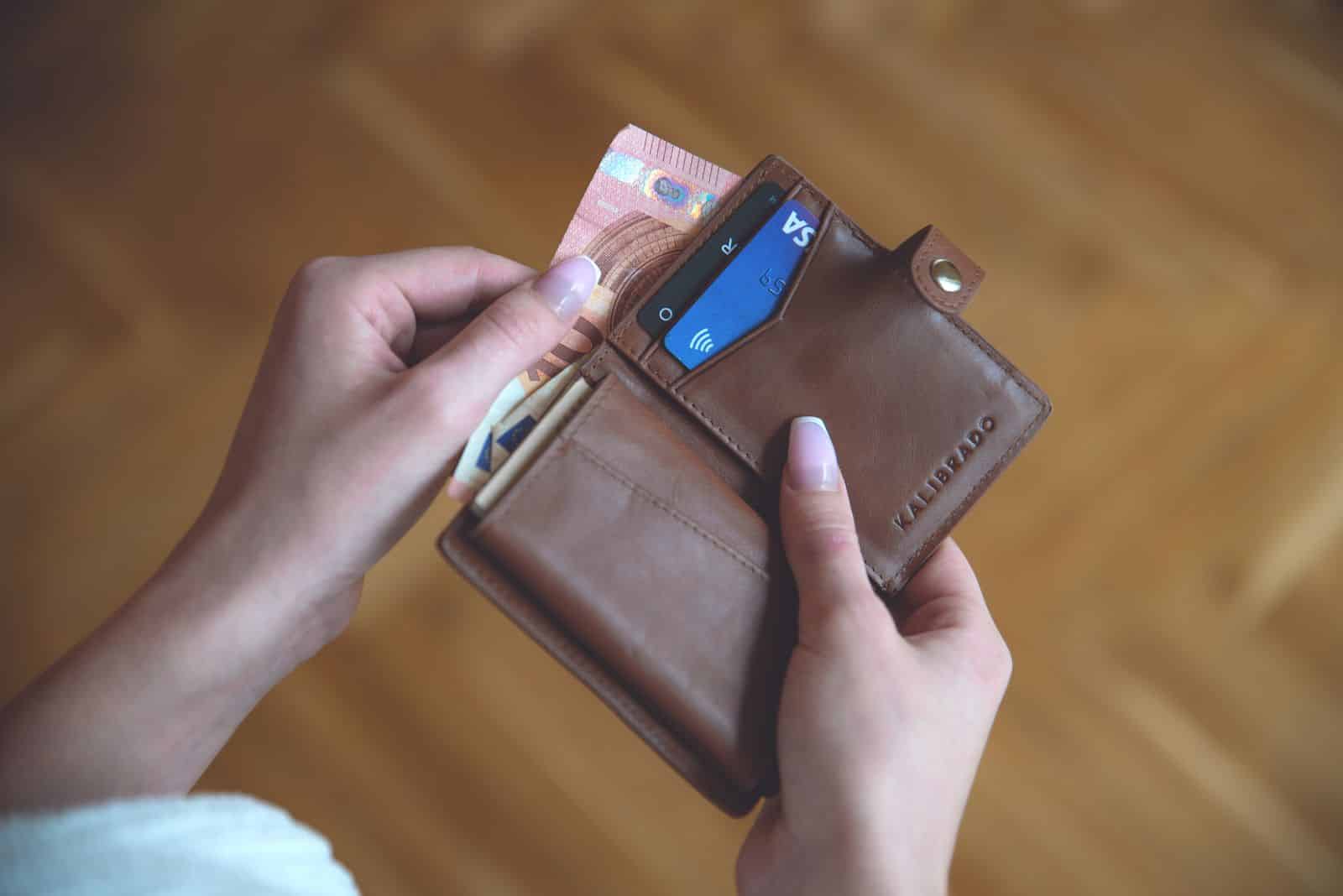
6. Extra Cash Can Make Spending Too Easy
Some people find that bills burn a hole in a pocket. The Motley Fool suggests that anyone who struggles to control cash spending keep only $40 to $50 on hand, or leave a small backup at home in a secure spot instead of in a wallet. Others take the opposite view and use envelopes of cash to stick to a budget, which works well when the amounts are planned rather than pulled from the ATM on impulse.
Either way, the point is control. A defined cap like $200 makes it harder for a casual afternoon out to turn into an expensive one.
7. Idle Bills Earn Nothing
Money sitting in a wallet earns no interest and slowly loses buying power. MoneyLion’s guide on how much cash to have in a wallet gives a simple example: $1,000 left idle could be worth about $943 in purchasing power after two years of 3% inflation. The same guide suggests $50 to $100 for most daily needs and calls $100 a safe upper limit for many people, with $100 to $200 for those who rely heavily on cash or are traveling.
Anything beyond that range usually does more good parked in an insured savings account.
8. A Small Backup Still Covers Real Emergencies
The case for carrying some cash is strong, and planners make it clearly. New Jersey planner Leslie Beck recalled ATMs going down during Hurricane Sandy, and New York planner Melissa Caro asks whether a person who lost their phone would have enough for a cab home. Minnesota planner Brett Anderson, who once carried less than $5, now keeps a couple hundred dollars as a backup after a card was declined over suspected fraud.
That is exactly why $200 works as a ceiling rather than a target. It is enough to handle a dead phone, a power outage or a cash-only stop, without turning a wallet into a liability.
Finding the Right Amount
The right number depends on daily routines. A commuter who tips valets and buys lunch from food trucks may land near the top of the range, while someone who pays for nearly everything by card may be fine with $40. Older relatives often have their own habits, as seen in this look at things boomers keep in their wallets that leave younger generations confused, and in this list of expenses boomers consider a waste of money.
The common thread from every source is the same: carry enough to get home and handle a small surprise, keep the rest where it is protected, and treat $200 as the point where cash stops helping and starts adding risk.
This article was written with the help of AI tools and checked against the sources linked above.




