

Pulling up the sheets and fluffing the pillows takes about two minutes, yet few household chores spark as much debate. Some people would never leave the bedroom without doing it, while others see no point in tidying a bed that will be slept in again that night.
Surveys and habit writers have spent years looking at the people in the first camp, and a few patterns keep showing up. None of these traits are caused by a smooth comforter, and plenty of non-bed-makers live organized, happy lives. Still, people who make the bed every morning often share a cluster of related habits. Many of them also like an orderly home in general, the kind built on best practices for seasonal storage, 2026’s most clever storage hacks to maximize every inch of space and 15 easy-to-use products that simplify everyday life at home. Here are 7 habits that tend to come along with a made bed.

1. They Tend to Be Morning People
A 2018 survey of 2,000 adults, carried out by the market research firm OnePoll for the sleep and bedding site Sleepopolis, found a clear split between the two groups. According to StudyFinds’ write-up of the bed-making survey, people who made their beds tended to be morning people who wake up without an alarm. Those who skipped the chore leaned toward being night owls who hit the snooze button before getting up. Bed-makers were also more likely to say they exercise, eat a healthy diet and consider themselves clean, and they were 10% more likely to say they enjoy cooking.
That fits with common sense. Someone who wakes up feeling ready to go has a few spare minutes and the energy to straighten the blankets before heading to the kitchen. Someone rushing out the door after the third snooze is far more likely to leave the covers in a heap.
2. They Like Starting the Day With a Quick Win
The best-known argument for bed-making comes from Navy Admiral William H. McRaven. In his May 17, 2014, commencement address at the University of Texas at Austin, he described how instructors inspected trainees’ beds every morning during Navy SEAL training. He called it “a simple task — mundane at best,” but argued that finishing it gave a small sense of pride that carried into the next task and the one after that. The full text of the McRaven speech later became the basis for his 2017 book on the same theme.
People who make their beds often describe the same feeling. Checking off one easy job right away sets a tone, and the momentum makes the next chore, from unloading the dishwasher to answering emails, feel a little less heavy.
3. They Rely on Routines
For many bed-makers, the chore is just one link in a longer chain. Psychiatrist Susan B. Trachman, writing in Psychology Today about making the bed as a first step, describes routines as a source of structure and predictability. A routine also cuts down on the number of small decisions a person has to make each day, which can leave more mental energy for things that matter.
In practice, that often looks like the same order every morning: alarm, bed, shower, coffee. Because the steps are automatic, the bed gets made without much thought at all.
4. They Pay Attention to Small Details
McRaven’s speech made a second point that bed-makers tend to embrace: small details matter. His argument was that a person who handles the little things well is better prepared to handle the big ones. Habitual bed-makers often carry that attitude into other corners of life, such as hanging up a coat instead of tossing it on a chair, wiping the counter after cooking, or sorting the mail the same day it arrives.
It is not about perfection. A slightly lumpy duvet still counts. The point is the regular attention, not hotel-level corners.
5. They Care About the Bedroom Setting
People who make their beds tend to think of the bedroom as a space worth keeping pleasant. In the National Sleep Foundation’s first Bedroom Poll, released in 2011, respondents who made their bed every day were 19% more likely to say they got a good night’s sleep every night. The poll of 1,500 adults, which was funded by Downy, also found that 78% felt more excited to go to bed on fresh-scented sheets.
Those numbers show a link, not proof that tidy blankets improve sleep. But they suggest that people who straighten the bed each morning are also the ones who think about clean sheets, a comfortable pillow and a calm, uncluttered room.
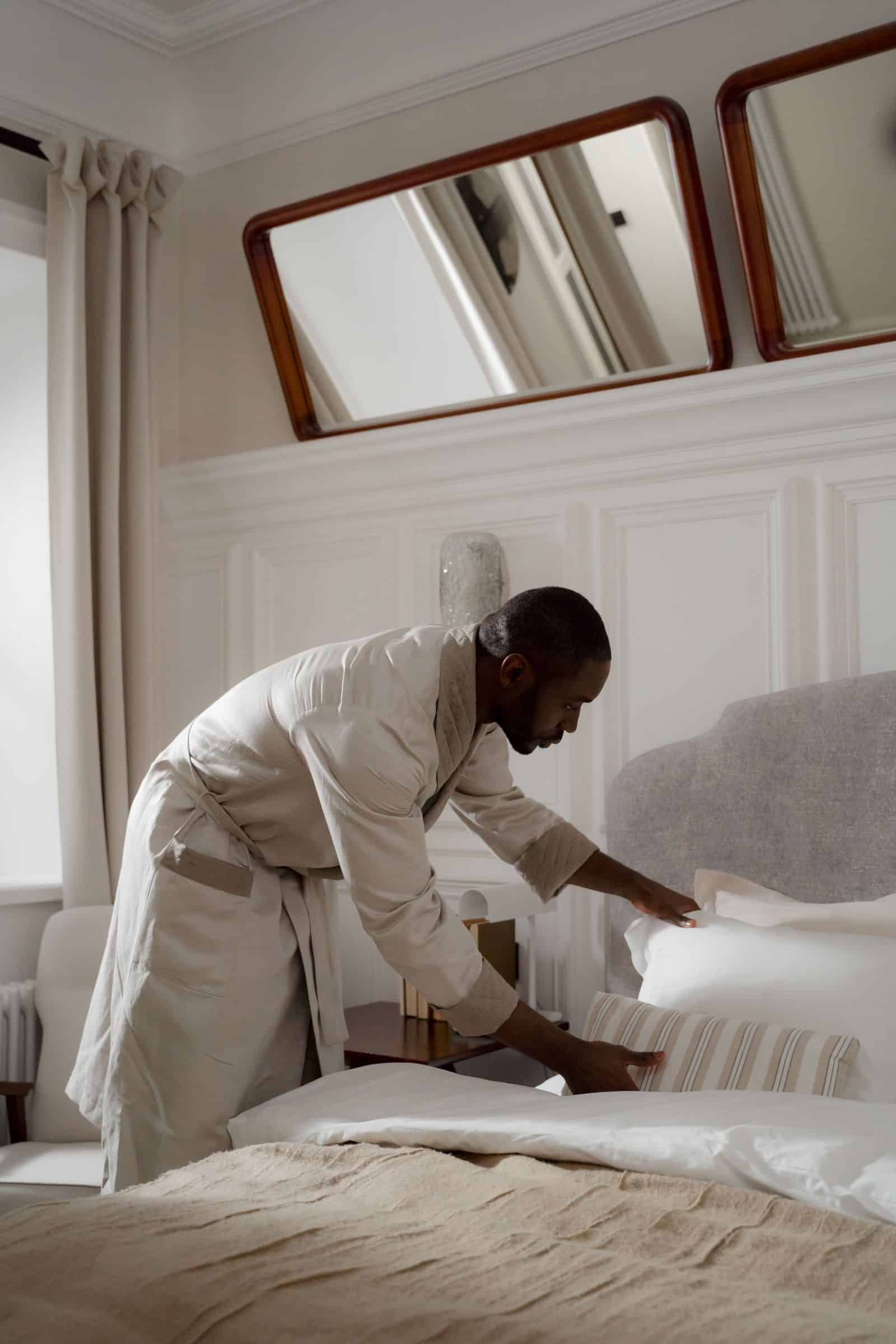
6. They Stack Good Habits Together
Writer Charles Duhigg, author of The Power of Habit, popularized the idea of “keystone habits,” small routines that can set off changes in other behavior. A Zapier explainer on keystone habits lists making the bed among the examples and notes that the habit has been linked with better productivity, a greater sense of well-being and stronger budgeting skills. The article stops short of saying the bed causes any of that, and the honest reading is correlation.
Even so, the pattern makes sense. A person who builds one dependable habit often finds it easier to add a second and a third. Readers interested in that process may find 5 Easy Steps to Change Any Habit a useful starting point.
7. They Plan the Day With Intention
Trachman also describes bed-making as a way of signaling a commitment to the rest of the day’s structured activities. In her Psychology Today piece, she suggests writing a plan, keeping it visible and adding new habits one at a time rather than overhauling everything at once.
That approach shows up in the way many habitual bed-makers handle their mornings. They tend to know what the day holds before they leave the bedroom, whether that means a work deadline, a grocery run or a workout. Making the bed becomes a natural pause to run through the list. For those who struggle to keep routines going, 12 reasons self-care habits fade and how to make them stick forever looks at the same problem.
A Note of Caution
Some of the bigger claims about bed-making deserve a raised eyebrow. Trachman’s article mentions socio-economist Randall Bell’s finding that people who make their beds are more than 200% more likely to become millionaires, and she is careful to point out that the link is correlational. Wealthy, organized people may simply be more likely to have many tidy habits at once.
The Sleepopolis survey has limits too. It was commissioned by a company in the bedding business, the answers were self-reported, and the published summary does not explain how the sample was weighted. It also found that 42% of bed-makers say a partner is the reason they do it, which suggests the habit is sometimes more about keeping the peace than personal discipline. Making the bed is a small habit, not a magic one.
The Bottom Line
A made bed will not change anyone’s personality overnight. What it does is reflect a set of habits that often travel together: early mornings, steady routines, attention to detail and a bedroom treated as a space worth caring for. For people who already do it, those two minutes are part of how the day starts. For everyone else, it may be one of the easiest habits to try.
This article was written with the help of AI tools and checked against the sources linked above.




