

The weekend after Thanksgiving is when ladders come out, extension cords get untangled and front yards start filling up with light-up reindeer. For most households, the only real worry is whether the bulbs still work. In many neighborhoods, though, a homeowners association rulebook or a city code has a say in what goes up, where it sits and how long it stays.
Most violations start with a friendly letter rather than a fine, but some displays have drawn city warnings and fines measured in the hundreds of dollars. Here are 8 holiday decorations and display habits that can run into HOA or city rules, based on association guidance, municipal codes and fire marshal notices.
Plenty of decorating ideas come with no rule problems at all, from sourcing and decorating with vintage Christmas decorations to tips for decorating a home on a budget. Taste is another matter, and lists of tacky decor habits worth dropping are a reminder that not every choice wins over the neighbors. The items below are about something more concrete: written rules.
1. Giant Yard Inflatables
Blow-up snowmen and Santas are a staple of suburban lawns, yet they are one of the first things an association may target. WTOP’s look at how HOAs regulate holiday decor notes that associations may ban inflatable lawn decorations outright. Before ordering a 12-foot inflatable, it is worth checking the community’s architectural guidelines.
2. Multicolored Light Strings
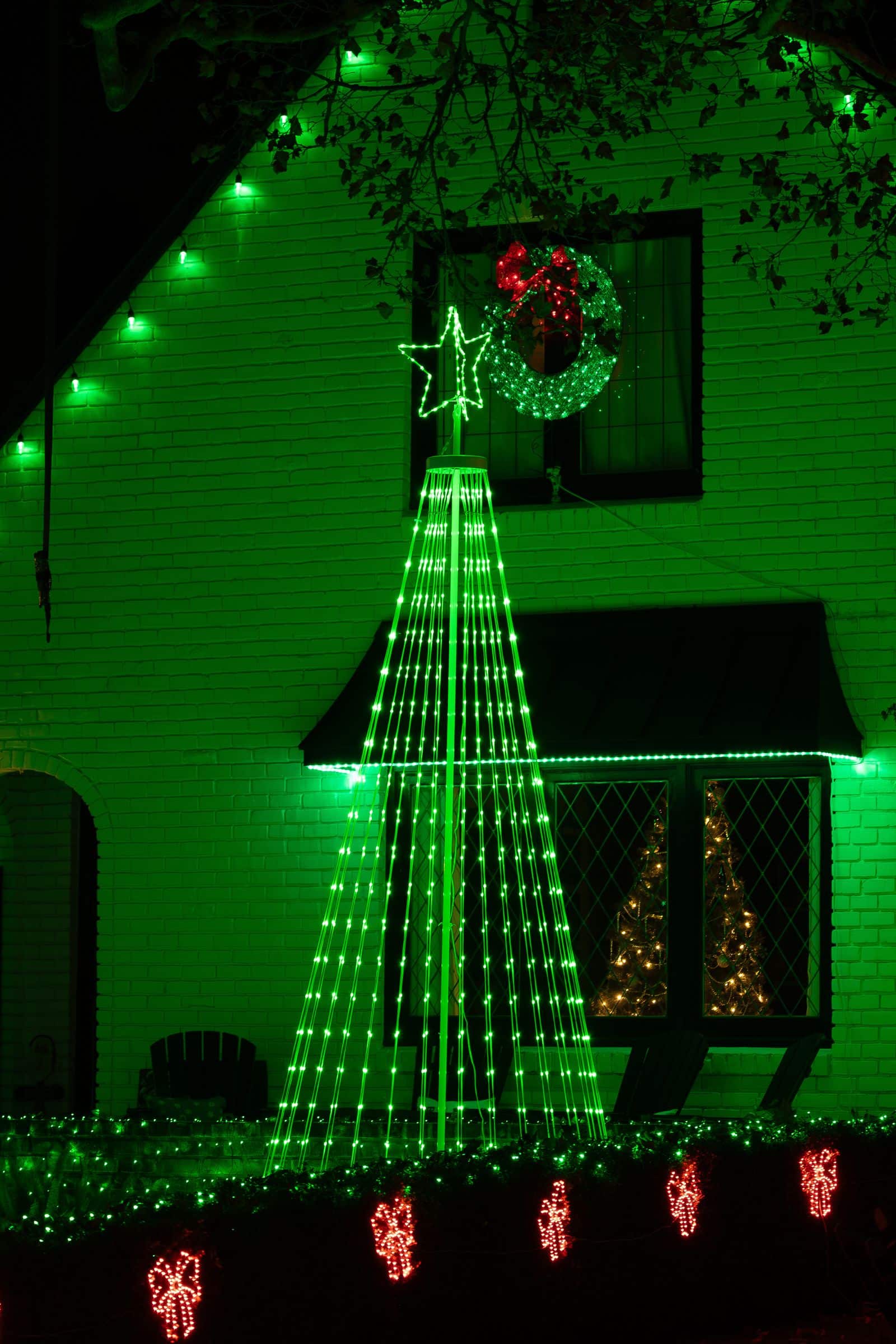
Color can be a rule, too. The same WTOP report explains that some associations restrict light strings to white or yellow only. A homeowner who wraps the porch in red, green and blue bulbs in one of those communities could receive a violation notice, usually with a photo attached.
3. Lights That Stay On Late Into the Night
Timers matter in many communities. Guidance published by the Community Associations Institute in its article on regulating season’s greetings in HOAs describes a sample policy that allows holiday lights only from sunset to 10 p.m. Boards may also limit hours on shared balconies, where bright displays can turn into a nuisance for the units next door.
4. Decorations Left Up Long After the Holiday
Takedown deadlines are among the most strictly enforced rules. WTOP reported that many associations require decorations to come down about 20 days after the holiday. The CAI article mentions a suggested window of two weeks before and two weeks after the holiday’s calendar date, and says displays cannot be permanent. A wreath still on the door in March is exactly the kind of leftover these deadlines are written for.
5. Displays With Music and Sound Effects
Synchronized light shows set to holiday songs draw crowds, and sometimes complaints. The CAI guidance notes that boards may ban sounds such as music or recorded audio. In Rocklin, California, CBS News reported in December 2024 that a homeowner with roughly 15,000 lights and 85 Santa figures received an HOA noise violation tied to the display’s sounds. In Dallas, a city committee in 2025 discussed treating loudspeakers in residential areas as presumptively offensive during certain hours after one home’s displays drew heavy traffic, according to CandysDirt’s report on Dallas’s proposed display rules. That proposal had not passed at the time of the report.
6. Decorations That Spill Onto City Property
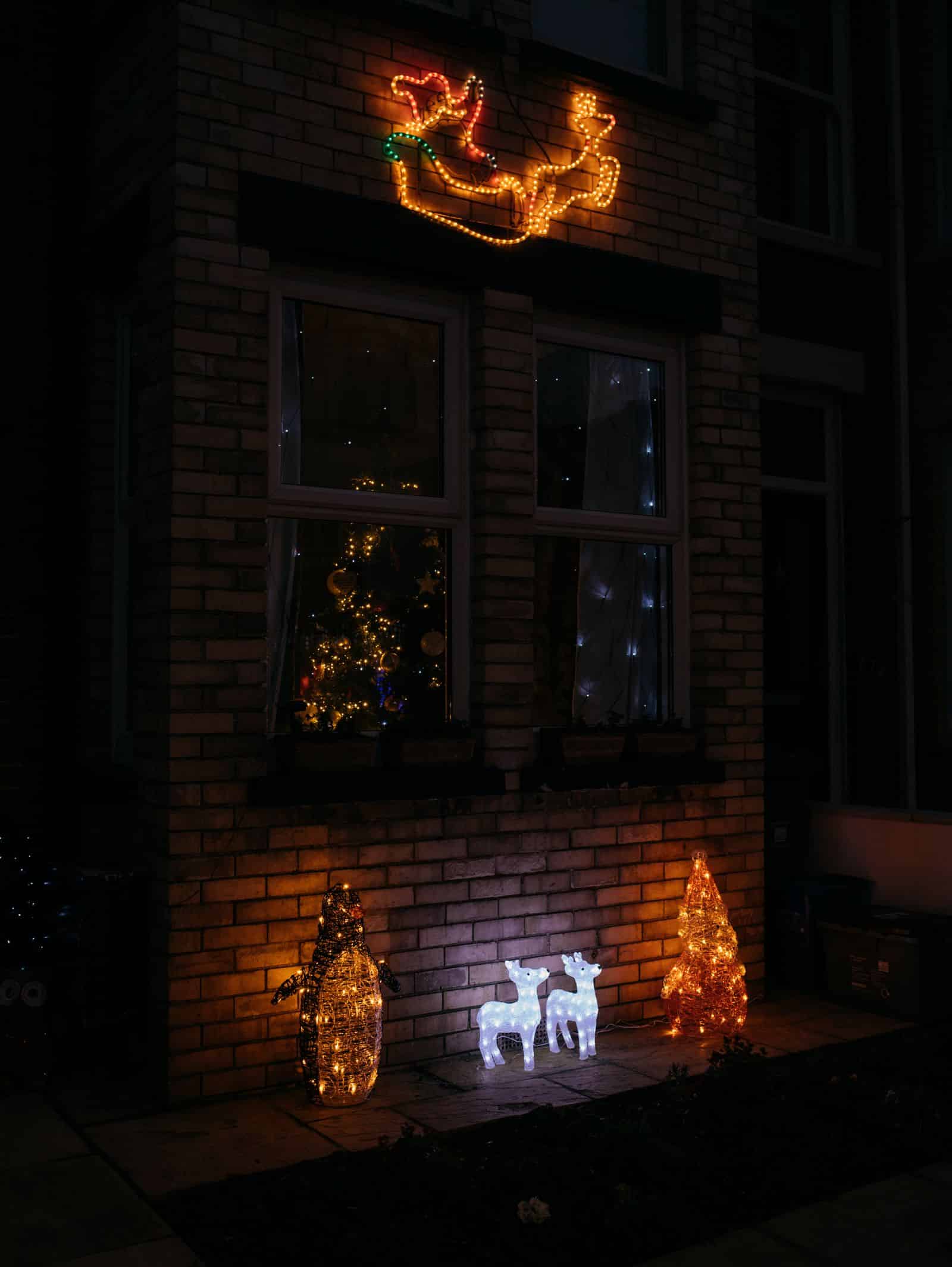
The edge of a front yard is not always where the owner thinks it is. The same Rocklin homeowner received a city letter warning that parts of the display sat on city property and had to be removed or he could face fines of hundreds of dollars, according to CBS News coverage of the Rocklin holiday display dispute. In Berkeley, California, the municipal code requires a permit for decorative installations in the sidewalk area and keeps a six-foot walkway clear.
7. Lights or Ornaments Tied to Utility Poles
Stringing lights from a porch to the streetlight out front may look festive, but many cities treat poles as off limits. Berkeley’s sidewalk installation rules say decorations may not be fastened to city or utility company poles or their fixtures. In Minneapolis, the city says a permit is needed to attach items such as banners and decorations to poles in the public right-of-way.
8. Cut Trees and Candles in the Wrong Spot
Fire codes add another layer for apartment and condo residents. Minnesota’s State Fire Marshal allows natural cut trees inside apartment units, but in apartment common areas only when the building has automatic sprinklers. Connecticut’s holiday safety bulletin from the state fire marshal’s office says trees may not be placed in corridors or exit paths and that candles and open flames are strictly prohibited on or near natural or artificial vegetation. A tree in the hallway outside a unit can therefore break the rules even if the same tree would be fine inside.
How to Decorate Without a Violation Letter
The simplest step is reading the association’s governing documents and the community’s architectural guidelines before the first strand goes up. City rules are usually posted on the public works or code enforcement website, and fire marshal offices often publish seasonal bulletins. When in doubt, a question to the board or the city office before a display is built can head off problems later.
Decorating is only one part of a busy season. Some households ease the rush with ideas from 14 ways to ease the season’s stress, while others are drawing inspiration from 12 retro decor trends millennials are reviving right now.
The Bottom Line
Most HOA and city decoration rules come down to a few themes: size, color, hours, sound, placement and fire safety. A display that respects those limits is far less likely to draw a complaint. Checking the rules early tends to cost a few minutes, while ignoring them can mean taking everything down in the middle of the season.
This article was written with the help of AI tools and checked against the sources linked above.




