

Granite has a reputation as one of the toughest surfaces in the kitchen, and in many ways it earns it. It handles hot pans, heavy cookware and years of daily use. What it handles poorly is the wrong cleaning product. Granite is a porous natural stone, and most countertops rely on a sealant to keep liquids, oils and stains from soaking in. Plenty of everyday sprays and scrubbers can wear that protective layer down without anyone noticing until the stone looks dull or blotchy.
That is why professional cleaners tend to be picky about what touches stone. The same care that goes into routines like cleaning a dishwasher to reduce smells and dirt or cleaning wood furniture so it looks new again applies here, with a few extra rules that are easy to miss.
Below are 8 things pros and home-care guides say should stay off granite counters, along with what tends to work better.

1. Vinegar
Vinegar is a favorite all-natural cleaner, which is exactly why it ends up on granite so often. The problem is its acetic acid. House Digest explains that vinegar can damage the sealant, leave small scratches and dull the stone’s shine, and it notes that the National Sanitation Foundation does not recommend vinegar on natural stone. Tasting Table makes the same point: because granite is porous, a weakened seal leaves it more open to absorbing liquids.
A splash of diluted vinegar might not ruin a counter overnight, but repeated use is what wears the protection away. Homeowners planning a refresh, such as one of these easy kitchen remodel ideas on a shoestring budget, have every reason to protect stone they already own.
2. Lemon Juice and Lemon-Scented Wipes
Citrus is another acid that causes trouble. House Digest notes that lemon can wear down the surface, corrode calcite in the stone and leave permanent white marks. The risk is not only from fresh lemons. Elizabeth Shields, operations manager at Super Cleaning Service Louisville, told The Spruce in a piece republished on AOL that the citric acid in lemon-scented wipes starts eating away at the sealant, and once that goes, the stone underneath becomes vulnerable.
That makes the quick swipe with a scented disinfecting wipe one of the most common granite mistakes. Bob Vila’s granite guide also lists disinfecting wipes and lemon-scented products as things to avoid, since they may contain citric acid.
3. Glass Cleaner
A streak-free spray seems like it should leave a polished counter looking even shinier. Instead, it can do the opposite. Sofia Martinez, founder and CEO of Sparkly Maid Austin, told The Spruce that the ammonia in glass cleaner harms the sealant and can leave streaks or a rough surface on stone. House Digest adds that the ammonium hydroxide in products like Windex can dull granite and weaken the seal, leaving it more open to stains.
Glass cleaner belongs on mirrors and windows. On stone, it is a shortcut that costs more than it saves.
4. Full-Strength Bleach
Bleach is a go-to for disinfecting, but it is hard on stone. Bob Vila’s guide says full-strength bleach dulls the finish and should be diluted if it must be used at all. House Digest goes further, warning that bleach and similar harsh disinfectants weaken the sealant over time, making granite more prone to permanent stains, chips and cracks with regular use.
An HGTV roundup of cleaning mistakes groups bleach with vinegar, ammonia and lemon as products that can damage a countertop’s sealant and lead to discoloration and erosion.
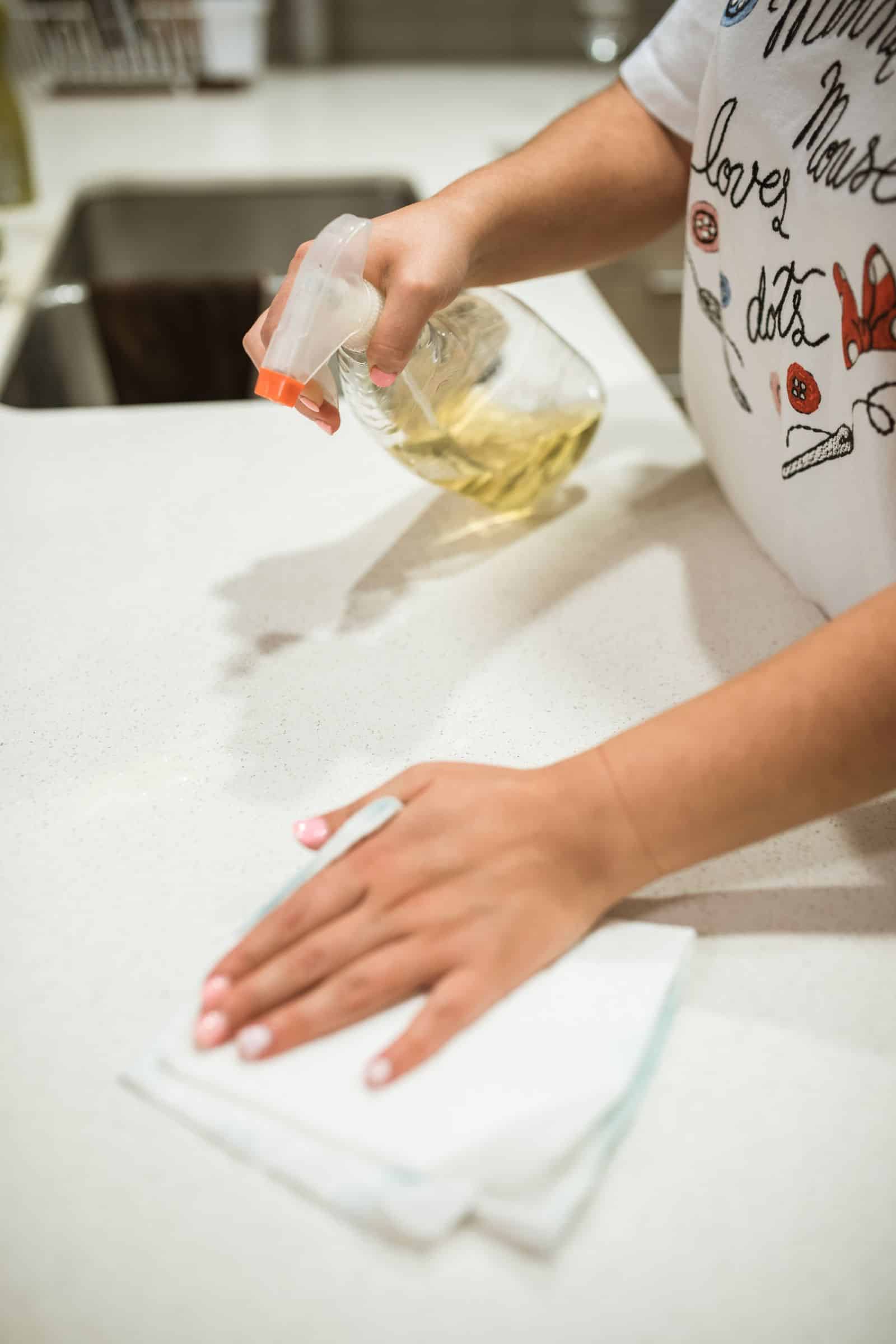
5. Magic Erasers
Melamine sponges are famous for lifting scuffs off walls, which tempts people to use them on stubborn counter spots. Shields told The Spruce that Magic Erasers are too abrasive for stone. Rather than dissolving dirt, they scrub it off, and in the process they wear down the sealant and polish that protect the counter.
The damage may not show after one use, but a dull patch where a spot used to be is a common result of repeated scrubbing.
6. Steel Wool and Scrubby Sponges
The green side of a kitchen sponge is built for baked-on pans, not polished stone. Bob Vila’s guide lists steel wool and scrubby sponges as too abrasive for granite because they can scratch the surface. Fine scratches catch the light, collect grime and make the counter look older than it is.
Pros generally reach for a soft sponge or microfiber cloth instead. For dried-on food, letting warm, soapy water sit for a minute usually does more than hard scrubbing.
7. Dish Soap With Degreasers
Mild dish soap is widely recommended for granite, but not every bottle qualifies. Shields told The Spruce that dish soaps with added degreasers can damage the sealant, and once that barrier is gone, the stone can turn dull even from plain tap water. Heavy-duty degreasers built for stovetops and grills raise the same concern.
The safer pick is a gentle, plain dish soap mixed with warm water, which Bob Vila’s guide calls the best cleaner for regular use.
8. Essential Oils
Adding a few drops of essential oil to a homemade spray is a popular way to make a kitchen smell fresh. On granite, it can backfire. According to Shields and Martinez in The Spruce, oils can leave dark spots on unsealed stone, and on sealed stone they leave a glossy film that attracts dust, which means more frequent cleaning.
Fragrance is better left to a candle or diffuser than to the countertop.
What Pros Use Instead
The shared advice is simple: warm water with a mild dish soap, or a cleaner labeled safe for natural stone, applied with a soft cloth. Martinez also cautions against generic all-purpose sprays, telling The Spruce that if the label does not guarantee the product is safe for natural stone, it is not worth finding out. Bob Vila’s guide adds a water-bead test: if water stops beading on the surface, the sealer may need attention.
For more on avoiding household slip-ups, this list of 12 top cleaning mistakes to avoid covers other common errors. And anyone outfitting a kitchen for regular cooking may find this guide to the top kitchen tools for cooking low FODMAP handy.
This article was written with the help of AI tools and checked against the sources linked above.




