
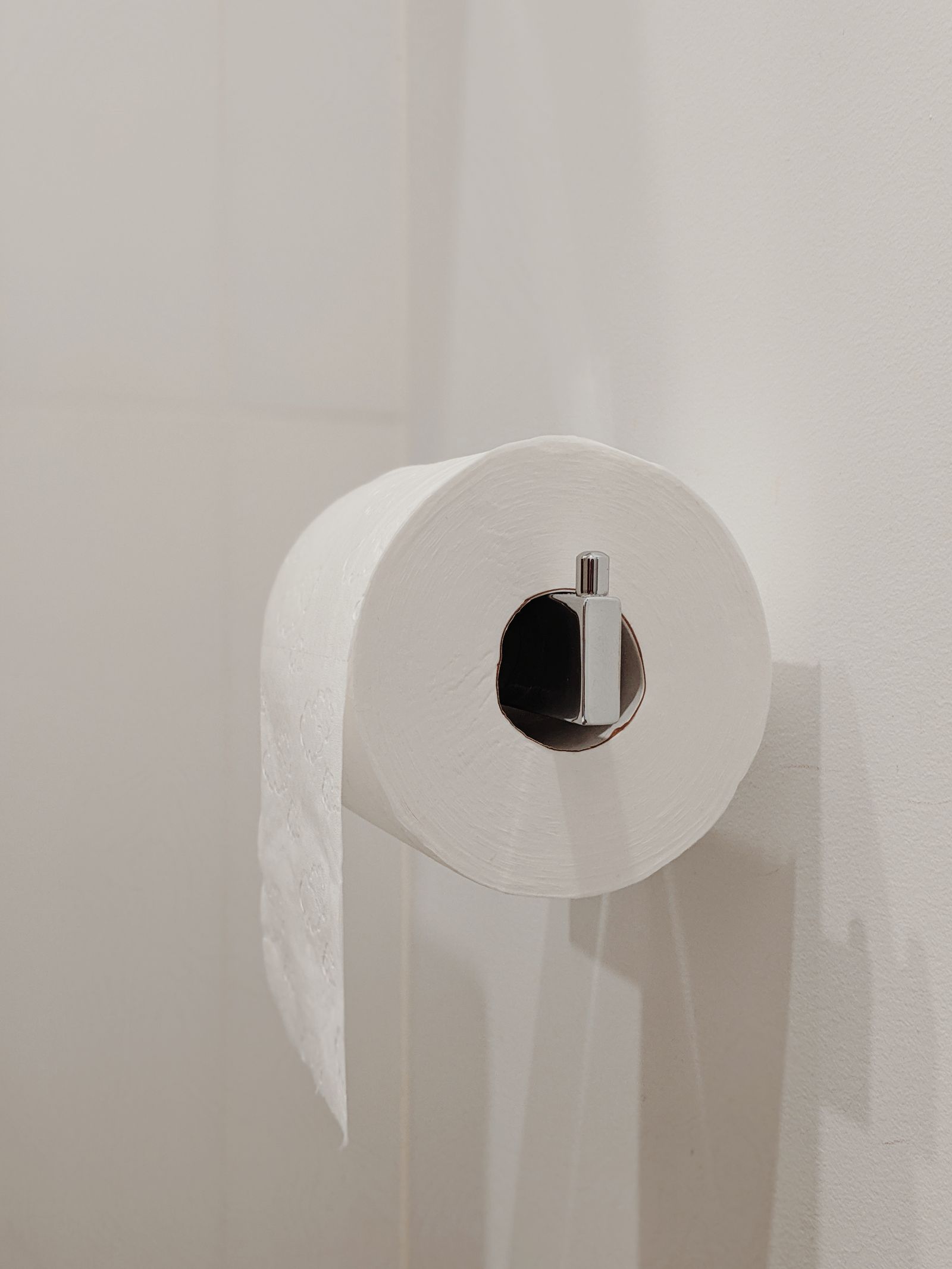
Few household debates have lasted as long, or generated as much heat, as the question of which way a toilet paper roll should hang. When advice columnist Ann Landers came down on the side of “under” in a 1986 column, she reportedly received more than 15,000 responses, according to Best Life. Decades later, the argument still pops up in kitchens, group chats and the occasional houseguest standoff.
Most people land firmly on the “over” side, with the loose end hanging in front of the roll and away from the wall. Cottonelle’s own guide to the over-or-under debate puts that share at about 70%. It is the kind of small, unspoken habit that sits alongside other everyday rituals people rarely question, much like the ones on this list of American habits and phrases that are considered rude in other countries.
Can a roll of paper really say something about personality? Relationship therapist Dr. Gilda Carle thought it was worth asking. Her informal survey of roughly 2,000 people produced a “toilet paper personality test” that has been making the rounds ever since. It is meant to be fun rather than rigorous science, but it lines up neatly with a handful of traits that “over” people tend to show. Here are 7 of them.
1. A Take-Charge Streak
The headline finding from Carle’s survey was simple: people who roll over rated themselves as more dominant than people who roll under. As Bustle reported, the participants, men and women between 18 and 75, said which way they hung the roll and then ranked their own assertiveness on a scale of 1 to 10. The “over” crowd scored higher.
In Carle’s description, that translates into a take-charge, can-do nature. These are the people who notice the empty roll, replace it and probably flip it to their preferred direction in the same motion. Social habits like this are always evolving, and some long-held household customs even appear on lists of social norms that some think should be abandoned.
2. Comfort in Leadership Roles
Dominance in Carle’s framing is not about being bossy. Writing for PsyBlog, Dr. Jeremy Dean summarized her results in a piece on toilet paper and personality, noting that “over” people came across as assertive and more likely to hold leadership roles. “Under” people, by contrast, were described as more agreeable, flexible and empathetic.
Neither style is better than the other, and plenty of teams benefit from a mix. Still, the person who calmly reorganizes the office supply closet without being asked may well be an over-roller at home.
3. A Craving for Order
A separate 2010 study, cited by KTNV in Las Vegas, described over-rollers as people who enjoy taking charge, crave organization and are likely to be overachievers. The appeal of “over” makes sense from that angle. The loose end is always visible, easy to find and neat when it hangs straight down.
People with this streak tend to like systems that just work, whether that is a tidy spice rack or a well-kept calendar. Some of the same instincts show up in this list of 12 things highly productive people never do.
4. Strong Convictions About the Right Way to Do Things
Over-rollers are not shy about their preference. According to Carle, about one in five people admitted to switching the roll’s direction in someone else’s home, and the switchers were usually “over” people correcting “under” setups. Cottonelle’s roundup of survey figures likewise notes that around 19% of people own up to changing the orientation at someone else’s house.
That kind of conviction can be charming or mildly maddening, depending on whose bathroom it is. Either way, it signals someone who has thought about a small detail and decided there is a right answer.
5. Respect for Tradition
Over-rollers have history on their side. Seth Wheeler of Albany, New York, patented the design that became the modern toilet paper roll in 1891, and Best Life notes that his illustration shows the roll hanging off the front. Cottonelle lists this “heritage” argument first among the reasons people give for preferring over.
For people who like doing things the way they were originally designed to be done, that is a pretty convincing case. It is the same mindset that keeps family recipes, handwritten notes of thanks and other old-fashioned habits alive.
6. An Efficiency-First Mindset
Many over-rollers are simply practical. Cottonelle points out that the over position puts the paper closer and makes it easier to grab from a seated position, while facing the sheet away from the wall also makes it easier to tear cleanly. HGTV host Sarah Richardson made a related point in Best Life, arguing that hotels, which replace toilet paper more often than anyone, cannot be wrong about hanging it over.
Under-rollers have their own practical case, to be fair. Cottonelle notes that the under position resists accidental unrolling, which is handy in homes with curious pets or toddlers.
7. Extra Awareness of Germs
Hygiene is the final argument over-rollers love to bring up. With the under position, knuckles can brush against the wall while tearing off a sheet, which Cottonelle says can transfer germs to the wall or other bathroom surfaces. Best Life also pointed to a 2011 University of Colorado study that found 19 groups of bacteria on surfaces across 12 public restrooms, though that study looked at restroom surfaces in general rather than at toilet paper itself.
People who think about where their hands have been are often the same ones who wipe down the kitchen counter before cooking and keep hand soap stocked. Hanging the roll over is just one more small habit in that pattern.
The Bottom Line
None of this is a scientific personality test, and even the PsyBlog summary noted that a related income survey on roll direction had not been published in a peer-reviewed journal. Theoretical physicist Brian Wecht, quoted by Best Life, concluded that the energy needed to spin the roll is the same either way, so in practical terms it does not matter. Still, small habits can be a fun window into how people approach the world.
For more lighthearted looks at what everyday choices might reveal, see these 12 personality traits of people who wear black and this list of traits shared by people who change into comfy clothes right away.
This article was written with the help of AI tools and checked against the sources linked above.




