

Cats have a long-standing reputation for being aloof, independent and hard to read. Anyone who shares a home with one knows the truth is more complicated. Cats do bond with the people around them, but they tend to show it in quiet, specific ways that are easy to miss if no one knows what to look for.
Researchers and veterinarians have spent years decoding those signals, and several behaviors stand out as signs that a cat feels genuinely safe with its person. Some are subtle, like a slow blink across the room. Others are more obvious, like a cat sprawled out with its belly in the air. For owners wondering whether that bond lasts, this look at whether cats forget their owners after a long time covers a related question.
Here are 6 cat behaviors that point to deep trust, along with what the research and veterinary guidance say about each one.
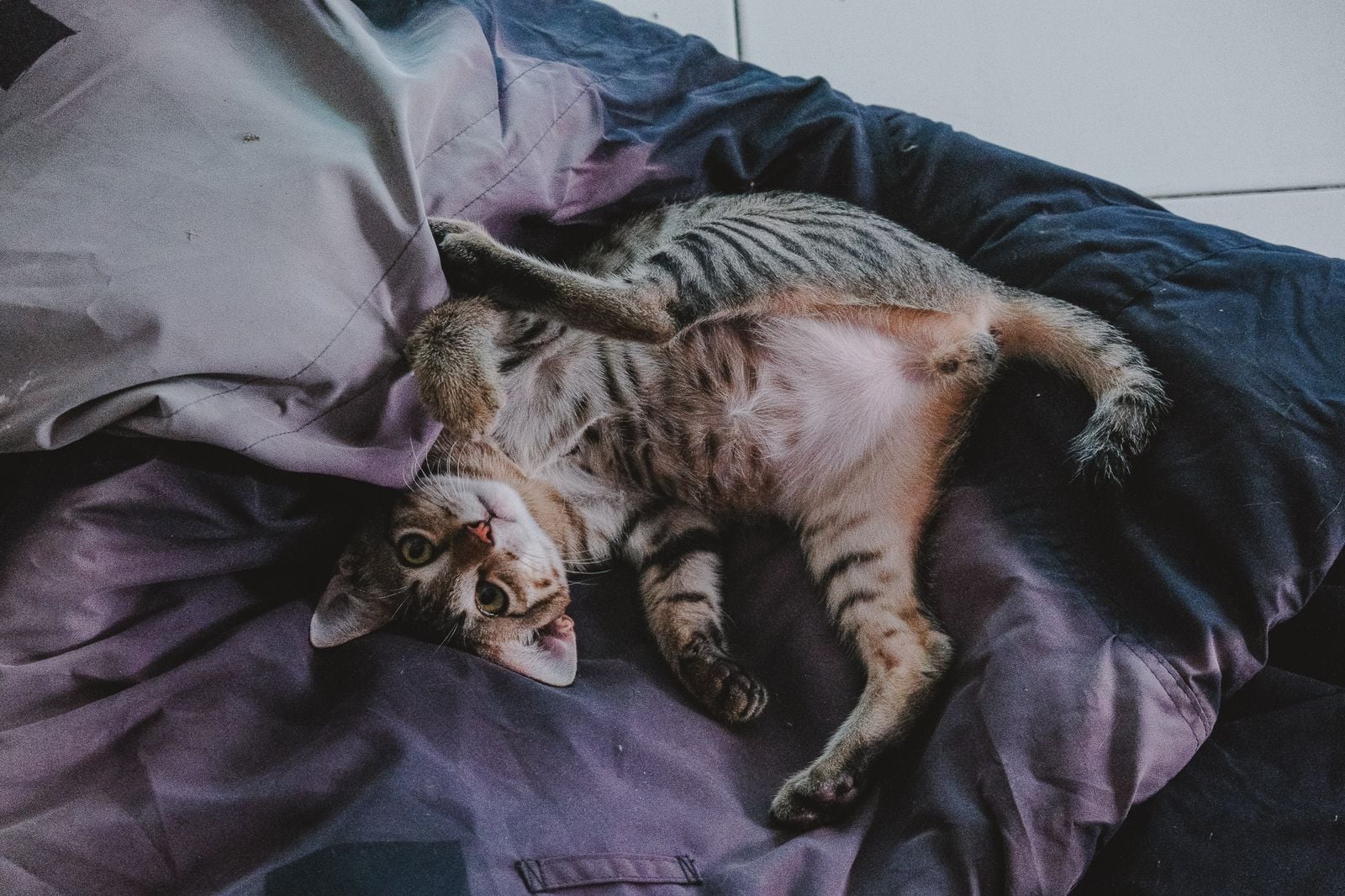
1. The Slow Blink
A long, lazy blink from a cat is often described as a “cat kiss,” and science backs up the idea that it carries meaning. Psychologists at the University of Sussex and the University of Portsmouth ran two experiments on slow blinking, published in the journal Scientific Reports. According to the University of Sussex, cats were more likely to slow blink at their owners after the owners slow blinked at them. Cats also returned slow blinks from an unfamiliar researcher and were more inclined to approach that person’s outstretched hand afterward.
Lead author Tasmin Humphrey described the exchange as a form of positive communication between cats and humans, and professor Karen McComb called it a great way of enhancing the bond with cats. A cat that narrows its eyes and blinks slowly at a person is, in other words, signaling that it feels relaxed rather than on guard. Homes that are set up with cats in mind, including choices like these cat-safe plants for a cat-friendly home, can help create that kind of calm.
2. Showing the Belly
The belly is one of a cat’s most vulnerable areas, so a cat that rolls onto its back near someone is making a statement. PetMD calls it the ultimate sign of trust, explaining that a cat on its back is showing it feels very relaxed and safe. Scientific American likewise lists an exposed belly as a sign that a cat is relaxed and trusts the person nearby.
There is an important catch. Both PetMD and Petplan stress that the display is usually not an invitation for a belly rub. Reaching in can prompt a bite or a scratch. Petplan puts it simply, noting that most cats prefer to be admired from a distance in that position. For shoppers thinking about cozy spots where a cat can stretch out, this holiday gift guide for cat people rounds up cat trees, smart feeders and litter upgrades.
3. Greeting With the Tail Held High
A cat that trots toward someone with its tail straight up is offering a friendly hello. Petplan’s guide to cat body language describes a high tail with a slightly curved tip as the feline equivalent of a big smile. PetMD adds that a content cat often holds its tail upright with a hook at the top and may let it brush against the person it is greeting.
Context matters, though. Scientific American notes that a tail held straight up and puffed out signals anger, not affection. Petplan’s veterinary expert, Dr. Brian Faulkner, advises reading the tail together with the ears, eyes, posture and whiskers rather than in isolation.
4. Head Bumps and Cheek Rubs
When a cat presses its head into a hand or rubs its cheek along a person’s leg, it is doing more than asking for attention. Cats have scent glands on their lips, between the eye and ear and under the chin, according to Scientific American, and rubbing transfers their scent. PetMD explains that head bunting is often an attempt to mark a person with the cat’s scent, which helps the cat claim that person as part of its group and strengthens the bond.
A cat that does this regularly is treating its person as familiar territory, which is about as close to a stamp of approval as a cat gets.
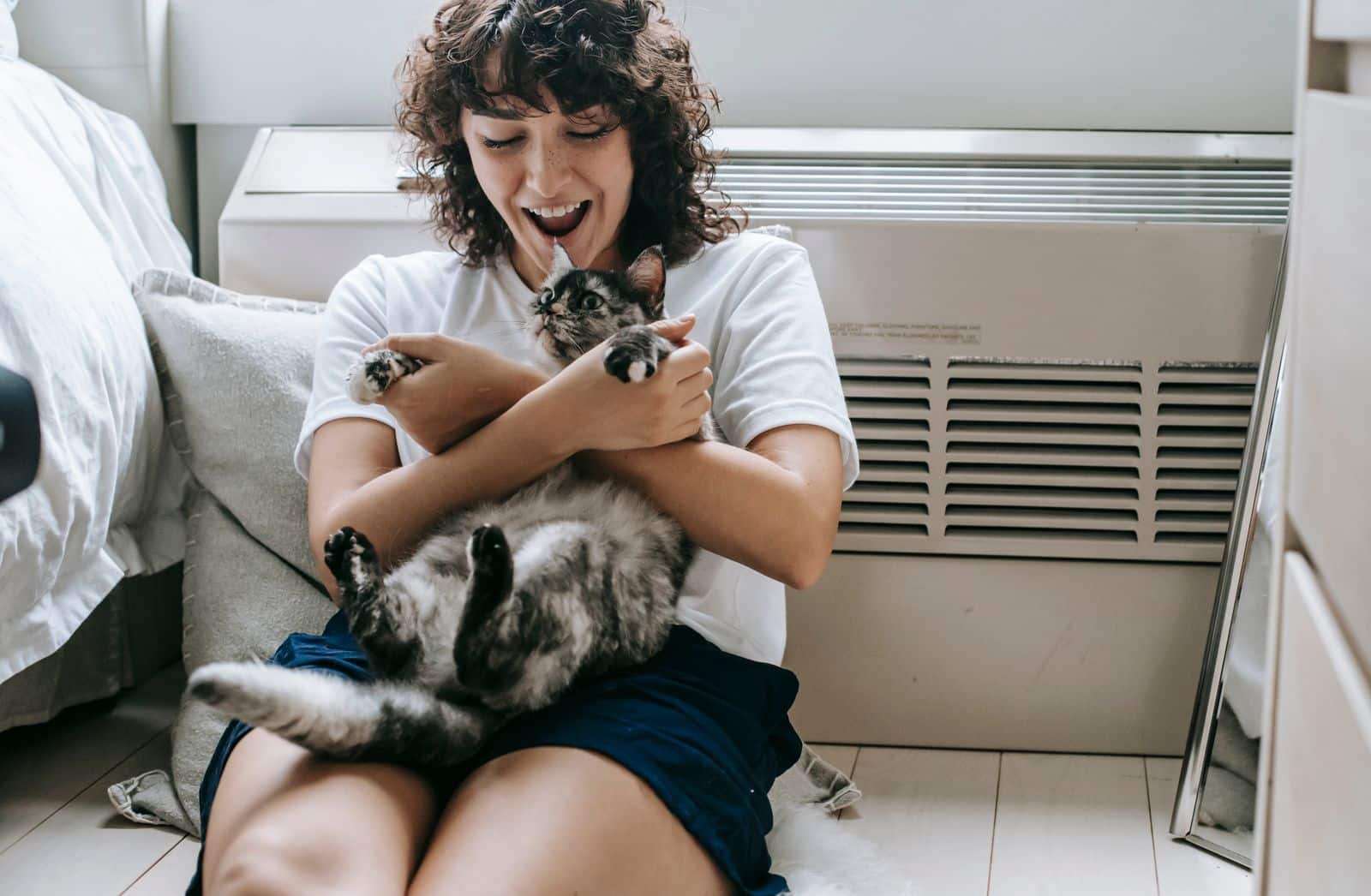
5. Sleeping On or Near a Person
Sleep is when any animal is least able to defend itself, which makes the choice of where to nap revealing. PetMD says a cat that sleeps on or near its person is showing love and trust, and that even a cat that stays just out of reach likely feels safe in that person’s presence.
Cats that knead before settling in may be adding another layer to that message. PetMD and Petplan both trace kneading back to kittenhood, when kittens pressed their paws against their mother while nursing, and link it to comfort and relaxation in adult cats. A cat that kneads a lap and then dozes off there is about as settled as a cat can be.
6. Treating a Person as a Secure Base
One of the clearest signs of trust comes from attachment research. At Oregon State University, researcher Kristyn Vitale and colleagues ran a “secure base” test with cats and their owners, a setup modeled on studies of dogs and human infants. As PetPlace reported, about two-thirds of the cats showed secure attachment: when their owner returned to an unfamiliar room after a short absence, the cats greeted them casually and then went back to exploring.
That pattern of checking in and then confidently investigating is the key. A securely attached cat uses its person as a safe home base in new or uncertain situations. The researchers found that those bonds stayed essentially unchanged even after a socialization and training course, suggesting the attachment style is stable.
Reading the Signs Together
No single behavior tells the whole story, and every cat has its own personality. Still, a cat that slow blinks, rolls over, greets with a raised tail and naps nearby is sending a consistent message of comfort. Owners who want to protect that bond for the long haul may find this missing pet guide on finding a lost dog or cat and preventing escapes worth bookmarking, along with this overview of annual pet ownership costs for dogs and cats.
This article was written with the help of AI tools and checked against the sources linked above.




