

Eating out feels simple. You scan a menu, place an order, and trust that the price reflects what you are getting. But behind that experience, many restaurants rely on subtle psychological tactics designed to nudge you into spending more without realizing it.
Menu layouts and portion sizing are rarely accidental, and these choices often work better than most customers would expect.
A study published in the Journal of Consumer Research found that strategic menu design can increase spending by up to 20 percent. It does this by guiding attention toward higher-priced items and removing obvious price cues.
Behavioral economist Dan Ariely has also noted that when people lack clear price anchors, they tend to rely on context, which makes them more susceptible to suggestion. These techniques do not feel aggressive, which is exactly why they remain so effective.
The silent creep of menu inflation

Restaurant prices climb faster than everything else on the table. The Bureau of Labor Statistics reports “food away from home” up 7.1 percent year over year, with full-service meals rising 5.8 percent between July 2022 and July 2023. A Popmenu survey of 1,000 U.S. diners finds that restaurant spending has fallen from 40 percent to 30 percent of monthly food budgets since 2022, even as many still go out.
Q2 2024 pricing data shows restaurant costs rising faster than gas prices, which are already unpopular. In that same outlook, 67 percent of consumers say eating out now feels too expensive, three points higher than the previous year.
The strategy is blunt but quiet. Update the numbers, keep the portions familiar, and let inflation swallow the protest before the bill arrives.
Service fees that aren’t service

The new line on the check comes dressed in soft words. “Kitchen appreciation.” “Wellness fee.” “Living wage support.”
National Restaurant Association figures cited by The Hill show that 15 percent of restaurants are adding service fees, with surcharges in 13 percent of fast-food and 17 percent of full-service spots. One 2025 fee analysis finds 3.7 percent of all restaurant payments now carry some extra charge, more than double in two years.
Entrepreneurs’ reporting on Los Angeles receipts documents wellness fees of 3 to 5 percent, industry compensation surcharges of 5 percent, and 20 percent “equitable pay” fees that do not replace tipping. An industry warning calls these add-ons a “hidden cost crisis” that erodes trust as they creep toward 10 or even 20 percent.
The price on the menu becomes a suggestion. The real number waits, small and patient, at the bottom of the bill.
Optical illusions in menu layout

Your eyes move first. Your appetite follows. Menu design firms, drawing on eye tracking research, describe a “golden triangle” on the page: center, then top right, then top left.
High-margin items are quietly placed in these hot zones, where your attention naturally lands. Low-margin dishes get pushed to dull corners, where your gaze drifts last.
A 2025 menu psychology guide notes that the top right section alone can draw about a third more attention than the rest of the page. Evergreen’s 2026 analysis of digital boards repeats the pattern, labeling those focus spots the golden region for profit.
Nothing looks manipulative. But while you “browse,” the page is already funneling you toward the dishes that matter most to the house.
The vanishing currency symbol

Sometimes the most powerful trick is what you do not see. Cornell University’s Center for Hospitality Research tested three menus: one with dollar signs, one with plain numerals, and one spelling out the word “dollars”. The food stayed identical. Diners with the numeral-only menu spent about 8 percent more than those who saw currency cues.
Cornell’s analysis suggests that the money symbol triggers the mental “pain of paying,” making guests more cautious. A separate summary of this work notes that the plain number, like “14,” feels abstract, while “14 dollars” feels real.
By 2026, restaurant accountants openly advised clients to drop currency signs to lift check averages. The ingredients do not change. The typography does. The total follows.
Anchors that drag prices up

On many menus, the first price you see is not meant to sell. It is meant to anchor. A review in the International Journal of Hospitality Management describes how a few very expensive items at the top make everything below look modest by comparison.
One analysis of 271 menus found that anchoring strategies raised average checks by 6.8 percent without changing recipes. A 2025 case study in the journal HBEM shows the same pattern in wider consumption: inflated reference numbers make routine prices seem like bargains.
Wine economists call this decoy pricing. In “The Puzzle of Wine Price in Restaurants,” a single high-priced bottle nudges guests toward still profitable, but “reasonable,” choices. You rarely order the showpiece. You still pay more than you planned.
Portion games and plate theater

Fullness is not just biology. It is staging. Experiments by Brian Wansink at the Cornell Food and Brand Lab, described in Stanford Magazine, show that larger plates and bowls make servings appear smaller.
This perception leads people to eat significantly more without sensing it. In one popcorn study, guests with bigger buckets ate far more, even when the popcorn was stale.
A separate Cornell analysis in the International Journal of Obesity examined depictions of the Last Supper over 1,000 years and found that portions and plate sizes grew steadily larger. That visual inflation mirrors what happens in dining rooms, where oversized plates and piled food signal generosity while normalizing excess.
Diners see abundance and feel value. Operators see carefully managed food costs wrapped in spectacle.
Save this article
Surcharges and the war on clarity

The real bill now arrives in layers. Popmenu’s 2024 national survey reports that 67 percent of consumers prefer ordering directly from restaurants rather than apps, mostly to dodge added fees.
Yet data cited by The Hill shows that 15 percent of restaurants still add service charges even for dine-in orders. The sticker price and the final price drift apart.
Entrepreneur’s deep dive on Los Angeles bills lists wellness fees of 3 to 5 percent, industry surcharges of 5 percent, and 20 percent “equitable pay” fees stacked on top of gratuity. A 2025 commentary on transaction data notes that 3.7 percent of restaurant payments now include an extra fee, a sharp increase over a short period.
The tactic keeps menus looking stable while quietly shifting real costs into the fine print that appears only after you have already committed.
Wine lists and decoy bottles

Wine lists are carefully coded. In “The Puzzle of Wine Price in Restaurants,” Michael P. Luca explains that many lists include a single very high-priced bottle to act as a decoy. That bottle sets the ceiling. It makes mid-range selections feel safely restrained, even when their markups remain steep.
The paper also notes a second trick. Restaurants often position their true target as the second-cheapest bottle on the list. Diners trying not to appear miserly gravitate toward that slot. By the glass pricing is stacked, too.
Operators typically recover the bottle cost within two pours, so the third glass poured is almost pure profit. Guests walk away convinced they have chosen wisely. The math tells a different story.
Bundles, combos, and the middle trap

The combo feels like a favor. A little soup. A small dessert. A tidy “value” meal.
2025 menu pricing guides indicate that when three versions of a dish are offered, most diners choose the middle option. Restaurants respond by building that middle tier around the margins they want most.
A 2026 briefing for restaurant accountants ties this directly to extremeness aversion: people avoid what looks too cheap or too lavish. The high-priced option serves as a foil.
The bare bones option defines the floor. The mid-tier becomes the “sensible” buy, even when it quietly costs more than ordering items separately. The trick sits in the structure, not in any single price.
Charm pricing and the power of .99

Sometimes the rip-off hides behind a single digit. A 2026 essay on digital menu psychology describes charm pricing as the practice of ending prices in .99 to exploit left-digit bias.
Guests read from left to right. A 9.99 entrée feels closer to nine than ten, even though the difference is one cent.
High-end places flip the signal. They drop .99 endings and use round numbers to suggest confidence and luxury, which pulls base prices higher without a bargain frame.
Paired with Cornell’s evidence on removing currency symbols, operators gain a double effect: numbers feel smaller and less like money at the same time. The decimals say “deal.” The ledger says “margin.”
Limited-time offers and manufactured rush
Scarcity is no longer natural. It is curated.
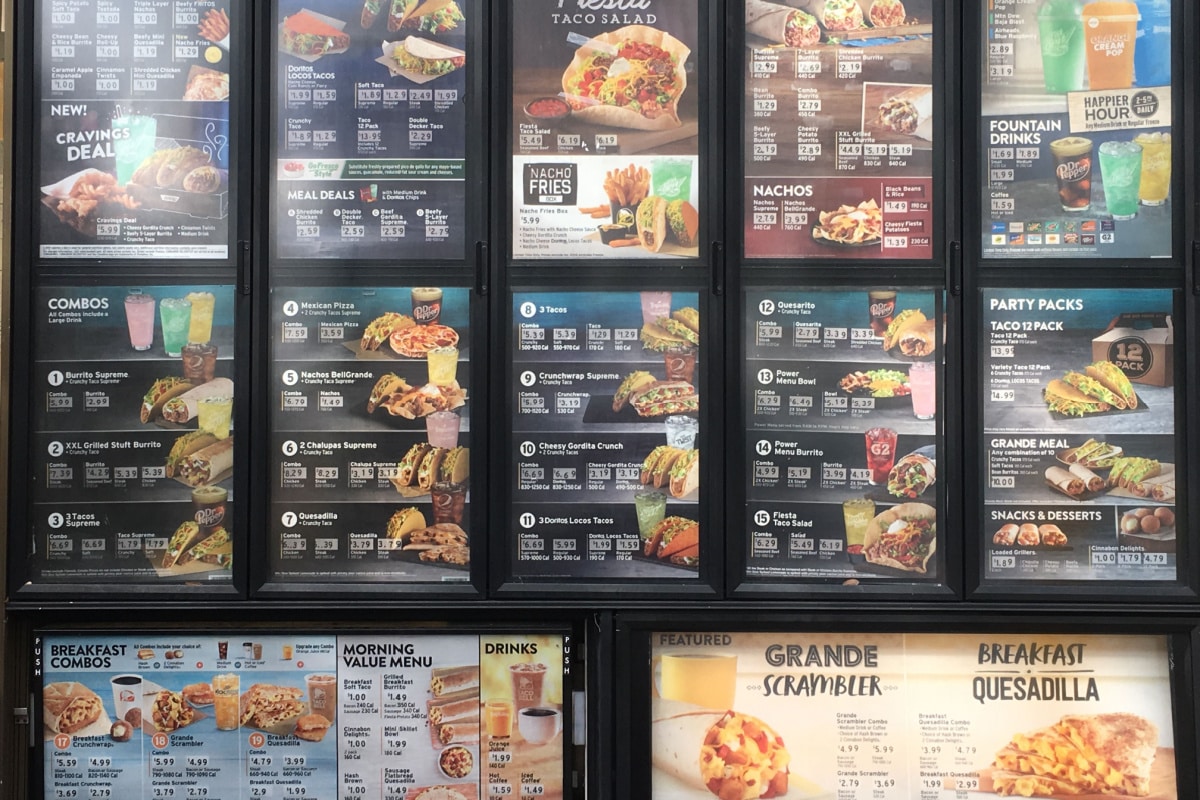
A 2023 restaurant value study by A Closer Look finds that 61.7 percent of diners are likely to visit when offered a limited-time promotion or new menu item. Specials and seasonal boards are designed to tap that reflex.
Popmenu’s 2024 national survey shows 66 percent of consumers favor restaurants that advertise more affordable specials, even as they cut back on eating out overall. Operators read that hunger for deals, then wrap regular dishes in a countdown. Happy hour windows. “Today only” toppings. Short-lived menu names.
The rush compresses decision-making and discourages comparing prices elsewhere. The clock, not the food, becomes the sales tool.
When “good value” masks overpaying

The most effective trick may be emotional. A Closer Look’s late 2023 survey reports that 58.6 percent of diners described their last restaurant visit as good or excellent value.
In the same sample, 67.5 percent also said they needed lower prices. Presentation, atmosphere, and ritual soften the impact of the bill.
A Q2 2024 pricing outlook indicates restaurant costs are still outpacing many other spending categories, even as two-thirds of consumers say rising prices are pushing them to cook at home more often. Yet they still go out, and often leave, calling it “worth it.” That gap is where subtle tricks live.
When warm lighting, loud plates, and a few well-placed words turn quiet markups into a memory, the rip-off never feels like one at all.
Disclaimer – This list is solely the author’s opinion based on research and publicly available information. It is not intended to be professional advice.
Like our content? Be sure to follow us





