Granola carries a strong health halo, often associated with fiber, whole grains, and a wholesome start to the day. Many store-bought versions, however, blur the line between nutritious and indulgent.
According to data from the United States Department of Agriculture, a single serving of granola can contain well over 200 calories. It can also contain as much sugar as some desserts, depending on added sweeteners and oils. Those numbers surprise people who assume all granola works the same way.
The real question is not whether granola can be healthy, but when and how it earns that label. Ingredients, portion size, and what you pair it with all matter more than the name on the package. Granola can support energy and satiety, or quietly push a breakfast into excess. Understanding what sits in the bowl helps determine whether granola fuels the day ahead or simply tastes as it should.
The Double Life of Granola
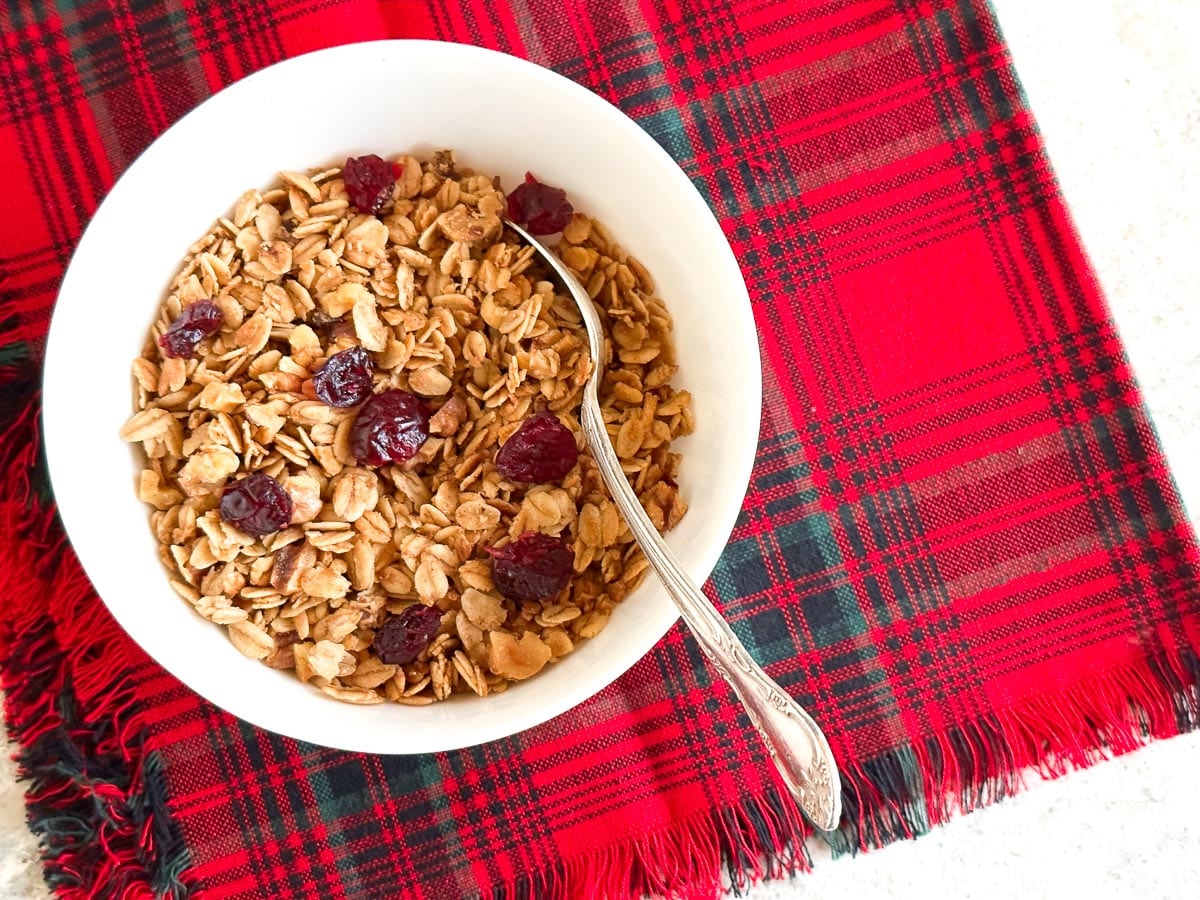
Granola lives a curious double life in the modern kitchen. It sits confidently in the health aisle, framed by images of oats, almonds, and alpine mornings, yet it can behave more like a dessert than a breakfast. Whether it nourishes or sabotages depends less on the name and more on composition, portion, and context.
Food labels rarely tell this story outright. Granola is not inherently good or bad. It is dense, flexible, and easily misunderstood. Understanding it requires looking past the rustic packaging and into the numbers that quietly shape how it behaves in the body.
Granola Is Calorie-Dense by Design

Granola’s richness is structural, not accidental. According to nutrient profiles compiled by the U.S. Department of Agriculture FoodData Central, standard granola provides roughly 450 to 500 calories per 100 grams. This is driven by a base of oats combined with oil, sweeteners, nuts, and seeds.
The same USDA listings show homemade-style granola averaging about 65 grams of carbohydrates, 30 grams of fat, and 18 grams of protein per cup. Most dietitians consider a realistic serving to be closer to one-quarter to one-half cup, roughly 30 to 60 grams. Many bowls drift closer to a full cup, quietly doubling or tripling the intended energy intake.
It Can Be a Sugar Bomb or Not
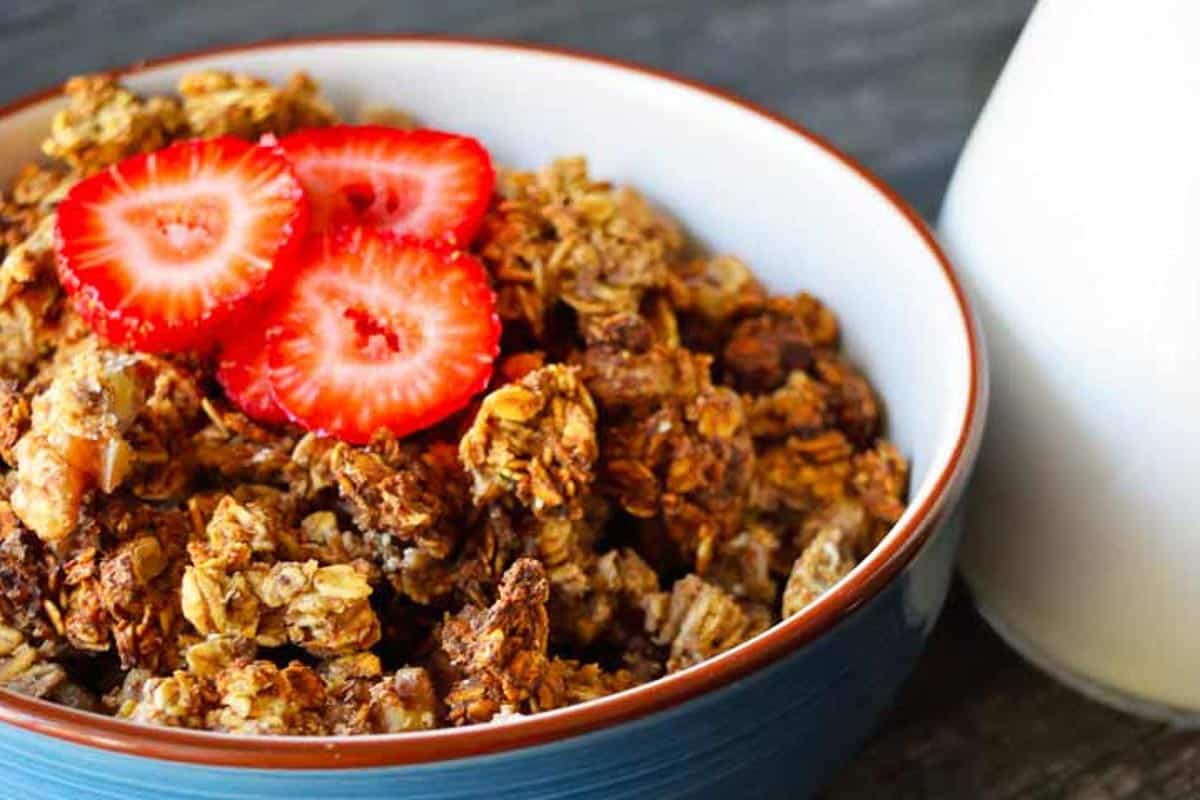
Sugar content is where granola most often tips into dessert territory. Consumer nutrition panels collected by the Center for Science in the Public Interest show that many packaged granolas deliver 10 to 15 grams of total sugar per half- to two-thirds-cup serving. Much of that sugar is added in the form of honey, syrups, or cane sugar.
A study published by the Harvard T.H. Chan School of Public Health proposes five grams of added sugar per serving as a practical upper limit. Independent supermarket audits summarized by Consumer Reports found that many leading brands exceed this threshold. This occurs even while they market themselves as natural or wholesome.
The Upside of Whole Grains and Healthy Fats

Granola’s reputation did not arise from nothing. Its foundation is typically whole grain oats, a source of beta-glucan fiber that the European Food Safety Authority recognizes for its role in supporting normal blood cholesterol levels.
Nuts and seeds add unsaturated fats, plant protein, magnesium, and vitamin E. The American Heart Association consistently highlights these fats as beneficial when they replace refined carbohydrates or saturated fats. Well-composed granolas often provide three to six grams of fiber and three to eight grams of protein per quarter- to half-cup serving, particularly when sweeteners are restrained.
How Granola Compares to Other Cereals
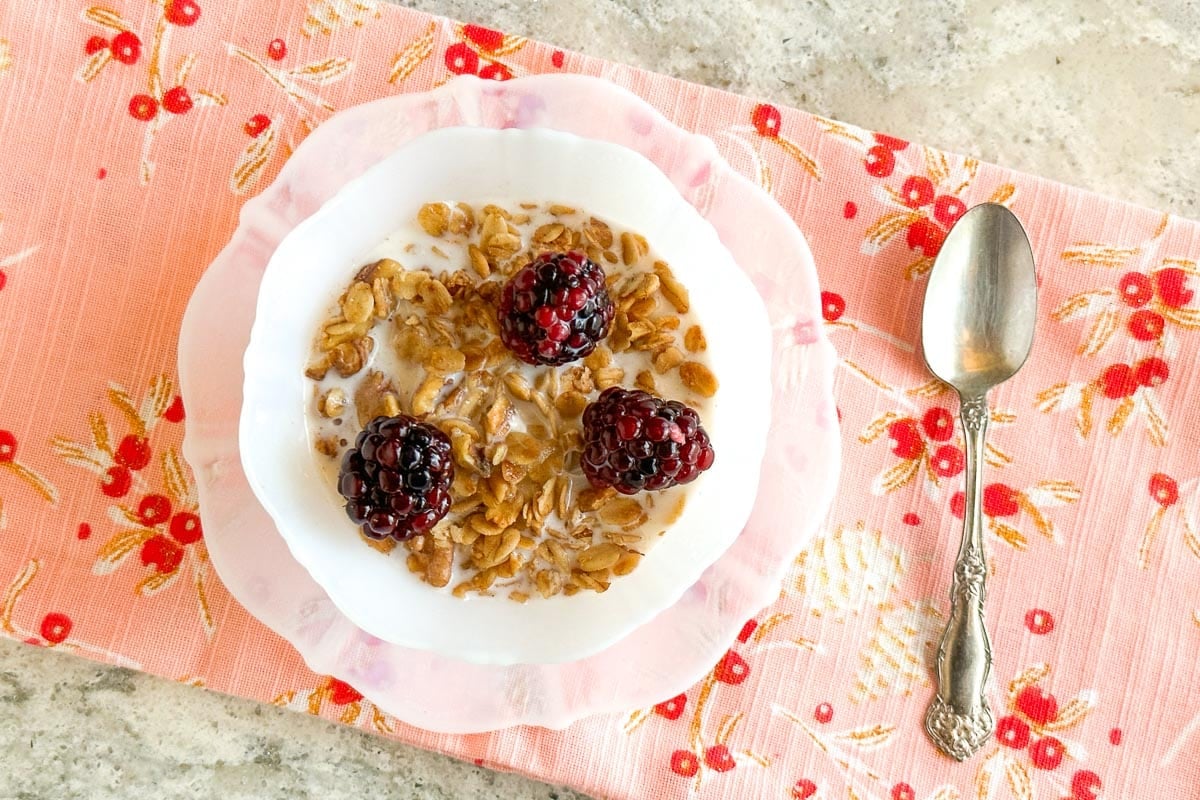
Granola occupies a different nutritional category than flakes or puffs. An analysis of ready-to-eat breakfast cereals published in Nutrients by researchers from the University of Vienna examined granola-type cereals. It categorized them as having higher levels of total energy, fat, saturated fat, and protein than other cereal groups, while generally containing less sodium.
This composition explains both its appeal and its risk. Higher fat and protein increase satiety, which can be useful. At the same time, energy density makes it easier to overshoot calorie needs, especially for people managing weight or blood glucose.
Portion Size Is the Make-or-Break Factor

Serving size is where theory meets habit. Many specialty and low-sugar brands recommend a quarter cup serving, roughly 28 to 30 grams, particularly for people monitoring calories or sugar intake.
Brand disclosures from companies specializing in reduced-sugar granola show that a quarter cup can land between 120 and 180 calories. Depending on the formulation, it may contain 1 to 5 grams of total sugar and 6 to 16 grams of fat. Dietitians frequently advise using granola as a topping for yogurt, fruit, or smoothie bowls rather than as the primary ingredient to keep portions realistic.
Save this article
Granola and the Health Convenience Economy
Granola’s popularity is not accidental. Market analyses from Grand View Research estimate the global granola market at roughly 4 billion U.S. dollars in 2024. Projections approach 5 billion dollars by 2025, with annual growth of about four to six percent through the early 2030s.
Industry reports attribute this growth to demand for convenient foods that signal health, particularly among consumers interested in plant-based diets, fiber, and protein. In response, manufacturers have introduced protein-fortified, fiber-enriched, low-sugar, organic, gluten-free, and ketogenic-style granolas. These products often improve nutrition profiles, but sometimes simply refine the marketing.
Why Labels Can Mislead
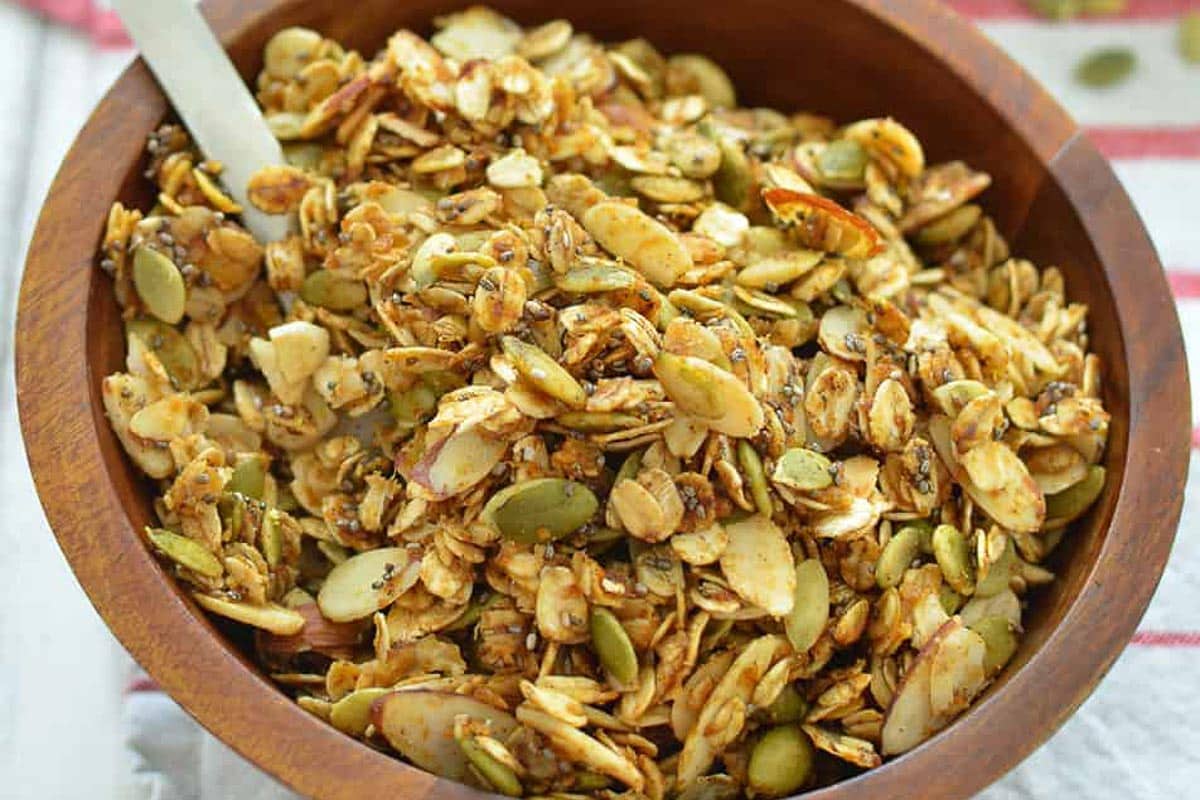
Granola is especially vulnerable to the language of wellness. Nutrition writers and public health advocates frequently note that many products marketed as natural or wholesome contain more added sugar than fiber per serving, a red flag for quality.
The 2025 low-sugar granola guide from Harvard T.H. Chan outlines three practical green flags: five grams or less of added sugar per serving, fiber at least as much as added sugar, and sodium below about 150 milligrams.
Consumer testing summarized by Consumer Reports shows that some products meeting these criteria deliver around 130 to 170 calories per serving. They also provide two to four grams of fiber and three to six grams of protein.
Blood Sugar and the Health Halo Effect

Granola’s mix of sugars, dried fruit, and refined oils can challenge blood sugar control when portions creep upward. Clinical nutrition guidance from the American Diabetes Association cautions that energy-dense carbohydrate foods require particular care for people with diabetes or insulin resistance.
Behavioral research summarized by the British Nutrition Foundation describes the health halo effect, in which foods perceived as healthy lead people to underestimate their calorie intake and overeat. Granola fits this pattern neatly. Dietary resources from institutions like Johns Hopkins Medicine often recommend pairing very low-sugar or unsweetened granola with protein-rich yogurt or milk to slow glucose absorption.
When Granola Truly Works

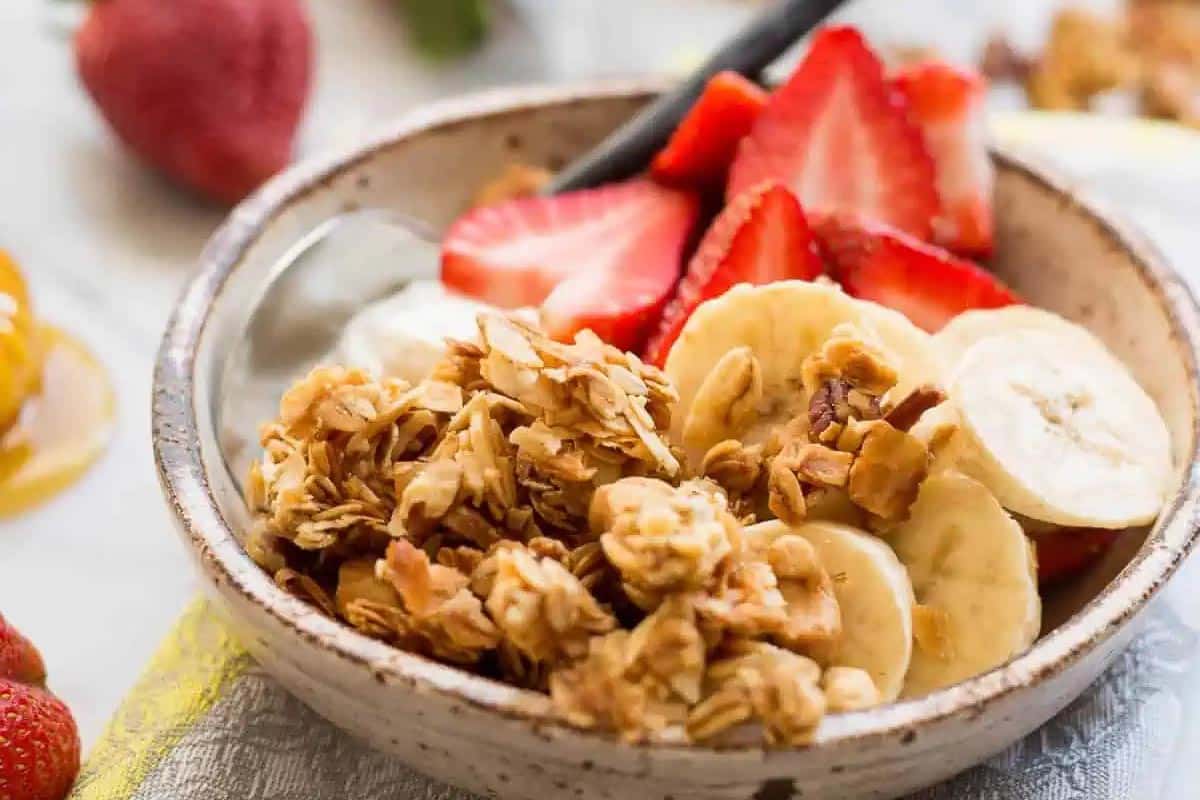
Granola shines when it is framed, not centered. A bowl built on plain Greek yogurt, topped with a quarter cup of low-sugar granola and fresh fruit, offers a balance of protein, fiber, and fat that supports satiety and steady energy.
Sports dietitians writing for the International Society of Sports Nutrition note that granola’s combination of complex carbohydrates and fats can be useful for highly active individuals. It may also benefit hikers or manual workers who need more morning energy. As part of an overall dietary pattern rich in whole grains, nuts, and seeds, granola can contribute meaningfully to heart and digestive health.
A Practical Way to Judge Your Granola
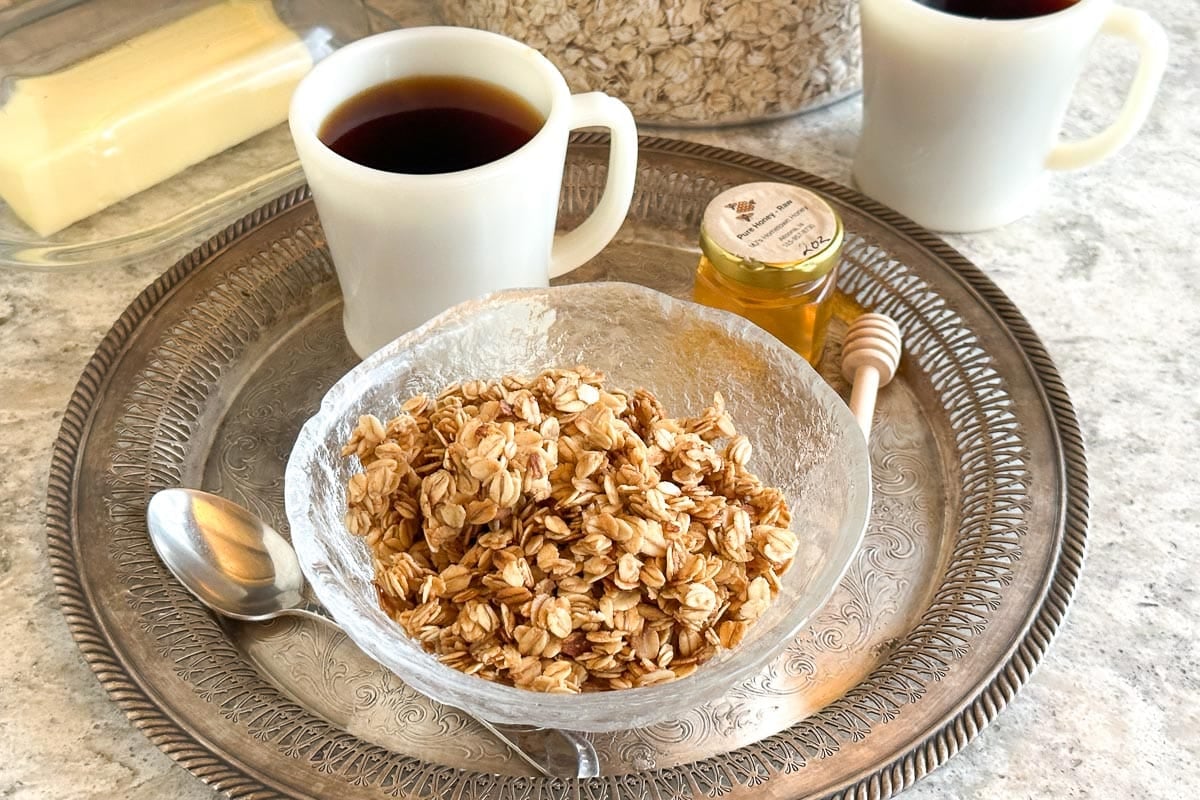
A few checks can separate breakfast from dessert. Start with serving size and aim for about a quarter cup if weight or blood sugar matters to you. Next, check added sugar and look for five grams or less per serving, ideally lower, with fiber meeting or exceeding that number.
Finally, scan the fat and sodium lines. Favor unsaturated fats from nuts and seeds, keep saturated fat in moderation, and look for sodium at roughly 150 milligrams per serving. These small steps turn granola from a gamble into a choice.
Key Takeaways

Granola can be a genuinely nourishing breakfast or a stealth dessert in disguise. The difference lies in the recipe, the portion you pour, and what you pair it with.
When oats, nuts, and seeds lead the way, and sugar is kept in check, granola earns its reputation for health. When portions swell, and sweetness dominates, it quietly behaves like a cake with a better publicist.
Disclaimer – This list is solely the author’s opinion based on research and publicly available information. It is not intended to be professional advice.
Like our content? Be sure to follow us