

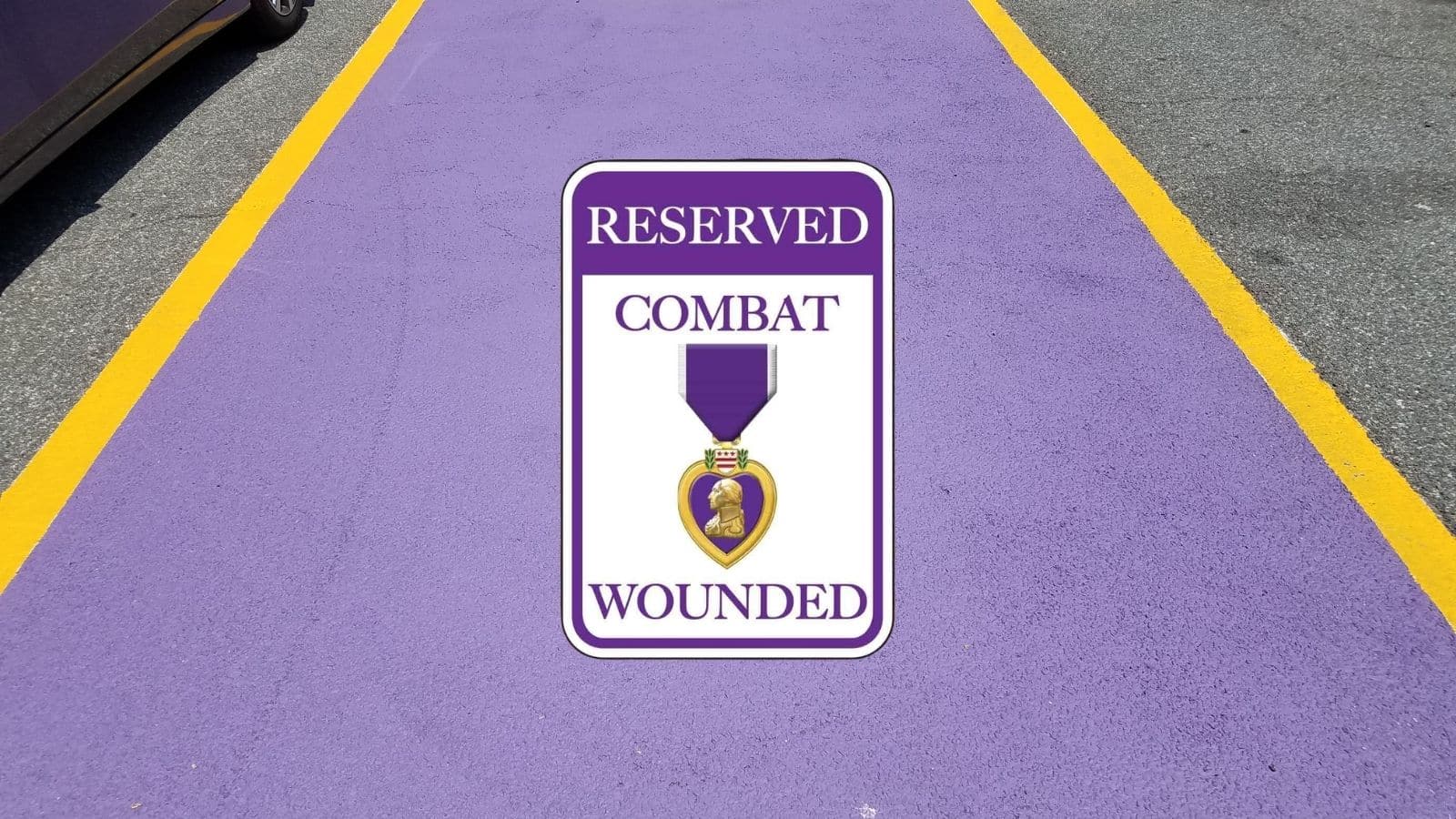
That bright purple parking space near the front of the lot is not random. It is one of the simplest, most visible ways communities are choosing to say thank you to wounded veterans.
In parking lots across the United States, a handful of spaces stand out—not for their prime proximity to a store entrance, but for the color they wear. Painted a vivid purple, these spots are reserved for veterans wounded in combat, recipients of the Purple Heart medal. They are not there to advertise a business or create novelty in a shopping center. They exist as small public acknowledgments of something much larger: service, sacrifice, and the lasting cost of war.
By December 2023, one initiative led by Veterans of Foreign Wars Post 4442 in West Virginia had helped establish more than 50 Purple Heart parking spaces across the state. Similar efforts have appeared in towns, shopping centers, medical campuses, and municipal lots around the country. One space on its own may seem modest. But taken together, these purple stalls form a quiet national pattern of remembrance embedded in everyday life.
A Spot That Says “Thank You”
A purple space is rarely ambiguous. This is a place reserved for someone who paid a personal price in service to the nation. Signs often read “Reserved – Combat Wounded” or “Purple Heart Parking Only,” sometimes accompanied by an image of the Purple Heart medal itself. Even for drivers unfamiliar with the program, the message is usually clear at a glance.
These spaces are often located close to entrances, sometimes near ADA stalls. That placement gives them both practical and symbolic value. Practically, it can make life a little easier for veterans living with pain, mobility limitations, or other combat-related injuries. Symbolically, it says something important: those who returned from war with wounds should not be invisible in civilian life.
Why the Purple Heart Matters
The meaning of the parking space comes directly from the medal it honors. The Purple Heart is awarded to members of the U.S. military who are wounded or killed as a result of enemy action. It is one of the oldest military decorations in the country and among the most solemn. Unlike medals that recognize service length or campaign participation, the Purple Heart marks a specific cost. It is tied to injury, bloodshed, and the enduring reality of combat.
That distinction is part of what makes Purple Heart parking feel different from general veteran appreciation campaigns. These spaces are not just for anyone who served. They are meant to recognize those who came home carrying the physical or psychological burden of wounds sustained in war. For many recipients, that burden is lifelong.
Recognition in Ordinary Places
There is something striking about where these spaces appear. Not at a military base or inside a veterans’ memorial park, but in front of a grocery store, pharmacy, town hall, hospital, or hardware store. That is part of their power. They move gratitude out of ceremonial spaces and into the ordinary flow of civilian life.
A memorial statue can be moving, but it is also easy to pass by without really seeing it. A reserved parking stall at the supermarket does something different. It inserts recognition into the errands, appointments, and routines of daily life. It says that military sacrifice is not something to be acknowledged only on Veterans Day or Memorial Day. It deserves to be visible on a Tuesday afternoon in a parking lot too.
A Symbol That Requires No Speech
Purple Heart parking works because it does not need much explanation. A sign, a color, a name—that is often enough. It is a civic gesture that communicates itself without a ribbon-cutting ceremony or a long plaque. In a culture where patriotic language can sometimes feel abstract, these spaces are unusually concrete. They turn gratitude into a visible, usable place.
That simplicity is part of the appeal for municipalities and businesses alike. A single space, a fresh coat of paint, and a sign can create a meaningful public tribute without a major budget or a lengthy approval process. In that sense, the Purple Heart stall is one of the rare public honors that is both emotionally resonant and logistically easy to implement.
How Purple Heart Parking Spread
Purple Heart parking spaces began appearing in U.S. communities around the mid-2010s, with Warren, Ohio, often cited among the earliest adopters. From there, the concept spread through a combination of local advocacy, veteran-led organizing, and community goodwill. Veterans’ groups championed it. Town councils approved it. Business owners volunteered spots in their lots. Hospitals, shopping centers, and public agencies followed.
It was not a single federal program or national mandate that drove the movement. Instead, it grew the way many durable civic traditions grow: locally, incrementally, and through imitation. One town painted a space, another town noticed, and soon the idea spread.
West Virginia’s Push
One of the clearest examples of that growth came out of West Virginia. By late 2023, Veterans of Foreign Wars Post 4442 had helped establish more than 50 Purple Heart parking spaces across the state. That number is striking not because 50 spaces will transform veteran life on their own, but because it shows how quickly a symbolic idea can scale when local organizations decide it matters.
Each new space reinforces the same message: wounded veterans should be recognized not just in speeches, but in the built environment of everyday life. West Virginia’s initiative turned a local tribute into a visible statewide pattern.
From Courtesy to Policy
In some places, Purple Heart parking remains an informal courtesy. A business may designate a spot, put up a sign, and rely on the honor system for compliance. In others, the idea has begun moving into formal local policy.
Raritan Township, New Jersey, for example, passed an ordinance in 2024 creating Purple Heart parking spaces adjacent to ADA stalls and establishing penalties for unauthorized use. That kind of codification changes the tone of the space. It moves the idea from a voluntary sign of respect to something more structured, with rules and consequences attached.
That does not mean every community will follow suit. But it does suggest that what started as a feel-good gesture is increasingly being treated as a legitimate part of municipal recognition for veterans.
The Honor System Still Matters
Even where there is no ordinance, Purple Heart parking carries a strong social expectation. Technically, in many places, someone without a Purple Heart plate or placard could pull into the space. But the point is not just legal enforcement. It is public respect.
That distinction matters. Purple Heart parking often functions less like a heavily policed restriction and more like a test of civic courtesy. The expectation is clear: if you did not earn the Purple Heart, you leave the space for someone who did. That understanding is part of what gives the spot its moral force. It relies on a shared willingness to recognize that not every convenient parking space belongs to whoever gets there first.
Not the Same as Accessible Parking
Purple Heart spaces are often placed near accessible stalls, but they are not the same thing. Accessible parking is governed by federal law and specific ADA requirements, including signage, spacing, and design standards. Purple Heart parking is separate. It is symbolic, not a substitute for disability accommodations.
That distinction matters for both legal and practical reasons. Some Purple Heart recipients also qualify for accessible parking because of service-related injuries. Others do not. The purple space is meant to honor combat-wounded veterans, not replace official disability access. When communities place these stalls near ADA spaces, they are acknowledging a likely overlap in need while still keeping the designations distinct.
Save this article
Why Purple Works
Parking lots are visually coded environments. White usually marks general parking. Blue signals accessible spaces. Yellow warns of fire lanes or restricted zones. Green may indicate electric vehicle charging. Purple, by contrast, has no standard regulatory meaning in most parking lots. That is exactly why it stands out.
Purple is symbolic rather than bureaucratic. It does not tell drivers where not to stop for fire safety or where a charging cable is located. It tells them that this particular space has been set aside in honor of sacrifice. Because the Purple Heart medal itself gives the color its meaning, the hue becomes instantly expressive once you know the reference.
In a sea of standardized striping, purple feels personal. It interrupts the neutral language of asphalt with a message of remembrance.
A Low-Cost Tribute With High Visibility
Part of the reason Purple Heart parking has spread is that it is relatively easy to create. Communities do not need to build a monument, acquire land, or fund a major construction project. Businesses do not need to redesign their entire lots. One or two spaces, some paint, a sign, and coordination with local veteran organizations can create a public tribute that people encounter every day.
That matters because many acts of public remembrance are expensive, time-consuming, or tucked away in spaces people rarely visit. Purple Heart parking is the opposite. It is cheap enough to implement and visible enough to matter. It meets people where they already are.
What Veterans See in It
For many Purple Heart recipients, the value of the space is not just convenience. It is recognition without explanation. A veteran does not have to ask for it, justify it, or tell their story to receive the gesture. The sign is already there, waiting.
That can matter more than outsiders might realize. Wounded veterans often move through civilian life with injuries or conditions that are not obvious to strangers. Chronic pain, traumatic brain injury, nerve damage, hearing loss, and PTSD do not always announce themselves visually. A Purple Heart space cannot solve those realities, but it can acknowledge them. It says, in a small but public way, that the community remembers there is a story behind the medal.
More Than a Better Parking Spot
It would be easy to dismiss Purple Heart parking as a minor perk, one more reserved space in an already crowded lot. But that misses the point. The space is not valuable because it shaves a few steps off a trip into the store. It is valuable because it makes sacrifice visible in a place where it otherwise would not be.
That visibility matters in a country where support for veterans is often expressed rhetorically but less often woven into everyday civic design. A purple parking stall is modest, but it is also tangible. It is not a slogan, not a bumper sticker, not a one-day ceremony. It is an ongoing acknowledgment built into the landscape.
A Public Reminder of the Cost of War
Purple Heart parking also serves another purpose: it reminds everyone else. Every driver who notices the sign is confronted, however briefly, with the reality that war has a human cost. The space marks the presence of people who carried that cost home with them. It takes military sacrifice out of abstraction and places it in front of the pharmacy, the town office, the supermarket, and the hardware store.
That kind of reminder has cultural value. It asks civilians to remember that freedom and security are not theoretical concepts. They have been paid for, unevenly and often painfully, by a relatively small number of people and families.
A Gesture That Fits Everyday America
There is something distinctly American about the Purple Heart parking movement. It is patriotic without being theatrical. It is public but local. It does not require a national campaign or a massive funding package. It relies instead on a town, a business, a veterans’ group, or a state agency deciding that a visible act of gratitude belongs in everyday life.
That may be why the idea has resonated. It feels practical rather than ceremonial, and personal rather than abstract. It does not ask communities to build something grand. It asks them to set aside a little space and make a point.
The Meaning Painted Into the Asphalt
No painted parking stall can compensate for the injuries, losses, and long recoveries that many Purple Heart recipients have endured. It cannot replace healthcare, disability support, employment protections, or the deeper obligations owed to veterans. Purple Heart parking is not a substitute for any of that, and it should not be mistaken for one.
What it can do is signal respect in a way that is immediate, local, and repeatable. It can remind a wounded veteran that their community thought of them before they arrived. It can remind everyone else that sacrifice did not end when the war did. And it can carve a small but lasting act of gratitude into the most ordinary landscape of all: the parking lot.
In a country still figuring out how best to honor military service in everyday life, these purple spaces do something quietly powerful. They reserve not just a place to park, but a place in public view. And sometimes, that kind of visible acknowledgment matters more than people realize.
More articles:
- 10 things no one tells women before they enlist in the military
- 8 things police officers wish everyone knew
- 10 common military myths passed down to kids
Dealing with IBS In The Military

Everyday life with IBS is challenging even when you have full control over your environment and stressors.
Now imagine yourself dealing with IBS in the military. You have no control over what you get to eat. You have no control over where you are going, or for how long, and what you will find when you get there. Learn more.
Just how armed are Americans? What the data say about U.S. gun owners
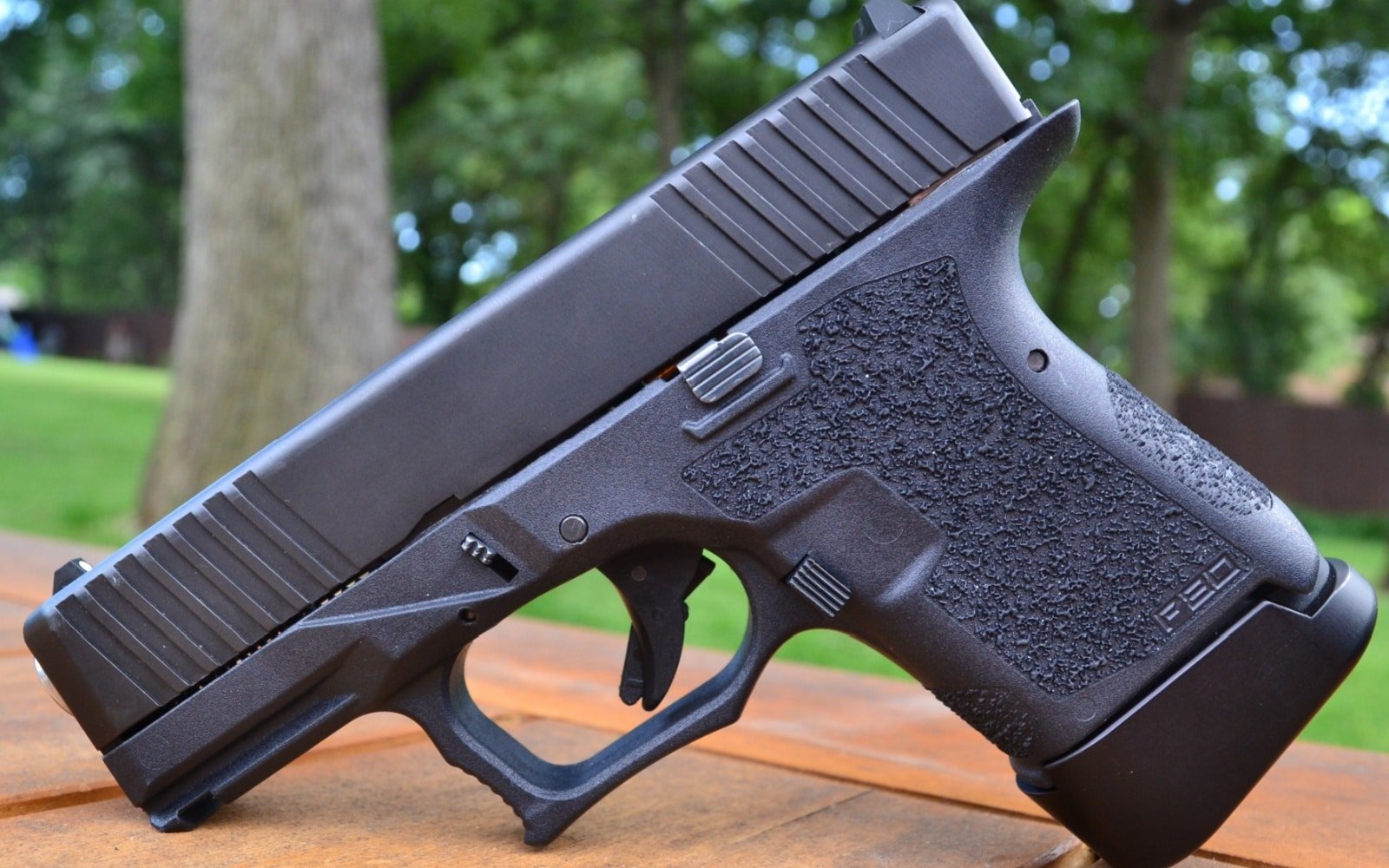
If you go by headlines and social media, it can sound like everyone in America is armed to the teeth—or that only a small, intense minority owns guns at all. The reality lands somewhere in between.
About one‑third of U.S. adults say they personally own a gun, and roughly four in ten live in a household where there is at least one firearm. Those guns are mostly handguns, often kept for personal protection, and they are concentrated in the hands of a relatively small share of owners. Learn more.





