

If you go by headlines and social media, it can sound like everyone in America is armed to the teeth—or that only a small, intense minority owns guns at all. The reality lands somewhere in between.
About one‑third of U.S. adults say they personally own a gun, and roughly four in ten live in a household where there is at least one firearm. Those guns are mostly handguns, often kept for personal protection, and they are concentrated in the hands of a relatively small share of owners.
This is a data‑driven look at how armed Americans actually are: who owns guns, which types are most common, and how many firearms the typical owner keeps.
How Many Americans Own Guns?
Several large, national surveys paint a surprisingly consistent picture. A 2023–2024 Pew Research Center survey found that 32 percent of U.S. adults say they personally own a gun. A separate synthesis from a firearm‑injury prevention project reports nearly identical numbers: about 32 percent personally own firearms, and another 10 percent live in homes with guns but do not own one themselves.
In practical terms, that means around 80–110 million adults in the United States are gun owners, and roughly 40 percent of all adults live in a household with at least one firearm. Americans are therefore not “all armed,” but guns are a normal part of life for a large minority of the population.
Looking at the guns themselves, global small‑arms research estimates that U.S. civilians own about 393 million firearms—around 46 percent of all civilian‑held guns in the world. That works out to roughly 120 firearms for every 100 U.S. residents, more than any other country.
The “average American” is more likely to have zero guns than one—but the “average gun owner” is likely to have several.
Who Owns Guns?
Gun owners are a diverse group, but the likelihood of owning a firearm varies sharply by gender, geography, and background.
- Gender: Men are more likely than women to report owning a gun. Recent summaries suggest that around four in ten men and roughly a quarter of women say they personally own firearms.
- Race and ethnicity: Non‑Hispanic white adults report higher ownership rates—often in the mid‑30 to 40‑percent range—than many other racial and ethnic groups, whose reported rates typically fall lower.
- Urban vs. rural: Where people live may matter as much as who they are. Survey data show that about 45–47 percent of adults in rural areas own guns, compared with around 28–30 percent in suburban areas and roughly 19–20 percent in urban communities.
- Region: Ownership is most common in parts of the South, Midwest, and West, and lowest in the Northeast. One recent analysis estimated that only about 15–17 percent of adults in states like Massachusetts and New Jersey own guns, versus roughly two‑thirds of adults in some rural Western states.
Military and law‑enforcement experience also correlate with higher ownership. One medical‑school–linked review notes that veterans are almost twice as likely as non‑veterans to personally own firearms.
Still, most adults in every demographic group do not own guns. What makes the United States unusual is how many firearms are in circulation relative to the number of owners.
How Many Guns Does the Average Owner Have?
For non‑owners, one of the most surprising findings is how concentrated gun ownership is. A widely cited national survey led by researchers at Harvard and Northeastern estimated that about half of all privately owned guns in the U.S. are owned by roughly 3 percent of adults. These “super‑owners” tend to have large collections.
A more recent study on the number and type of private firearms estimated that the civilian gun stock grew from about 265 million in 2015 to roughly 326 million in 2019. Over that period, the share of firearms that were handguns rose to about 44 percent, continuing a long‑term shift toward pistols and revolvers. The same research suggested that 70 percent of handguns in private hands are pistols and 30 percent are revolvers.
Taken together, these studies indicate that:
- Many owners have more than one gun.
- A substantial minority of owners have four or more.
- A relatively small group accounts for a large share of the total firearms in circulation.
In other words, the “average American” is more likely to have zero guns than one—but the “average gun owner” is likely to have several.
Save this article
Why Do Americans Say They Own Guns?
The main reason people give for owning a gun has changed over time. Historically, hunting, target shooting, and collecting dominated. Today, personal protection clearly leads.
In a 2023–2024 Pew survey, about 72 percent of gun owners said protection is a major reason they own a firearm. A review aimed at clinicians found the same pattern: self‑defense is now the primary reason for gun ownership, up from 26 percent in 1999 and 48 percent in 2013.
Hunting and sport shooting still matter—many owners report multiple reasons—but protection is now the top driver. Attitudes have shifted alongside behavior: about 64 percent of U.S. adults say having a gun in the home makes people safer, double the share who said that in 2000.
What Kinds of Guns Are Most Popular?
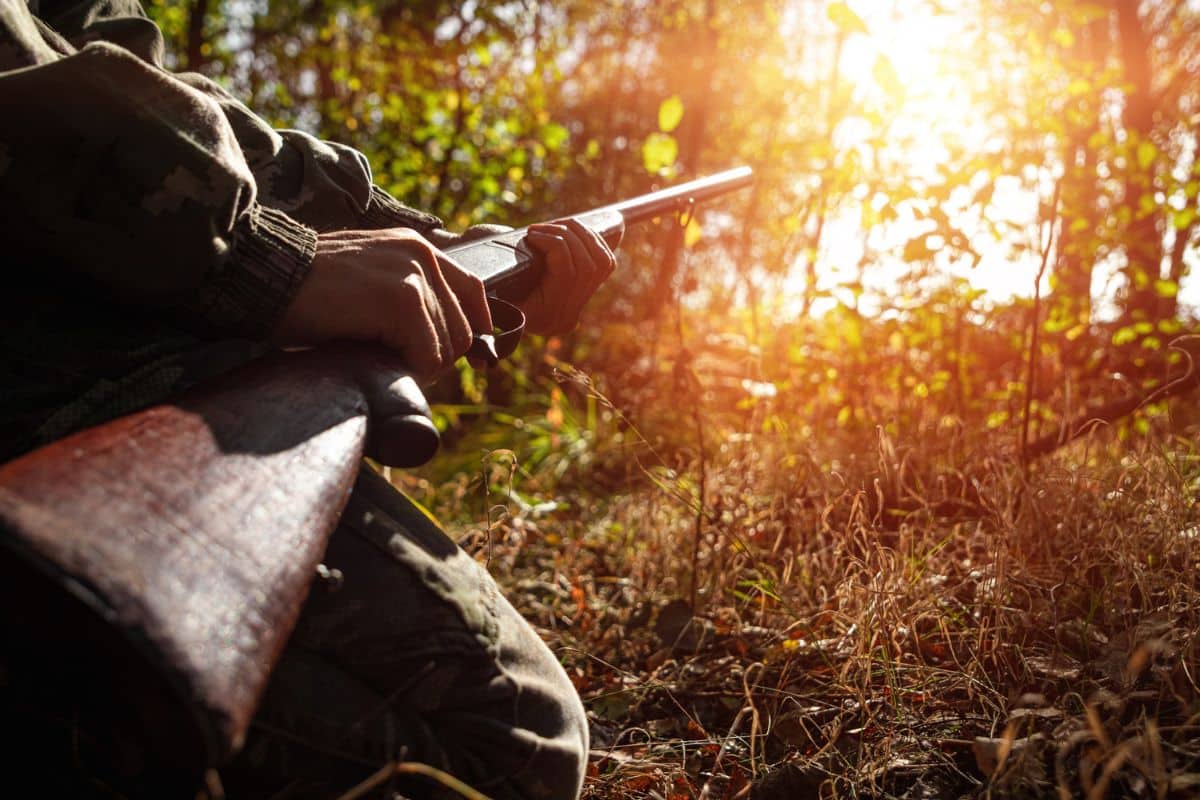
Most surveys ask about gun types rather than brand names, which is helpful for understanding the big picture of what Americans actually keep at home.
Handguns: The Most Common Type
Handguns are the clear leader. In one national survey of owners, about 72 percent said they own a handgun or pistol. A recent state‑level analysis found similar patterns, with around 72 percent of owners reporting at least one handgun, compared with lower shares owning rifles or shotguns.
Roughly speaking, modern semi‑automatic pistols—especially 9mm models—dominate the handgun market. Detailed research into the private firearm stock found that about 70 percent of handguns in circulation are pistols, while about 30 percent are revolvers. Federal manufacturing data and industry reports show that handguns now account for more than half of new firearms produced for the U.S. market.
Rifles: From AR‑15s to Hunting Guns
Rifles are the second‑most commonly owned category. Around 62 percent of gun owners say they have a rifle. On the new‑gun side, semi‑automatic rifles based on the AR‑15 platform have emerged as some of the most frequently sold long guns in recent decades, used for target shooting, competition, and various types of hunting.
At the same time, traditional bolt‑action hunting rifles—chambered in popular calibers for deer and other big game—remain staples, especially in rural areas where hunting is part of local culture. One national estimate suggested that about 63 percent of long guns in private hands are rifles, with the remaining 37 percent shotguns.
Shotguns: Multi‑Purpose Workhorses
Shotguns round out the big three. About 54 percent of gun owners say they own at least one shotgun. Pump‑action 12‑gauge models, such as the long‑running Remington and Mossberg lines, have been produced in the millions and are used for everything from bird hunting to clay‑target sports to home defense.
Because so many shotguns and rifles have been in circulation for decades, especially in hunting families, they are likely over‑represented in closets and gun safes compared with what current sales figures alone might suggest.
So, How Armed Are We Really?
The data point to a nuanced answer.
Most Americans do not personally own a gun, but a large minority—about one in three adults—do. Guns are present in roughly four in ten households, and U.S. civilians collectively own hundreds of millions of firearms—more than any other country, both in absolute numbers and on a per‑person basis.
Within that landscape, ownership is uneven: it is more common among men than women, more common in rural regions and some parts of the South and West, and less common in dense coastal states and big cities. A relatively small share of owners hold a very large share of the guns, often keeping multiple handguns along with rifles and shotguns.
For consumers trying to understand the “average” gun household, think of it this way: you are more likely to know someone with no gun at all than someone with a huge collection—but if you walk into a gun owner’s home, you are more likely to see a small mix of firearms rather than just one.
You may also want to read:
- 10 reasons legal gun owners are facing felonies in Chicago
- 12 legendary gunslingers known for their deadly precision in the Wild West
- 12 things that are completely illegal to do in one U.S. state but not another
8 everyday safety hazards kids encountered in the 70s

Back in the ’70s, kids were out there riding bikes without helmets, climbing trees without any safety nets, and taking car rides without seatbelts. Well, seatbelts were more of a suggestion than a rule. The safety standards we take for granted today simply didn’t exist back then.
In fact, child mortality rates have dropped dramatically since then, with unintentional injuries falling by nearly 50% between 1960 and 1990! Despite the progress, accidents were still the leading cause of death for kids in that era. Learn more.
12 Surprising (and often hidden) Household Hazards

No need to bubble-wrap your life—just a little awareness goes a long way. From hidden fire hazards and toxic gases to common kitchen tools that can harm birds, here are 12 hidden dangers that might be lurking in your home—and what to do about them. Peace of mind starts here. Learn more.





