

Some of America’s richest metropolitan areas also rank among the worst in the nation for road quality, exposing a costly gap between wealth and maintenance.
In one of America’s richest cities, the roads tell a different story than the skyline. Potholes linger, repairs stretch out, and residents grow used to navigating around decay that never quite disappears.
According to the American Society of Civil Engineers, a significant share of urban roads across the United States remains in poor or mediocre condition. This persists despite the immense wealth concentrated in major metropolitan areas. The contradiction raises a simple question. Why does prosperity not translate into smoother streets?
The answer rarely comes down to a lack of money alone. Infrastructure depends on coordination, long-term planning, and political will, all of which can falter even in affluent places. Funding gets tied up in competing priorities, projects face delays, and maintenance often loses out to more visible investments. Over time, small cracks turn into larger failures, leaving cities that look modern on the surface but struggle to maintain the basics underneath.
A billion‑dollar skyline, a third‑world commute
From a distance, the city looks polished. Tech campuses. Luxury towers. Sky‑high rents. Up close, the drive feels different. The road shudders. The steering wheel chatters. Every commute becomes a small suspension test, a quiet reminder that prosperity does not guarantee basic upkeep.
TRIP, a national transportation research nonprofit, has found that the San Francisco–Oakland urban area has the highest share of “poor” roads among large U.S. metros. About 71 percent are rated poor, while only 6 percent are classified as good.
TRIP also estimates that bad pavement in this region costs drivers about 1,049 dollars a year in extra vehicle repairs and operating costs. It is a strange kind of wealth, where drivers in one of America’s richest corridors pay luxury prices to navigate bargain‑basement streets.
When being “Rich” is not the same as being liquid
City wealth often lives in glossy metrics. High GDP per capita. Booming property values. A downtown full of cranes. Those numbers tell one story. The budget ledger tells another. Money can be everywhere and still not be available to fix the block outside your door.
San Francisco regularly appears near the top of U.S. rankings for income and housing costs. Yet data from TRIP, which names it the worst in the nation for road conditions, shows how little that headline wealth actually guarantees.
In Los Angeles, the Los Angeles Times reports that the city faces a broader budget crunch. Rising police and fire salaries, convention center expansion, and record legal settlements are driving the strain, leaving fewer discretionary dollars for street resurfacing. Wealthy cities can be asset‑rich and cash‑poor, stuck between shiny megaprojects and cracked local pavement.
The cost of waiting one more year
Potholes are not just an annoyance. They are debts with interest. The longer a city delays proper repair, the more the road disintegrates, and the more expensive each mile becomes. On the surface, deferring work looks like savings. On the spreadsheet, it is a slow‑motion ballooning of future costs.
The Los Angeles Times explains this in brutal arithmetic. A street in decent shape can be protected with slurry sealing at roughly 30,000 dollars per mile. Let that same road decay, and resurfacing can jump to 200,000 dollars per mile.
Full reconstruction can reach 1 million dollars a mile, more than thirty times the early maintenance cost. In wealthy cities fighting budget fires elsewhere, the temptation to push road work to “later” builds an invisible infrastructure credit card that eventually comes due.
Patchwork politics instead of full resurfacing
Drivers see a checkerboard of patches and think someone is at least trying. But a patch is not a reset. It is an aspirin for a structural problem. When cities rely on spot repairs instead of full resurfacing, they create streets that are technically “touched” by maintenance crews and still miserable to drive.
The Los Angeles Times reports that Los Angeles has leaned heavily on what it calls “large asphalt repair.” This means patching only the worst sections of a street, rather than repaving the entire stretch.
At first glance, the approach seems efficient. In practice, it often costs more per mile. The same trucks and crews are mobilized for smaller jobs. Meanwhile, the underlying pavement continues to age unevenly. The result is a slow drift rather than a reset. Wealthy cities end up spending heavily just to stay ahead of visible decay. Instead of fixing the system, they manage the symptoms.
Too many cooks in the asphalt kitchen
In some cities, the people who stripe the lanes are not the ones who repave the road, and they are not the ones who pour the curb ramps either. Different departments, different mandates, different data systems. Coordination becomes a full‑time job that no one fully owns. The result is a street that reflects bureaucratic seams as much as physical cracks.
The Los Angeles Times describes how Los Angeles splits responsibilities among agencies: StreetsLA handles paving and some repairs, while the Department of Transportation deals with striping and certain safety elements. The editorial argues that consolidating these roles, as cities like New York have done, could improve efficiency and let limited dollars stretch further.
In a wealthy city with siloed departments, money can leak away in duplicate mobilizations and misaligned schedules. This often happens long before it ever reaches the worst block in a neighborhood.
Accessibility at champagne prices
Sidewalk ramps and curb cuts are basic accessibility features, but they can also become budget sinkholes when designed and delivered inefficiently. In theory, a rich city should be able to afford inclusive, well‑built streets. In practice, overengineering and high per‑unit costs can crowd out simpler, cheaper work that would benefit more people.
According to the Los Angeles Times, Los Angeles spends between 35,000 and 50,000 dollars per single curb corner, up to 200,000 dollars at a single intersection. The same piece notes that Dallas spends about one‑tenth of that per ramp, and Beverly Hills spends about one‑fifth.
When a single intersection can cost as much as resurfacing several blocks, even a wealthy city faces a difficult trade-off. It must choose between gold-plated upgrades in a few locations and basic pavement care across entire neighborhoods.
The metrics that make failure look acceptable
On paper, a city can claim its roads are doing “fine” while drivers feel every bump. Much depends on how you measure success. Average scores can hide brutal outliers. A well‑paved downtown can balance out a neglected working‑class corridor. The composite line looks healthy. The lived experience feels anything but.
San Francisco’s Pavement Condition Index, compiled by the Metropolitan Transportation Commission, gave the city an average score of 75 in 2023. This was described as a commendable result compared with other Bay Area counties.
Yet TRIP’s national analysis of poor road segments still ranks the wider San Francisco‑Oakland area as having 71 percent of roads in poor condition. Point‑in‑time averages and regional comparisons soften the verdict. The driver’s suspension does not feel that nuance.
Save this article
When drivers pick up the tab
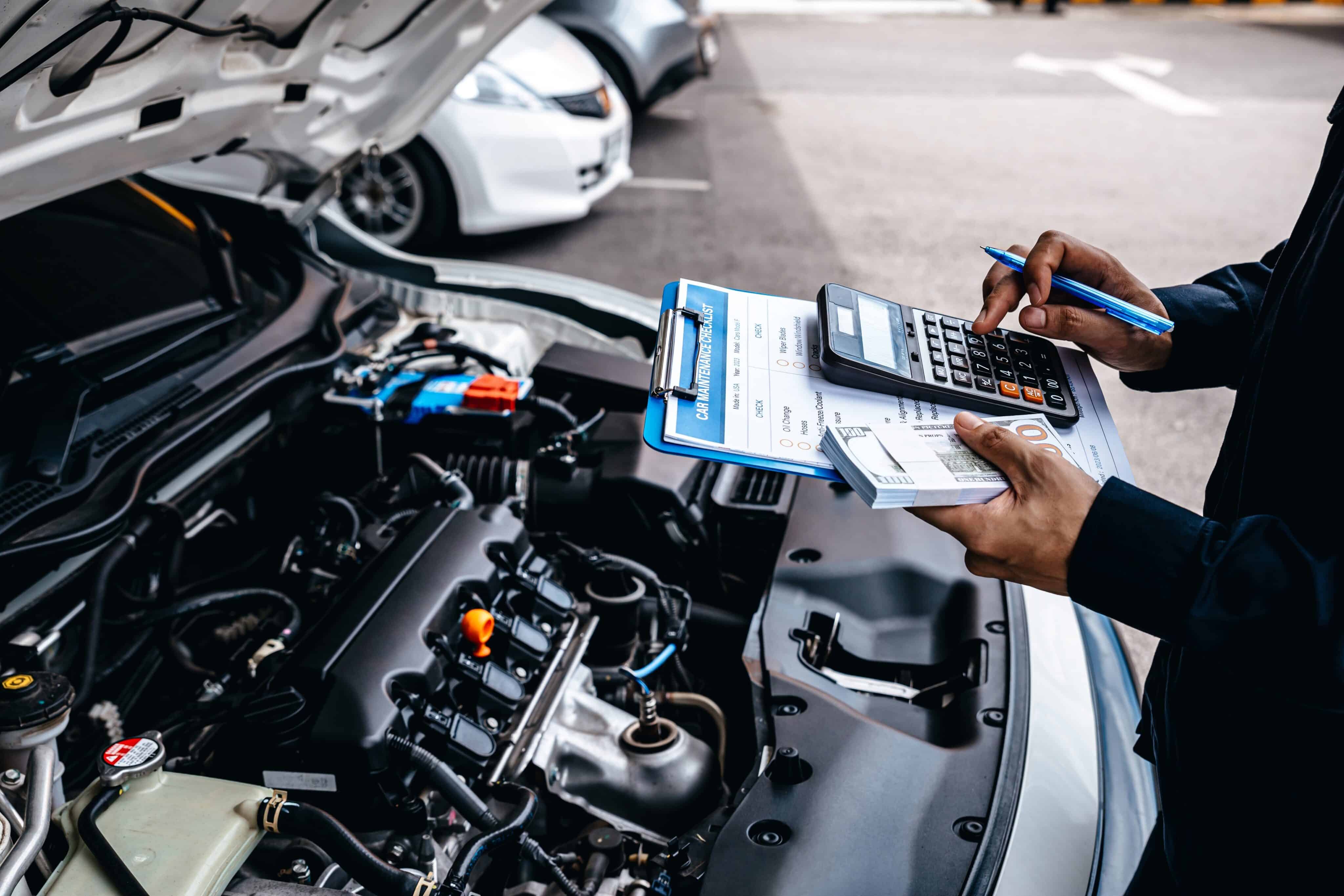
Every shuddering trip to work comes with a receipt you never see. Wheel alignments. New tires. Bent rims. Time lost dodging new craters on old routes. In wealthy cities, residents pay high taxes, high rents, and a hidden “pothole premium” layered on top. The road becomes a quiet cost center.
TRIP calculates that drivers in the San Francisco‑Oakland metro pay about 1,049 dollars per year in extra vehicle operating costs linked to rough pavement. Its national work has found that nearly half of American drivers rate road quality as bad, with pothole‑related search activity more than doubling between 2019 and 2022. Even in affluent regions, routine driving feels like volunteering your car as collateral for decades of deferred maintenance.
Glamour corridors vs. forgotten blocks
Prosperous cities often maintain what tourists see first. The route from the airport. The sidewalks outside shopping districts. The streets around stadiums and convention centers. Venture beyond those curated corridors and the picture changes. Asphalt past a certain ZIP code starts to look like a different municipality entirely.
A 2025 analysis by Wealthy Driver ranked San Francisco and Los Angeles among the worst big-city roads in America. It described San Francisco’s surface as a patchwork of deep ruts and decades of patch jobs. It also portrayed Los Angeles as a landscape of cracked, uneven streets where potholes “pop up overnight.”
Meanwhile, the Los Angeles Times notes that the city still spends hundreds of millions of dollars a year on resurfacing and fills more than 200,000 potholes annually. The money is real. So is the unevenness of where that fresh blacktop lands.
Competing crises on the same ledger
A city that is rich on paper rarely has just one problem. Housing costs. Homelessness. Policing. Climate resilience. Legal settlements. Pension obligations. Street repair competes with every other crisis and often loses, because good pavement is invisible when it works and loud only when it fails.
In Los Angeles, the Los Angeles Times traces the street-repair crunch to major financial commitments. These include generous public safety contracts, convention center investments, and a wave of lawsuit payouts.
Nearby, Santa Monica offers a contrast. Its 2025–27 budget documents warn of “serious challenges” and limited growth in key revenue streams. Yet the city still maintains a stronger Pavement Condition Index. It stands at 82, compared with Los Angeles’s projected 56. The pattern is clear. Wealth brings options, but also obligations. Over time, those obligations push routine maintenance to the margins.
The politics of who gets a smooth ride
Street quality is not just an engineering issue. It is a map of power. Well‑connected neighborhoods can get priority resurfacing and quick responses, while areas with fewer advocates see orange cones less often. In very wealthy cities, that gap can feel even sharper, because the contrast between polished and crumbling is only a few blocks apart.
The Los Angeles Times notes that Los Angeles’s projected Pavement Condition Index of 56 will lag far behind neighboring municipalities. Cities like Santa Monica, West Hollywood, and Culver City sit in the 70s and 80s.
TRIP’s national ranking places New York‑Newark and Philadelphia in the top ten large metros for poor roads as well, despite their economic heft. Where the asphalt is smooth, you often find money and political attention. Where it rattles your teeth, you often find the absence of both.
The wealthy city is learning to think long-term
Fixing the streets of a rich city is less about finding money than about deciding what kind of city that money is for. Short election cycles reward ribbon‑cuttings and marquee projects. Pavement is slow, quiet, and relentlessly unglamorous. Yet it is also the literal ground under every other promise about opportunity and mobility.
The Los Angeles Times argues for dedicated, protected funding streams for transportation in Los Angeles. One option is to tie a fixed share of property taxes to street and sidewalk repair. Another is to create a voter-approved infrastructure measure. Research from TRIP points to a simple pattern. Early and consistent maintenance keeps costs manageable. Delay does the opposite. It multiplies the bill over time.
For one of America’s wealthiest cities, the challenge is not just money. It is a time horizon. The real test is whether it can plan in decades instead of fiscal years. That means trading patchwork fixes for a long-term, steady, and equitable approach. The goal is simple. Streets should feel as well-built as the skyline looks.
More articles:
- 11 charming Southern cities where you can retire on $1,400 a month
- Top 12 worst cities in America
- These 12 U.S. cities are growing so quickly residents feel overwhelmed
Disclosure: This article was developed with the assistance of AI and was subsequently reviewed, revised, and approved by our editorial team.
Like our content? Be sure to follow us on Newsbreak.
The most expensive cities to live in the world

As inflation bites worldwide, a new ranking reveals the cities where simply getting by now costs a small fortune.
Curiosity about the cost of living often leads us to wonder just how far our paychecks would stretch in different corners of the globe. With inflation tightening its grip globally, the price of essentials like housing, transport, and even a simple morning espresso has skyrocketed in major metropolitan hubs. For many American families, watching these financial trends offers a fascinating, if somewhat shocking, glimpse into the global economy. Learn more.
12 Most Tourist-Friendly Cities Around the World

Data from Statista shows that Istanbul welcomed over 20 million international visitors in 2023 and London nearly 19 million, yet newer traveler surveys suggest the cities people remember most are the ones where locals actively help, smile, and make strangers feel at home.
When it comes to travel, some cities go above and beyond to make visitors feel welcome and comfortable. Whether it’s their easy public transport, friendly locals, or top-tier hospitality, these cities stand out as tourist-friendly destinations. Learn more.





