

Long before store shelves filled up with specialty sprays for every surface, households kept a short list of basic supplies and a lot of know-how. A box of baking soda, a jug of vinegar, a bar of soap and a clothesline covered most of the cleaning that needed doing, and many of those habits were passed down from one generation to the next.
Plenty of those methods have held up surprisingly well. The 10 tricks below come from an era when grandparents made do with simple ingredients, and each one still has a place in a modern home. Readers looking for more household help can find a step-by-step guide on how to clean wood furniture to make it look new again, a walkthrough on how to clean a dishwasher to reduce smells and dirt, and a comparison of Shark vs Bissell vacuums to get the house guest-ready for anyone who prefers a modern tool for the floors.
1. A Baking Soda Paste for Gentle Scouring
Baking soda has been a pantry staple in the United States since at least 1846, when bakers John Dwight and Austin Church opened the first American factory to produce it, according to the Wikipedia entry on sodium bicarbonate. Grandparents knew it was good for more than biscuits. Mixed with minimal water, it forms a paste that works as a gentle scouring powder on sinks, tubs and stubborn spots. The same entry notes one important exception: baking soda attacks the thin protective layer on aluminum, so aluminum pans are better cleaned another way.
2. Baking Soda and Aluminum Foil for Tarnished Silver
Polishing the good silver before a holiday dinner used to be a long, messy job. An older shortcut skips most of the rubbing. Silver placed in a warm baking soda solution while touching a piece of aluminum foil loses its tarnish through a simple chemical reaction. It is a handy trick for forks, spoons and serving pieces that only come out a few times a year.
3. White Vinegar for Mineral Deposits
Distilled white vinegar became cheap and widely available after 19th- and 20th-century advances in production, which made it an everyday household product. The Wikipedia entry on vinegar explains that its acidity dissolves mineral deposits from glass, coffee makers and other smooth surfaces, and that it works well on glass and stainless steel. It is best diluted with water.
The same source lists some limits worth keeping in mind. Vinegar can damage stone countertops, some flooring, knives, electronic screens and the rubber parts of small appliances, and frequent use near the rubber seal of a washing machine is not recommended.
4. Vinegar and Newspaper on Windows
Before microfiber cloths and paper towels, a stack of old newspapers did double duty as a window cleaner. Sprinkling malt vinegar onto crumpled newspaper is described as a traditional and still popular way to clean grease-smeared windows and mirrors in the United Kingdom.
5. Washing Soda for Greasy Laundry and Hard Water
Washing soda, also known as sodium carbonate or soda ash, was once a standard laundry-day supply. According to the Wikipedia entry on sodium carbonate, it helps break down fats and grease and is a component of many dry soap powders. It also softens hard water by pulling calcium and magnesium out of solution, which helps soap do its job. The entry notes that it is a relatively mild alkali, which is why it has long been considered suitable for use at home.
6. A Scoop of Borax in the Wash
The 20 Mule Team name has been on laundry room shelves for generations. Borax came into common use in the late 19th century, when Francis Marion Smith’s Pacific Coast Borax Company began marketing it under the 20 Mule Team trademark, a name that came from the mule teams that hauled it out of the California and Nevada deserts, according to the Wikipedia entry on borax. It is still sold as a laundry booster today and is also known for inhibiting mold growth.
7. Line-Drying Clothes and Sheets
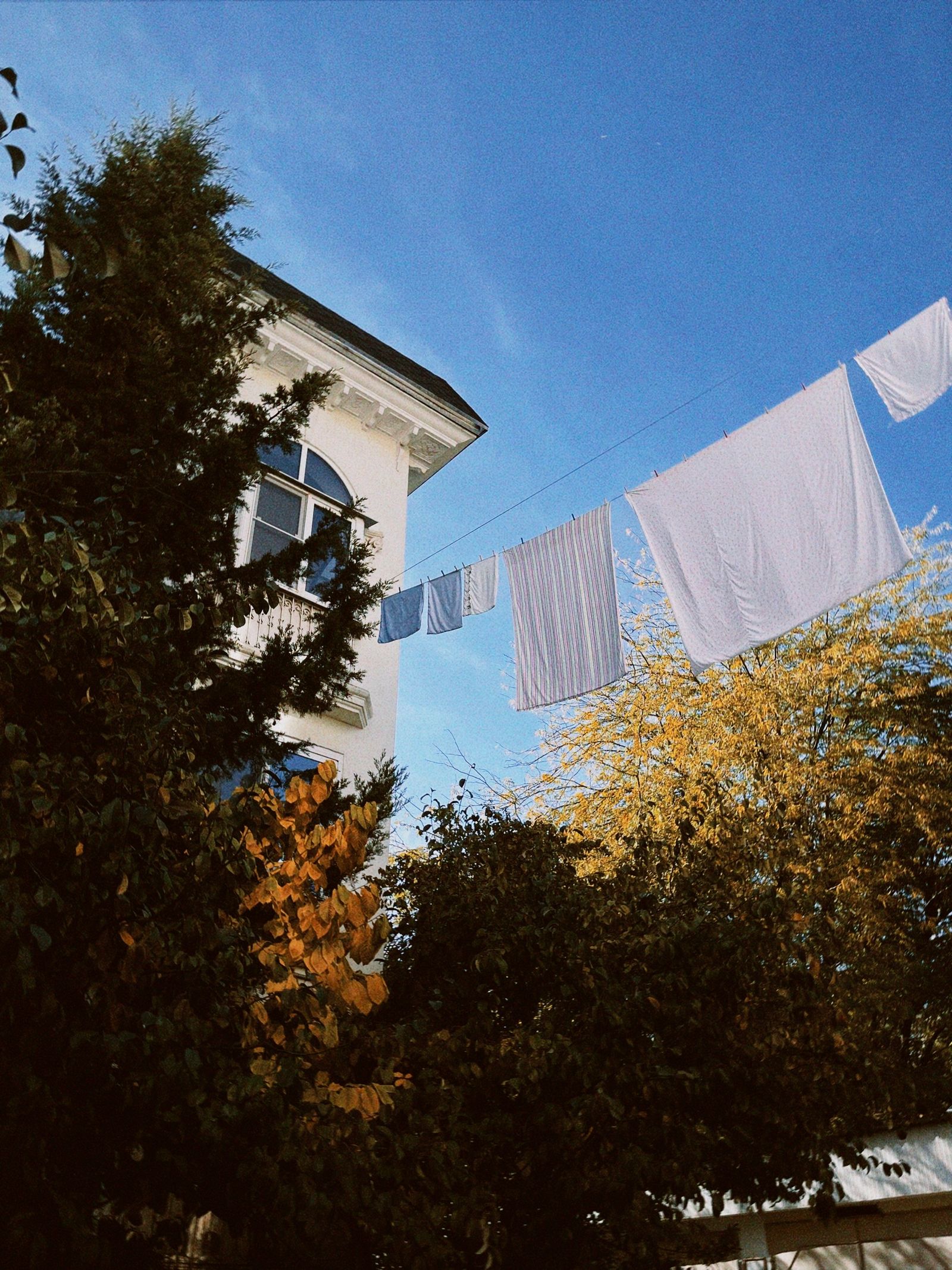
Clotheslines were a common sight until electric dryers spread through American homes in the 1960s. Hanging laundry outside costs nothing, produces no greenhouse gas emissions and causes less wear and tear on fabric, according to the Wikipedia entry on clotheslines. The same entry notes that an average dryer load produces about 2 kg of carbon dioxide equivalent. One caution still applies: the sun’s UV rays can damage some fabrics, which is one reason some people prefer drying certain items indoors.
8. Coarse Salt for Cast-Iron Pans
In the first half of the 20th century, most American households owned at least one piece of cast iron. A long-standing way to clean a skillet is to scrub it with coarse salt and a paper towel, then rub on a thin coat of oil. That approach still works, according to the Wikipedia entry on cast-iron cookware, which also lists hot water and a stiff brush as an option. The one firm rule: a seasoned pan should never go through the dishwasher, which strips the coating.
9. Taking Rugs Outside for a Good Beating
Before vacuum cleaners became affordable, rugs were hung over a clothesline or railing and beaten with a tool made of wood, rattan, cane or wire. Some families even beat their rugs face down in fresh snow or spread snow over them to catch the dust. Carpet sweepers and vacuums took over from the 1950s on, but a good shake or beating outdoors is still an easy way to knock dust out of small throw rugs and doormats.
10. Beeswax for Wood Furniture
Beeswax has long been used to polish wood and leather. Traditional furniture polish often combined it with turpentine, and some recipes blended it with linseed or tung oil. It remains a classic choice for older wood pieces.
Why These Habits Have Lasted
What these tricks have in common is that they rely on a handful of cheap ingredients that do several jobs at once. They appeal to anyone hoping to cut down on clutter under the sink or spend less on specialty products. They also fit into a wider appreciation for older ways of doing things, much like the ideas in 12 things boomers got right all along. Even simple methods can go wrong when used on the wrong surface, so a look at 12 Top Cleaning Mistakes to Avoid is a good companion to any of these.
Old Methods, Modern Homes
A grandparent’s cleaning cupboard may have looked bare by today’s standards, but it held a surprising amount of cleaning power. Testing any of these methods on a small, hidden spot first is a sensible step, especially on stone, aluminum or delicate fabrics. Used with a little care, these old-fashioned tricks can still handle a lot of everyday mess.
This article was written with the help of AI tools and checked against the sources linked above.




