Madagascar’s one-of-a-kind creatures are vanishing at an alarming rate, victims of deforestation and the illegal wildlife trade.
An American in Madagascar might feel like they’ve stumbled into another world, a place where evolution had a bit of a laugh and then let its creations run wild. The island nation, separated from the African continent for millions of years, is home to a spectacular assortment of creatures that exist nowhere else on the planet. From the goofy-looking lemurs to the cryptic chameleons, these animals are a living, breathing testament to nature’s boundless creativity, but that fairytale is turning into a cautionary tale.
Sadly, the island’s magnificent wildlife is in a race against time, and it’s a race they are losing. Habitat destruction, primarily from slash-and-burn agriculture and illegal logging, is eroding their homes at a frightening pace. It’s like watching a real-life game of Jenga, where every pulled block threatens to bring the whole beautiful tower crashing down, and the consequences for these animals are dire.
Red-Bellied Lemur
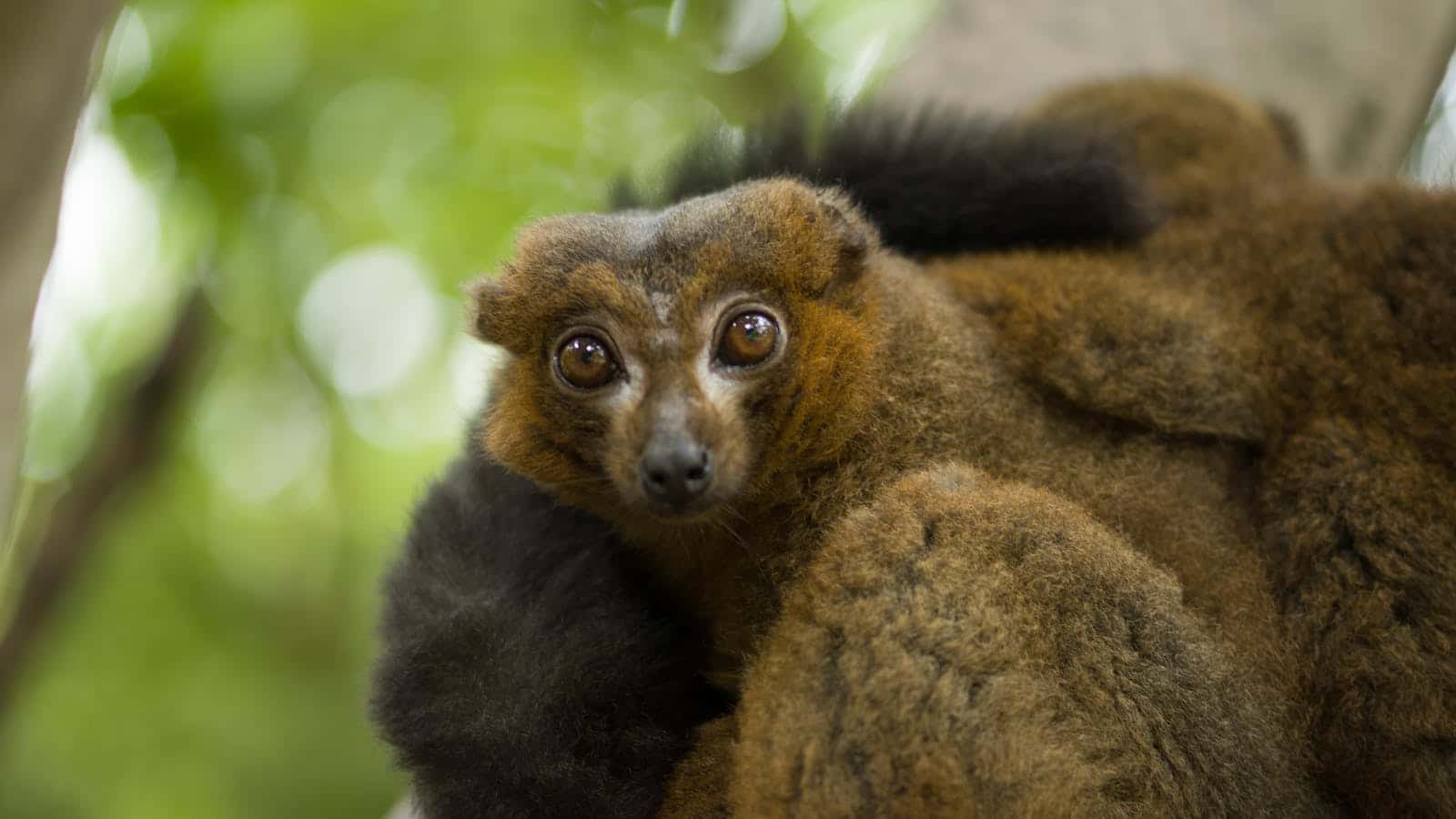
The Red-Bellied Lemur is a bit of a homebody, preferring to stay in the canopy and rarely venturing down to the forest floor. They have a rusty red or brown coat, and the males sport white patches below their eyes that look like tears. They are a cornerstone species because they play a crucial role as seed dispersers, helping to regenerate the forests they call home.
The IUCN lists them as a vulnerable species, and their population continues to decline. As logging and farming encroach on their territory, the Red-Bellied Lemur finds itself in an increasingly shrinking world, unable to disperse the very seeds that could help save their forest.
Aye-Aye
Have you ever seen an animal that looks like a critter from a children’s book? The Aye-aye is that animal. This nocturnal lemur has a set of chompers that never stop growing, a bit like a beaver, and a bony, elongated middle finger that it uses to tap on trees to find grubs. This spooky-looking finger helps it locate insect larvae under the bark, a skill called percussive foraging.
Unfortunately, the Aye-aye’s strange appearance has made it a target. Some local beliefs consider it a bad omen, leading to its persecution, and this ancient superstition is a major threat. According to the International Union for Conservation of Nature (IUCN), the Aye-aye is now listed as an endangered species.
Radiated Tortoise
Imagine a tortoiseshell so flawlessly patterned that it looks like a work of art, a stunning mosaic of yellows and browns. That’s the Radiated Tortoise, a truly majestic reptile that can live for over 100 years. It’s found only in the spiny forests of southern Madagascar, where its beautiful shell helps it blend into the dappled sunlight and shade. Poachers, however, are drawn to its attractive shell, leading to its capture for the illegal pet trade and for food.
The numbers for this long-lived animal are dropping like a stone. An estimated 80% of the wild radiated tortoise population has disappeared in the last 20 years. This precipitous decline has pushed the species to the brink of extinction.
Fossa
The Fossa is not a cat, a dog, or a mongoose; it’s a combination of all three, a creature that has been described as a cat-like mongoose. This carnivorous predator is Madagascar’s top dog, or rather, its top predator, with a long, slender body and semi-retractable claws that make it an exceptional climber. It’s the only animal that poses a real threat to adult lemurs. Its hunting habits keep lemur populations in check, which helps maintain a healthy ecosystem.
Like many of the island’s animals, the Fossa is struggling with a disappearing habitat. Its population is vulnerable due to deforestation, and it’s also targeted by farmers who worry about their livestock. As their forest homes shrink, so too do the Fossa’s chances of survival.
Sifaka Lemur
The Sifaka is a lemur that can really bust a move, and I’m not kidding. They are known for their incredible “dancing,” a sort of hopping motion they use to travel on the ground. When they jump between trees, it looks like they are flying, leaping across huge gaps with stunning grace. Their stunning leaps are not just for show; they are a vital means of navigating through the canopy.
Different species of Sifakas, such as the Silky Sifaka, are among the most critically endangered primates in the world. Their numbers are plummeting as their forest corridors are converted to farmland. The IUCN has categorized several Sifaka species as critically endangered.
Ring-Tailed Lemur
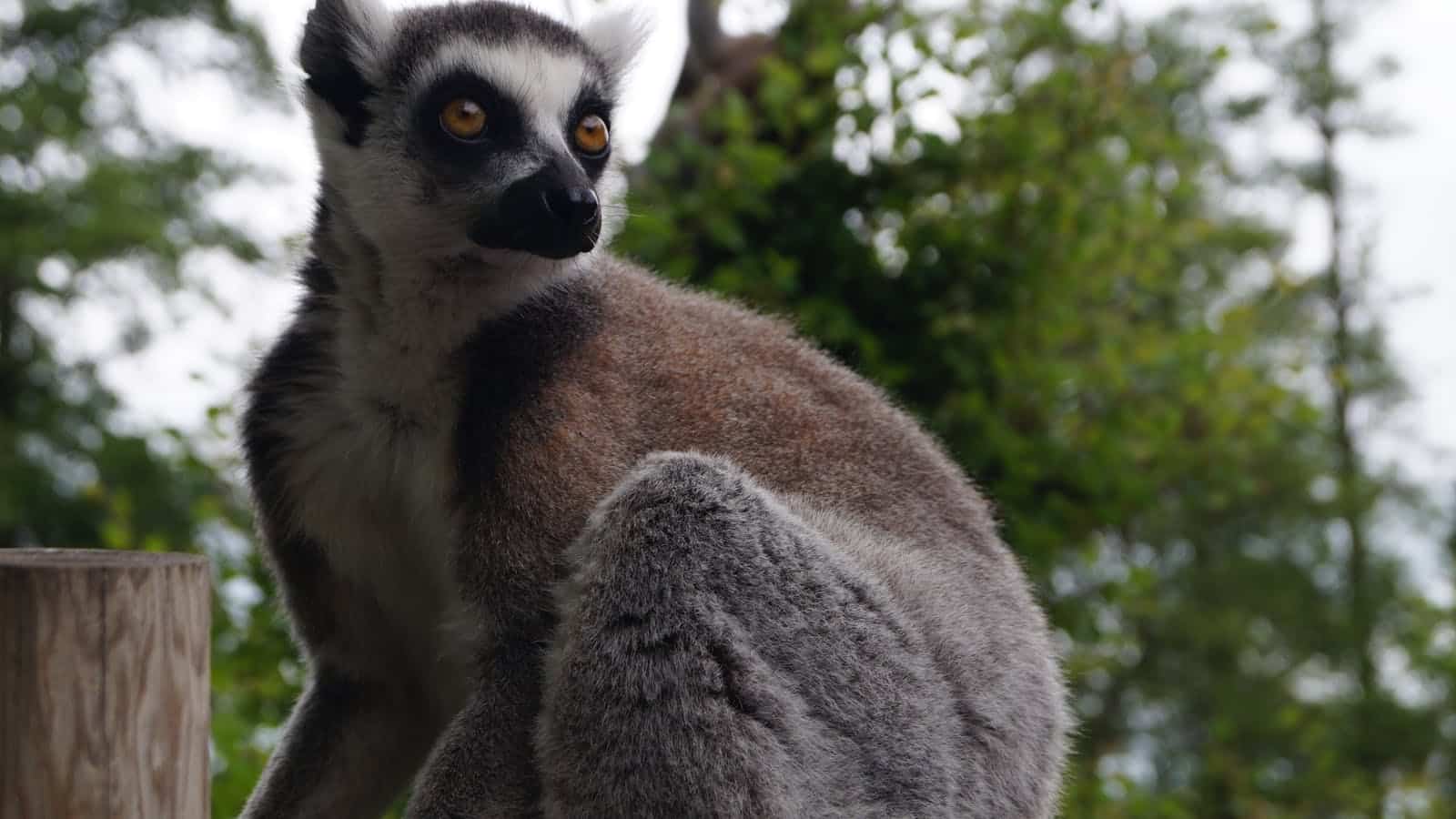
The Ring-Tailed Lemur is probably the most famous animal on Madagascar, thanks to pop culture. With its striking black-and-white striped tail and intelligent eyes, it’s the poster child for the island’s wildlife. These social primates live in large groups called troops and spend their days sunbathing with their arms outstretched, like they’re charging up with solar power.
Their popularity hasn’t saved them from the same fate as their cousins. A 2017 estimate by Mongabay suggested that only about 2,000 to 2,400 ring-tailed lemurs remained in the wild, a drastic decline from previous estimates. This decline is mainly due to habitat loss and the pet trade.
Madagascar Pygmy Chameleon
If you’re not looking carefully, you’d probably miss this little guy. The Madagascar Pygmy Chameleon is one of the world’s smallest reptiles, so tiny that it can sit on the tip of your finger. Its incredible camouflage makes it a master of disguise, blending in perfectly with the leaf litter on the forest floor. Its diminutive size is its greatest strength in avoiding predators, but it also makes it exceptionally vulnerable to environmental changes.
While the Pygmy Chameleon is not as well-studied as some of the larger animals, its limited range and specific habitat needs make it very susceptible to deforestation. About 80% to 90% of Madagascar’s original forests have been lost, a statistic that spells trouble for tiny creatures that rely on a stable, forested home.
Satanic Leaf-Tailed Gecko
The name might sound intimidating, but this gecko is a master of mimicry, with a body that is a dead ringer for a dried-up leaf. Its incredible disguise helps it hide from predators. Even its tail is shaped like a decaying leaf, complete with veins and a slightly tattered edge.
Save this article
This remarkable reptile’s existence is a precarious one. Its habitat is disappearing rapidly. It’s also highly sought after in the illegal pet trade.
Malagasy Slender-Legged Mongoose
The Malagasy Slender-Legged Mongoose is a sleek, long-bodied creature that belongs to the same family as the Fossa. It has a striking striped pattern and is an agile hunter of insects, small rodents, and lizards. This mongoose is an important part of the food chain, both as a predator and a prey animal.
This mongoose is rapidly decreasing, putting it on the endangered list. Their dry forest habitat is being converted to agricultural land, leaving them with fewer and fewer places to hide and hunt.
Madagascar Flying Fox
Don’t let the name fool you; this is not a fox at all but a magnificent bat, the largest in Madagascar. With a wingspan that can reach four feet, it’s an impressive sight as it soars through the twilight sky. It’s a key pollinator and seed disperser, making it essential to the health of Madagascar’s forests. The bat’s massive size allows it to carry large seeds and fruits, spreading them across the landscape.
This bat is listed as vulnerable by the IUCN, with its population on the decline. A recent study by the Madagascar Bat Conservation Project found that populations have declined in some areas due to habitat loss and hunting for bushmeat.
Malagasy Civet
The Malagasy Civet looks like a small, striped cat, but it’s actually more closely related to the Fossa and the mongoose. It’s a nocturnal, solitary animal that spends its nights on the forest floor, hunting for small invertebrates and vertebrates. Its secretive nature makes it challenging to study, which in turn makes it harder to protect.
The civet is listed as vulnerable, facing threats from deforestation, hunting, and competition with introduced species like dogs and cats. Its population is dropping, a sign that the fragile balance of Madagascar’s ecosystem is under severe strain.
Disclaimer – This list is solely the author’s opinion based on research and publicly available information. It is not intended to be professional advice.
Like our content? Be sure to follow us.
How Total Beginners Are Building Wealth Fast in 2025—No Experience Needed

How Total Beginners Are Building Wealth Fast in 2025
I used to think investing was something you did after you were already rich. Like, you needed $10,000 in a suit pocket and a guy named Chad at some fancy firm who knew how to “diversify your portfolio.” Meanwhile, I was just trying to figure out how to stretch $43 to payday.
But a lot has changed. And fast. In 2025, building wealth doesn’t require a finance degree—or even a lot of money. The tools are simpler. The entry points are lower. And believe it or not, total beginners are stacking wins just by starting small and staying consistent.
Click here and let’s break down how.
5 Easy Steps to Change Any Habit

5 Easy Steps to Change Any Habit
We all click on them with the hope that just THIS time the secret to changing a bad habit or adopting a healthy one will be revealed and we’ll finally be able to stick to that diet, stop that one or ten things that might in the moment make us feel temporarily good but really just make us fat, unhealthy, sad, mad or just frustrated with ourselves.