

Some of history’s wealthiest leaders amassed personal fortunes on par with national treasuries. Yet their relentless quest for wealth or power led to disastrous military defeats, catastrophic financial ruin, and rebellions that toppled dynasties, showing how greed can turn triumph into disaster on a world stage.
Greed has been a constant force in shaping history. While ambition can drive great leaders to extraordinary feats, it often blinds them to the dangers of overreach. The leaders in this article didn’t just seek power—they craved total domination, wealth, and influence, no matter the cost.
Their stories serve as timeless reminders that unchecked ambition can lead not only to personal destruction but also to the downfall of entire empires and nations.
Julius Caesar – The Ambitious Dictator

Julius Caesar rose to power through dazzling victories and keen political instincts, but his ambition evolved into an apparent bid for unchecked rule. By claiming the title of “dictator for life,” he shattered the Republic’s tradition of shared power and turned the system that had elevated him into a tool for personal dominance.
Caesar’s pursuit of total dominance made him enemies among those he trusted. His assassination in 44 BCE was a result of fears that his unchecked power threatened Rome’s future. His desire for control ultimately led to his violent demise.
King Louis XVI – A Royal Downfall

Louis XVI’s France carried an estimated 4 billion livres in royal debt, with interest consuming roughly 40-50 percent of state revenue in the 1780s. Historians note that this severe fiscal squeeze, combined with visible court luxury, fueled public anger that helped drive the Revolution.
Louis’s failure to address the growing crisis led to the French Revolution. His greed to maintain royal authority, at the cost of his people’s suffering and financial freedom, led to his arrest and execution in 1793. The monarchy ended with his downfall.
Napoleon Bonaparte – The Emperor’s Hubris

At its height, Napoleon’s empire directly ruled about 44 million people. It dominated most of continental Europe, but his drive to keep expanding led to disastrous overreach, especially in Spain and Russia, where huge losses and military exhaustion triggered the rapid collapse of his power.
The ill-fated invasion of Russia in 1812 marked the turning point. Napoleon’s forces were decimated, and his empire crumbled. His relentless ambition eventually led to his exile, marking the end of his reign.
King Henry VIII – A Ruthless King
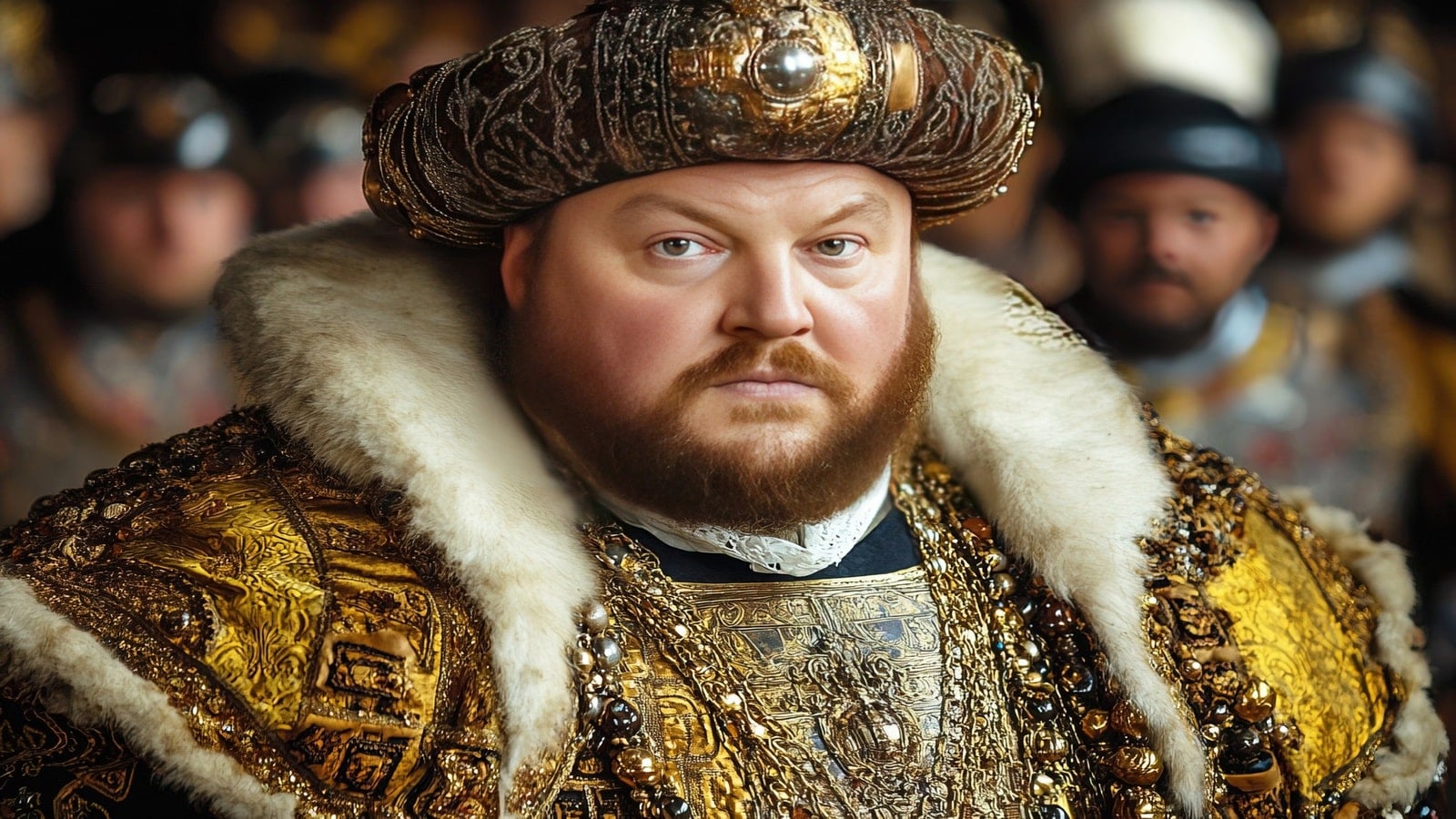
Henry VIII ruled England for 38 years (1509–1547), oversaw the closure or destruction of over 800 monasteries during the Dissolution of the Monasteries, and greatly expanded the royal navy from a handful of ships to several dozen, roughly a tenfold increase in warships.
His six marriages and religious upheaval left England in turmoil. Henry’s greed for control and his desire to preserve his legacy led to instability that haunted England long after his reign. His actions left a fractured kingdom in his wake.
Emperor Nero – A Destructive Reign

Nero ruled the Roman Empire for about 14 years, from 54 to 68 CE, taking power as a teenager and dying at age 30 after a military revolt and his own suicide. His reign saw major events such as the Great Fire of Rome in 64 CE and the harsh persecution of Christians, alongside massive building projects such as the Domus Aurea palace, which reshaped central Rome.
Nero’s actions alienated the elite and caused widespread unrest. His reign ended when his own guards abandoned him. The self-indulgent emperor took his own life, a tragic end to a reign fueled by greed.
Richard Nixon – The Fall of a President

Richard Nixon’s career was built on hard work and political savvy. But his desire to remain in power led him to cover up the Watergate scandal. His actions showed just how far he was willing to go to protect his presidency.
Nixon’s greed for political dominance cost him everything. In 1974, faced with certain impeachment, he became the first U.S. president to resign. His pursuit of power led to his disgrace and the collapse of his political career.
Ivan the Terrible – The Tyrant’s Greed

Ivan the Terrible’s ambition for power led to violent purges and terror. His desire for absolute control over Russia drove him to create the Oprichnina, a force that instilled fear across the land. His reign was one of terror and paranoia.
Save this article
Ivan’s cruelty and unchecked greed ultimately left Russia in chaos. By the time of his death, his empire was fractured, and his dynasty weakened. His relentless ambition destroyed both his legacy and his people.
Also on MSN: 12 Famous Historical Figures Who Died Broke Despite Their Success
Czar Nicholas II – The Fall of the Romanovs

Czar Nicholas II’s reign was marred by failure to address Russia’s growing discontent. While his people faced poverty, Nicholas lived in luxury. His inability to adapt to the changing political landscape led to widespread unrest.
The Russian Revolution led to his abdication and eventual execution. Nicholas’s greed for maintaining power and his refusal to change sealed the fate of the Romanov dynasty. His family paid the ultimate price for his inaction.
Cleopatra – The Queen’s Desire for Power

Cleopatra’s ambition for power was evident in her strategic alliances with Julius Caesar and Mark Antony. Her desire to restore Egypt’s glory led her to manipulate Roman politics. But her greed for dominance turned the tide against her.
After Antony’s defeat by Augustus, Cleopatra’s position was weakened. Faced with the loss of Egypt, she chose to end her life in 30 BCE. Her pursuit of power ultimately led to her tragic downfall.
Genghis Khan – The World Conqueror

Genghis Khan’s rise to power was driven by revenge and a desire for empire-building. His relentless pursuit of conquest expanded the Mongol Empire across Asia. But his insatiable hunger for land and power sowed the seeds of instability.
His successors struggled to maintain the vast empire he left behind. Genghis Khan’s greed for control eventually fractured the empire he had built. His legacy was marked by both greatness and destruction.
Adolf Hitler – The Fueled Desire for World Domination

Adolf Hitler’s ambition to dominate Europe led to the devastation of millions of lives. His greed for a racially pure empire drove the Holocaust and World War II. Hitler’s desire for control over Europe brought unimaginable suffering to countless people.
In the end, Hitler’s unchecked ambition led to his own demise. As the Allies closed in on Berlin, he took his own life in 1945. His pursuit of global domination marked the end of his regime and the ruin of Europe.
Ferdinand Marcos

Ferdinand Marcos ruled the Philippines for over two decades, using his position to amass great wealth and power. His greed for control led him to declare martial law in 1972, consolidating his authority while stripping the people of their rights.
His greed for power and wealth made him unpopular and sparked numerous protests. In 1986, facing growing opposition and a revolution, Marcos fled the country, marking the end of his corrupt rule.
Key Takeaway

These leaders, each driven by an insatiable greed for power, wealth, or control, ultimately faced destruction because they underestimated the consequences of their ambition. Their fates serve as cautionary tales that, while ambition can drive outstanding achievements, it can also blind leaders to the dangers of unchecked greed. History has shown that those who reach too far often fall the hardest.
Disclaimer: This list is solely the author’s opinion based on research and publicly available information. It is not intended to be professional advice.
Disclosure: This article was developed with the assistance of AI and was subsequently reviewed, revised, and approved by our editorial team.
20 people in history who deserve more respect than they get
20 People in History Who Deserve More Respect Than They Get
The characters you’ll meet in these pages will not be your run-of-the-mill luminaries. We’re talking about the unsung heroes, the underrated pioneers, and the overlooked trailblazers—people who, despite their significant contributions, got lost in the shuffle of time. It’s time to give these 20 deserving folks the long-overdue respect.





