

A silent inbox could make even the most qualified person second-guess their worth. You adjust the résumé, perfect the cover letter, and practice your interview pitch, only to watch another application evaporate into thin air. It’s frustrating, yes, but it’s not just your imagination.
The job market is tougher than ever: According to the Bureau of Labor Statistics, U.S. job openings were at 6.9 million in February 2026, yet hires dropped to 4.8 million, the lowest rate since April 2020. Gallup found that by the end of 2025, only 28% of workers felt it was a good time to find a quality job, while 72% disagreed.
If your job search feels as if you’re wading through quicksand, you’re not alone. The truth? It’s not only about qualifications; it’s about timing, signals, and hidden forces that often have more sway than ability alone.
Your Resume Feels Generic, Not Story-Driven
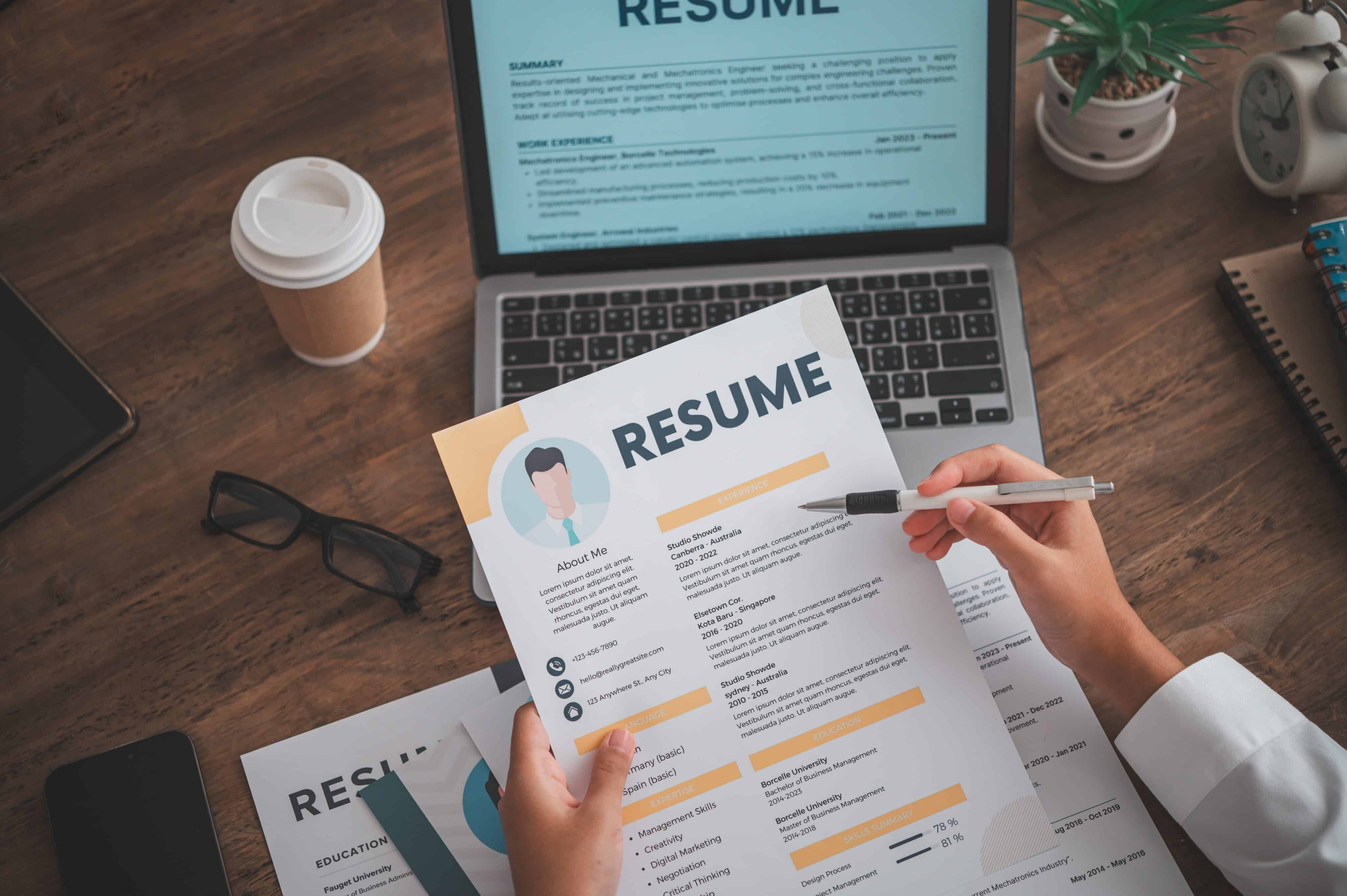
A résumé can be technically correct and still feel invisible. That is the trap. Jobscan found that 97.8% of Fortune 500 companies used an applicant tracking system in 2025, which means the first reader is often software, not a person with patience and imagination.
Then the human layer arrives with its own filters: NACE’s Job Outlook 2025 found that employers most often look for problem-solving skills (88.3%), teamwork (81.0%), written communication (77.1%), and flexibility/adaptability (67.0%).
A generic résumé that lists duties without outcomes fails to convey those signals. It tells people where you sat, but not what moved because of you. This is fixable, and that matters. The hiring market is crowded, yet the document that wins attention is still the one that turns work history into evidence, not wallpaper.
You’re Not Speaking to the “Real” Problem They Have

Many candidates talk like they are applying for a title when the employer is hiring for a headache. A team is behind on delivery. A manager is losing people during onboarding. Sales are wobbling. Customer complaints keep stacking up. In a market where BLS says hires dropped by 387,000 year over year in February 2026, employers are making fewer bets, which means they lean harder toward people who sound useful on day one.
NACE’s 2025 data helps explain why: 88.3% of employers want problem-solving, 73.7% want initiative, and 73.2% want a strong work ethic on a candidate’s résumé. Chris Hyams, Indeed’s CEO, put the shift into one clean line, saying, “The most necessary skill for someone to be employable in the decades to come…is adaptability.”
The candidate who keeps saying “I want to grow” may be sincere. The candidate who says, “Here is the bottleneck I think you are trying to solve, and here is how I would help,” usually sounds closer to relief.
Your Communication Style Feels Off-putting or Disconnected

Communication leaves a trail long before your skills get a fair hearing. NACE found that employers look for written communication on résumés 77.1% of the time, verbal communication 69.3% of the time, and interpersonal skills 63.1% of the time.
That means your email tone, response speed, interview pacing, and follow-up style all start speaking before you ever get to prove your full value. Greenhouse’s 2024 Candidate Experience Report adds the other side of the mirror: 52% of candidates said they had been ghosted, and 79% said they would reapply to a company if they received feedback after an interview.
Hiring teams know that poor communication hurts trust because candidates constantly complain about it. So when a candidate sounds vague, replies days late, or drifts into overly relaxed language, some employers quietly assume that pattern will show up inside the job too.
That may feel unfair, but it is common. The encouraging part is that small changes in clarity and warmth can reshape that impression faster than most people think.
Your “Fit” with Culture Is Subtly Wrong

“Culture fit” can sound fluffy until you watch it change hiring decisions in real life. This is not always about being cheerful at lunch or loving the same buzzwords as the team. It is often about pace, decision-making style, feedback style, risk tolerance, and how people treat one another under pressure.
Greenhouse found in 2024 that 53% of employees said companies advertised job responsibilities that differed sharply from reality after they started, and another 53% said they were showered with praise during hiring, only to receive a salary or title that did not match their qualifications.
Those numbers matter because they show how often companies and candidates misread each other. Daniel Chait, Greenhouse’s CEO, captured the damage well: “Drawn-out interviews, misleading job descriptions, and ghosting only make for a frustrating candidate experience.” That dynamic runs both ways.
A candidate can be highly capable and still feel out of step with a team that prizes a different communication rhythm, level of structure, or appetite for change. A rejection can hurt, and still protect you from an environment that would have worn you down.
You’re Applying to the Wrong “Tier” of Roles

Sometimes the issue is not talent. It is calibration. ManpowerGroup reported in 2026 that 72% of employers globally were having trouble filling roles, and U.S. data reported through Staffing Industry Analysts put the American figure at 69%.
At the same time, Employ’s 2025 Recruiter Nation Report found that recruiters still named the lack of qualified candidates as a top stressor, at 47%, even as competition and rising candidate expectations were also on the rise.
Put those facts together, and the message gets clearer: job markets can be tough and still full of mismatches. A candidate may be reaching too far above current proof or aiming too low, muddying the story.
A broad general audience sees this every day. A strong coordinator applies for director roles without evidence of leadership. A seasoned worker keeps applying beyond their actual scope and reads every silence as a rejection of their worth.
Reframing “what I deserve” into “what I can prove right now” is not settling. It is a strategy, and strategy often opens the next door faster than pride does.
Old-School Application Forms Are Silently Eliminating You

Some candidates never get rejected because they never truly arrive. The form beats them first. In 2026, Jobs Go Public reported 57% of job seekers would abandon an application if it was too complex. BambooHR highlighted the same 57% from LiveCareer’s 2025 survey, plus another detail: many applicants feel their résumés never reach a real person.
The public sector shows this tension well. NEOGOV’s 2025 report said state and local governments hired over 580,000 people in the prior year, but 62% of agencies still struggled to find qualified candidates. The funnel leaks. A deserving person can be screened out by friction, not weakness.
If you keep stalling on clunky portals, endless data entry, or exhausting qualification questions, that is not laziness. It is part of the modern filter. The practical move is to treat application stamina like a resource. Save energy for better-fit roles, keep your materials organized, and do not let a broken process define your ability.
You’re Over-Confident or Under-Confident in the Same Interview

Interviews ask for a strange balance. You have to sound sure of yourself without sounding inflated, open without sounding unsure, and accomplished without sounding exhausting. That balancing act matters more in a market where fewer openings are turning into hires.
Save this article
BLS said hires fell to 4.8 million in February 2026, and NACE’s 2025 employer data shows why tone matters during those narrower decisions: 73.7% look for initiative, 69.3% for verbal communication, and 63.1% for interpersonal skills. In other words, hiring managers are reading competence and chemistry simultaneously. A candidate who undersells every answer can sound risky, even if they are excellent.
A candidate who overstates every answer can sound hard to manage, even if they are talented. That does not mean you need a fake personality. It means you need signal clarity.
The sweet spot is simple: speak with grounded confidence, attach claims to examples, and leave room for learning. The goal is not to perform perfectly. It is to sound like someone people can trust with work and still want beside them on a difficult Tuesday.
You’re Not Corresponding To How Work Is Actually Done

The job may carry an old title and still demand a very new brain. World Economic Forum research published in 2025 said employers expect 39% of workers’ core skills to change by 2030, while the share of the workforce completing training as part of long-term learning strategies rose to 50%, up from 41% in 2023.
Gartner adds a sharper edge from the candidate side: 52% of job applicants believe AI screens their application information, 39% say they used AI during the application process, and only 26% trust AI to evaluate them fairly. That is the modern terrain. Work is more hybrid, more tool-heavy, more adaptive, and more entangled with digital systems than many job seekers show in their interviews and materials.
If your examples sound frozen in one mode, fully in-person, fully manual, fully fixed, some employers will worry you are stronger in yesterday’s workflow than tomorrow’s. That does not mean you need to become a machine evangelist. It means you need to show you can keep up with the work as it is being done now.
Your Upskilling or Side-Projects Aren’t Visible

A hidden strength helps your confidence more than your candidacy. Employers cannot reward growth they cannot see. World Economic Forum data from 2025 showed that 50% of the workforce had completed training as part of long-term learning strategies, up from 41% in 2023, indicating that continuous learning is no longer extra credit.
ADP’s 2025 research sharpens that into career reality: only 3.8% of workers learn new skills on the job within 2 years of being hired; only 17% strongly agree that their employers invest in the skills they need for advancement; and U.S. payroll data link upskilling to a 37% increase in wages. Those are not small numbers. They tell a quiet story about a market that rewards visible growth but does not always provide it.
So your certificates, side projects, volunteer leadership, freelance wins, and self-taught tools need to appear where employers actually scan. Learning that lives only in your memory does not travel. Learning that is framed as proof can start to change how a hiring team reads your trajectory.
You’re Skimming the Surface in Interviews

A lot of interviews fall apart for one simple reason: the candidate knows the role title but not the world around the role. That gap shows up in vague answers, thin questions, and a strange flatness where curiosity should be. NACE’s Job Outlook 2025 report says employers value problem-solving (88.3%), teamwork (81.0%), and written communication (77.1%).
None of those qualities thrives in surface-level conversation. They show up when you connect your experience to the team’s work, the company’s market, and the problem hiding underneath the job post. Gallup adds more pressure to that truth: nearly half of active job searchers say the experience has been negative, and many cannot even land an interview.
In a crowded market, “I’m excited about the opportunity” is too thin to carry real weight. A better interview sounds more specific. It explains why this team, this moment, this kind of problem, and your experience fit that puzzle. Depth does not require a grand performance. It requires real attention.
Hiring Timelines Have Stretched Into the Darkness

You are not imagining the long silences. Employ’s 2025 hiring benchmarks showed an average of 46.2 days between a candidate’s first interaction and an accepted offer, while the stretch from job posting to accepted offer averaged 63.5 days. At small and midsize companies, that number reached 83.5 days. No wonder so many applicants feel ghosted.
SHRM’s coverage of Candidate Experience Awards research said candidate resentment is rising again, and Kevin Grossman warned that candidates who report a very poor recruiting experience are “less likely to apply again, refer others, have any brand affinity, or make purchases from that company.” That quote may sound like it is speaking to employers, but it also speaks to you. Slow hiring can warp your self-image if you let it.
A delayed process is not always a verdict on your worth. Sometimes it is budget hesitation, too many approvals, recruiter overload, or plain organizational drift. When hiring timelines stretch into the fog, the healthiest move is to keep momentum elsewhere rather than letting one company’s silence swallow your confidence.
You’re Not Owning Your “Why” and Your Narrative

A résumé can get you considered, but your narrative is what makes people remember you after the meeting ends. That is more important now because the market is both crowded and tired. Gallup found that 51% of U.S. employees in late 2025 were either actively seeking a new job or on the lookout for opportunities, and only 28% thought it was a good time to find a quality role.
In that kind of climate, a hiring team can see many qualified people and still choose the one whose story feels coherent. Jobscan’s 2025 ATS research says 97.8% of Fortune 500 companies use an ATS, meaning candidates must first survive automation before reaching a human. Your “why” is the bridge between those two gates.
It explains your transitions, growth, setbacks, and direction without apology or fog. You do not need a dramatic life story. You need a clean one. When your narrative sounds grounded, forward-looking, and honest, people stop seeing random experience blocks and start seeing a person with momentum.
A short reflective close

Job hunting can bruise people in private. It can make smart people feel invisible, generous people feel cynical, and hardworking people feel as if they have somehow misread their own values. Yet the data keeps pointing to something gentler and more useful than shame.
BLS shows hiring has cooled. Gallup shows confidence in finding a good job has dropped hard. Candidate-experience research keeps showing how often process, timing, poor communication, AI filters, and unclear signals shape outcomes before merit gets a fair shot. That is the uneasy truth.
The hopeful part sits right beside it. Many of the reasons you are not landing the job you deserve are not fixed flaws. They are patterns you can see sooner, name more clearly, and change more strategically. A tighter story, a sharper résumé, better alignment, stronger questions, cleaner follow-up, and more visible learning are not magic.
They are leverage you still control, even in a market that feels cold. And sometimes that small return of control is enough to help your next application sound like a person moving toward a future rather than begging for entry.
Key Takeaways

The modern hiring maze does not judge you solely on your qualifications. ATS systems now sit in front of most major employers, with Jobscan finding 97.8% of Fortune 500 companies used them in 2025.
Employers say they want problem-solving, teamwork, communication, initiative, and adaptability traits, according to NACE. At the same time, BLS shows hires have cooled, Gallup shows job-market confidence has plunged, and candidate-experience studies keep finding long timelines, ghosting, misleading postings, and complex application systems that push people out before talent is fully seen.
That means your job search needs more than persistence. It needs a stronger signal. When you make your impact visible, aim at the right tier, show how you solve live problems, and tell a story that sounds clear and human, you give hiring teams fewer reasons to miss what you can really do.
Disclaimer –This list is solely the author’s opinion based on research and publicly available information. It is not intended to be professional advice.
Like our content? Be sure to follow us