

From retail giants to iconic airlines, many of America’s most recognizable brands collapsed not because they lacked popularity, but because markets changed faster than they could adapt.
Walk into any conversation with a Baby Boomer about classic brands and watch their eyes light up. Mention an old soda, a department store, or a beloved TV brand, and suddenly everyone has a story.
Nostalgia hits hard, especially when it involves brands that once dominated American culture. I love these conversations because they remind me how quickly the business world changes.
A brand can rule the market for decades and then disappear almost overnight. Ever wonder why some brands stick in our memories long after they vanish from shelves?
Let’s talk about 13 once-popular brands Boomers haven’t forgotten companies that shaped everyday life, influenced culture, and still spark nostalgia today.
Woolworth’s: The five-and-dime store that defined small-town shopping
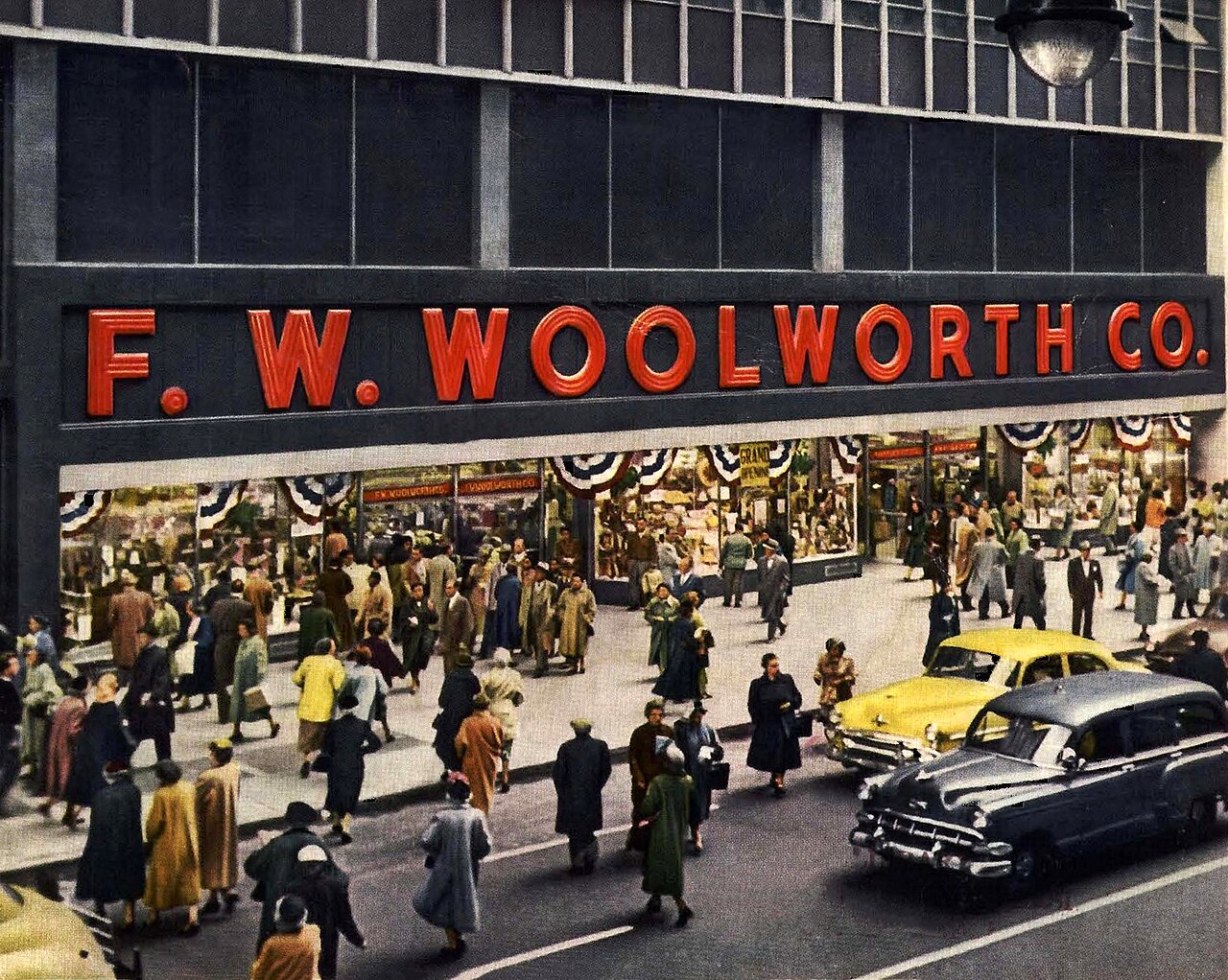
Before modern big-box retailers appeared everywhere, Woolworth’s stood at the center of American shopping culture.
Founded in 1879 by Frank Winfield Woolworth, the chain introduced the concept of the “five-and-dime” store, where shoppers could buy everyday items for five or ten cents.
By the 1950s, Woolworth’s operated over 2,000 stores worldwide and generated massive retail sales.
Boomers remember Woolworth’s as more than a store. It served as a social hub. Families browsed toys, school supplies, and household goods all in one place.
Many stores also featured lunch counters, where customers ordered burgers, sandwiches, and milkshakes while chatting with neighbors.
Several factors made Woolworth’s unforgettable:
- Affordable everyday goods
- Famous lunch counters
- Central locations in downtown shopping districts
I once spoke with someone who swore Woolworth’s served the best grilled cheese in town. Nostalgia might exaggerate things slightly, but hey, memories often do. 🙂
Retail trends eventually shifted toward suburban malls and large discount chains. Woolworth’s closed its last U.S. stores in 1997, but Boomers still talk about those lunch counters like sacred ground.
Montgomery Ward: The mail-order giant before online shopping
Long before Amazon dominated online retail, Montgomery Ward revolutionized shopping through mail-order catalogs. The company launched in 1872 and quickly changed how Americans purchased goods, especially in rural areas.
Imagine living miles away from the nearest town. Instead of traveling long distances, families flipped through a thick catalog and ordered everything from clothes to farming equipment. Sound familiar? That system basically predicted modern e-commerce.
At its peak, Montgomery Ward became one of the largest retailers in the United States. The catalog offered thousands of products, including:
- Clothing and household goods
- Tools and farm equipment
- Furniture and appliances
Boomers remember the excitement of catalog season. Families gathered around the table and circled their favorite items. Kids dreamed about toys while parents planned practical purchases.
Montgomery Ward eventually struggled against competitors like Walmart and Target. The company filed for bankruptcy in 2000. Still, many Boomers remember those catalogs as the original “online shopping experience,” minus the Wi-Fi.
Pan Am: The airline that made air travel glamorous
When people mention classic airlines, Pan American World Airways, better known as Pan Am, is almost always included. The airline launched in 1927 and quickly became the face of international travel.
Pan Am made flying feel luxurious and adventurous. The company introduced iconic aircraft like the Boeing 707 and later helped launch the famous Boeing 747 jumbo jet. Passengers dressed elegantly, flight attendants served full meals, and travel felt like a special event.
Boomers remember Pan Am for several reasons:
- Global route networks
- Stylish branding and uniforms
- First-class service standards
The airline symbolized the excitement of global exploration. Families proudly kept Pan Am luggage tags as souvenirs.
Financial struggles and industry changes eventually grounded the airline in 1991. Even today, though, Pan Am logos appear on retro merchandise. Why? Because the brand still represents the golden age of aviation.
Sears: The retail empire that once sold entire houses
If you grew up in the mid-20th century, you almost certainly visited Sears. At its peak in the 1970s, Sears ranked as the largest retailer in the United States.
The company built its reputation through catalogs and department stores packed with everything imaginable. Tools, clothing, appliances, lawnmowers Sears sold it all.
One fact always amazes people: Sears even sold mail-order houses between 1908 and 1940. Customers ordered house kits from the catalog, and builders assembled them on-site.
Boomers remember Sears for several iconic features:
- Reliable Craftsman tools
- Trusted Kenmore appliances
- Massive shopping malls anchored by Sears stores
IMO, Sears felt like a one-stop universe for household needs. Unfortunately, competition and poor management decisions slowly eroded the brand. Many locations closed in the 2010s.
Still, mention Sears to a Boomer, and you’ll hear stories about back-to-school shopping or browsing tool aisles with dad.
Radioshack: The electronics store every tinkerer loved
If you enjoyed gadgets, you probably loved RadioShack. The brand opened in 1921 and eventually became a paradise for electronics enthusiasts.
RadioShack stores stocked components that hobbyists needed to build or repair devices. Walk into the store, and you’d find shelves filled with wires, resistors, adapters, and batteries.
Boomers especially remember the excitement of exploring new technology there. The store even sold early personal computers like the TRS-80, which debuted in 1977.
Popular RadioShack products included:
- DIY electronics kits
- CB radios
- Early personal computers
- Audio equipment
I visited a RadioShack once and spent an hour staring at cables I didn’t even need. Ever done that in a tech store? Yeah, same energy.
Online retailers and big electronics chains eventually replaced the niche market. RadioShack filed for bankruptcy in 2015, but many Boomers still miss it.
Blockbuster: The Friday night movie ritual
Ask any Boomer or Gen X movie fan about Blockbuster, and they’ll probably smile. Before streaming existed, families visited video rental stores every weekend.
Blockbuster launched in 1985 and grew rapidly. At its peak, the company operated over 9,000 stores worldwide.
The typical routine looked like this:
- Drive to Blockbuster on Friday night
- Browse VHS or DVD shelves
- Argue about which movie to rent
Late fees became legendary. Nobody enjoyed them, but everyone remembers them.
Netflix eventually disrupted the rental model with mail-order DVDs and later streaming. Blockbuster filed for bankruptcy in 2010.
Still, Boomers remember the excitement of walking through those aisles. Streaming feels convenient, but it lacks that “movie night treasure hunt” feeling.
Oldsmobile: The classic American car brand
For decades, Oldsmobile represented innovation in American automobiles. The brand launched in 1897 and became one of General Motors’ most important divisions.
Oldsmobile introduced numerous automotive firsts, including the first mass-produced automatic transmission in 1939.
Boomers often recall popular models like:
- Oldsmobile Cutlass
- Oldsmobile 88
- Oldsmobile Toronado
These cars dominated American roads during the 1960s and 1970s.
Unfortunately, declining sales forced General Motors to discontinue Oldsmobile in 2004. Even so, many Boomers still consider those vehicles icons of classic American engineering.
Polaroid: Instant photography before smartphones
Before smartphones captured every moment instantly, Polaroid made instant photography magical. Edwin Land introduced the first commercial instant camera in 1948.
Save this article
By the 1970s and 1980s, Polaroid cameras became household staples. Users snapped a photo, waited a minute, and watched the picture develop in their hands.
Boomers loved the novelty. Parties, vacations, and family gatherings often featured Polaroid cameras.
Why people loved Polaroid:
- Instant photo development
- Simple camera operation
- Unique physical photos
Digital cameras eventually disrupted the market. Polaroid filed for bankruptcy in 2001.
Ironically, instant photography now enjoys a comeback. Nostalgia never really disappears.
TWA: The airline that rivaled Pan Am
Trans World Airlines (TWA) once competed directly with Pan Am for global dominance. The airline launched in 1930 and became one of America’s most recognizable carriers.
TWA introduced several aviation innovations and operated glamorous international routes.
Boomers remember:
- Stylish airport terminals
- High-end service
- Famous advertising campaigns
Despite its legendary reputation, TWA eventually struggled financially as the airline industry changed through deregulation, rising costs, and intense competition.
After years of challenges and restructuring, the airline was ultimately acquired by American Airlines in 2001, marking the end of the TWA brand. Still, aviation enthusiasts often celebrate TWA as a symbol of the golden age of aviation.
Howard Johnson’s: The highway restaurant icon
Before modern fast-food chains dominated highways, Howard Johnson’s restaurants welcomed travelers across the United States.
The chain gained fame for its 28 flavors of ice cream and distinctive orange-roofed buildings.
Road trips during the 1950s and 1960s often included stops at Howard Johnson’s.
Popular menu items included:
- Fried clams
- Ice cream desserts
- Classic American diner meals
Changing dining trends and competition slowly reduced the chain’s presence.
Boomers still remember those orange roofs like nostalgic road-trip landmarks. For them, spotting a Howard Johnson’s sign often meant a welcome break during a long road trip, good food, ice cream, and a brief pause before the adventure continued.
Zenith: The television brand that ruled living rooms
During the mid-20th century, Zenith dominated the television industry. The company built high-quality TVs and radios known for their durability.
Zenith even introduced the first wireless remote control in 1955.
Families gathered around Zenith televisions to watch the evening news, sitcoms, and major events.
Boomers associate the brand with:
- Reliable electronics
- Clear television pictures
- Innovative remote technology
Global competition eventually reshaped the electronics market. Zenith disappeared as a major consumer brand.
Still, many Boomers remember the iconic slogan: “The quality goes in before the name goes on.”
Circuit City: The electronics giant before Best Buy took over
For years, Circuit City dominated the consumer electronics retail market. The chain opened in 1949 and grew into a major competitor to Best Buy.
Circuit City stores offered:
- Televisions and audio equipment
- Computers and accessories
- Home appliances
Boomers loved the massive showrooms filled with cutting-edge technology. However, management decisions and economic challenges eventually forced the company into bankruptcy in 2009.
Even today, many shoppers still remember wandering through those brightly lit aisles, comparing televisions or testing stereos long before online reviews and one-click shopping reshaped how people buy electronics.
Woolco: Walmart’s forgotten competitor
Before Walmart dominated the discount retail market, Woolco was a major competitor. The brand launched in 1962 as a discount division of Woolworths.
Woolco stores offered affordable clothing, groceries, and household items.
Shoppers appreciated:
- Low prices
- Large store layouts
- Convenient locations
However, intense competition eventually forced Woolworth to close most Woolco stores by the early 1980s.
Even though the chain disappeared from the retail scene decades ago, many Baby Boomers still remember Woolco as one of the early pioneers of big-box discount shopping, helping pave the way for the massive retail superstores that dominate today’s marketplace.
Final thoughts on once-popular brands, boomers haven’t forgotten
Brands rise, dominate markets, and sometimes disappear. Yet memories stick around far longer than storefronts.
These 13 once-popular brands Boomers haven’t forgotten have shaped shopping habits, travel experiences, entertainment, and technology for decades.
Some companies collapsed because of competition.
Others struggled to adapt to changing markets. Still, each brand left a cultural footprint that people remember today. Next time someone starts reminiscing about old stores or airlines, listen closely.
You might hear a story about browsing a Sears catalog, renting a movie at Blockbuster, or eating ice cream under a Howard Johnson’s orange roof. And honestly? Those stories make business history way more fun.
More articles:
- 12 Brutal Truths Behind Why America’s Real History Still Gets Denied
- The history of 14 popular English sayings that don’t seem to make sense
- Black History Month is reframing how history is told
Disclosure: This article was developed with the assistance of AI and was subsequently reviewed, revised, and approved by our editorial team.
Like our content? Follow us on Newsbreak
How secular history supports the existence of Jesus

Long before modern debates, Roman officials, Jewish scholars, and sharp-tongued critics recorded Jesus as a real man, leaving a paper trail that still anchors the historical record.
Most of us have heard the name Jesus of Nazareth, whether in a church pew, a history classroom, or as a cultural reference that endures. It is easy to think that his existence is purely a matter of religious faith, but if you examine the dusty archives of ancient history, you find something surprising: Jesus is not merely a character in the Bible. There is substantial evidence from non-religious sources that confirms that a man named Jesus walked the dusty roads of first-century Judea. Learn more.
Why Gen Z may be the most unmotivated generation in history

A growing wave of early burnout is reshaping how Gen Z approaches work, challenging old assumptions about motivation and ambition.
It is easy to label Generation Z as “lazy” or “unmotivated” when looking through the lens of traditional milestones, but that assessment misses the forest for the trees. This generation is navigating a number of economic and social challenges that their predecessors did not face at the same age. Learn more.
16 American legends created by marketing, not history

Ever wonder why you give a diamond ring to propose, or why Santa wears a red suit? You might think it’s ancient history, but it’s actually brilliant marketing.
Let’s be real, we’re swimming in a sea of ads. With companies spending billions a year on advertising in the U.S., they’re not just trying to sell you stuff—they’re shaping the very culture we live in. Learn more.





