

Every time we speak, we unknowingly echo forgotten moments of fear, faith, violence, and survival embedded deep inside familiar phrases.
The English language is a bizarre collection of borrowed words and confusing phrases that often baffle non-native speakers. We frequently use idioms that paint vivid mental images, like ‘raining cats and dogs,’ without stopping to consider their strange literal meanings. It is fascinating to realize that our casual conversations are filled with historical references that date back centuries or even millennia.
While we understand the intent behind these sayings, their origins are often completely forgotten by the average speaker. You might be surprised to learn that many of these common expressions come from nautical traditions, farming practices, or even specific historical events. Understanding the roots of these 14 sayings adds a layer of richness to our communication that simple definitions cannot provide.
Break The Ice

This phrase comes from the days of early exploration, when ships were the only way to travel and trade across the frozen waters. Special “icebreaker” ships would be sent ahead to carve a path through the frozen sea, allowing other smaller vessels to pass through safely. This literal breaking of the ice paved the way for others to move forward, just as we do in conversation today.
In a modern social setting, breaking the ice serves the same purpose as clearing a path for communication between strangers. It is interesting to note that 98% of Gen Z Americans use slang and idioms in daily life, compared to 81% of Baby Boomers. We use these little verbal icebreakers to smooth over awkward introductions and get the conversation flowing.
Bite The Bullet

Field surgeons during the Civil War often had to perform painful procedures without the aid of anesthesia or strong painkillers. To help patients cope with the agony, doctors would give them a soft lead bullet to clench firmly between their teeth. This prevented them from screaming or biting their tongues during the operation.
Today, the phrase means facing a difficult or painful situation with courage and fortitude, just as those soldiers did. We all have to force ourselves to do things we dislike, whether it is paying taxes or having a tough conversation. It remains a powerful reminder of the resilience required to endure unavoidable hardships.
Butter Someone Up

In ancient India, devout worshippers would throw balls of clarified butter, known as ghee, at the statues of their gods to seek favor. This slippery tradition was believed to please the deities and grant the thrower good fortune or forgiveness for their sins. Over time, the custom traveled and evolved into a metaphor for flattery.
Now we use the term to describe the act of overwhelming someone with compliments to get what we want from them. While we no longer throw actual dairy products at people, the intention behind the intense praise remains exactly the same. It is a sticky way to smooth things over before asking for a big favor.
Cat Got Your Tongue

One grim theory suggests this saying originated from the British Navy, where the “cat” referred to the cat-o’-nine-tails whip. The pain from a whipping was so intense that it was said to leave the victim speechless and unable to utter a word. Another theory points to ancient Egypt, where liars’ tongues were fed to cats.
Regardless of which gruesome origin story you believe, the phrase is still the go-to question when someone is strangely quiet. It is a playful yet pointed way to ask why someone is hesitating to speak up when they are expected to. The saying has survived for centuries, even if the physical punishments have thankfully vanished.
Turn A Blind Eye

British naval hero Horatio Nelson is credited with coining this phrase during the Battle of Copenhagen in 1801. When ordered to retreat, Nelson raised his telescope to his blind eye and remarked that he could not see the signal. He continued the fight and ultimately led his fleet to a decisive victory.
This act of willful ignorance is now used to describe ignoring visible facts or bad behavior to suit one’s own agenda. We often choose to look the other way when confronting the truth is inconvenient or likely to cause a conflict. It serves as a reminder that sometimes not seeing is a conscious choice.
Bury The Hatchet

Native American tribes had a powerful ceremonial tradition to signify the end of hostilities between warring groups. Chiefs would literally bury their weapons, including hatchets and clubs, into the ground to show that the fighting was officially over. This physical act demonstrated a commitment to peace and trust.
In our current relationships, we use this idiom when we decide to forgive past wrongs and move forward as friends. However, keeping the peace is rare, as a 2024 Preply study found that 89% of Americans feel that slang is unprofessional in the workplace. Perhaps we need to bury the hatchet on judging how people speak at work.
Caught Red Handed

This saying originated from old English laws regarding the poaching of livestock and game animals. To convict someone of butchering an animal that wasn’t theirs, they had to be caught with the animal’s blood still on their hands. Without this bloody evidence, it was difficult to prove the crime had been committed.
We now use this phrase whenever someone is discovered in the middle of doing something they shouldn’t be doing. It does not have to involve a crime, but it always implies that the evidence is undeniable and obvious. There is no use denying it when you are caught with your hand in the cookie jar.
Give The Cold Shoulder

Save this article
In medieval England, it was customary to welcome guests with a warm, fresh meal as a sign of hospitality. However, if a host wanted a guest to leave, they would serve a cold piece of shoulder meat from the leftovers. This was a subtle but clear signal that the visitor had overstayed their welcome.
Today, the phrase describes deliberately ignoring someone or treating them with cold, unfriendly distance. It is a passive-aggressive way to show displeasure without having to say a single mean word to their face. The message is received loud and clear, even without the cold meat.
Go Cold Turkey

Some believe this phrase comes from the cool, goosebump-covered skin of a drug addict going through sudden withdrawal. The skin of a plucked turkey looks very similar to the skin of someone who is chillsweating during detox. It paints a vivid and slightly disturbing picture of the physical effects of quitting.
The term has expanded to mean abruptly stopping a habit rather than gradually tapering it off. Psyche shows that our verbal habits are changing too, with people speaking about 300 fewer words per day every year between 2005 and 2018. Perhaps we are all going cold turkey on long conversations.
Spill The Beans

In ancient Greece, members of secret societies or councils would vote on new members using white and black beans. If the jar had been knocked over and the beans spilled, the secret vote would have been exposed prematurely. A black bean usually meant a “no” vote, so revealing them could be quite dramatic.
We use this idiom today whenever someone ruins a surprise or reveals a secret that was meant to be kept hidden. It is interesting that 80% of Gen Z students now acquire a significant portion of their language skills from social media. Information travels faster than ever, making it harder to keep those beans in the jar.
Kick The Bucket
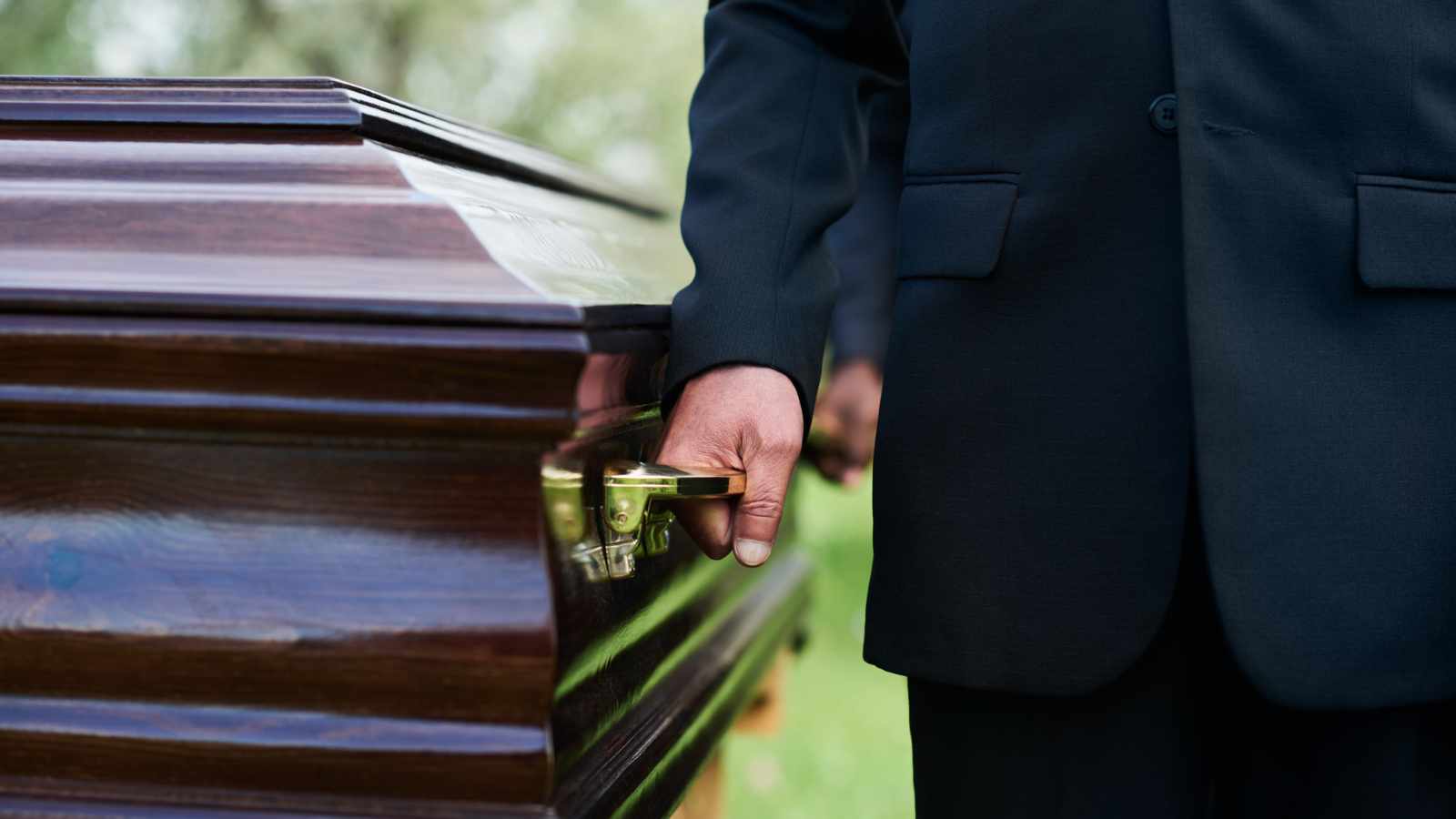
This morbid phrase likely comes from the slaughterhouse method of hanging animals by their heels from a wooden beam. This beam was known as a “bucket” or “buquet” in French, and the animals would kick it during their final spasms. It is a dark and graphic origin for a phrase we use so casually.
Despite its grim roots, we often use this saying in a lighthearted way to talk about mortality. A list of things to do before you “kick the bucket” has become a popular concept known as a bucket list. It helps us face the inevitable with a bit of humor and planning.
Barking Up The Wrong Tree

Hunting dogs were often used to chase raccoons or other animals up into the trees for safety. Sometimes the clever prey would jump to a neighboring tree, leaving the dog barking furiously at an empty branch. The dog believed it had cornered its target, but it was completely mistaken.
This idiom is perfect for situations where someone is pursuing a mistaken line of thought or accusing the wrong person. It happens frequently in investigations or arguments when we are sure we are right but have missed the facts. You are making a lot of noise, but your target is long gone.
Costs An Arm And A Leg

Portrait painters in the 18th century would charge less for a painting that only showed the subject’s head and shoulders. If the client wanted their limbs included in the portrait, the price would go up significantly. Thus, a full-body painting literally costs an arm and a leg extra.
We use this phrase to complain about anything that is exorbitantly expensive, from cars to groceries. Recent economic shifts are not the only things changing; Merriam-Webster added 5,000 new words to the dictionary in September 2025. Keeping up with inflation and new vocabulary can feel like it costs everything we have.
Piece Of Cake

In the 1870s, “cake walks” were competitions where slaves would walk in a circle, and the most graceful pair would win a cake. Because the activity was seen as easy and the prize was a sweet treat, it came to be associated with effortless tasks. Over time, “cake” came to mean something easy to accomplish.
Now, we use this tasty idiom to describe any job or test that requires very little effort. Sadly, reading is no longer a “piece of cake” for everyone, as 40% of American adults had not read a book in the previous year. We might need to make reading as appealing as cake to get those numbers up.
Disclaimer – This list is solely the author’s opinion based on research and publicly available information. It is not intended to be professional advice.
Like our content? Be sure to follow us.





