

What if your past, present, and future all exist at once, and the stars above are just fragments of a much stranger truth? New theories about the cosmos are shaking up everything we thought we knew about reality.
The universe is estimated to be about 13.8 billion years old, based on data from NASA’s WMAP and ESA’s Planck spacecraft. There’s something about staring up at the night sky that makes you ask yourself if time is even real.
Scientists, philosophers, and dreamers have been attempting to answer those profound questions for centuries, and the theories they developed are both fascinating and unsettling. Once you hear them, you may never look at the stars or your pillow the same way again.
The multiverse could be real
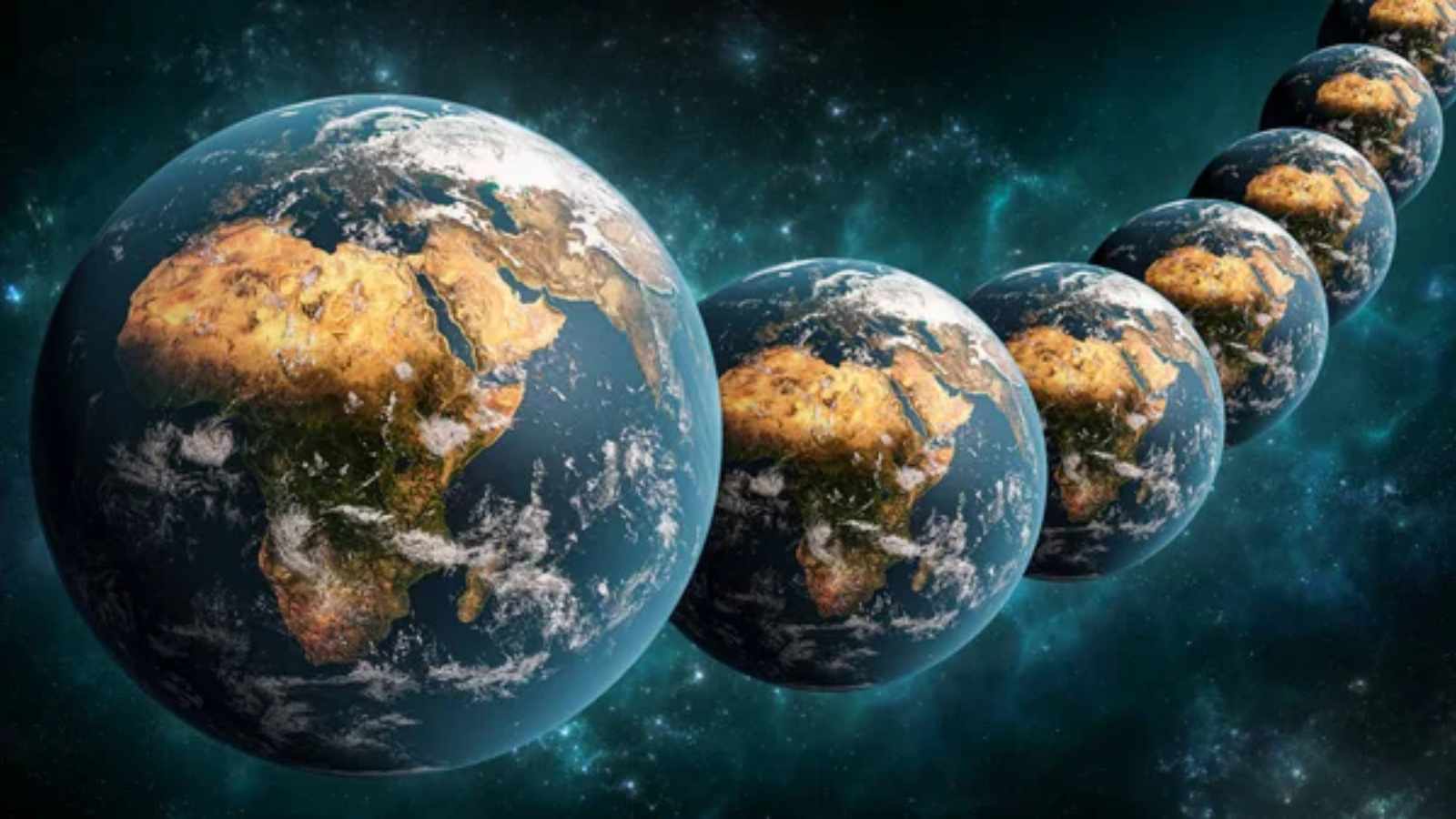
There’s another version of you out there who made the opposite choice at every big decision. That’s the essence of the multiverse theory—our universe might be one bubble in a giant cosmic foam.
In fact, cosmologists studying cosmic inflation suggest that multiple universes could have formed after the Big Bang, each with its own set of laws of physics. Some versions might look almost identical to ours, while others could be completely unrecognizable. If that doesn’t mess with your head before bed, nothing will.
Time might not exist the way we think

We treat time like a river—constantly flowing forward. But physicists have suggested that time might be more of an illusion created by our brains. Einstein’s theory of relativity already showed us that time runs differently depending on speed and gravity.
Some researchers now argue that past, present, and future may all exist simultaneously, and we’re just “moving” through them. That means your childhood, this moment, and your future retirement could all be equally real right now.
We might be living in a simulation
What if everything you’re seeing, feeling, and doing right now is part of an elaborate program? The simulation hypothesis, popularized by philosopher Nick Bostrom, suggests advanced civilizations could create simulated universes indistinguishable from reality.
Even Elon Musk has said he thinks the odds we’re not in a simulation are “one in billions.” If that’s true, your late-night snack might just be code running on someone else’s hard drive. Comforting? Maybe not—but strangely fascinating.
Quantum entanglement defies logic
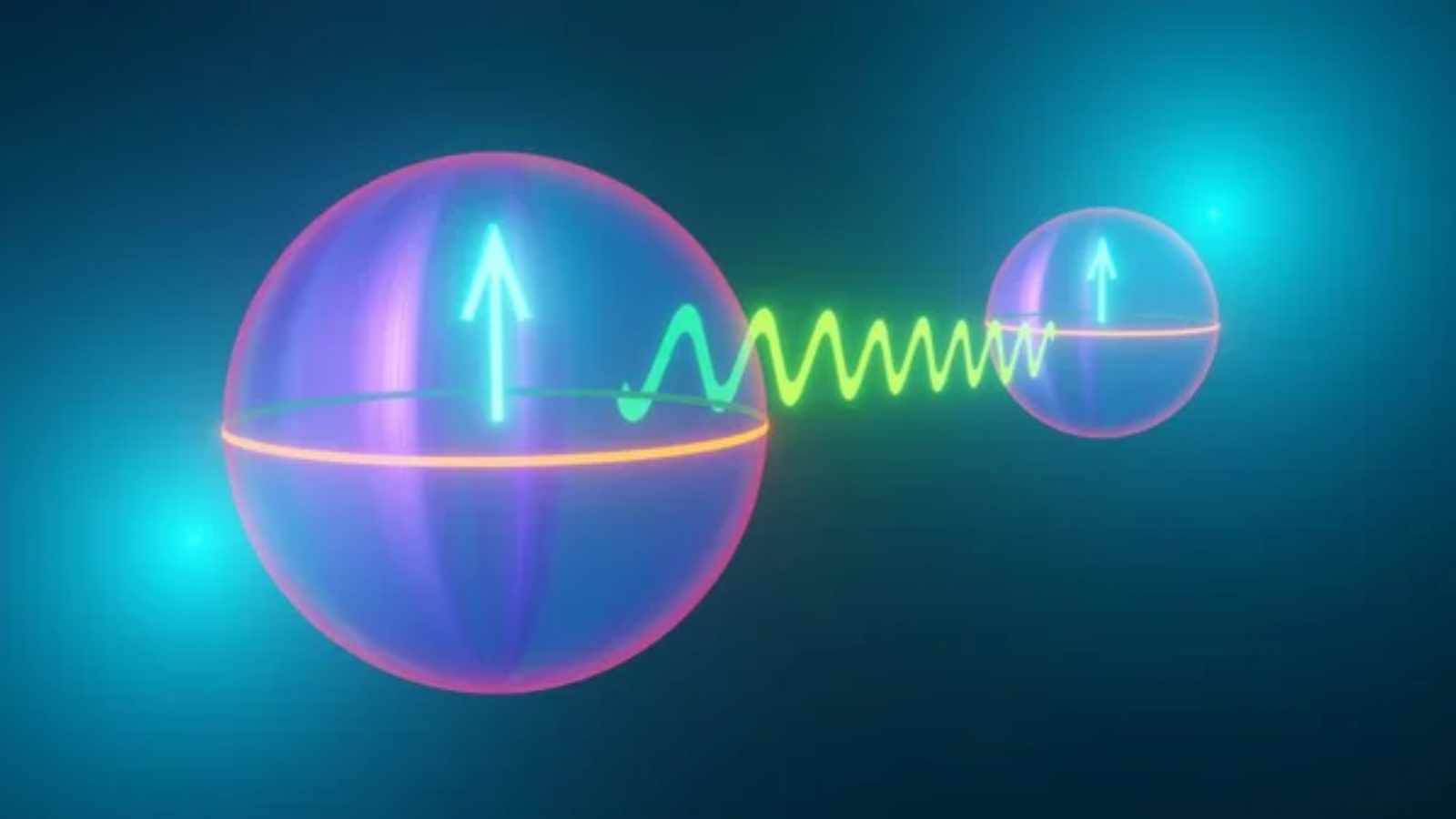
Einstein famously called it “spooky action at a distance.” Quantum entanglement happens when particles become linked so that changing one instantly affects the other, even if they’re light-years apart.
Experiments have confirmed this phenomenon, but we still don’t fully understand how it works. It seems to defy the idea that nothing can travel faster than the speed of light. In other words, the universe might be weirder than our most basic rules allow.
The universe might be infinite

Try to picture the edge of the universe. Now try to picture what’s beyond it. Hard, right? Some cosmologists argue the universe has no boundary at all—it just keeps going, forever.
If that’s the case, then somewhere out there, with enough repetition, there could be another version of Earth… and another version of you brushing your teeth. Infinity has a way of making the ordinary feel strangely extraordinary.
The Big Bang might not be the beginning
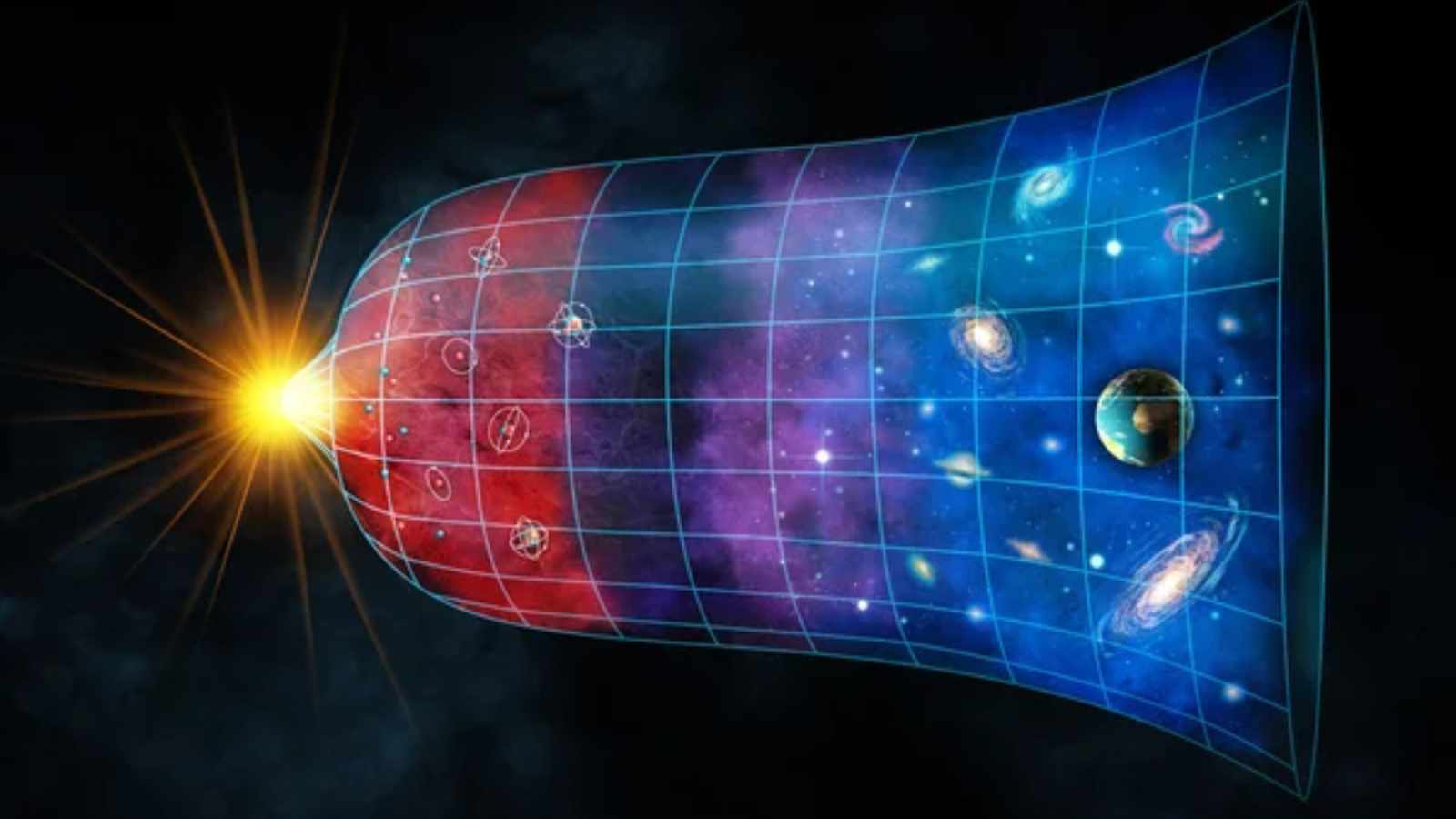
Most of us have learned that the universe began with the Big Bang approximately 13.8 billion years ago. But some cosmologists argue it might not have been the beginning—just a transition.
The “big bounce” theory suggests the universe could be in a cycle of expanding and contracting forever. If true, then our cosmos might be just one chapter in an endless cosmic story. That idea makes “the beginning of everything” a little harder to pin down.
Dark matter is everywhere, but invisible
Around 85% of the universe’s mass is something we can’t see or touch: dark matter. We know it’s there because galaxies spin in ways that can’t be explained by visible matter alone.
Yet scientists have no idea what it actually is—it doesn’t emit light or energy we can detect. That means every time you walk outside, you’re surrounded by an invisible cosmic ghost that outweighs all the stars and planets we can see. Sleep tight.
Parallel timelines could exist
The last big decision you made? Somewhere, according to the many-worlds interpretation of quantum mechanics, there could be a timeline where you chose differently—and it played out in a whole separate universe.
These alternate timelines don’t interact with ours, but they could theoretically coexist. It’s a wild idea, but some physicists argue it’s the best explanation for strange quantum behavior. Essentially, every moment could create a fork in reality.
The heat death of the universe is coming
Save this article
One of the most widely accepted theories about the ultimate fate of the universe is the concept of “heat death.” Billions of years from now, stars will burn out, galaxies will drift apart, and energy will spread so thin that nothing new can happen.
No heat, no light, no movement—just an endless cosmic stillness. Scientists estimate this could take over 100 trillion years, but it’s still eerie to think the universe has an expiration date.
Black holes might lead somewhere
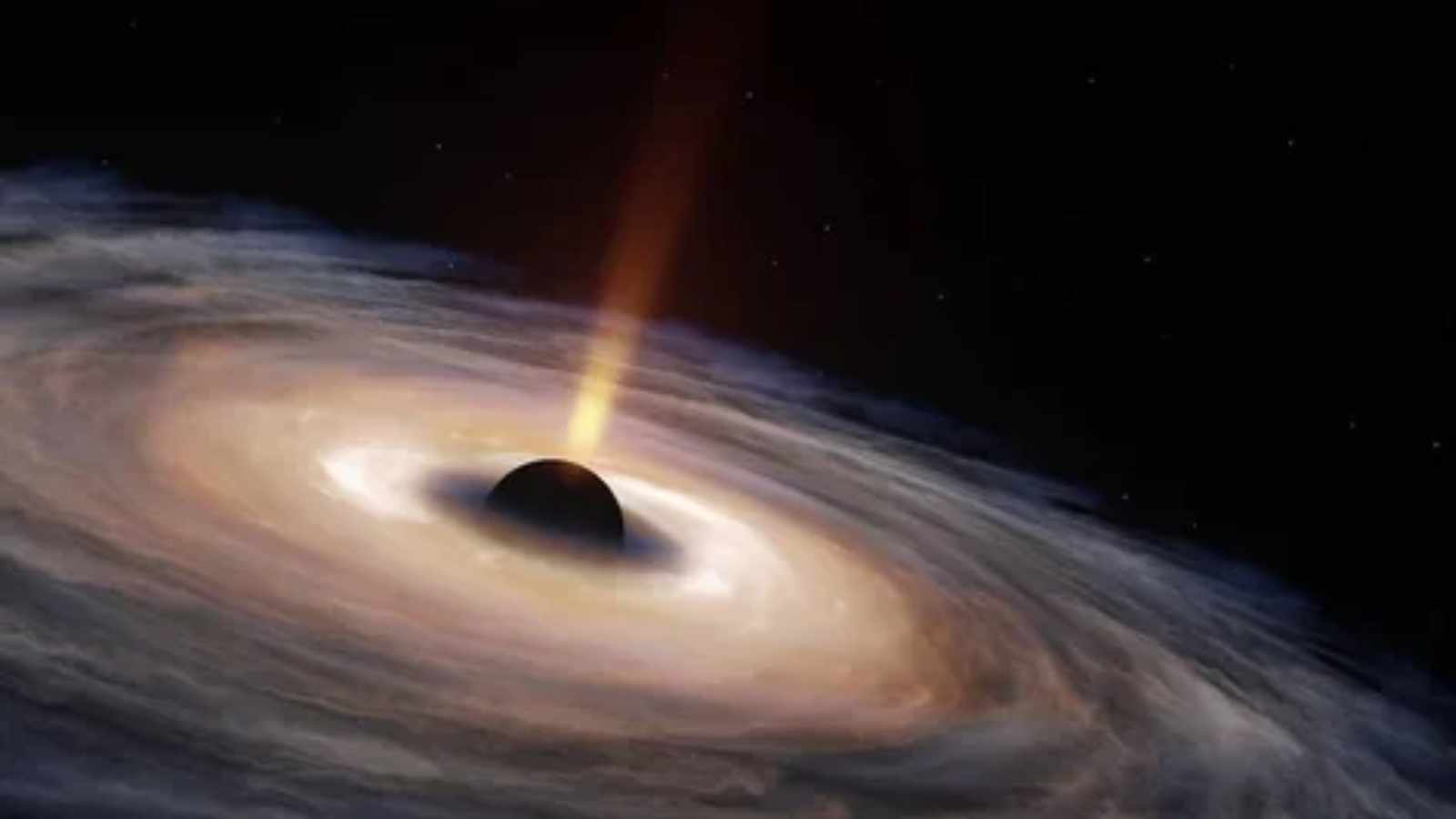
We usually think of black holes as cosmic vacuum cleaners that suck up everything in sight. However, some theories suggest that they might also serve as gateways to other universes or dimensions.
A black hole’s center, known as the singularity, defies our current understanding of physics. Some researchers have even proposed that what goes in could emerge somewhere else as a black hole. Of course, we can’t test this—at least not without taking a one-way trip.
The universe may be conscious
Here’s a theory that blurs science with philosophy: what if the universe itself is conscious? Some thinkers suggest that consciousness isn’t something humans “have,” but rather a fundamental feature of the cosmos, like space or time.
This concept, known as panpsychism, suggests that even particles may possess some form of awareness. While controversial, it raises the question: maybe the universe is aware of itself—through us.
We might be living inside a black hole

This one feels straight out of science fiction, but it’s an idea some astrophysicists take seriously. The theory suggests that our entire universe could exist inside a black hole formed in another universe.
The Big Bang, then, would have been the moment we crossed its event horizon. If true, it means the “outside” of our universe is entirely beyond our reach. It also means our cosmos is just one of many that have been born this way.
Alien life may be more common than we think

The universe contains an estimated 200 billion galaxies, each with billions of stars. Statistically, it seems unlikely that Earth is the only place with life. The Fermi Paradox points out this contradiction: if intelligent aliens exist, why haven’t we seen them?
Some theories suggest that they may be too far away, too different to recognize, or perhaps they’re avoiding us. Either way, contemplating all those possibilities can make the night sky feel incredibly alive.
Key takeaways

Reality may be stranger than we imagine. Many theories, such as multiverses and simulations, suggest that our universe—and even our everyday lives—might not be as straightforward as they appear.
Time, space, and matter don’t always follow common sense. Concepts such as relativity, quantum entanglement, and parallel timelines challenge our fundamental assumptions about how the universe operates.
The cosmos may have both a beginning and an end—or neither. Theories like the Big Bang, the Big Bounce, and heat death paint vastly different pictures of the universe’s ultimate fate.
We’re not alone in asking the big questions. These theories, such as the mystery of alien life and the concept of a conscious universe, remind us that science and philosophy often intertwine when exploring the unknown.
Disclaimer – This list is solely the author’s opinion based on research and publicly available information. It is not intended to be professional advice.
16 grocery staples to stock up on before prices spike again

16 Grocery Staples to Stock Up On Before Prices Spike Again
I was in the grocery store the other day, and it hit me—I’m buying the same things I always do, but my bill keeps getting higher. Like, I swear I just blinked, and suddenly eggs are a luxury item. What’s going on?
Inflation, supply-chain delays, and erratic weather conditions have modestly (or, let’s face it, dramatically) pushed the prices of staples ever higher. The USDA reports that food prices climbed an additional 2.9% year over year in May 2025—and that’s after the inflation storm of 2022–2023.
So, if you’ve got room in a pantry, freezer, or even a couple of extra shelves, now might be a good moment to stock up on these staple groceries—before the prices rise later.
6 gas station chains with food so good it’s worth driving out of your way for

6 Gas Station Chains With Food So Good It’s Worth Driving Out Of Your Way For
We scoured the Internet to see what people had to say about gas station food. If you think the only things available are wrinkled hot dogs of indeterminate age and day-glow slushies, we’ve got great, tasty news for you. Whether it becomes part of a routine or your only resource on a long car trip, we have the food information you need.
Let’s look at six gas stations that folks can’t get enough of and see what they have for you to eat.





