

Christianity is one of the most talked‑about and practiced religions in the world, but even people who grew up in church or know the basics often don’t understand some of its most fascinating parts: its history, practices, and cultural impact.
From its extremely early oral roots to surprising cultural influences centuries later, Christianity has shaped and been shaped by the world in ways that don’t always make the headlines.
For example, the very earliest Christians didn’t rely on written Scripture at all; the movement spread primarily through spoken teaching long before the New Testament was penned.
This wasn’t a minor detail: oral transmission was how communities preserved and passed on the message for up to two decades after Jesus’ life.
Scholars also point out that Christianity’s explosive growth occurred despite severe persecution and a lack of political power for centuries, suggesting that its expansion was deeply rooted in community networks rather than state endorsement.
With that in mind, here are 14 lesser‑known but genuinely worth‑knowing facts about Christianity that shine a light on its history, practices, and global influence.
Christianity spread before any new testament writings existed

Most people assume the Gospels and letters were written immediately after Jesus’s death. That’s not true.
Early Christians relied almost entirely on oral testimony and storytelling for the first 15–20 years before any of the New Testament was written down.
Paul’s letters were some of the earliest texts, but the first Gospel (Mark) likely wasn’t written until the mid‑60s AD, more than three decades after the crucifixion.
This shows how strongly the earliest Christian communities trusted memory and spoken teaching, a world apart from our modern focus on written records.
Christianity grew tremendously despite brutal persecution

From Emperor Nero’s brutal crackdowns in the mid‑first century to Diocletian’s empire‑wide persecutions in the early fourth century, early Christians suffered imprisonment, torture, and execution.
Yet, according to estimates by sociologists of religion, Christianity grew from a few thousand believers to millions by 300 AD, despite these hardships.
That kind of growth without political support, military force, or cultural dominance remains one of history’s most remarkable religious movements.
Christians once used a fish symbol instead of the cross

Before the cross became the universal symbol of Christianity, believers used the fish (called ichthys).
The Greek letters of ichthys stood for “Jesus Christ, God’s Son, Savior,” and the symbol was discreet enough to mark secret meeting places or identify fellow believers during times of persecution.
The cross became dominant only later, once Christianity was more public and less persecuted.
The bible was not “invented” by the church out of thin air
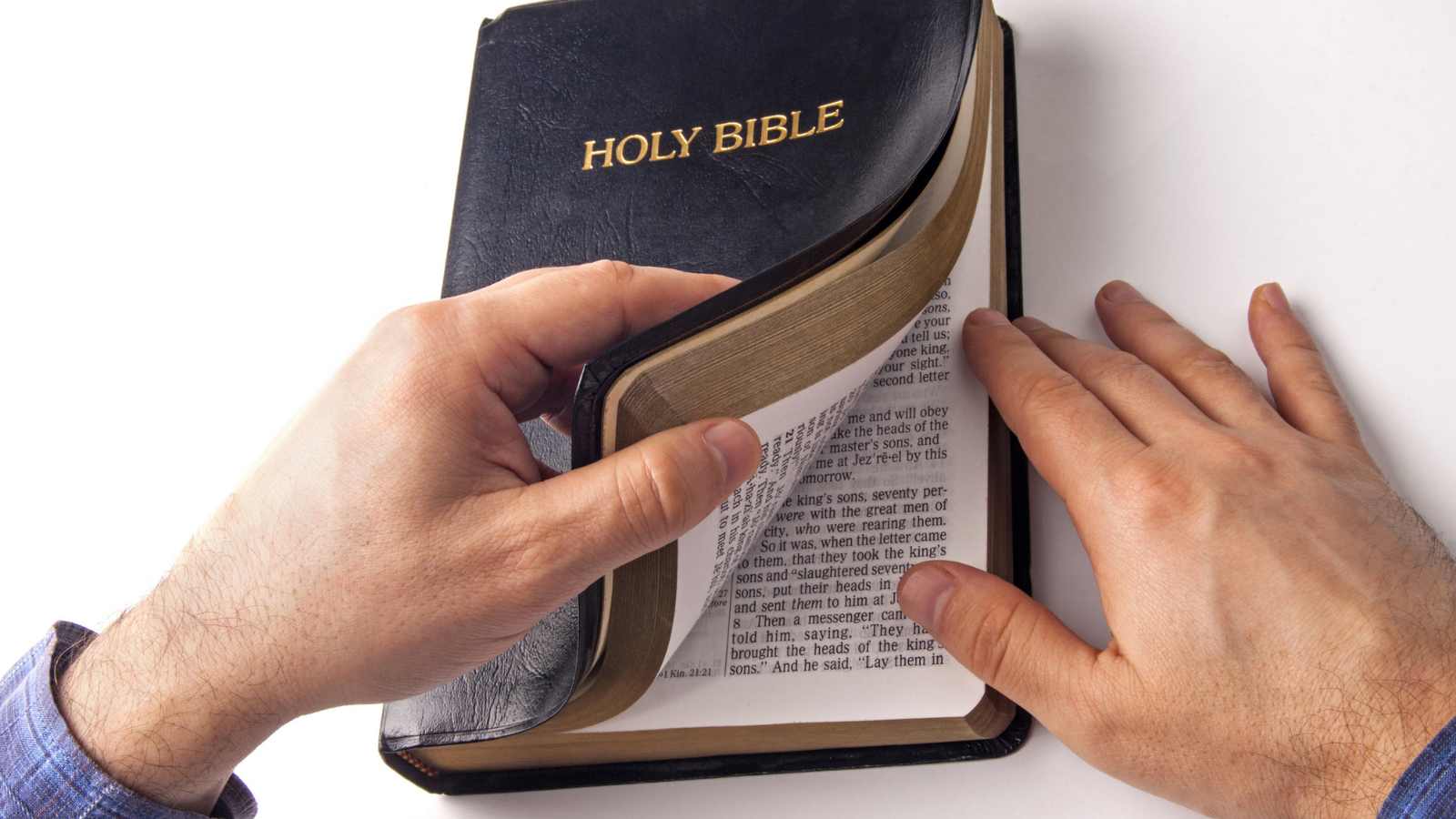
Despite some claims, the Bible wasn’t invented suddenly as a document of control.
The Old Testament was inherited from Jewish tradition, and the New Testament books were recognized over time based on community usage, testimony, and continuity with apostolic teaching, not imposed arbitrarily.
Understanding that process helps distinguish faith history from conspiracy theories.
Christmas wasn’t celebrated at all for centuries

Most Christians today assume Christmas has been part of Christian tradition forever. Actually, the early church didn’t celebrate Christ’s birth at all. Worship focused on Easter, the resurrection, for the first few centuries.
It wasn’t until the fourth century that December 25 was chosen for Christmas, partly to align with existing Roman winter festivals.
That means for hundreds of years, the most significant Christian feast wasn’t Christmas, it was Easter.
The image of Eve and the Apple is not from the Bible

The idea that Eve ate an apple is a cultural image, not a biblical one. The Bible says she ate fruit from the “tree of knowledge.” The specific type of fruit isn’t mentioned.
The apple became popular in Western art partly because the Latin word for apple (malum) also means “evil,” creating a symbolic connection.
Art and language shaped what many people believe about the story much more than Scripture itself.
The ark of the covenant’s whereabouts are still a mystery

The Ark, the sacred chest that held the tablets of the Ten Commandments, disappears from historical records after the Babylonians destroyed the Temple in 586 BC.
Some traditions claim it was hidden in Ethiopia, while others speculate it was damaged or lost forever.
This long‑standing mystery continues to fuel historical and religious speculation to this day.
Some Christians believe animals may be in heaven

The Bible doesn’t explicitly state if animals go to heaven. Still, many theologians and believers interpret passages like Isaiah 11, which depicts peace among animals, as evidence that creation may be restored in the afterlife.
This belief comforts many people today and shows how theology can interact with personal experience.
The bible mentions strange figures called the nephilim

Save this article
Genesis mentions beings called Nephilim, described as the offspring of “sons of God” and human women.
Some interpretations suggest they were giants or mighty warriors, a fact that has puzzled scholars and inspired mythic connections to other ancient traditions.
If literal or symbolic, these references highlight how ancient texts often include elements that feel mysterious to modern readers.
Christianity is a truly global religion, not a “western” one

Although Christianity shaped much of Western culture, it did not originate in the West. It began in the Middle East and spread quickly across Africa, Asia, and Europe.
Today, the majority of Christians live outside the Western world, especially in Africa, Latin America, and parts of Asia, reflecting both historical expansion and vibrant contemporary growth. This counters the stereotype that Christianity is strictly a “Western religion.”
Early Christian communities were surprisingly diverse

From the earliest years, Christianity drew people of many backgrounds. In first‑century Roman society, believers included Jews and Gentiles, slaves and free people, and men and women serving in leadership roles.
Women played significant roles in house churches, often leading gatherings and serving as key figures in early missions. That level of diversity at such an early stage is often overlooked in modern narratives.
The Nicene Creed was written to help Christian unity over 1,700 years ago

In 325 AD, bishops from across the Roman Empire gathered at the Council of Nicaea, where they drafted the first version of what is now known as the Nicene Creed.
This creed affirmed key points of Christian belief, especially Jesus’s divinity, and became a cornerstone of doctrine still recited in many churches today. It was an early attempt to unify Christians theologically, centuries before denominational splits.
Christianity helped inspire the modern hospital system

Contrary to the stereotype that religion opposes science or social progress, early Christians played a significant role in caring for the sick.
The parable of the Good Samaritan and teachings about loving “the least of these” shaped a compassion‑based ethic that led to the development of organized care for the ill, the precursor to modern hospitals.
This reflects how faith communities influenced societal expectations about compassion and care.
Christianity has influenced concepts of human dignity and rights

Many historians argue that the idea of universal human dignity, the belief that every person has inherent worth, has roots in Christian theology.
Unlike many ancient cultures that tied rights to status, citizenship, or class, Christian teaching emphasized the value of every human being as created in God’s image. That theological foundation later helped shape global human‑rights thinking.
Today, this influence is evident in legal and ethical frameworks worldwide.
Key takeaways

✔ Christianity’s survival wasn’t inevitable; it thrived amidst persecution. Early believers maintained community without written Scripture and grew rapidly despite danger.
✔ Many images people assume are biblical are actually later cultural interpretations, like the apple in Eden or the ubiquity of the cross.
✔ Christianity was global long before it was “Western,” and remains richly diverse across cultures.
✔ The religion shaped systems and ideas from healthcare to human rights that extend beyond theology and into society.
✔ Church history is complex, with councils like Nicaea aiming for unity, and early communities embracing diversity in leadership and worship.
✔ Some traditions and symbols reflect survival tactics more than theology, such as the early Christian ichthys fish.
✔ Understanding Christianity is enriched not by assumptions, but by looking at history, culture, and context together.
Disclaimer – This list is solely the author’s opinion based on research and publicly available information. It is not intended to be professional advice.
Disclosure: This article was developed with the assistance of AI and was subsequently reviewed, revised, and approved by our editorial team.
Like our content? Be sure to follow us
5 Easy Steps to Change Any Habit

5 Easy Steps to Change Any Habit
We all click on them, hoping that just THIS time the secret to changing a bad habit or adopting a healthy one will be revealed. We’ll finally be able to stick to that diet, stop those one or ten things that might in the moment make us feel temporarily good but really just make us fat, unhealthy, sad, mad, or just frustrated with ourselves.
Well… this isn’t one of those articles. I don’t have five easy steps to help you change your habits….
16 Best Jobs for Pregnant Women

16 Best Jobs for Pregnant Women
Pregnancy is a transformative and joyous period in a woman’s life, but it comes with unique challenges and demands. One of the most crucial aspects during this time is ensuring a healthy work-life balance.
Finding the right job during pregnancy is not just about earning an income; it’s about maintaining your health, well-being, and peace of mind.





